Top

Binance Takes P2P Service Measures in Response to Sanctioned Russian Banks

Policy & Regulation·August 26, 2023, 1:37 AM

Global crypto exchange Binance has removed the option for users to conduct transactions via sanctioned Russian banks on its peer-to-peer (P2P) platform, a decision that comes on the heels of a Wall Street Journal exposé published earlier this week, shedding light on the platform’s involvement in facilitating the movement of funds for Russian users.

Previously, Binance’s peer-to-peer service featured five Russian banks under sanctions as a method for ruble transfers between users. However, the company swiftly acted to address potential compliance concerns. Fittingly, this latest news was also broken by the Wall Street Journal on Friday.
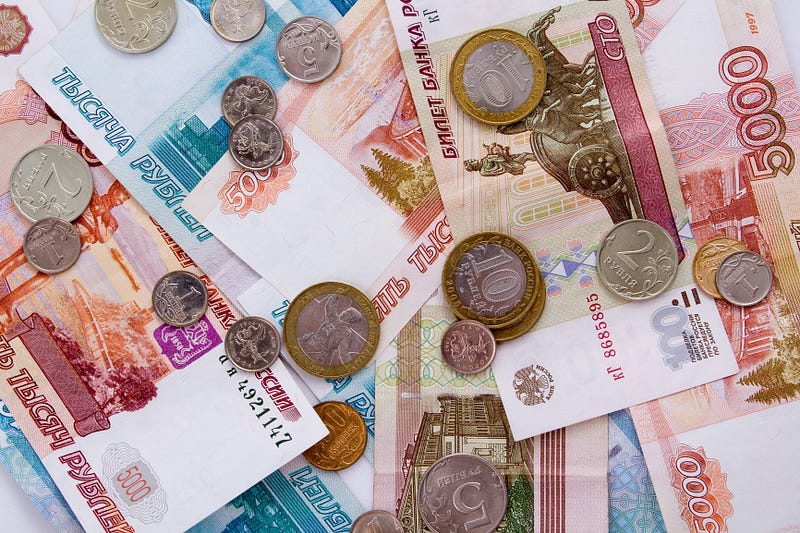
Dmitry Sidorov on Pexels


Sailing too close to the wind

When approached regarding the omission of these banks, a Binance spokesperson stated: “We regularly update our systems to ensure compliance with local and global regulatory standards. When gaps are pointed out to us, we seek to address and remediate them as soon as possible.”

The Wall Street Journal’s article outlined how Binance’s peer-to-peer platform facilitated ruble-to-crypto trades that frequently involved the sanctioned Russian banks, with Rosbank and Tinkoff Bank being prominent examples.

These trades often utilized layers of intermediaries to convert funds from these banks into Binance balances, as detailed by various company resources, user screenshots, and messages in official chat groups. Despite these revelations, Binance’s exchange had continued to handle significant volumes of ruble trading, according to data compiled by digital asset research firm CCData.


US DoJ probe

Binance’s activities in Russia could potentially contribute to its ongoing legal challenges in the United States. The US Justice Department (DoJ) has been probing the company’s actions for potential violations of American sanctions on Russia. In response to such concerns, the Binance spokesperson emphasized:

“Binance aims to diligently comply with the global sanctions rules and enforces sanctions on people, organizations, entities, and countries that have been blacklisted by the international community, denying such actors access to the Binance platform.”


Workarounds

Traders, however, had reportedly found workarounds to the bank removals, as observed in the official Telegram chat group for Russian clients. Many shared that they could still engage with sanctioned banks by selecting alternative payment methods and then manually inputting their Rosbank or Tinkoff bank details.

Earlier this year, an investigative report by CNBC alleged that employees of the company had told it that Binance staff regularly helped Chinese customers to bypass Know Your Customer (KYC) controls in order to access the platform. More recently, another report, once again by the Wall Street Journal, found that business in China was booming, which surprised many given that China banned crypto trading within the country in 2021.

It’s apparent that the company is reacting to regulatory and legal pressures in taking the decision to make these changes to its P2P service. Perennial crypto critic US Senator Elizabeth Warren took to X (formerly Twitter) on Friday, stating:

“I rang the alarm about sanctions evasion by Russia using the crypto platform Binance — and urged [the DoJ] to investigate potentially false statements it made to Congress. We need stronger crypto regulations to rein in illicit finance.“


More to Read
View All
Web3 & Enterprise·

May 18, 2023

Korean Firms Team Up to Boost Biofuel Use Through Blockchain Tech

Korean Firms Team Up to Boost Biofuel Use Through Blockchain TechSouth Korean tech service provider SK C&C announced on Thursday that it inked an agreement with Recycle Ledger, a company that operates a service for tracking transactions related to recycling resources. Through this collaboration, the two firms aim to employ ChainZ, SK C&C’s blockchain application programming interface (API) platform, to track the journey of waste cooking oil.Photo by Sigmund on UnsplashBroadening ESG operationsThis deal allows SK C&C to broaden its environmental, social, and governance (ESG) operations into the waste management sector through blockchain tech, strengthening its position as a prominent provider of ESG solutions and a leader in Korea’s net-zero digital intelligent transport systems (ITS).Prior to this initiative, SK C&C launched Click ESG, a comprehensive ESG management platform, and Centero, a carbon credit trading platform, enhancing its ESG offerings.Recycle Ledger operates an ESG platform built on blockchain technology, enabling easier tracking of waste and recycling resources while promoting transparent information sharing. The firm is currently developing a tracking management system for waste cooking oil, specifically tailored for aviation biofuels, a rapidly emerging market sector.Global trendThe US, the EU, and other developed nations are implementing regulations that require sustainability certification for biomaterials and enhancing systems to monitor and manage the collection process of waste cooking oil. This oil can serve as an ingredient for biofuels.This stricter regulatory landscape emerged partly in response to instances of greenwashing, where conventional biofuels are falsely presented as being derived from used cooking oil. Such deceptive practices became prevalent due to the escalating prices of biofuels.Since the adoption of the International Air Transport Association’s (IATA) resolution known as Fly Net Zero in October 2021, which commits airlines to achieve net zero carbon by 2050, many developments have taken place. The EU has imposed a requirement for suppliers to blend at least 2% of sustainable aviation fuel (SAF) into kerosene starting from 2025, planning to boost this to 63% by 2050. The US, meanwhile, aims for 100% SAF use in its aviation fuel demand by 2050.Waste cooking oil trackerIn light of these developments, Recycle Ledger plans to introduce a blockchain-based service that comprehensively tracks and manages the complete life cycle of waste cooking oil, from restaurants to biofuel producers. By utilizing blockchain technology, the company aims to help waste cooking oil exporters obtain sustainability certifications for biomaterials.Recycle Ledger is collaborating with fintech solution provider Woori FIS and electronic payment firm Payup to develop a system that addresses the inconvenience of cash transactions for recyclable resources. Recycle Ledger is also exploring the implementation of a carbon point system for waste cooking oil emissions.Blockchain-based data flow trackingMeanwhile, SK C&C will provide its blockchain mainnet ChainZ as an API to help Recycle Ledger provide its services swiftly and securely.SK C&C’s data tracing API is designed to document information across all data management stages, including data creation, provision, receipt, analysis, and deletion, offering an environment to track data flow.Recycle Ledger CEO Kim Ki-jong said that its platform could enhance the value of recyclable resources and prevent greenwashing by storing transaction data on the blockchain.Choi Chul, the head of the Web3 tech group at SK C&C, touted ChainZ’s benefits, including data security, transparency, and integrity. He highlighted the need for data traceability and transparency within the ESG sector given the multiple stakeholders involved, and affirmed ChainZ’s readiness to satisfy the demand for new ESG services.

news
Policy & Regulation·

May 25, 2023

Japan Set to Tighten Crypto AML Rules

Japan Set to Tighten Crypto AML RulesJapan is working on tightening anti-money laundering (AML) rules relative to digital assets shortly. That’s according to a report by local media outlet Kyodo News.The stricter enforcement measures will take effect from June 1. The objective is to include the tracing of cryptocurrency asset transactions into the legal framework relative to AML, and in that way, bringing the application of AML in Japan into line with global standards.Photo by Louie Nicolo Nimor on UnsplashTravel ruleIn December of last year, the Financial Action Task Force (FATF), a global money laundering and terrorist financing watchdog based in Paris, France, deemed that the approach taken to crypto-related AML in Japan fell short of international requirements and best practice.Specifically, it’s the FATF’s “travel rule” that the Japanese are about to implement. Otherwise known as FATF Recommendation 16, the travel rule is a set of guidelines devised to prevent both terrorist financing and money laundering.The measure puts an onus on all crypto companies to screen all crypto transactions that exceed the value of $1,000 or a variance of this amount based on implementation by each FATF member state. As an example, in the United States, the FATF travel rule is being implemented with transaction monitoring being applied on transactions to the value of $3,000 and above.Once identified, the crypto firm must record details of the transaction and communicate that information, including both sender and recipient data, to the authorities. That would involve the sender and receiver’s legal names, their account numbers, and addresses. Relevant transaction activity includes exchanges between one or more forms of digital currency and the transfer of virtual assets.G7 alignmentThe move follows a decision taken at a Japanese cabinet meeting on Tuesday, as a direct response to FATFs recommendations. Following discussions earlier this month, the intergovernmental political forum of the G7 group of countries indicated its support for the FATF’s call for the establishment of the travel rule as a global standard. Japan is currently leading the group through its G7 presidency and likely wants to align with the views of its international peers.The country had been moving towards travel rule implementation in the past but in a less decisive way. Two years ago, Japan’s Financial Services Agency (FSA) requested virtual asset service providers (VASPs) to implement the travel rule. In a self-regulatory approach in 2022, the country’s Virtual Currency Exchange Association issued a recommendation for members to apply the rule.Those approaches lacked teeth, leading to a cabinet decision to amend existing legislation late last year and this more recent move to apply and enforce the rule.Regulatory frameworkWhile Japan may not be top of the class in terms of AML regulation relative to crypto, it is a forerunner in terms of crypto regulation generally. It was the first country in the world to suffer a serious crypto-related failure when the Mt.Gox cryptocurrency exchange collapsed in 2014.The fall-out from that collapse led to the Japanese introducing more stringent regulations although it took until 2017 to get them implemented. As a consequence, when the next major collapse occurred, the fall of FTX in November 2022, the Japanese have fared much better than investors located elsewhere. Regulation meant that a separate Japanese entity, FTX Japan, was established. It had to adhere to stricter conditions, meaning that FTX Japan customers have been allowed to withdraw their funds since February while their international counterparts must undergo a much longer process to recover their funds.

news
Web3 & Enterprise·

Sep 13, 2023

Bitget Exec Speaks to Utility of Enhanced KYC

Bitget Exec Speaks to Utility of Enhanced KYCCrypto continues to undergo significant transformation as regulatory authorities across Asia tighten their grip on the industry. In response to these regulatory changes, Seychelles-headquartered Bitget has joined KuCoin and OKX, which have recently bolstered their Know Your Customer (KYC) measures to ensure compliance and safeguard their operations.In a recent interview with Cointelegraph, Bitget Managing Director Gracy Chen spoke to the utility of KYC measures, stating that KYC is useful in filtering out illegitimate users, particularly those engaged in activities such as money laundering.Photo by Pixabay on PexelsMeeting Asian regulatory requirementsThe Seychelles-based exchange with ties to China and Singapore recently announced updates to its KYC protocols. These changes come in the wake of the Monetary Authority of Singapore’s (MAS) directives, which advise financial institutions, including cryptocurrency exchanges, to implement robust risk management procedures. The MAS has taken a stringent stance, shutting down certain digital payment token service providers to prevent them from facilitating lending and staking activities by retail customers.Starting from October 1, Bitget will require users who have not completed level 1 KYC verification to be restricted from creating new trading orders. This move aims to ensure that users comply with the newly updated guidelines and maintain the integrity of the exchange’s operations.Following industry peersKuCoin and OKX, two other prominent exchanges which, like Bitget, have their corporate headquarters in Seychelles and a strong presence in Asia, have also revamped their KYC policies. While KuCoin initially introduced KYC in 2018, the exchange has strengthened its identity verification procedures, requiring users to upload documents and complete face checks.Furthermore, in July, it announced a mandatory KYC requirement, in line with anti-money laundering (AML) regulations. While the mandatory KYC requirement is already in force, the other changes are set to take effect at the end of the month.OKX, on the other hand, has implemented stringent requirements, including the submission of a government-issued ID selfie for users to access all its services. The exchange recently set a deadline for service users to complete KYC.Bitget’s Chen highlighted that its decision to embrace KYC measures was driven by a commitment to serving the market responsibly. She acknowledged that while some users may have reservations about KYC, it is a necessary step to maintain the integrity of the exchange and prevent illicit activities. Speaking at the fringes of the firm’s EmpowerX Summit in Singapore, Chen said:“I’m pretty sure if the user is a financially healthy user, such as, like, if they’re not doing something illegitimate, such as money laundering, they should be pretty comfortable with the KYC process.”Tightening regulationThe tightening of regulations in Asia is not limited to Singapore alone. Japan has also taken steps to enhance anti-money laundering measures related to cryptocurrency transactions, responding to international calls for stricter oversight. Additionally, South Korea’s Financial Services Commission (FSC) has announced plans to require companies to disclose details about their cryptocurrency holdings, expected values, and related business models in their financial statements, aligning crypto accounting with conventional financial reporting.These regulatory developments signify a broader trend in the region, with cryptocurrency service providers proactively adapting to the changing landscape. As governments and regulatory authorities take steps to address the potential risks associated with cryptocurrencies, exchanges are prioritizing compliance to ensure their longevity and continued growth.

news
Loading