Top

AsiaPay and BLOX explore crypto payments within Malaysian market

Web3 & Enterprise·January 11, 2024, 7:05 AM

BLOX, the Malaysian Web3 firm, has forged a strategic partnership with AsiaPay, a payment processor and gateway solution provider in Asia, focused on crypto payments.


Memorandum of understanding (MOU)

According to a recently published press release, the collaboration has been formalized through a memorandum of understanding (MOU) and aims to collectively explore and develop cryptocurrency digital payment solutions tailored for the Malaysian market.


As global consumers increasingly gravitate towards the most frictionless payment methods, cryptocurrencies are gaining significant traction. However, the seamless integration of cryptocurrencies into day-to-day transactions requires the support of adept payment service providers.
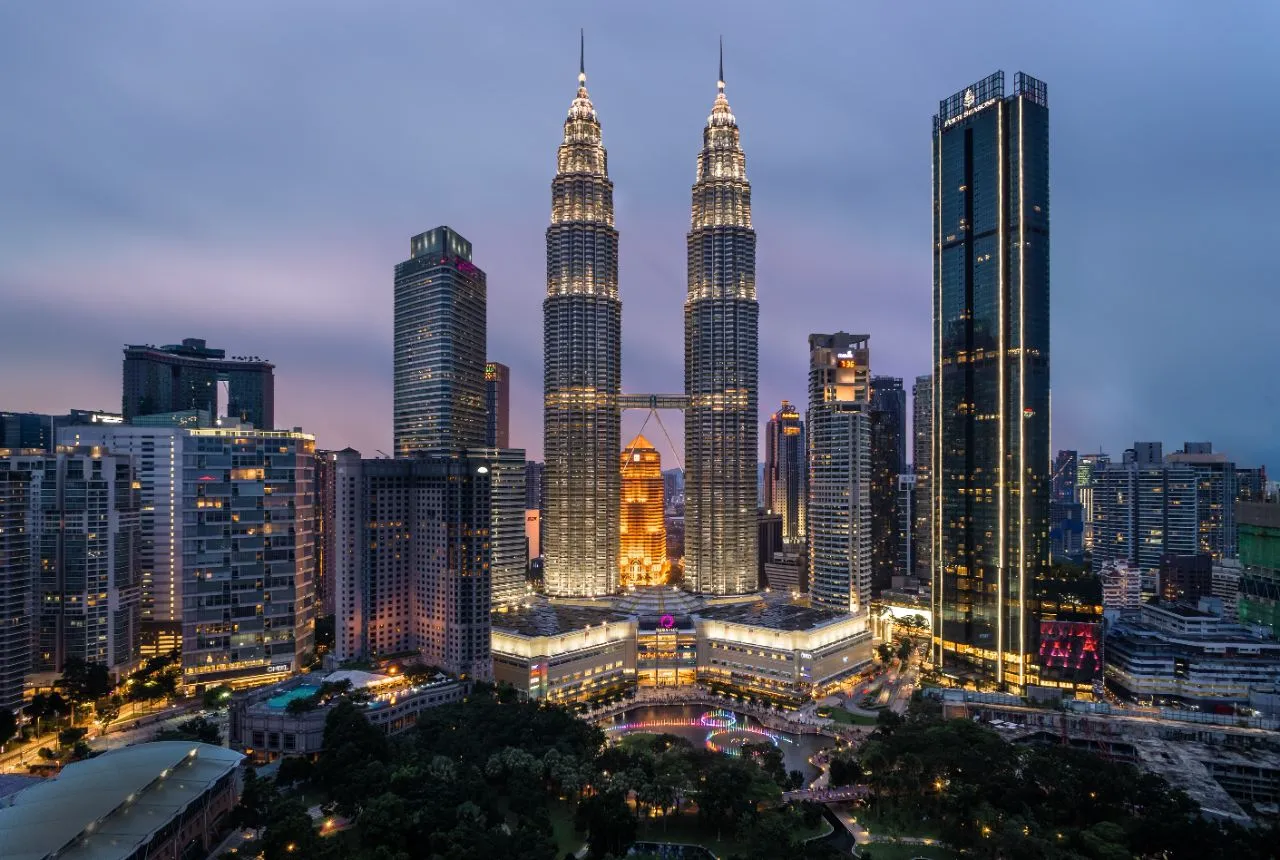
https://asset.coinness.com/en/news/ee36dfcca9140a88d21a03350a092138.webp
Photo by Esmonde Yong on Unsplash

Stablecoin potential

Despite the burgeoning popularity of cryptocurrencies, the inherent volatility in their prices poses a considerable challenge. To address this challenge, stablecoins have emerged as a viable solution. The adoption of stablecoins has gained momentum, particularly in the business-to-business (B2B) segment, where the efficiency of blockchain-based payments and instant settlement can be harnessed without being hampered by the uncertainties of price fluctuations.


It is within the area of stablecoins that BLOX can lend support, given that the entity is responsible for the first Malaysian ringgit-denominated stablecoin (MYRC). Ethan Chung, CEO and Co-Founder of BLOX, expressed enthusiasm about the partnership, stating:

“I’m excited to announce our partnership with AsiaPay, enabling Malaysian merchants to effortlessly accept crypto payments without the need for technical expertise. Empowering businesses, simplifying transactions.”


Regulatory sandbox

The crypto payment exploration, which will be undertaken by the two companies, is being enabled under the auspices of a regulatory sandbox environment provided by Malaysian central bank Bank Negara Malaysia.


Loo Tak Kheong, Country Head and Director at AsiaPay Malaysia, emphasized the added value this collaboration brings to their payment solutions. He said:

“At AsiaPay, we provide payment acceptance solutions with multi-currency, multi-lingual, multi-card, and multi-channeled payment capabilities, which we believe by adding an additional payment method via crypto, will further enhance the value-add service to our Merchants and Partners in the payments ecosystem.”


AsiaPay operates throughout the Asian region, headquartered in Hong Kong but with a local corporate entity also established to serve the Malaysian market.


Malaysia has shown interest in harnessing blockchain for the purposes of international trade and payments. Last year the Southeast Asian country’s Prime Minister had expressed interest in decreasing its dependency on use of the U.S. dollar. Under the guidance of the country’s central bank, Malaysian banks have explored the use of blockchain for the purpose of trade finance.


The country had expressed interest in a central bank digital currency (CBDC) in a financial sector blueprint it had previously published, mapping a way forward from 2022 to 2026. The same document deems decentralized cryptocurrencies like bitcoin to be “non-backed digital assets.” Previously the country’s deputy finance minister had said, “cryptocurrencies like Bitcoin are not suitable for use as a payment instrument due to various limitations.”


This strategic alliance between BLOX and AsiaPay reflects the ongoing evolution of payment systems, positioning both companies at the forefront of the exploration of crypto-as-a-payment means in Malaysia.


More to Read
View All
Web3 & Enterprise·

Jan 02, 2024

Hyperithm invests in Japanese yen stablecoin issuer JPYC Inc.

Hyperithm, a digital asset management firm based in Tokyo and Seoul, has invested in JPYC Inc., the issuer of JPY Coin (JPYC), the first stablecoin pegged 1:1 to the Japanese yen. First launched in January 2021, JPYC is a legal Prepaid Payment Instrument in Japan that is issued on various blockchains, including Ethereum and Polygon. The total figure for the investment was not disclosed by either party.Photo by Precondo CA on UnsplashInsights from industry leaders"We believe that stablecoins linked to fiat currencies are essential to expanding the cryptocurrency ecosystem. Japan became one of the first countries to officially issue stablecoins after the revision of the Payment Services Act in June," said Lloyd Lee, CEO of Hyperithm. "We expect that the widespread adoption of JPYC will increase the inflow of Japanese capital into the cryptocurrency ecosystem." Noritaka Okabe, CEO of JPYC Inc., explained that the firm aims to create more connections between crypto and everyday life, forging an environment where everyone can participate in innovation and capital liquidity. JPYC Inc.'s strategic evolutionAlthough it is currently issued as a third-party Prepaid Payment Instrument, JPYC Inc. plans to acquire a license to conduct transactions including money transfers and electronic payments in accordance with the revision of the Payment Services Act, which took effect in June 2023. This will serve to strengthen the stablecoin’s trust structure and remove limits on remittances. After acquiring the license, Mitsubishi UFJ Financial Group, a bank holding and financial services company based in Tokyo, will be responsible for JPYC's fiat currency reserves. Pioneering crypto financeFounded in January 2018, Hyperithm provides crypto corporate finance services to institutional and upper-class investors. It is one of South Korea’s 29 companies that are licensed by the Financial Intelligence Unit (FIU) to operate as a Virtual Asset Service Provider (VASP). Notably, it raised $11 million in a series B funding round in 2021, which was led by former clients Hashed and Wemade Tree. The company’s CEO, Lee, was also listed on Forbes’ 30 Under 30 Asia under the Finance and Venture Capital category. 

news
Policy & Regulation·

Feb 28, 2025

First stablecoins gain DFSA approval in Dubai

The Dubai Financial Services Authority (DFSA), the financial regulatory agency of the Dubai International Financial Center (DIFC), a special economic zone, has approved two stablecoins under its crypto regulatory framework. The two stablecoins, USD Coin (USDC) and EURC, are both issued by blockchain-focused financial services firm Circle. While USDC is a U.S. dollar-backed stablecoin, EURC is a euro-backed stablecoin. In a press release published on the Circle website on Feb. 24, the company announced details regarding the approval. The stablecoins are the first to be recognized and approved by the DFSA.Photo by Christoph Schulz on UnsplashStablecoin integrationThe development means that firms based in the DIFC are now free to integrate either stablecoin into digital asset applications and products focused on areas such as payments and treasury management. A number of Circle executives took to social media to comment on the development. Circle Co-founder and CEO Jeremy Allaire outlined on X that the approval means that financial institutions in Dubai “are now able to transact in markets with USDC and EURC.” In legally recognizing the two stablecoins, Allaire pointed out that the DFSA had joined regulators in the European Union (EU) and Canada.  Last Summer, Allaire announced that Circle’s stablecoins complied with the EU’s Markets in Crypto Assets (MiCA) regulation. In December, Circle became the first stablecoin issuer to meet Canadian listing regulations. Dante Disparte, Circle’s chief strategy officer and head of global policy, pointed out that a trend is emerging requiring the pre-clearing of stablecoins prior to them entering into circulation or gaining regulatory approval. “In always-on finance, reciprocity is key,” he added.  Meanwhile, the firm’s EU Strategy & Policy Director, Patrick Hansen, underscored the significance of the approval. Hansen pointed to the fact that the DIFC is home to 6,000 registered entities, including 800 authorized financial firms. An ‘edge’ over TetherEugene Cheung, Chief Institutional Business Officer at Hong Kong-based digital asset platform OSL, said that the approval was “massive for institutional adoption,” while giving Circle an “edge” over Tether within the $157 billion stablecoin market. While Circle has always taken a regulatory-compliant approach, competitor Tether has struggled with compliance. In Europe, 10 companies have been approved to issue stablecoins under MiCA regulations, but Tether is not among them. This has led to a number of exchanges delisting Tether’s USDT in Europe. The DIFC was first established in 2004. The economic free-zone caters to firms operating within the Middle East, South Asian and African regions. The number of businesses registered within the free zone has increased by 25% since 2023. In November 2022, the DIFC recognized Bitcoin (BTC), Ethereum (ETH) and Litecoin (LTC). The following year, it added Toncoin (TON) and Ripple’s XRP, together with ZETA, the native token of the ZetaChain network. In 2024, the DFSA amended its crypto regulations to allow foreign funds to invest in recognized crypto tokens, while enabling domestic qualified investor funds to invest in unrecognized tokens.Although the regulatory approach taken by the authorities in Dubai accommodates stablecoins, algorithmic stablecoins are prohibited.

news
Policy & Regulation·

Jan 15, 2025

Former Thai PM expresses positive view on crypto

Thaksin Shinawatra, who served as Thailand's 23rd prime minister from 2001 to 2006 and whose daughter Paetongtarn Shinawatra currently serves as the Southeast Asian nation’s prime minister, expressed positive views on crypto while speaking at an event in Bangkok on Monday.Photo by Evan Krause on UnsplashIssuing stablecoins According to a report by Reuters, in his speech, Shinawatra called on Thailand’s Securities and Exchange Commission (SEC) to enable the trading of stablecoins and cryptocurrencies that are otherwise backed by real-world assets (RWAs). Addressing the consideration of systemic risk posed by cryptocurrencies, Shinawatra stated:"There will be no risk, it is just another currency in the world."  Shinawatra also commented on a government plan to make the Thai tourist resort city of Phuket a potential location for a pilot program which would trial crypto payments. Bullish on crypto This is not the first occasion in which the former Thai prime minister expressed a bullish view on crypto. He has been a long-standing advocate for cryptocurrencies. His comments earlier this week mirror similar views he expressed while speaking at an event at the Intercontinental Hotel in Hua Hin in December. On that occasion, he stated: “There are already many cryptocurrencies. Some people say that in the future, we will have more currencies than countries.”  In Hua Hin, he also suggested that his friends believe that Bitcoin could reach a unit price of $850,000. With that potential rise in value, Shinawatra wants Thai citizens to be well-positioned for the crypto wave. He encouraged the Thai government to engage positively with digital assets and to take the time to study the emerging asset class. Back in August, Thailand’s SEC launched the Digital Asset Regulatory Sandbox as part of an initiative to permit interested service providers to trial crypto-related services within a controlled sandbox environment.  Building on that sentiment expressed by Shinawatra in December, in his latest speech, he called on the country’s financial institutions to be more open to cryptocurrency.  Paying attention to U.S. policy on crypto In making that call, he cited developments in the United States. Particularly, he focused on the incoming U.S. administration’s positive embrace of digital assets. This includes positive commentary made by U.S. President-elect Donald Trump and the appointment of Paul Atkins by Trump as the new head of the Securities and Exchange Commission (SEC) in the U.S. Atkins has already outlined plans to collaborate with crypto-friendly SEC Commissioners Hester Peirce and Mark Uyeda, with a view towards shaping the agency’s crypto policies.  Beyond crypto, the former prime minister had a number of other suggestions that he feels would be good for Thailand. With regard to the country’s stock market, he called for tighter regulatory oversight, tax incentives for long-term investors and improved corporate governance. He encouraged the opening of a carbon credit trading venue in order to ensure better pricing. Shinawatra believes that Thailand should legalize online gambling on the basis that it is currently losing 100 billion Thai baht ($4 billion) in annual tax revenue from the activity. The Thai government has moved to approve a draft law that would legalize casinos and gambling.

news
Loading