Top

Animoca Brands Co-Founder: U.S. ETF approval positive for Asia

Markets·January 12, 2024, 3:33 AM

The long-awaited approval of spot bitcoin exchange-traded funds (ETFs) in the U.S. on Tuesday is anticipated to have a more substantial impact on the development of cryptocurrencies in Asia.


That’s the view of Yat Siu, the co-founder of Animoca Brands, a Hong Kong-based crypto venture capital and game software firm. The U.S. Securities and Exchange Commission's (SEC) approval is expected to attract new capital to the crypto industry, providing a safer avenue for the crypto-curious.
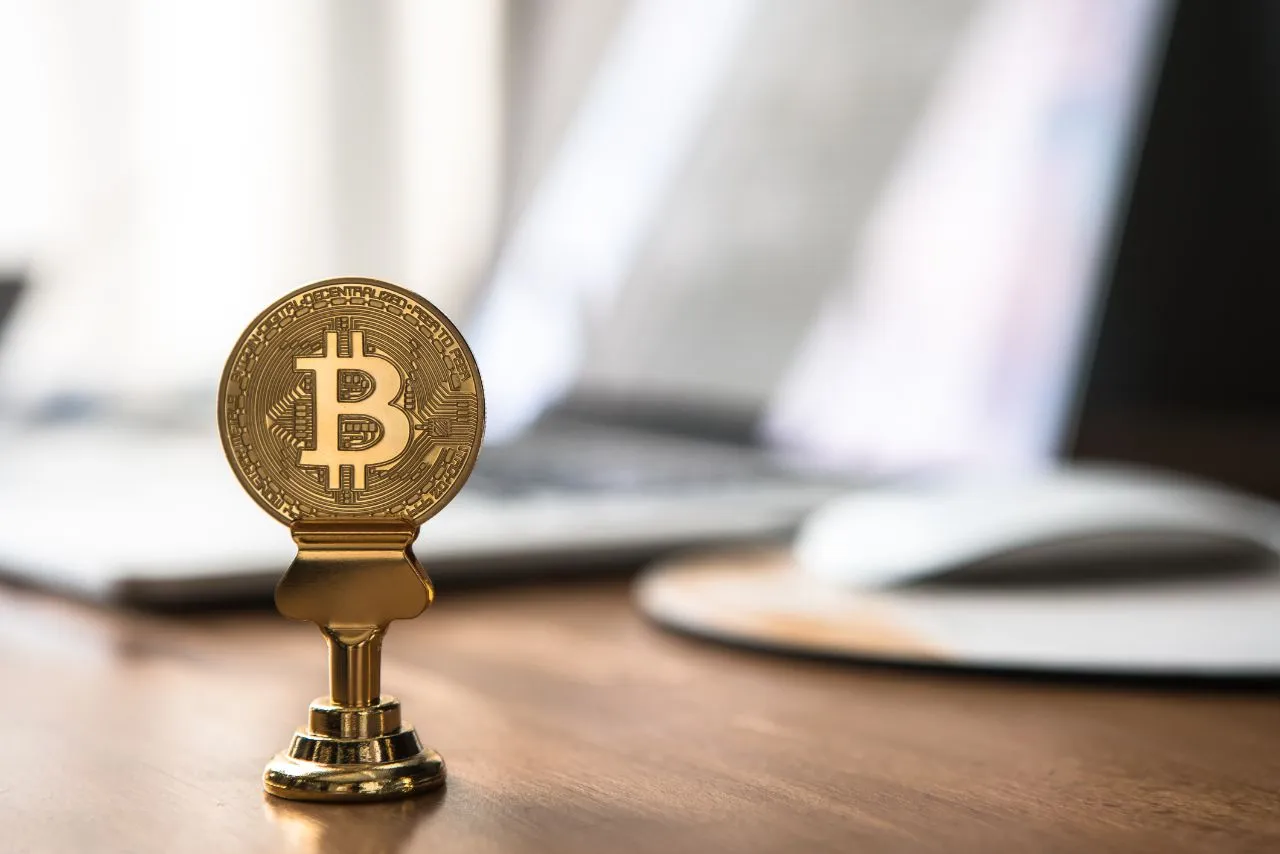
https://asset.coinness.com/en/news/1e613042a2d7df30a0d3f738271b420d.webp
Photo by André François McKenzie on Unsplash

Potential for surge of interest in Asia

In an interview with The Block, Siu emphasized the positive effect on Asia, attributing it to the region's regulatory clarity and the willingness of governments and regulators to build a crypto ecosystem. Strengthening regulatory oversight was a finding of a recent report relative to a number of Asian hubs. Industry leaders believe that the approval of spot bitcoin ETFs in the U.S. could lead to a surge of interest in Asia, where crypto adoption is already higher than in other continents.


The perception of cryptocurrencies as investment assets, rather than just for transactions, might shift in the Asian market, with the ETF offering a regulated and lower-risk avenue for investment exposure. Additionally, Yat Siu noted that Asian investors, particularly the younger generation, have a more open view towards capitalism compared to their U.S. counterparts.


In a recent interview with CNBC, Australian venture capitalist and founder of MHC Digital Group, Mark Carnegie, also expressed the opinion that the digital asset markets in Asia would flourish once the hype of the U.S. ETF approval has subsided.


ETF focus on Singapore and Hong Kong

Post the U.S. approval, attention turns to Asia, with Hong Kong and Singapore emerging as potential candidates for introducing spot crypto ETFs. Hong Kong, in particular, has undergone regulatory renewal, positioning itself as a crypto hub, with it reportedly already attracting interest from fund managers, including those backed by Chinese capital, looking into launching spot crypto ETFs.


Yat Siu alongside Glenn Woo, Head of Sales of APAC at Web3 infrastructure company Blockdaemon, were both positive in their assessment of Hong Kong as a worthy location for the offering of spot bitcoin ETFs in comments made last month. In November, the CEO of Hong Kong’s Securities and Futures Commission (SFC) indicated an openness to considering proposals for spot crypto ETF products aimed at retail investors.


Singapore, known for its mature regulatory environment, is also considered a strong contender. Meanwhile, Japan may witness significant regulatory movement following the U.S. ETF approval.


However, challenges and variables remain for Asia. The scale of capital inflows in Asia, compared to the U.S., and the caution of regulators in the face of crypto industry volatility and trust issues are cited as potential hurdles. Some experts suggest that Hong Kong and Singapore may initially be cautious in encouraging retail participation in virtual asset investments due to previous losses experienced by residents. Still, in the medium to longer term, increased interest and appetite for virtual assets are expected.



More to Read
View All
Policy & Regulation·

Aug 03, 2023

Binance Thriving in China Despite Crypto Ban

Binance Thriving in China Despite Crypto BanWhen China cracked down on cryptocurrency trading in 2021, it seemed like Binance, the world’s largest crypto exchange, would have to leave the country behind. However, nearly two years later, an investigative report carried out by the Wall Street Journal finds that business is thriving for Binance in China.Photo by Hanson Lu on Unsplash$90 billion in monthly tradingThe report, which was published on Wednesday, reveals that users managed to trade a staggering $90 billion worth of cryptocurrency-related assets in China within just one month.Internal data, shared with The Wall Street Journal and corroborated by current and former employees, unveils this underground activity. Remarkably, these transactions propelled China to become Binance’s largest market, accounting for a massive 20% of global trading volume, excluding trades by a subset of major traders.Almost one million active Chinese usersDespite the supposed ban, Binance’s internal discussions highlight the pivotal role China still plays for the exchange. Current and former employees indicate that Binance’s investigations team collaborates closely with Chinese law enforcement. This partnership aims to identify potential criminal activities among the 900,000+ active users in China, underscoring Binance’s efforts to maintain oversight.However, Binance now faces regulatory challenges tied to its secretive global operations. In June, the US Securities and Exchange Commission (SEC) filed a lawsuit against Binance and its Founder, Changpeng Zhao (CZ), alleging illegal operations and misuse of customer funds.Meanwhile, the Justice Department is conducting its own investigation. A report by Semafor on Wednesday suggests that authorities are considering fraud charges but they’re concerned that such an eventuality may lead to a run on the exchange. This regulatory onslaught has seen Binance’s market share among US users plummet, leading to a reduction of over 1,000 jobs out of its 8,000-strong workforce.Circumventing regulationThe clandestine existence of Binance’s footprint in China offers insights into the exchange’s ability to function surreptitiously in unwelcoming environments. To circumvent restrictions, Binance directed Chinese users to visit local websites with domain names before rerouting them to the global exchange. This tactic allowed Binance to keep a foothold in China, even after the government blocked direct access to its website in 2017.China’s central bank, responsible for imposing the crypto ban, remained silent when questioned about these developments. Binance’s official stance is that its website is blocked in China and inaccessible to users there.Holding on to its China-based users is crucial for Binance as it navigates a treacherous regulatory landscape that threatens its future. The company’s history with China is intricate. CZ established the firm in Shanghai in 2017, only for the government to initiate a series of regulatory attacks on crypto exchanges soon after. This led to concerns about money being illicitly moved out of the country, and Zhao eventually relocated Binance’s operations to Japan.Despite this move, Binance retained a significant workforce in China, a decision that raised concerns among its US arm regarding data control. Binance’s Chinese heritage also attracted attention, with Zhao addressing the company’s challenge of being labeled both a “criminal entity” in China and a “Chinese company” in the West.Binance’s relationship with China remains complex. As the exchange navigates these murky waters, its ability to operate under the radar and maintain its foothold in markets like China will undoubtedly play a significant role in determining its future trajectory.

news
Policy & Regulation·

Feb 05, 2025

Hong Kong’s SFC flags suspect platforms disguised as HashKey

The Securities and Futures Commission (SFC), an independent statutory body that regulates Hong Kong’s securities and futures markets, has alerted investors to 33 suspicious websites which appear to be masquerading as HashKey, one of the Chinese autonomous territory’s first licensed virtual asset exchanges.Photo by Dan Freeman on UnsplashAlert listThe regulator flagged the websites by publishing their domain names to its alert list. Hong Kong’s SFC first published its alert list relative to suspicious crypto-related entities in November 2021. In terms of both suspicious trading platforms and suspicious crypto-related web links, the regulator has found 91 instances to date. Remarks added to the listing confirm that a HashKey company, Hash Blockchain Limited, had reported the websites to the regulator as fraudulent websites. The web domain links have been slightly modified when compared to official links to the HashKey website, in an effort to mislead HashKey customers. A little less than two weeks ago, HashKey published a statement to its website, making service users aware of the fraudulent links and websites. It stated: “Fraudulent websites will appear under different domain names or with slight modifications or variations of the official HashKey Exchange website address www.hashkey.com by adding a combination of letters, numbers or symbols.” The company added that it has no connection with these websites, that no affiliation exists with HashKey Exchange, and consequently the company doesn’t accept any liability for any matters relating to these fraudulent websites and links. As well as the regulator, HashKey has also reported the matter to the Hong Kong Police Force. Tackling crypto-related fraudBoth law enforcement and regulators in Hong Kong have been more proactive in tackling any signs of crypto-related fraud or potential scams following an episode of fraud involving an unlicensed Dubai-headquartered crypto exchange, JPEX, in 2023. At that time, the authorities within the Chinese autonomous territory received in excess of 2,369 complaints from Hong Kong residents who had been duped by the unregulated exchange. Overall, victims were out of pocket to the tune of $166 million. Some commentators had likened the JPEX scandal as being an “FTX moment” for Hong Kong, referring to the high profile collapse of Bahamas-headquartered crypto exchange FTX in November 2022. However, Hong Kong investors also suffered as a result of the FTX collapse.  In fact, the Hong Kong Monetary Authority (HKMA) and the SFC were listed as FTX creditors in 2023. The statutory bodies appeared on the FTX creditor list alongside 50 Hong Kong institutions. Towards the end of 2023, the agency issued a public warning regarding HongKongDAO and BitCuped, entities that were accused of misinformation. In February 2024, the SFC issued a reminder to investors within the Chinese autonomous territory to ensure that they’re only engaging with licensed cryptocurrency platforms. To date, the regulator has awarded crypto trading licenses to seven virtual asset trading platforms (VATPs). Earlier this month, the regulator extended use of its swift licensing process to all new applicants in an effort to fast-track the approval of more licensed platforms.

news
Web3 & Enterprise·

Aug 24, 2023

Nomura-Backed Digital Exchange Acquires Trading License in Dubai

Nomura-Backed Digital Exchange Acquires Trading License in DubaiKomainu, a digital exchange backed by Japanese financial services conglomerate Nomura, has achieved the milestone of acquiring an operational license in Dubai.The occasion marks a significant moment for Komainu’s expansion efforts in the Middle East, highlighting the progress the company has made in terms of regulatory approval. It follows Komainu’s previous success in obtaining its MVP license in November 2022, establishing the company as one of the first entities to receive such authorization from the local regulator.The operational license was granted by Dubai’s Virtual Asset Regulatory Authority (VARA) on Friday, with the firm being added to the regulator’s virtual asset service provider register.Photo by Emma Harrisova on UnsplashEnabling a broader service offeringWith this operational license in hand, Komainu is now equipped to introduce extended institutional staking and collateral management services to clients within Dubai. These services will be facilitated through Komainu Connect, a purpose-built platform tailored to cater to the precise needs of institutional clients.While Komainu is a Jersey-based entity, the company has an active presence in the Dubai market as it has established subsidiary firm Komainu MEA FZE, which is based within the city. This local presence indicates Komainu’s intention to play an active role in the institutional digital asset business in the region.Dubai growth potentialSebastian Widmann, Head of Strategy at Komainu, emphasized the exciting growth prospects that Dubai’s flourishing digital asset ecosystem offers. He noted that the region is currently experiencing an influx of assets driven by the launch of new exchanges.Widmann stated: “Dubai has a vibrant digital asset ecosystem and impressive talent pool, and we are proud to contribute to the growth of this innovative financial hub.” He further emphasized that Komainu’s presence and its favorable regulatory status position the company uniquely as it embarks on the next phase of its business journey.It’s been a good month for Nomura-backed digital asset businesses in Dubai. A few weeks ago, another Nomura-funded company, Laser Digital Middle East FZE, was also successful in acquiring an operating license from VARA.VARA’s approach to crafting regulations has been instrumental in fostering a framework that supports permissible activities and services for customers and investors in Dubai. These regulations are designed to enhance clarity, establish certainty, and mitigate potential market risks. VARA’s overarching objective is to create a model framework that promotes both global economic sustainability and innovation.Bridging market gapFounded in 2018, Komainu’s inception was driven by the need to bridge a gap in the market by delivering secure and compliant custody services for institutional players venturing into digital asset investments.Komainu’s foundation is built upon a strategic joint venture involving prominent entities such as Nomura, CoinShares, and Ledger. It acquired its first client for Komainu Connect, the firm’s regulated settlement and custody system for institutions, in June when it signed up Seychelles-based crypto exchange OKX to the service.Headquartered in Jersey, the Jersey Financial Services Commission (JFSC) and Dubai’s Virtual Asset Regulatory Authority (VARA) now provide regulatory governance where Komainu’s activities are concerned.

news
Loading