Top

Hong Kong’s HKVAC drops XRP from top 5 crypto index

Markets·January 16, 2024, 7:38 AM

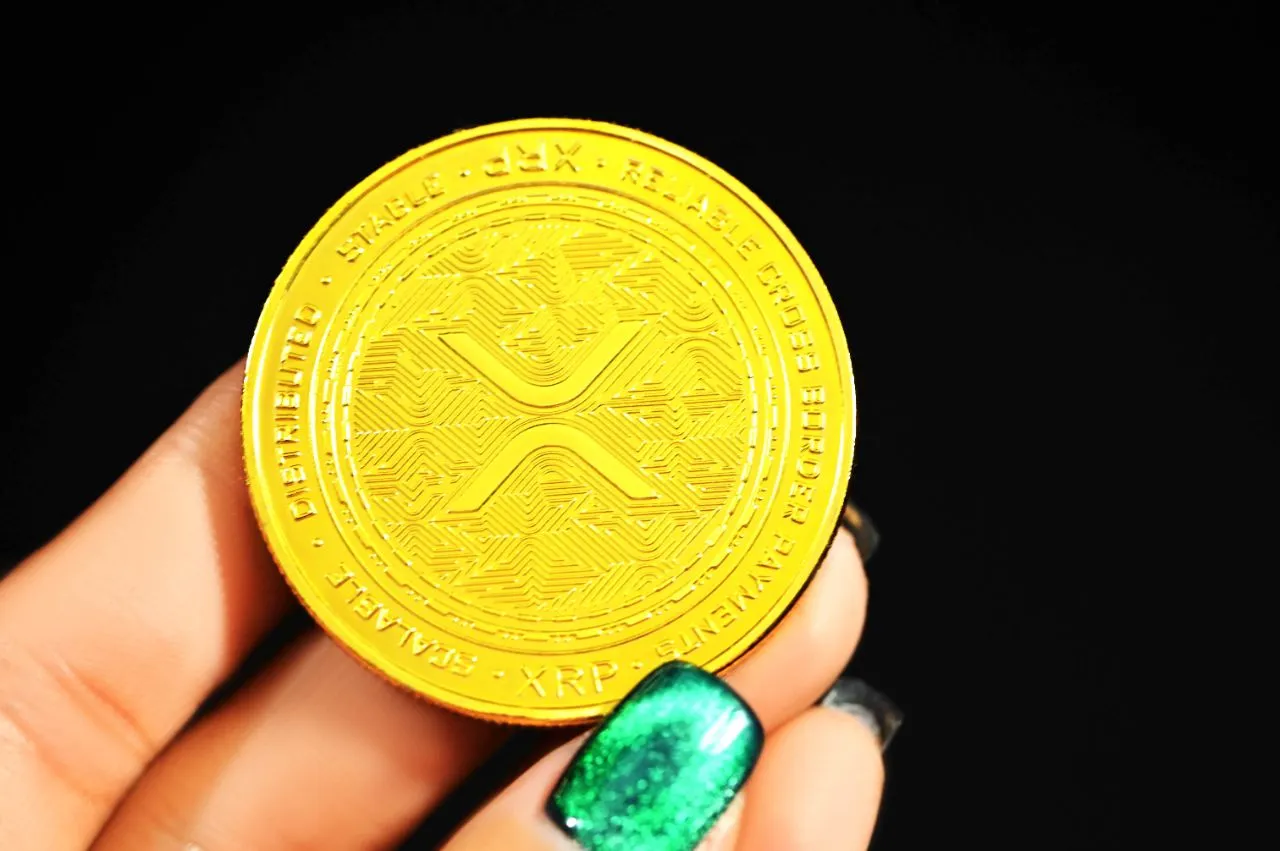
The Hong Kong Virtual Asset Consortium (HKVAC), a digital asset group in China's special administrative region, has announced modifications to its core cryptocurrency index, reshuffling the top contenders to the detriment of XRP, the payment solution token developed by Ripple Labs.
https://asset.coinness.com/en/news/89e98c2bec2b36b43ca45ef20278eb8b.webp
Photo by Kanchanara on Unsplash

Solana takes top 5 slot

Effective as of this Friday, HKVAC will replace XRP with Solana (SOL) in its Top 5 Large Cryptocurrency Index, signaling a shift in the composition of its benchmark index.


HKVAC is a collaborative effort between Hong Kong-based industry participants such as crypto exchanges and licensed ratings agencies. Its aim is to optimize the risk management capabilities of the crypto sector and in that way, assisting market participants including local regulatory bodies.


Crypto exchange platform HTX, previously known as Huobi, became the first member of HKVAC in 2023. It was joined by iPollo, KuCoin, LK Venture, Nano Labs, Purise, Wealthking Investment, G-Rocket Global Accelerator, Hong Kong Data Infinity Technology and others in making up the organization’s membership.


The HKVAC's Top 5 index reflects the global cryptocurrency ranking based on market capitalization, maintaining a pulse on the ever-evolving crypto landscape. However, beyond market cap, the digital asset group considers additional factors such as market valuation, investability and liquidity in its index rebalancing decisions.


Solana’s growth and progression

Solana, currently ranked as the fifth-largest cryptocurrency, has been making substantial strides in the market. Despite the 2022 collapse of the FTX crypto exchange, which significantly impacted SOL's price, the cryptocurrency has made an impressive recovery. Over the past year Solana has surged by 315%. Presently, SOL boasts a market cap of $41 billion, securing its position in the top echelons of the cryptocurrency market.


In contrast, XRP, the ousted cryptocurrency, has experienced a more modest price growth during the same period. As of the latest data, XRP holds the sixth position in the cryptocurrency ranking, with a valuation of $31 billion. The decision to remove XRP from the Top 5 index was met with a 3.9% decline in its value, settling at $0.57. XRP had moved within the Top 5 index in October of last year.


It was added to the index alongside SHIB in 2023. At the time of its formation, HKVAC emphasized that market capitalization was one of the primary criteria incorporated within the evaluation, which extends to 30 cryptocurrencies. A re-evaluation is carried out each quarter on the basis of that market cap criterion.


Crypto rating reshuffle

The HKVAC's reshuffling extends beyond the Top 5 index, impacting other leading cryptocurrencies. Notable changes include the removal of Filecoin (FIL), Binance USD (BUSD), Maker (MKR), Hedera (HBAR) and TrueUSD (TUSD) from the Global Large Cryptocurrency Index. These have been replaced by Near Protocol (NEAR), Internet Computer (ICP), Immutable (IMX), Optimism (OP) and Injective (INJ). Additionally, Avalanche (AVAX) is set to replace Tron (TRX) on the HKVAC Top 10 Global Large Cryptocurrency Index, effective this Friday.


These adjustments come amid Hong Kong's ongoing efforts to bolster the cryptocurrency industry within the region. In December, the financial regulator in Hong Kong signaled its readiness to accept spot crypto exchange-traded funds (ETFs). This move aligns with the United States Securities and Exchange Commission's review of 11 spot bitcoin ETF applications, ultimately approved on Jan. 10.




More to Read
View All
Markets·

May 23, 2024

Japan’s largest bank collaborates with KlimaDAO on carbon credit marketplace

Japan’s largest bank, MUFG, has teamed up with KlimaDAO Japan, the provider of a digital reserve currency backed by carbon credits, to explore the use of the JPYC stablecoin for settling tokenized carbon credit transactions on the Progmat blockchain platform. Settlement on ProgmatProgmat provides the infrastructure to enable the issuance of various stablecoins. Last September, MUFG announced a collaboration with Binance geared towards stablecoin issuance. The JPYC stablecoin, operational since 2021, functions as a prepaid money instrument, similar to a prepaid card, due to its existence before Japan’s stablecoin legislation. Under new regulations, JPYC can either obtain a money transmitter license or issue a trust-style stablecoin with a bank like MUFG acting as the trustee for the stablecoin's reserves. Last year, JPYC formed a partnership with MUFG implicating the use of the Progmat platform.  This partnership, along with the involvement of Kansai Electric subsidiary Optage as the integration partner, sets the stage for the KlimaDAO stablecoin experiments. Optage will provide the corporate infrastructure required to manage the carbon credits added to the blockchain and provide a means for funds settlement to be achieved via bank transfer. Through the use of various local stablecoins for the purpose of settlement, it’s hoped that improved liquidity on a global basis may be achieved.Photo by Dan Meyers on UnsplashInitially recognized for making tokenized carbon credits accessible on public blockchains, KlimaDAO's functionality extends beyond this. The organization also offers the capability to retire credits. Last year, KlimaDAO expanded its reach by launching Carbonmark, an enterprise-focused marketplace.  This platform, which utilizes blockchain technology, namely Polygon, and smart contracts, offers a user-friendly experience by integrating traditional payment methods like bank transfers and SAP integration.  J-CreditsJapan operates a national scheme known as J-credits, and the Tokyo Stock Exchange has introduced a secondary market for these credits. J-credits are designed to certify the amount by which greenhouse gas emissions have been reduced through the use of carbon sinks in Japan. However, the volume of J-credit transactions remains low, reflecting the broader state of Japan's voluntary carbon market.  KlimaDAO aims to address this by launching the KlimaDAO Japan Market, simplifying the process for domestic companies to purchase and utilize carbon credits. This initiative will involve tokenizing J-credits, referred to as D-Carbons.  Andrew Bonneau, KlimaDAO co-founder, outlined on X that “@KlimaDAO is in a unique position to facilitate an efficient J-Credit market on chain, while serving as the base infrastructure for integrating these assets with 3rd party services.” While the initial phase will use traditional bank payments, the ultimate goal is to transition to using stablecoins, particularly the JPYC stablecoin. Norbert Gehrke, an observer of developments within the Japanese fintech scene, outlined on Medium that the Japanese carbon credit market is likely to reach three trillion yen ($19.15 billion) by 2030. Meanwhile, the global carbon credit market has a current value of 39 trillion yen ($249 billion). KlimaDAO Japan has mentioned the use of a permissionless blockchain for this initiative but has fallen short of confirming that the Polygon network will be relied upon. Japan has several homegrown blockchains, which might be considered for this project.  At the time of writing, the KLIMA token had risen 31% over the course of the previous 24 hours, with a unit price of $3.53 according to CoinGecko. 

news
Web3 & Enterprise·

Jun 15, 2023

More Players Join NH Bank-Led Security Token Consortium in South Korea

More Players Join NH Bank-Led Security Token Consortium in South KoreaMultiple South Korean banks and fractional investment firms are now joining the security token consortium led by NongHyup Bank (NH Bank), according to a report from local news outlet Etoday today.Expanding consortiumNH Bank announced today that the Industrial Bank of Korea, Shinhan Bank, and Woori Bank, along with fractional investment companies, will be participating in the banking sector’s security token consortium. This consortium was established in April and initially comprised NH Bank, Suhyup Bank, Jeonbuk Bank, and six fractional investment companies.The objective of the banking sector’s involvement in the consortium is to contribute to the security token industry by developing distributed ledger technology infrastructure, conducting research to promote security tokens, and strengthening investor protection.The consortium participants will engage in further discussions on how banks can participate in the security token market while adhering to evolving legislation related to security tokens. Additionally, they will explore methods to establish the necessary platforms required by fractional investment companies to issue security tokens.Photo by Mathieu Stern on UnsplashSecurity tokens as corporate bondsIn the long term, the group plans to issue security tokens as corporate bonds, taking inspiration from German tech company Siemens’ strategy, or create a secondary market for security tokens to promote the overall security token ecosystem. Earlier this year, Siemens issued a blockchain-based one-year bond worth 60 million euros ($64.9 million).The consortium’s new fractional investment firms include fractional real estate investment platform Funble, artificial intelligence entertainment firm Blade Ent, blockchain tech firm Trackchain, online bookstore Yes24’s fractional artwork ownership platform ARTiPIO, and electric vehicle (EV) charging sharing platform Charzin.

news
Web3 & Enterprise·

Oct 07, 2024

Zetrix launches product to simplify KYC for Chinese nationals

Zetrix, a layer-1 blockchain project for real-world applications, has launched an electronic Know Your Customer (KYC) verification product for Chinese nationals. The Malaysian enterprise, which is a subsidiary of digital services company My E.G. Services Berhad (MYEG), has launched ZCert. The offering is available to Chinese nationals who opt to have their digital identities published to the Xinghuo BF network, a Chinese national blockchain infrastructure network developed under the guidance of China’s Ministry of Industry and Information Technology and managed by the China Academy of Information and Communications Technology.Photo by Diego Jimenez on UnsplashFirst-of-its-kind applicationZetrix acts as an international super-node relative to the Xinghuo blockchain. In a press release published by PR Newswire on Oct. 3, the company outlined that ZCert had been launched as a first-of-its-kind application, enabling Chinese nationals “to be authenticated and verified digitally overseas, paving the way for a seamless, efficient, and secure verification process for verifiers and identity holders. ” The service simplifies the issue of identity verification for verifiers located outside of China, as a consequence of Zetrix’s integration with the Xinghuo BIF network.  Connecting to ‘China Web3’Xinghuo signed a memorandum of understanding (MoU) with Zetrix’s parent company, MYEG, to establish the international super-node back in November 2022. The tie-up was seen as an opportunity to provide access to Chinese government agencies and businesses internationally.  At the time, MYEG Managing Director and Zetrix Co-Founder Wong Thean Soon said that “with the commencement of the Xinghuo International Supernode, the rest of the world can connect and be part of the China Web 3 evolution that will promote the establishment of international communities and facilitate global trade and finance.”  On this occasion, Wong said that the new product “enables a new wave of services powered by smart contracts.” He added that KYC processes can be simplified and automated, while “user data is retained by users at all times and only critical information is shared in an encrypted manner." The company has already digitized Chinese driving licenses for the purpose of overseas verification. Furthermore, it has plans to expand its offering beyond ID verification soon. In April of this year, Zetrix and MYEG signed an MOU with MaiCapital, a Hong Kong-based virtual assets manager, with a view towards collaborating on the launch of a digital asset fund or digital asset-based exchange-traded fund (ETF). Last year Zetrix engaged in a pilot project with the Bank of China with the aim of offering supply chain financing products. On a similar theme, its parent company entered into a partnership with the Philippines Bureau of Customs (BOC) and Cargo Data Exchange Center Inc. (CDEC), also in 2023. The collaboration involved the use of Zetrix’s ZTrade product, a Web3 platform that enables digitized trade document verification. Zetrix launched its ZETRIX token in October 2023 through an initial exchange offering (IEO) facilitated by the Coinstore exchange.

news
Loading