Top

Tax burden contributes to Indonesian crypto exchange trading slump

Policy & Regulation·January 18, 2024, 3:53 AM

While Indonesia has been recognized as one of the world's swiftest embracers of cryptocurrencies, it has faced a notable setback more recently, with a 60% decline in transaction volumes on local exchanges compared to the preceding year.


High taxes

In a recent report by CoinDesk Indonesia, the publication speculates that the imposition of high taxes may be a pivotal factor dissuading traders and impacting the overall market dynamics. Indonesia’s tax system treats crypto assets as commodities, with the burdensome taxes arising as a direct consequence of that classification.


The tax framework in Indonesia subjects crypto assets to both income tax and value-added tax (VAT), treating them akin to commodities. Leading crypto exchanges in the country reveal that the cumulative tax load on each transaction could surpass the trading fees imposed by exchanges, potentially discouraging users from engaging in crypto transactions.


Oscar Darmawan, the CEO of the leading Indonesian crypto exchange INDODAX, told CoinDesk that users bear an income tax of 0.1% and a VAT of 0.11% on every crypto transaction. Additionally, exchanges are required to remit a 0.04% fee to the recently established national crypto bourse.


Darmawan clarified that “this places a significant financial burden on the domestic crypto industry." expresses Darmawan in an interview with CoinDesk Indonesia, underscoring the challenges faced by the industry due to the current tax structure.
https://asset.coinness.com/en/news/e94a80d8c14da36f5c78fb2aee719cbd.webp
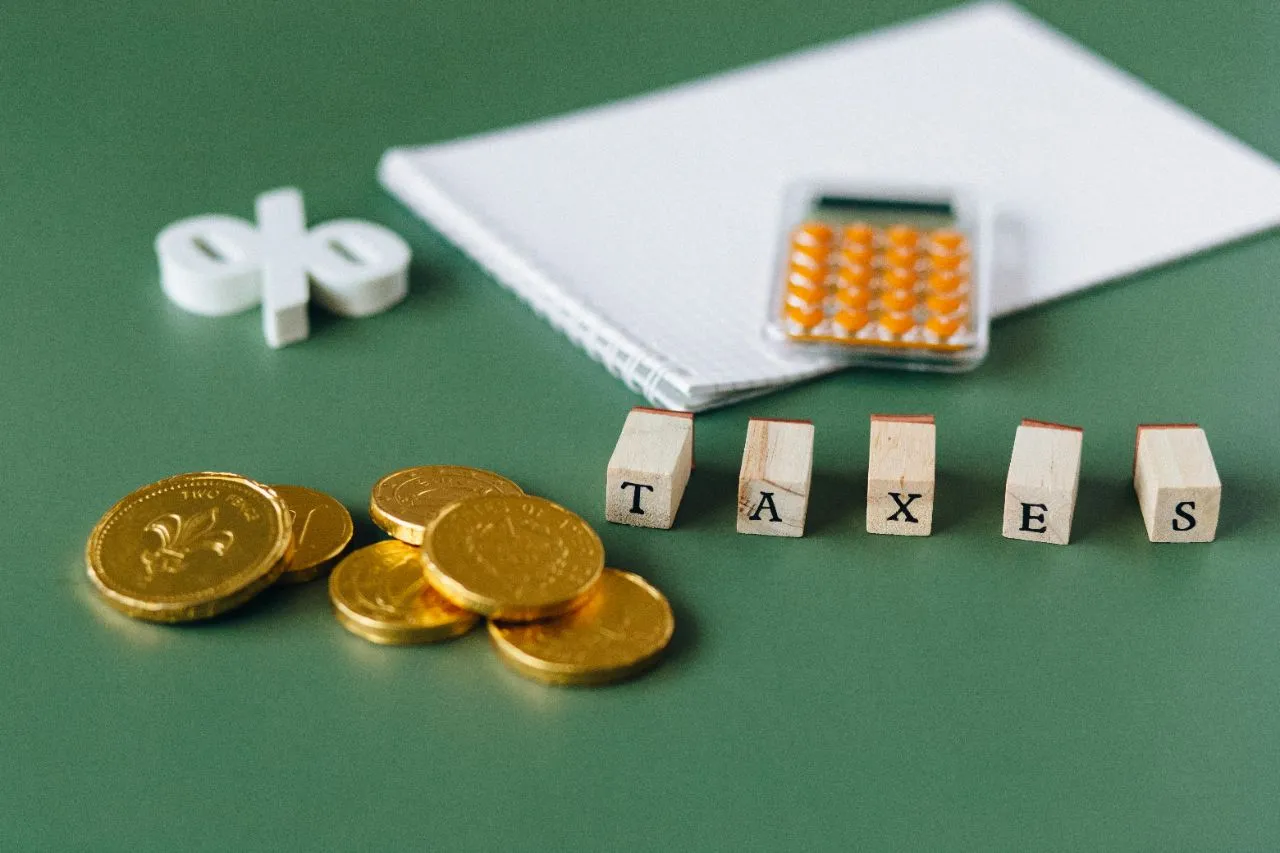
Photo by Nataliya Vaitkevich on Pexels

An international issue

The tax treatment of digital assets has been a bugbear for the crypto space on an international basis. In Japan, it arose last month that the country’s lawmakers were considering applying an exemption for companies from paying taxes on unrealized cryptocurrency gains. It has since transpired that such an amendment will be applied to its fiscal 2024 tax reform plan.


India has applied a heavy tax burden where crypto is concerned, with a 30% tax applied to capital gains relative to the sale of crypto assets. Additionally, 1% taxation applies by way of a tax deducted at source (TDS) on crypto transactions.


The use of cryptocurrency for the purchase of goods and services in the United States remains a stumbling block, given that the current tax code treats such a scenario as a taxable event. Last year, two U.S. senators attempted to address that issue, by including a $200 exemption for purchases made with cryptocurrency.


Calls for crypto asset reclassification

In response to this dilemma in Indonesia, some stakeholders within the local crypto industry advocate for a paradigm shift in the classification of crypto assets. They propose treating crypto as securities instead of commodities, anticipating that this alteration could alleviate the tax burden on users. Yudhono Rawis, the CEO of the exchange platform Tokocrypto, asserts:


"Both stocks and crypto are tradable assets with profit potential … Thus, implementing the same tax regime for both these investment instruments would be more equitable and consistent."


The industry anticipates regulatory changes in the near future, as crypto oversight in Indonesia is set to transition from the commodities regulator to the Financial Services Authority (OJK) in January 2025.



More to Read
View All
Policy & Regulation·

Dec 27, 2024

Proposed stablecoin legislation advances to Hong Kong’s Legislative Council

Legislation geared towards regulating stablecoins has reached the Legislative Council stage in the Chinese autonomous territory of Hong Kong.  The bill, which extends to a 285 page document, has been formulated following “extensive consultations” with industry stakeholders, according to Eddie Yue, CEO of the Hong Kong Monetary Authority (HKMA).  This latest development moves the Chinese autonomous territory one step closer to having a comprehensive regulatory framework in place for stablecoins. The bill’s arrival at the Legislative Council follows its publication on Dec. 6 in Hong Kong’s Gazette. Subsequently, on Dec. 18, it made its preliminary entry at the Legislative Council by way of a first reading. The legislation will deem a digital asset a stablecoin if it is operated on a distributed ledger, is expressed as a unit of account and maintains an equivalent value relative to another asset that it references. Digital assets issued by governments or central banks will be excluded from that stablecoin definition.Photo by Laurentiu Morariu on UnsplashThree readings requiredBefore the bill can be enacted into law, it is required to go through a series of three readings. Allied to that process is a requirement for a series of debates, with the bill coming under the scrutiny of lawmakers. Depending upon the issues raised, this process may also require the introduction of amendments to the proposed legislation. If passed following the third reading, it will then be forwarded to the autonomous territory’s chief executive, John Lee Ka-chiu, to be signed into law. Once signed into law, stablecoin issuers in Hong Kong will then be required to obtain a license from the city's central bank, HKMA. That licensing process would implicate the HKMA scrutinizing the applicant with an emphasis on the evaluation of the issuer, its resources, the use of reserve assets and the means through which the stablecoin’s value will be rendered stable. Stablecoin optimismThis latest milestone has provoked a cause for optimism among some commentators. Sean Lee, co-founder of Hong Kong-based Web3 firm IDA, told the South China Morning Post (SCMP) that “the applications of stablecoin will be numerous.” Lee outlined that stablecoins can be used for payments, settlements, payrolls and financing, while adding that “new products will spring up, and transactions will be faster, instant, 24/7 – and at a lower cost.” Dominic Maffei, Standard Chartered’s head of digital asset and fintech for Hong Kong, is similarly encouraged. Maffei stated: “As of today, we think that stablecoins are the best available tool for connecting traditional finance and Web3 markets and have proven use cases and business models to support that belief.” Once enacted, the bill is likely to have a significant impact on the stablecoin market in Hong Kong. In Europe, the application of the Markets in Crypto Assets (MiCA) regulation is having such an impact. It has led to a growth in Euro-denominated stablecoin trading while leading U.S. dollar stablecoin Tether (USDT) is being delisted by many platforms due to its non-compliance with these regulations.

news
Web3 & Enterprise·

Aug 31, 2023

Binance Japan Sets Out Market Vision

Binance Japan Sets Out Market VisionDuring a virtual business discussion recently led by Takeshi Chino, the Head of Binance Japan, the firm provided insights into its vision within the Japanese market.Photo by David Edelstein on UnsplashIntegrating international version featuresSince its recent launch, Binance Japan has primarily been offering cryptocurrency spot trading and its “Simple Earn” crypto lending service. Expansion into leverage trading is on the horizon, aligning with the international version once regulatory requirements are met.Other key services that Binance has been offering on an international basis include its Initial Exchange Offering (IEO) platform “Launchpad” for emerging projects, staking services, and an NFT marketplace. While the exact timeline for introducing these services in Japan remains undisclosed, Chino assured attendees that there would be a gradual roll-out in compliance with local regulations.The vision that has been set out will see a particular focus being placed on potential collaborations involving stablecoins. Elaborating further on the company’s plans, Chino outlined that domestic expansion would encompass equities management, leverage trading, and the integration of features present in Binance’s global version.In reporting on the event, local crypto media outlet Coinpost explained that Chino further expressed Binance Japan’s ambition to establish connections between its ecosystem and Japanese private entities and government bodies, going beyond the scope of crypto transactions.Focusing on stablecoinsCentral to this vision is the integration of stablecoins into the existing financial infrastructure, with active partnerships leveraging Binance’s technology stack and track record.Chino recognizes the recent regulatory developments regarding yen-based stablecoins as a positive development for business expansion. While Japan’s stablecoin issuance framework remains stringent, collaborations for joint developments are being considered. The potential of yen-backed stablecoins for trade settlements and programmable payments is also being explored.Expanding crypto asset offeringBinance Japan has already made a significant mark by managing 34 equities since its inception, establishing itself as a leader in the Japanese equities landscape. Notably, Binance’s native BNB (Build and Build) token and the Algorand ALGO token have made successful entries into the Japanese market.In its take on the online briefing, Bloomberg outlined that Chino has an initial target of one hundred crypto assets. The global version of the company offers in excess of 350 assets to its users. In adding new assets, a focus will be placed on those particular digital assets that resonate with Japanese market preferences.Other short-to-mid-term goals include facilitating Security Token Offering (STO) payments through stablecoins, merchant onboarding for “Binance Pay,” educational initiatives, among others.Binance Japan emerged following the acquisition by Binance of Sakura Exchange Bitcoin (SEBC), a local crypto exchange, in November of last year. A regulatory backlash following a number of high profile crypto platform failures in 2022 led to Japanese regulators issuing Binance with a warning letter for failing to attain full registration.A response to past difficulties in Japan, in particular relative to the failure of Mt.Gox in 2014, meant that crypto market traders were protected better by comparison with market participants overseas.

news
Web3 & Enterprise·

Nov 08, 2023

Korean crypto firms relocating for cheaper rent amid prolonged crypto winter

Korean crypto firms relocating for cheaper rent amid prolonged crypto winterAs the prolonged crypto winter continues to affect the industry, blockchain and cryptocurrency firms in South Korea are under pressure to economize. Faced with a deteriorating business and investment climate, numerous companies are reducing their office space and relocating to areas with cheaper rent, according to a Wednesday (local time) report by local media outlet Bizwatch.Photo by Nastuh Abootalebi on UnsplashReducing operating costsBizwatch reported, citing industry sources, that Parameta (previously Iconloop), a blockchain enterprise, has relocated its headquarters from Seoul’s upscale Signature Towers to a more economical shared office space this year. This strategic move is interpreted as an effort to slash operating costs by choosing a location with significantly lower rental expenses. A Parameta representative confirmed that the relocation was part of measures to reduce costs.Binance-backed Streami, which runs the Gopax cryptocurrency exchange, is also reportedly contemplating an office relocation after downsizing its staff. The company’s workforce has dwindled from over 100 employees earlier in the year to approximately 60 by September. A Streami spokesperson has indicated that they have yet to reach a decision regarding the relocation. Streami’s situation is particularly significant due to its ongoing challenges in securing approval from financial regulators for changes to its executive representatives since Binance acquired a majority stake. Recently, Streami appointed a new CEO from the domestic tech firm CityLabs, which has also purchased an 8.55% stake in Streami and intends to further increase its investment in the exchange operator.Similarly, Korea Digital Exchange, the operator of cryptocurrency-only exchange Flybit, has listed for sale one of its two floors of office space in Seoul’s Seocho district. This move comes nearly a year and eight months after the company expanded into the current premises.Changes in workforce sizesBefore the crypto winter, when the Korean crypto market witnessed unprecedented growth, numerous companies expanded their offices to make room for the growing workforce, bolstered by rising revenues. For instance, Dunamu, which runs Upbit — Korea’s largest crypto exchange — garnered attention for acquiring pricey real estate in Gangnam to construct a new office.However, the boom was short-lived. With the onset of the crypto downturn, numerous companies found themselves having to shut down. Blockchain technology firms are facing similar challenges, with many developers steering away from the sector due to persisting market instability. For many of these firms, the workforce has diminished as they’ve either undergone restructuring or struggled to recruit replacements for departing employees.An industry insider remarked that reducing operating costs is a logical step for companies facing a lack of investment and revenue. They noted that this only applies to those resilient enough to weather the hardship, adding that many cryptocurrency-only exchanges are likely to shut down completely in these challenging conditions.In fact, Cashierest, a crypto-only exchange, recently announced the cease of operations. Concerns about the company had been growing after staff layoffs and the departure of its CEO in July. A thorough analysis by the Financial Intelligence Unit (FIU) of the Financial Services Commission (FSC) found that, of the 21 Korean crypto-only exchanges, 18 are operating with negative shareholder equity as of the first half of this year. Moreover, 10 did not earn any revenue from transaction fees during the same period.Crypto-only exchanges typically see lower trading volumes as they cannot facilitate trades in Korean won. In South Korea, only five trading platforms — Upbit, Bithumb, Coinone, Korbit and Gopax — are officially registered with the financial regulator to conduct fiat-to-crypto transactions.

news
Loading