Top

Two Asian nations turn down spot bitcoin ETFs

Policy & Regulation·January 19, 2024, 2:50 AM

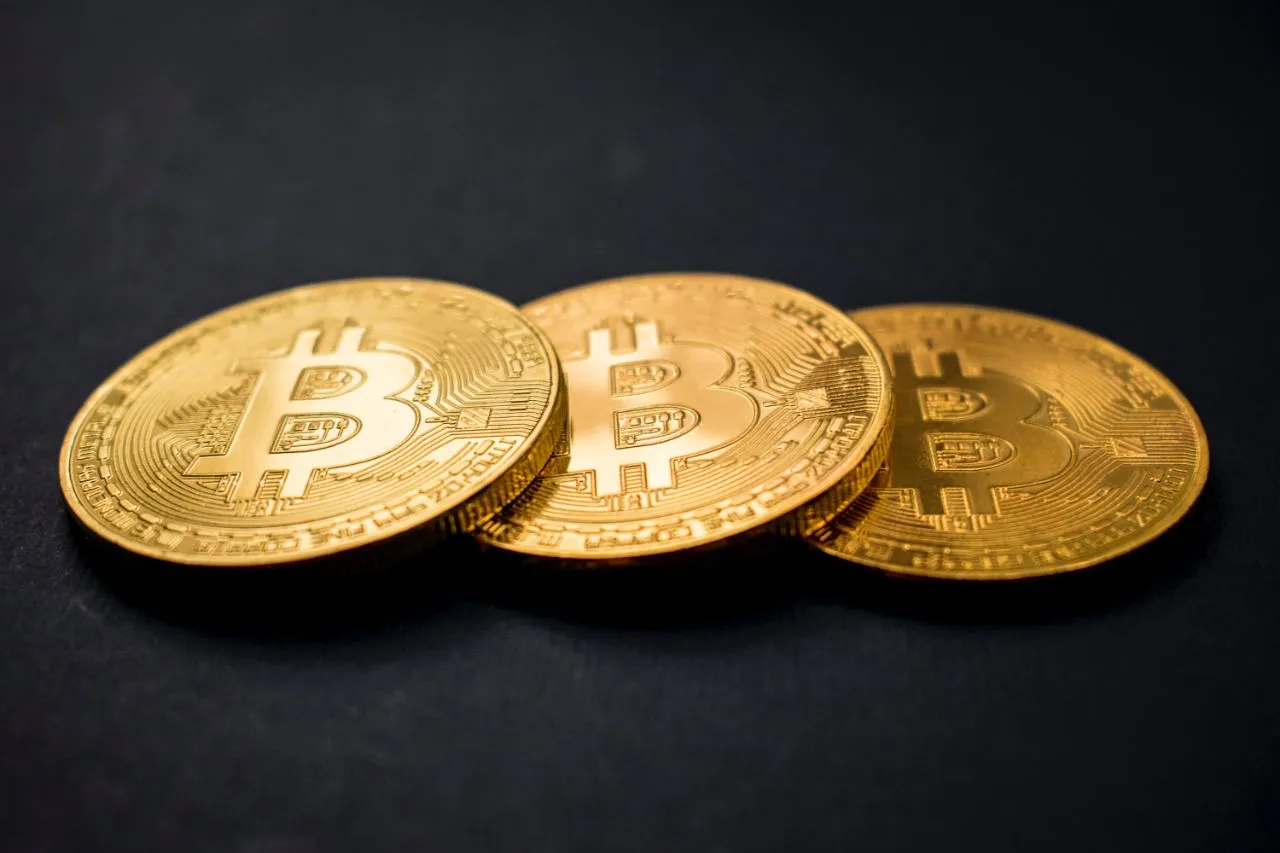
In a contrasting move to the recent approval of several spot bitcoin exchange-traded funds (ETFs) by the U.S. Securities and Exchange Commission (SEC), regulators in both Singapore and Thailand have turned down permission to list spot bitcoin ETFs.
https://asset.coinness.com/en/news/5c20fe2ebeb33d6997e51486fa52cb42.webp
Photo by Dmytro Demidko on Unsplash

Bitcoin not a qualified asset

According to local news media on Wednesday, Singapore's Monetary Authority (MAS) has announced its decision not to permit the listing of spot ETFs in the country. The MAS argues that cryptocurrencies, including bitcoin, do not meet the criteria for qualified assets within the context of ETFs.


This regulatory divergence means that retail investors in Singapore won't see the introduction of spot bitcoin ETFs domestically. However, they still have an avenue to trade such ETFs as they can turn to local brokerages for access to overseas markets. Despite this allowance, the MAS emphasizes the need for these retail investors to exercise caution due to the inherent high volatility and speculative nature of cryptocurrency trading.


A spokesperson from the regulatory authority clarified that while collected investment schemes (CIS), falling under the Securities and Futures Act regulation, include ETFs, they do not encompass bitcoin or any other cryptocurrency.


Future potential

While MAS may be turning down spot bitcoin ETFs at this point, there’s potential for a change of heart in the future. The FIMA Bill is currently working its way through the city-state’s legislative process. If enacted, it would give broader regulatory oversight of crypto to MAS. Lasanka Perera, CEO of Independent Reserve Singapore, recently suggested that the bill could make an ETF more likely.


Thailand says no

Meanwhile, Thailand’s Securities and Exchange Commission (SEC) has stated that it currently does not plan to allow asset management firms to launch spot bitcoin ETFs in the country.


Thai securities brokerage firms have been encouraging investors to consider investing directly in U.S. spot bitcoin ETFs. The Thai SEC clarified that while it closely monitors these developments, there is no immediate policy to allow spot bitcoin ETFs in Thailand. The regulator emphasizes that Thai investors can still engage in digital asset investments through domestic exchanges licensed by the SEC under the Digital Assets Decree.


India, too, doesn’t appear to have been looking favorably on the potential for such products. The governor of the Reserve Bank of India (RBI) said last week that “the way we look at crypto remains unchanged, irrespective of who does what.”


Asian optimism

In the wake of ETF approval in the U.S., many industry commentators had suggested that Asia would respond positively. Australian venture capitalist Mark Carnegie has suggested that the developing bull market would be “an Asian story.”


Yat Siu, co-founder of Hong Kong’s Animoca Brands, expressed the view that U.S. ETF approval would have a substantially positive impact within the Asian region. Hong Kong appears to be the most positive in the region in its outlook with regard to embracing spot bitcoin ETFs. Immediately following approval in the U.S., a Hong Kong legislator spoke out to encourage a proactive response relative to launch of similar products within the Chinese autonomous territory.


Meanwhile, recent news reports indicate that spot bitcoin ETFs experienced substantial trading volume, accumulating $10 billion just three days after their approval in the U.S. 

More to Read
View All
Web3 & Enterprise·

Nov 13, 2023

Zep joins hands with NEAR Protocol to elevate Web3 experience for users

Zep joins hands with NEAR Protocol to elevate Web3 experience for usersSouth Korean metaverse platform Zep announced on Monday (local time) that it has partnered with the Layer 1 blockchain network NEAR Protocol. The two companies aim to jointly pursue a business model catered to developers and Web3 users, accelerating the widespread adoption of Web3.Zep plans to leverage the collaboration to enable its partners to issue and distribute various Web3-based digital assets while enhancing the user experience on its metaverse platform.Photo by GuerrillaBuzz on Unsplash“Working with NEAR Protocol will be an opportunity to provide a new experience for both Web2 and Web3 users. The collaboration will allow us to provide Zep users with more diverse and rich content and establish ourselves as a leader in the metaverse industry by providing a seamless user experience in the Web3 space,” said Kim Sang-yeop, Co-CEO of Zep.Bringing the metaverse to diverse audiencesZep is a joint venture between game developer SUPERCAT and Naver Z, the operator of the 3D avatar social platform Zepeto. Following its beta launch two years ago, the platform has since accumulated 8.3 million users and recently surpassed 1.3 million monthly active users.Zep has been consecutively launching special features for enterprises, such as single sign-on (SSO) authentication and data dashboards, prompting businesses and public organizations to recognize its versatility. Based on its success in the Korean market, the platform is on the verge of entering the Japanese and Southeast Asian markets.Dominating the dApp sphereMeanwhile, NEAR Protocol has experienced rapid growth as an operating network for decentralized apps (dApps), making it one of the fastest-growing blockchain networks this year. According to data from major dApp store DappRadar, NEAR Protocol-based dApps have secured the top two rankings among all blockchain applications, proving that it is the preferred choice for companies considering mass adoption.

news
Policy & Regulation·

Dec 07, 2023

Korbit relists blockchain gaming token WEMIX

Korbit relists blockchain gaming token WEMIXKorbit, a major fiat-to-cryptocurrency exchange in South Korea, is relisting WEMIX, a cryptocurrency issued by blockchain gaming company Wemade. Korbit’s decision follows in the footsteps of its local competitors, Coinone and Gopax, who have also recently reinstated WEMIX. The WEMIX token is used to pay transaction fees, stake and vote on governance proposals.Starting at 1:00 a.m. UTC on Dec. 7, Korbit users gained the ability to create a WEMIX wallet and deposit the token on the exchange. Trading and withdrawals of WEMIX will be enabled at 3:00 p.m. UTC on the same day.The Korbit exchange only accepts WEMIX deposits originating from the Wemix network. Deposits of WEMIX sent from other blockchain networks, including BNB Beacon Chain, Ethereum and Klaytn, may be processed improperly and carry the risk of becoming irretrievable.Photo by Asa E-K on UnsplashDecision reversal and underlying rationalesOver a year ago, the Digital Asset eXchange Alliance (DAXA), a coalition of the five Korean fiat-to-crypto exchanges — Upbit, Bithumb, Coinone, Korbit and Gopax — collectively decided to delist WEMIX from all their platforms. This decision was based on several concerns, including unreliable disclosure of the token’s circulating supply, provision of inadequate and misleading information to investors and inconsistencies in the data provided during the explanation period. These issues collectively eroded trust in the company.However, Korbit has determined that the previously identified issues with WEMIX have been addressed. The exchange observed that the circulating supply of WEMIX has been reduced to a level that aligns with the schedule initially submitted to DAXA. The launch of the WEMIX mainnet rectified the discrepancy where the circulating supply displayed on crypto data platforms like CoinMarketCap was twice the actual figure. Additionally, the collateral that Wemade had deposited in decentralized finance (DeFi) protocol Kokoa Finance has been recovered.The crypto trading platform also believes that Wemade has resolved the problem of providing misleading information to investors by making corrections to its third-quarter earnings report.Regarding data fallacies, Korbit holds the view that the game publisher has taken steps to address the inaccuracies in the data previously provided to the alliance. These efforts to reduce uncertainty and fulfill disclosure responsibilities include several measures: Wemade now live-updates the circulating supply of WEMIX and other pertinent details on its official blog. The gaming company has also entrusted the management of its non-circulating WEMIX supply to Ceffu, the sole institutional custodian for Binance, a global crypto exchange. Furthermore, Wemade now makes announcements about token movements whenever they occur.Restrictions imposed on GopaxMeanwhile, Korbit stated its commitment to complying with voluntary regulations and common listing guidelines established between DAXA members. This statement is particularly noteworthy in light of the recent developments with Gopax. Gopax faced the three-month suspension of its voting rights from DAXA, following the relisting of WEMIX.

news
Web3 & Enterprise·

Nov 06, 2023

South Korean cryptocurrency-only exchange Cashierest to close its doors

South Korean cryptocurrency-only exchange Cashierest to close its doorsCashierest, a cryptocurrency-only exchange based in South Korea, announced on Monday (local time) that it will be closing its doors. A cryptocurrency-only exchange is a type of trading platform that supports trading of tokens but not fiat currencies. In South Korea, there are only five exchanges — Upbit, Bithumb, Coinone, Korbit and Gopax — that provide trading with the Korean won.As of 11 a.m. KST on Nov. 6, the services for token deposits and new sign-ups have been discontinued. Trading activities on the platform will cease at 11 a.m. on Nov. 13. Additionally, the ability to transfer tokens from Cashierest to other exchanges will end at 1 p.m. on Dec. 22.Photo by Lisa Bresler on UnsplashEarlier layoffs and CEO resignationSpeculation about the potential sale of Cashierest has been circulating since earlier this year, following layoffs and the resignation of its former CEO, Park Won-joon, in July. These events are largely seen as a result of low trading volumes on the platform, which many attribute to its lack of support for trading in Korean won.Lack of fiat support leading to low trading volumeA detailed study by the Financial Intelligence Unit (FIU) under the Financial Services Commission (FSC) revealed that, out of 21 Korean crypto-only exchanges, 18 are experiencing a deficit in shareholders’ equity as of the first half of this year. Furthermore, 10 did not generate any revenue from transaction fees.During the same period, the five exchanges that support fiat-to-crypto transactions had an average daily trading volume of KRW 2.9 trillion (approximately $2.2 billion), while the collective daily trading volume for all crypto-only exchanges was just KRW 1 billion. This indicates that the market size of crypto-only exchanges is merely 0.03% of that of their fiat-supporting counterparts.

news
Loading