Top

South Korean cryptocurrency-only exchange Cashierest to close its doors

Web3 & Enterprise·November 06, 2023, 8:57 AM

Cashierest, a cryptocurrency-only exchange based in South Korea, announced on Monday (local time) that it will be closing its doors. A cryptocurrency-only exchange is a type of trading platform that supports trading of tokens but not fiat currencies. In South Korea, there are only five exchanges — Upbit, Bithumb, Coinone, Korbit and Gopax — that provide trading with the Korean won.

As of 11 a.m. KST on Nov. 6, the services for token deposits and new sign-ups have been discontinued. Trading activities on the platform will cease at 11 a.m. on Nov. 13. Additionally, the ability to transfer tokens from Cashierest to other exchanges will end at 1 p.m. on Dec. 22.
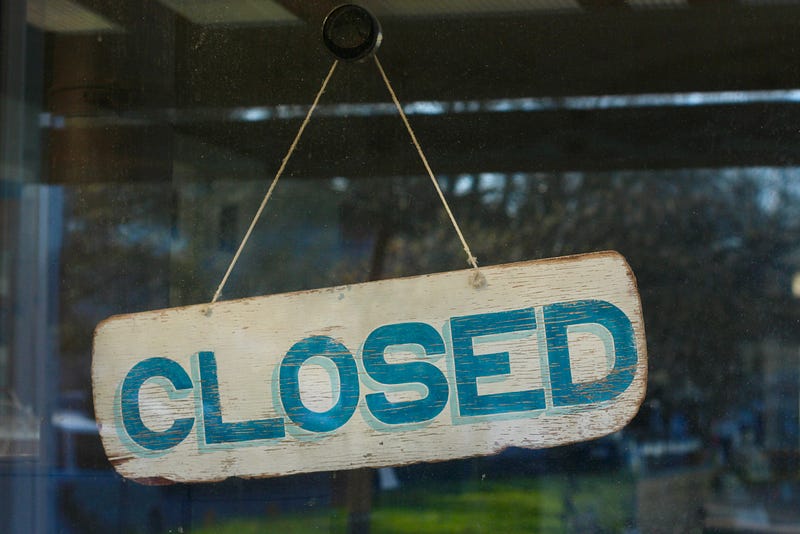
Photo by Lisa Bresler on Unsplash


Earlier layoffs and CEO resignation

Speculation about the potential sale of Cashierest has been circulating since earlier this year, following layoffs and the resignation of its former CEO, Park Won-joon, in July. These events are largely seen as a result of low trading volumes on the platform, which many attribute to its lack of support for trading in Korean won.


Lack of fiat support leading to low trading volume

A detailed study by the Financial Intelligence Unit (FIU) under the Financial Services Commission (FSC) revealed that, out of 21 Korean crypto-only exchanges, 18 are experiencing a deficit in shareholders’ equity as of the first half of this year. Furthermore, 10 did not generate any revenue from transaction fees.

During the same period, the five exchanges that support fiat-to-crypto transactions had an average daily trading volume of KRW 2.9 trillion (approximately $2.2 billion), while the collective daily trading volume for all crypto-only exchanges was just KRW 1 billion. This indicates that the market size of crypto-only exchanges is merely 0.03% of that of their fiat-supporting counterparts.


More to Read
View All
Web3 & Enterprise·

May 18, 2023

Coinbase Effects International Expansion By Extending Singapore Offering

Coinbase Effects International Expansion By Extending Singapore OfferingIn further proof of Coinbase’s recently-adopted strategy of focusing on global expansion, the company has just extended the range of its product offering to Singaporean customers.Photo by Meriç Dağlı on UnsplashNo Fees on USDCThe move was announced by way of a blog post published to the company’s website on Tuesday. The expansion entails the introduction of fee-less purchases of the USDC stablecoin for users who buy it with the Singaporean dollar (SGD). Furthermore, it is enabling Singaporean customers to earn rewards on the USDC that they hold on the platform. USDC trading pairs are being added that will allow users to trade USDC directly with over two hundred digital assets.Taking staking overseasAdditionally, Coinbase Global is rolling out staking to the Singaporean market. Users will be empowered with the ability to stake the following digital assets: ETH, SOL, ADA, ATOM, and XTZ.It’s interesting that Coinbase feels enabled in rolling out a digital asset staking service in this overseas market. In March of this year, the company received a Wells Notice — a formal notice informing the recipient that there are firm plans to bring enforcement actions against it — from the Securities and Exchange Commission (SEC) in the United States. The notice was sent in relation to digital assets covered under Coinbase’s staking product offering, Coinbase Earn.In highlighting the issue, the company bemoaned the fact that the SEC had gone down the route of issuing a Wells Notice without it expressing a single specific concern about any specific digital asset offered by the platform in advance of taking the action.Global strategyCoinbase Founder and CEO Brian Armstrong has been outspoken in criticizing the regulatory approach to crypto in the United States. He expressed that at the time of having received the Wells Notice earlier this year, and again last week, when he and key Coinbase executives visited Abu Dhabi and Dubai in the United Arab Emirates.On the day of SEC Chair Gary Gensler’s appearance before the House Financial Services Committee on Capitol Hill in Washington, D.C. a few weeks ago, Armstrong signaled that unless there was a more accommodating regulatory approach taken to crypto in the US, Coinbase would increasingly be looking to expand operations overseas.A short time later, it emerged that the company had obtained a license to trade in Bermuda. At last week’s Dubai Fintech Summit, Armstrong applauded the regulatory approach taken by the UAE and indicated that the company is interested in opening a base in Abu Dhabi.Positive survey resultsAgainst this background, it’s not surprising to hear that Coinbase has expanded its service offering in Singapore, another aspiring global hub for crypto business. As part of reviewing and updating its business offering in the city state, Coinbase carried out a survey of prospective customers in Singapore. It found that 25% of Singaporeans consider crypto as the future of finance, on a par with findings in the US, and higher than the 17% reported in the UK.Among its other findings, security concerns and price volatility of digital assets are still a barrier to entry for many. Of those who are already crypto-native, they tend to trade higher trade amounts, and with greater frequency, if from higher income backgrounds.

news
Policy & Regulation·

Oct 25, 2023

As Excitement for First US Spot Bitcoin ETF Intensifies, South Korea Still Faces Mountain to Climb

As Excitement for First US Spot Bitcoin ETF Intensifies, South Korea Still Faces Mountain to ClimbThe price of bitcoin has surged significantly as it recorded an 18% increase in the past week, spurred by mounting anticipation surrounding the US’ first spot bitcoin exchange-traded fund (ETF) propelled by asset management juggernauts BlackRock and Fidelity Investments — a threshold that had not been crossed in over a year. According to CoinMarketCap, bitcoin is trading in the upper $33,000 range as of 5 p.m. KST on Wednesday.Photo by André François McKenzie on UnsplashOngoing buildupThe approval of a spot bitcoin ETF — long rejected or delayed due to a plethora of reasons like the volatility of cryptocurrencies and their susceptibility to market manipulation — would in the long run open up the possibility for institutions to earmark bitcoin as a major asset that can be integrated into the sphere of traditional finance. This would make bitcoin easier to handle and increase its exposure to traditional investors. “The mere possibility of this development marks a significant shift in the market landscape,” said an unnamed executive at a Korean asset management company in a news article by South Korean news outlet Maeil Business Newspaper.BlackRock’s spot bitcoin ETF, the iShares Bitcoin Trust, was also listed on the US Depository Trust & Clearing Corporation (DTCC)’s website with the ticker symbol IBTC on Monday before it mysteriously disappeared the following day. It has since been relisted on the website. The listing is “all part of the process of bringing ETF to market”, as explained by Bloomberg’s senior ETF analyst Eric Balchunas via his X (formerly Twitter) account on Tuesday.Is a spot bitcoin ETF on the table for Korea?However, Korean experts believe that there are still numerous hurdles to overcome in order for a spot bitcoin ETF to settle in Korea. In particular, some question whether cryptocurrency platforms that offer custodial services can even be classified as exchanges. There is also the issue of bitcoin’s varying prices across different exchanges. Its current price on Upbit, the country’s largest crypto exchange, is in the KRW 45.9 million range as of 5 p.m. on Wednesday. Local financial authorities have reportedly expressed skepticism about bitcoin ETFs for these reasons, suggesting a murky future for this development becoming a reality in Korea.

news
Web3 & Enterprise·

Aug 22, 2024

Tether plans launch of dirham-pegged stablecoin

Tether, the issuer of the USDT stablecoin, has teamed up with local partners in the United Arab Emirates (UAE) in order to launch a dirham (AED)-backed stablecoin. In a statement published to the firm’s website on Aug. 21, Tether outlined that the stablecoin is being launched in partnership with Dubai-based technology conglomerate Phoenix Group and Green Acorn Investments, a company that describes itself as “a socially responsible investment firm dedicated to supporting critical sectors and supporting the generation of sustainable wealth and financial literacy.”Photo by DrawKit Illustrations on UnsplashFully backed by AED reservesThe stablecoin issuer outlined that each token will be “fully backed by liquid UAE-based reserves.” Tether further maintained that the back-end management of the new token will adhere to the firm’s “transparent and robust reserve standards,” and that “every Dirham-pegged token is tied to the value of the AED, providing stability and confidence in its value.”  Tether dominates the stablecoin market where USDT accounts for $117 billion, against a backdrop of an overall stablecoin market valued at $169 billion.  Perennial skepticsThe company has perennially faced criticism for a lack of transparency relative to the backing of its USDT stablecoin, given its policy of providing attestation reports instead of fully comprehensive audits from a top-tier auditing firm. One of the firm’s critics, the pseudonymous X account @OccamiCrypto took to the social media platform to provide its reaction to this most recent development, stating: "This Tether UAE stablecoin 'launch' will likely be as real as Tether’s promised audit and real time reserve reporting." The Tether critic went on to claim that the announcement is nothing more than "Tether spin," and that Tether has never attempted to become regulated in any market and that nothing would come of it. Another Tether critic, freelance journalist Jacob Silverman, commented on the development on X, stating:”Russian businessmen in UAE must be rejoicing.” His comment is suggestive of a common assertion that Tether is being used to facilitate the circumvention of sanctions. According to the firm’s press release, it believes that the product will enable users locally to access the benefits of the AED in digital form. The company claims that it will “streamline international trade and remittances, reduce transaction fees, and provide a hedge against currency fluctuations, thus playing a crucial role in the financial ecosystem of the UAE and beyond.” Tether’s partner Phoenix Group has been active in the crypto-sphere in recent times through mining. In December of last year, the company sealed a $380 million deal with Chinese mining equipment manufacturer MicroBT. Earlier that month, the company went public on the Abu Dhabi Securities Exchange (ADX). On face value, this development appears positive. However, UAE-based crypto and blockchain lawyer Irina Heaver recently warned that tightening regulations within the UAE may shut down crypto payments within the country. Heaver specifically cited the use of USDT as being under threat, with the potential for stablecoin-based transactions to be prohibited as new rules are ushered in.  

news
Loading
