Top

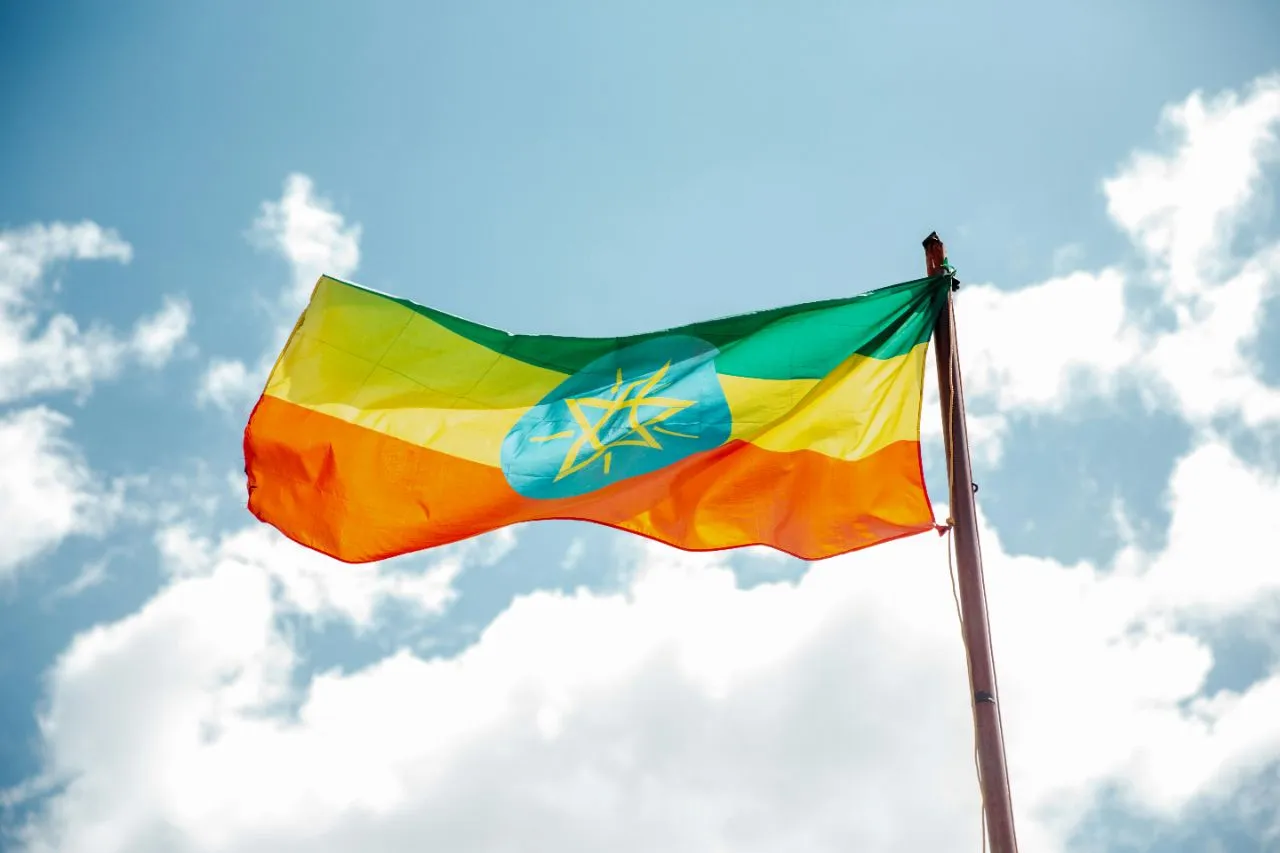
Ethiopia may be embracing Bitcoin mining with new data mining partnership

Policy & Regulation·February 17, 2024, 12:16 AM

Ethiopian Investment Holdings, the largest sovereign wealth fund in Africa, has announced the signing of a memorandum of understanding (MoU), which is suspected to involve a deal on Bitcoin mining.


Deal uncertainty

Taking to LinkedIn on Feb. 15, the sovereign wealth fund outlined details of a partnership with Data Center Service, a subsidiary of Hong Kong’s West Data Group. Separately, Kal Kassa, CEO of Ethiopian operations at Hashlabs Mining, posted on the X social media platform, outlining that it was a stakeholder in the project and that it involved Bitcoin mining. The matter lacks full confirmation however, given that Kassa subsequently deleted his post while the sovereign fund’s statement falls short of mentioning Bitcoin mining.


Once verified, the project would signify a substantial investment of $250 million. It’s understood that the investment would be directed towards the establishment of state-of-the-art infrastructure tailored for data mining and artificial intelligence (AI) training operations within Ethiopia.
https://asset.coinness.com/en/news/5eb2203d16f268f18f530fd826549762.webp
Photo by Kelly on Pexels

Exploiting abundant energy resources

A key component of this venture may involve the setup of Bitcoin mining operations utilizing Canaan Avalon miners. This initiative would align with Ethiopia's broader strategy to capitalize on its abundant energy resources to attract international investment and stimulate economic growth.

Ethiopia has about 5,200 MW of installed generation capacity, 90% of it coming from hydropower and the remainder from wind and thermal sources.


While the official confirmation from the government is pending, the ambitious project has sparked both excitement and skepticism within the industry. Concerns linger regarding the energy-intensive nature of Bitcoin mining and its potential strain on the local electricity supply, an issue of particular relevance in a nation where energy accessibility remains a pressing challenge for many.


Bloomberg report

Earlier this month, a report from Bloomberg highlighted Ethiopia as being a new haven for Chinese crypto miners. Following the imposition of a mining ban in China in 2021, many operations were redeployed overseas. Kazakhstan in particular was a popular choice. The Eurasian country wasn’t prepared for the influx, leading to power blackouts.

Hashlabs Mining co-founders Jaran Mellerud and Alen Makhmetov both featured in the article. Mellerud outlined the difficulty, stating:

“Firstly, countries can run out of available electricity, leaving no room for miners to expand. Secondly, miners can suddenly be deemed unwelcome by the government and be forced to pack up and leave.”

Makhmetov outlined that he had a 10 MW facility in Kazakhstan which still sits idle today as curbs and taxes enforced in Kazakhstan on miners “basically killed the industry.”


Despite these difficulties in Kazakhstan and China's official ban on cryptocurrency trading, the legalization of Bitcoin mining in Ethiopia in 2022 has spurred a notable influx of Chinese miners seeking new investment avenues.


Ethiopia will need to be mindful of the difficulties experienced in Kazakhstan. With that, the Ethiopian government's move towards regulating cryptographic products, including mining activities, reflects a measured yet optimistic approach towards harnessing the economic potential of Bitcoin mining.


This regulatory framework aims to strike a balance between fostering sector growth and safeguarding the country's energy security and environmental commitments.




More to Read
View All
Web3 & Enterprise·

Jan 10, 2024

Partnerships enable AsiaNext to launch crypto derivative trading

AsiaNext, a Singapore-based institutional digital asset trading venue, has officially rolled out its cryptocurrency derivatives trading platform.Photo by Kirill Petropavlov on UnsplashWintermute and B2C2 collaborationsThe launch involves notable trading members such as Wintermute and London-headquartered liquidity provider B2C2. B2C2 is a subsidiary company of Japanese financial services conglomerate SBI Holdings. SBI acquired the company in August of last year with B2C2 expressing the view that the acquisition would represent an opportunity for the company to broaden its client base. SBI partnered with Swiss financial infrastructure firm Six Group in a joint venture to establish AsiaNext back in 2020 with a view towards driving institutional digital asset liquidity. Meanwhile, Wintermute’s involvement with AsiaNext in this instance follows its move in 2023 to expand its Singapore base, where it conducts its derivatives business. In November, Wintermute Asia conducted its first-ever options block trade through the CME Group, one of the world’s leading derivatives marketplaces. Wintermute's Founder & CEO, Evgeny Gaevoy, highlighted the significance of the partnership with AsiaNext in the context of traditional financial institutions seeking alternative exposure to digital assets. Gaevoy stated: "Partnering with AsiaNext enables us to elevate our derivatives offering, positioning Wintermute in the foreground of the expanding digital asset ecosystem." The AsiaNext platform asserts that it provides enhanced risk management with reduced counterparty and settlement risk. Additionally, AsiaNext offers capital efficiencies through intraday margining and settlement processes, supporting high-frequency trading and ensuring availability 24/7 for crypto derivatives trading. Chong Kok Kee, CEO of AsiaNext, emphasized the platform's commitment to providing a secure environment for institutional investors to explore digital assets in the region. By prioritizing regulation and rigorous governance, AsiaNext aims to establish itself as a trusted venue for exposure to digital assets. B2C2 CEO Thomas Restout commented on the positive nature of the collaboration. He stated:”We’ve witnessed [AsiaNext’s] unwavering commitment to governance and risk management, alongside their focus on aligning closely with our needs. This instills a high level of confidence in our partnership. Being at the forefront of digital asset adoption, we are pleased to provide liquidity on the venue through our collaboration.” Licensing approvalsIt's worth noting that AsiaNext obtained a Recognized Market Operator (RMO) license from the Monetary Authority of Singapore (MAS) in September. However, this license specifically pertains to tokenized securities, and as such, the crypto derivatives trading operates through a separate subsidiary. In June the company had acquired in-principle approval for a Capital Markets Services (CMS) license. On the digital securities front, SIX Digital Exchange (SDX) and Osaka Digital Exchange (ODX), operated by SIX and SBI respectively, play key roles in secondary markets, showcasing the partners' commitment to advancing regulated digital securities markets. Launched in late 2021, SDX was the world's first regulated digital securities market. SBI followed suit with the recent launch of ODX on Christmas Day. The anticipated approval of the first U.S. spot bitcoin ETFs adds a timely dimension to the launch, potentially driving increased demand for hedging strategies in the market. 

news
Markets·

Feb 23, 2024

KODA’s crypto assets in custody surpass $6B

Crypto custodian Korea Digital Asset (KODA) has seen its custody assets exceed the $6 billion mark, equivalent to about KRW 8 trillion, according to game media outlet Kyunghyang Games.  Established in November 2020 through a collaboration between KB Bank, the blockchain venture capital firm Hashed and blockchain tech company HatchLabs, KODA provides custodial services for crypto assets. A custodial service provider refers to a third-party institution that manages virtual assets on behalf of clients. Several big banks overseas such as Goldman Sachs and Citibank provide asset custodial services. Photo by Chris Liverani on UnsplashA leading provider of crypto asset custodial services Having been offering one-stop crypto asset custodial services for companies and institutional clients since March 2021, KODA has become a notable virtual asset business operator in South Korea with it being registered with the Financial Intelligence Unit (FIU). By the end of June 2023, KODA made up nearly 80% of the local custodial service market share, per FIU data. At the time, out of the total KRW 2.9 trillion in crypto assets held by 49 local custodial service providers registered with the FIU, KRW 2.3 trillion was managed by KODA. By December 2023, KODA announced it was managing KRW 8 trillion in crypto assets, with over 200 custodial wallets and about 50 institutional clients using its services.  Bracing for the potential approval of spot bitcoin ETFs in KoreaThe demand for crypto asset custodial services is expected to rise as Korea’s ruling and opposition parties are pledging to integrate crypto assets into the traditional financial system, leading up to the general election in April. Major political parties are considering the possibility of allowing transactions of spot bitcoin ETFs and legalizing investment in crypto assets by private companies. Cho Jin-seok, CEO of KODA, said that the integration of digital assets into the traditional financial system is an unstoppable global trend that no one can resist, and that KODA will be able to serve as a key crypto infrastructure if the local financial authority approves trading spot bitcoin ETFs.  Kim Seo-joon, CEO of Hashed, stressed the significance of preparing for the potential approval of spot bitcoin ETF transactions, noting how a number of spot bitcoin ETFs were released in the U.S. right after the approval. He added that KODA’s commitment to regulatory compliance and technological expertise would make it an essential partner in introducing virtual asset ETFs to the local market.

news
Markets·

Apr 26, 2024

Turkey leads in stablecoin purchases relative to GDP

According to a recent report from blockchain intelligence firm Chainalysis, stablecoin purchases in Turkey amount to 4.3% of the country's GDP, surpassing all other global economies. The report, titled "The 2024 Crypto Spring Report" highlights Turkey's significant share of stablecoin transactions relative to its economic output.Photo by Michael Jerrard on UnsplashStablecoin activity in TurkeyBetween April 2023 and March 2024, stablecoin purchases in Turkey totaled $38 billion, representing 4.3% of the country's GDP, which was $907 billion as of 2022. This data encompasses transfers between the Turkish lira and stablecoins in either direction, emphasizing the scale of stablecoin activity within the Turkish economy. Chainalysis director of research Kim Grauer explained that stablecoin activity does not directly impact GDP but is expressed as a percentage to provide context for readers. Grauer clarified that the reported figure includes transfers of Turkish lira to stablecoins and vice versa. Turkey's prominence in stablecoin purchases stands out compared to other economies analyzed by Chainalysis. In Thailand and Georgia, stablecoin purchases accounted for 1.3% and 0.7% of GDP, respectively, over the same period. Global trends in stablecoin usageWhile the United States leads in stablecoin transaction volumes, with fiat purchases surpassing $20 billion in March 2024, Turkey's share of stablecoin purchases relative to GDP is notably higher. The use of stablecoins, including Tether (USDT) and USD Coin (USDC), has outpaced other cryptocurrencies like Bitcoin and Ether, representing over 50% of all transaction volume in recent months. Rapid growth in stablecoin transactionsChainalysis analysts attribute the rapid growth of stablecoin transactions to their utility in everyday transactions beyond trading. Major jurisdictions, including the European Union, the United Kingdom, Brazil and Thailand, have witnessed significant increases in fiat purchases of stablecoins over the past year. Nations experiencing currency volatility and devaluation, such as Turkey, have increasingly turned to stablecoins like USDT to safeguard their savings. Turkey's inflation rate surged to as high as 67% in March, prompting residents to seek alternative stores of value. The findings from Chainalysis underscore the growing prominence of stablecoins in global economic activity, particularly in nations grappling with currency instability. Turkey's significant share of stablecoin purchases relative to GDP reflects a broader trend of increasing adoption of stablecoins for everyday transactions and wealth preservation. 

news
Loading