Top

Crypto boom drives $17.5B surge in demand deposit at Korean banks

Markets·March 06, 2024, 8:20 AM

Among various accounts within a bank, a demand deposit account is considered a “station” where people can temporarily store their money and easily withdraw it for future investments. These accounts are highly liquid, since users can deposit or withdraw funds at any time without having to pay a penalty to a bank. 


Following the recent cryptocurrency boom, the five major banks in Korea – KB Kookmin Bank, Shinhan Bank, Hana Bank, Woori Bank and NH Nonghyup Bank – are seeing a significant influx of funds into their demand deposit accounts, according to local media outlet Money Today. This is partly attributed to an increasing number of youths who are seeking to invest in crypto assets, parking their money in these banks’ demand deposit accounts. Shinhan Bank and Nonghyup Bank have seen the highest increase in their deposits, owing to their affiliation with local crypto exchanges that have access to real-name accounts from these banks. 
https://asset.coinness.com/en/news/43c2e4ebf68df9e379886cc37b37ebb1.webp
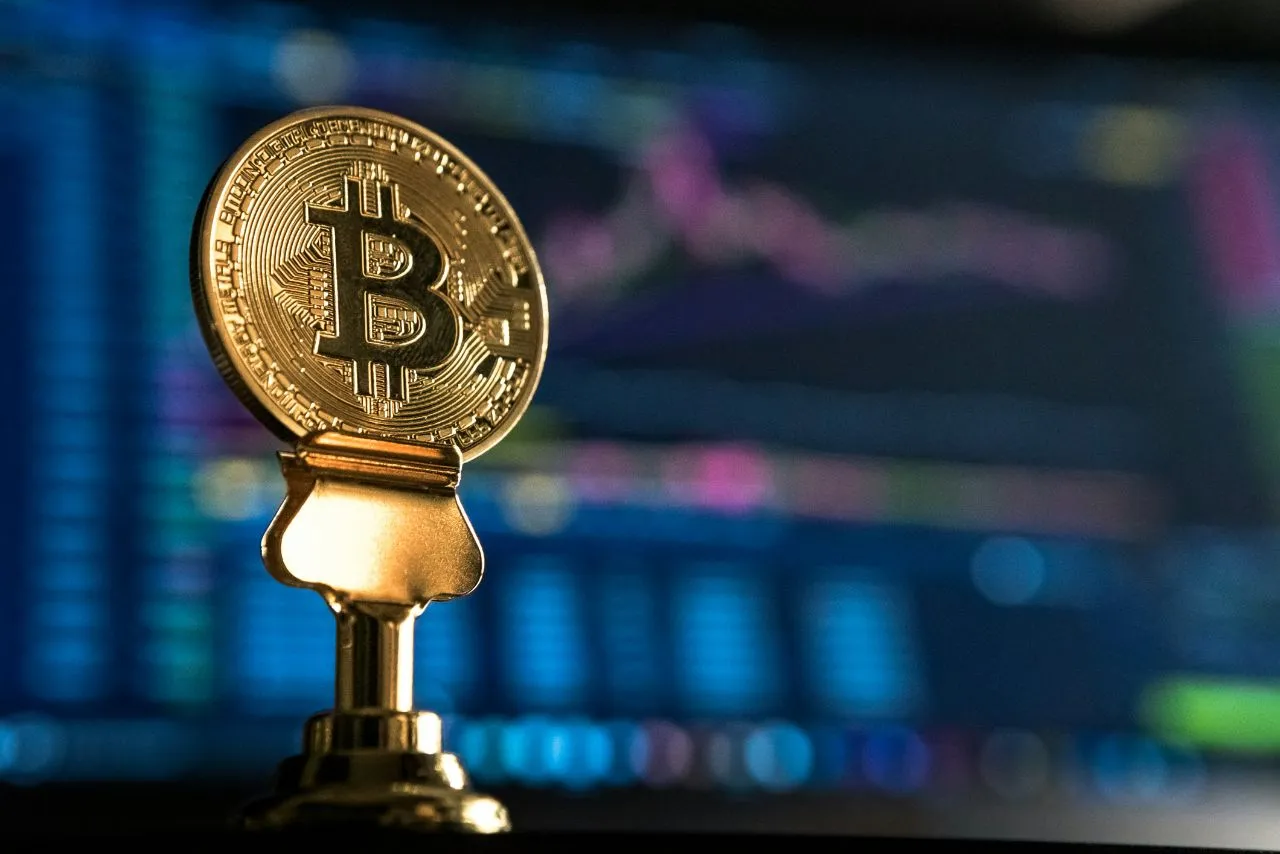
Photo by André François McKenzie on Unsplash

BTC’s surge attracting young investors to crypto

Experts say that these deposits could be potentially transferred to the crypto market by owners as Bitcoin’s value continues to climb. An insider from a crypto exchange noted that the bullish crypto market, spurred by the U.S. approval of spot bitcoin ETFs, is driving a number of young investors to turn to crypto investments, encouraging them to channel their deposits into buying crypto tokens. 


Data from these five major banks shows their total demand deposits by the end of February exceeded KRW 614 trillion ($460 billion), seeing a month-over-month increase of about KRW 23.5 trillion. During the same period, the banks’ combined regular savings grew by KRW 23.6 trillion, while their combined installment savings saw a decrease of KRW 13.3 trillion. This came after the government-led savings product “Youth Hope Installment Savings” reached its maturity, which returns users their principal with relatively large interest gains. 


Banks scrambling to attract crypto investors with new savings products

In response to the potential decline in interest rates in the second half of this year, an increasing number of customers are seeking to put their money into savings products with an interest rate of as low as 3%, according to a banker. In a bid to attract more users, local banks are busy introducing new savings products. 


KB Kookmin Bank launched a savings product offering a relatively high annual interest rate of up to 4%, and Shinhan Bank rolled out a savings product targeting youths with an annual interest rate of up to 3.85%. 


Meanwhile, Kbank, an online-only bank, is deemed among the largest beneficiaries of the crypto boom, as the bank saw its average daily new customers triple compared to last year. Since 2020, Kbank has served as the provider of real-name accounts to Upbit, the leading crypto exchange in Korea. 


Ha Joon-kyung, a professor at the Department of Economics at Hanyang University, said the sudden surge in demand deposits means that a significant portion of these funds will be invested in high-yielding but risky assets, including cryptocurrencies, stocks and real estate. 
 

More to Read
View All
Web3 & Enterprise·

May 09, 2023

Artifact Labs Raises $3.25M

Artifact Labs Raises $3.25MArtifact Labs, a Hong Kong-based start-up company that concerns itself with Web3 and metaverse products from leading brands, has raised $3.25 million in a recent funding round.Photo by Pixabay on PexelsThe NFT-focused company, which was spun out of Hong Kong’s South China Morning Post (SCMP) in 2022, has received funding from Blue Pool Capital and Animoca Ventures, with Blue Pool leading the funding round. Blue Pool Capital is the investment vehicle of Alibaba founders Jack Ma and Joe Tsai.The company was borne out of a decision taken by the SCMP in 2021 to launch an NFT standard called artifact, which was geared toward recording historical data. Its starting point in that endeavor was the sale of NFTs of its very own historical front pages. That included iconic historical snapshots such as the return of Hong Kong to the Chinese in 1997, the outbreak of avian flu, the onset of the Asian financial crisis and the death of the UK's Princess Diana in 1997.Expansion of operationsArtifact Labs has said that it intends to use the funding to expand company operations. Executing on that, the firm intends to fill multiple developer positions.Phillip Pon, CEO of Artifact Labs commented on the development via a press release:“It’s not about creating new IPs for speculation — for example NFT hype projects — it’s about driving new engagement with historically significant collections by using Web3. We want to carve new space in the younger public’s consciousness for historical brands and artifacts, while supporting these important organizations with new revenue streams to fund their preservation work, we are also solidifying immutable on-chain data preservation through NFTs.”It appears that the firm will release NFT collections on behalf of preservation organizations, while at the same time developing technology to assist institutions in preserving their archives on the blockchain.NFTs with inherent valueLast year, Artifact Labs Founder and former CEO of the SCMP, Gary Liu, said in an interview that NFTs need to contain a certain inherent value beyond just being endorsed by a number of people. Liu stated: “There has to be intrinsic value in the asset itself or the underlying asset that it represents. That’s what is going to drive NFT innovation.”That philosophy is borne out by one of Artifact’s recent collaborations. In February, the firm partnered with RMS Titanic, Inc, a company that’s dedicated to preserving the legacy of the infamous sunken ship. Central to the partnership was an intention to mint NFTs based upon over 5,500 artifacts that have been recovered from the sunken wreckage.In January Artifact Labs partnered with Dubai-based data intelligence and marketing technology firm, MEmob+. The objective of the firms in teaming up is to have the complete range of expertise necessary between them in order to offer brands and companies a strategic advisory service when it comes to delving into the metaverse. Artifact’s art platform Materia, will be harnessed by MEmob+ to assist brands who want to develop art projects in the metaverse.

news
Policy & Regulation·

Dec 05, 2023

Terraform Labs fails to halt class action lawsuit

Terraform Labs fails to halt class action lawsuitThe High Court in Singapore has dismissed an appeal filed by Terraform Labs and its co-founders, marking a significant step forward for the plaintiffs behind a class action initiated against the company.That’s according to a report published by Singaporean publication, the Business Times, on Thursday. The legal development follows the collapse of TerraUSD (UST) tokens in May of 2022, resulting in the loss of billions of dollars in market value. The collapse, in turn, has led to several lawsuits against Terraform, its founders and affiliated entities, with those court actions playing out in courtrooms in Singapore, South Korea, Montenegro and the United States.Photo by Wesley Tingey on UnsplashFraudulent misrepresentation allegedThe class-action suit, initiated in September 2022 by Julian Moreno Beltran and Douglas Gan on behalf of 375 others, alleges fraudulent misrepresentation by Terraform, Co-Founders Do Kwon and Nikolaos Alexandros Platias and the Luna Foundation Guard (LFG). The claimants argue that these misrepresentations induced them to purchase UST, stake the tokens and retain them as their value plummeted.UST had been designed to be pegged to the U.S. dollar with a 1:1 ratio. However, flaws in the tokenomics behind that digital asset meant that it faced a loss of confidence in May 2022, trading at around $0.05 when the court’s decision was released. The claimants collectively suffered losses of nearly $57 million.Terms of use cited in attempt to dismissTerraform attempted to have the lawsuit dismissed by invoking an arbitration clause in its website’s terms of use, asserting that users had waived their rights to a jury trial or participation in a class action. However, the Assistant Registrar (AR) rejected this application, stating that the defendants failed to establish an arbitration agreement.The AR highlighted that the terms of use were inconspicuous on the website, and there was insufficient effort to draw users’ attention to those clauses. Terraform, Kwon and associated entities appealed this decision, which was heard by Justice Hri Kumar Nair on Sept. 25.Despite establishing a prima facie case for an arbitration agreement, the court ruled that Terraform’s participation in the legal proceedings, including filing a defense and counterclaim, meant it could no longer seek a stay in favor of arbitration.Multiple actionsIt’s a busy time for all stakeholders relative to the Terraform collapse. Playing out within the same timeframe is a lawsuit in the United States taken by the Securities and Exchange Commission (SEC) against Terraform and Do Kwon, where the SEC claims that crypto asset securities fraud has been carried out.The latest installments in that saga in recent weeks have seen both parties file to seek summary judgment. Last week, a court in New York approved the confidential treatment of specific documentation which had been produced by Jump Crypto, a division of proprietary trading firm Jump Trading.There are also criminal actions underway. In a South Korean court in October, Terraform Labs Co-Founder Daniel Shin denied wrongdoing in the Terra/Luna collapse. Meanwhile, a court in Montenegro has approved the extradition of Do Kwon, with a final decision to be made shortly as regards whether he should be extradited to the United States or South Korea.

news
Policy & Regulation·

Jul 13, 2023

Korea Makes Strides in Establishing the Legal Framework for Security Tokens

Korea Makes Strides in Establishing the Legal Framework for Security TokensSouth Korea is making significant strides in establishing a legal framework that enables individuals to own and trade fractional shares or portions of real-world assets such as music copyrights, real estate properties, and artworks, through tokenization on blockchain platforms.Photo by Tingey Injury Law Firm on UnsplashAmendments to two actsAccording to a report by local news outlet Newsis, the ruling People Power Party (PPP) and the Financial Services Commission (FSC) are actively involved in proposing amendments to the Electronic Securities Act and the Capital Markets Act to legalize security tokens. These amendments will be presented to the National Assembly this month by PPP lawmaker Yun Chang-hyun, who is also a member of the National Policy Committee.Security tokens, which utilize the capabilities of blockchain technology, will play a pivotal role in this context. Once the legal framework is in place, the issuance and distribution of these tokens will be facilitated.In preparation for the proposal of these amendments, PPP lawmakers conducted a hearing today to discuss the matter at hand. The hearing included a presentation by Lee Soo-young, Head of the FSC’s Capital Markets Division, who shed light on the formulation of security token policies to bolster the capital market. Additionally, Choi Jeong-cheol, Head of the Strategy and Planning Division at Korea Securities Depository, outlined the key points of the proposed amendments to the Electronic Securities Act and the Capital Markets Act. Distinguished attendees at the hearing included Park Sun-young, an economics professor at Dogguk University; Hwang Hyun-il, a financial lawyer at law firm Shin and Kim; and Kim Kap-lae, a senior researcher at the Korea Capital Market Institute.Details in subsequent decreesIt is anticipated that these amendments will incorporate the framework introduced by the FSC in February, which focuses on enabling the issuance and distribution of security tokens, as well as establishing account management organizations and over-the-counter (OTC) brokerages. The forthcoming enforcement decrees, following the amendment of these Acts, will specify the precise details, including the authorization requirements for these entities and investment limits.

news
Loading