Top

OKX scores payment institution license in Singapore

Web3 & Enterprise·March 14, 2024, 1:51 AM

Leading cryptocurrency exchange OKX has acquired an in-principle approval from Singapore’s financial regulatory authority for a Major Payment Institution (MPI) license through its local arm, OKX SG.
https://asset.coinness.com/en/news/91b59b003a99d9ea8e3cf58985176405.webp
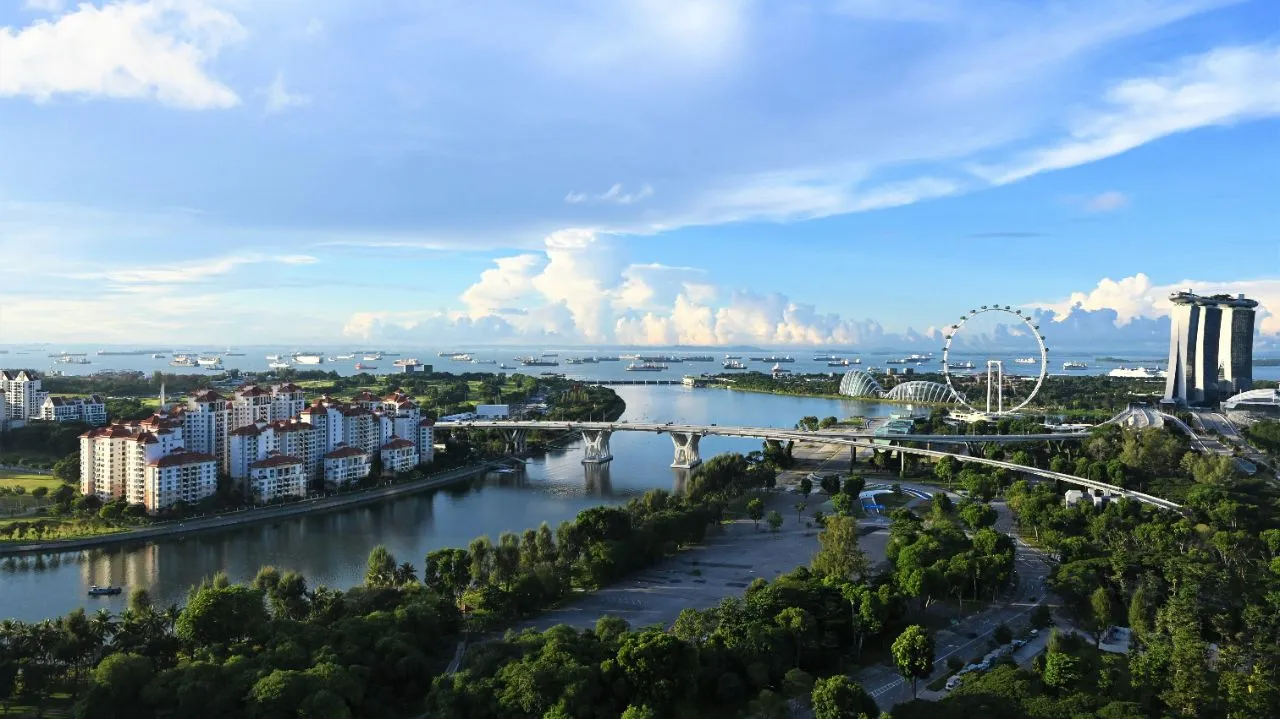
Photo by Mark Stoop on Unsplash

Enabling broader service offering

According to a blog post published by the company on March 12, OKX confirmed the receipt of in-principle approval for the coveted license. The MPI license, issued by the Monetary Authority of Singapore (MAS), Singapore's primary financial regulatory body, represents an important step forward for the company. Once granted the full license, OKX will be empowered to offer digital payment token services and facilitate cross-border transfers within Singapore.


A plethora of OKX executives took to social media to comment on the achievement. Hong Fang, President of OKX, expressed the company's long-standing interest in Singapore, describing it as a cornerstone of its global strategy. Fang emphasized Singapore's appeal to entrepreneurial ventures, citing its tech-savvy populace as early adopters. She praised the country's regulatory framework as "clear and thoughtful," enabling businesses like OKX to cultivate sustainable growth over the long term.


With this regulatory approval, OKX intends to concentrate on bolstering its spot product offerings in the Singaporean market. Fang outlined plans to forge local banking partnerships to enhance customer experiences and expand service offerings in the future.


In summarizing the company’s outlook, Fang wrote that OKX is looking to “build locally. Be compliant. Invest long-term.” OKX CEO Star Xu suggested that the firm intends to be a “long-term member of the Singapore fintech community” as a consequence of the approval.


Global market expansion

The company’s CMO, Haider Rafique, pointed out that this latest license approval follows hot on the heels of further expansion in venues like Dubai, Argentina and Turkey.


The in-principle license approval follows OKX's recent acquisition of a conditional license from Dubai’s cryptocurrency regulatory authority. On Jan. 16, the Virtual Assets Regulatory Authority (VARA) of Dubai granted OKX a license, enabling the exchange to provide regulated services as a virtual asset service provider within the region.

On Feb. 27 the firm launched OKX TR, catering to the needs of crypto users in Turkey. In the same month, the company launched its services within the Argentinian market.


MPI-licensed entities like OKX enjoy the privilege of facilitating multiple payment services, surpassing volume limitations prescribed for standard payment firms. This flexibility allows OKX to transcend the prescribed limits of three million Singapore dollars ($2.2 million) for individual payment services and a monthly cap of SG$6 million ($4.4 million) for multiple services.


Joining OKX in the pursuit of regulatory compliance, BitGo, a prominent crypto custody business, also received an in-principle approval from MAS. BitGo announced on Jan. 10 that it had secured initial approval, subject to fulfilling additional requirements stipulated by the regulator.


Several other notable cryptocurrency entities, including Crypto.com, Coinbase and Ripple, have already obtained complete payment institution licenses in Singapore.


OKX's attainment of in-principle approval underscores the ongoing drive among market participants towards regulatory compliance and expansion into key markets. The move should help the firm to position itself well for further market growth as the digital assets space continues to progress.


More to Read
View All
Markets·

Dec 07, 2023

South Korean crypto exchanges list USDT

South Korean crypto exchanges list USDTBithumb and Coinone, two of South Korea’s largest cryptocurrency exchanges, have recently listed Tether (USDT) — the USD-pegged stablecoin issued by Tether Limited — according to an article by local news outlet Kyunghyang Games on Thursday (local time). Both exchanges support Tether trading on the TRON network.Photo by DrawKit Illustrations on UnsplashTether gains momentum in South KoreaBithumb listed the currency today at KRW 1,316 in response to high investor demand. Meanwhile, Coinone, which listed Tether on Nov. 30 to become the first fiat-to-crypto exchange in the country to facilitate USDT/KRW trading, cited reasons such as Tether’s reliability and transparency, demonstrated by regular updates on its audits and reserves. The listing price was KRW 1,289.Industry sources anticipate that USDT/KRW trading in South Korea will eventually lead to reduced transaction fees and a simplified transaction process for domestic traders. Previously, in order to access most overseas markets where USDT is used as the default currency, users have had to sell their assets overseas first and then repurchase USDT to participate in trading.Simplified transactions are also expected to contribute to balancing pricing across different markets and reducing the Kimchi premium — a term used to describe the difference between trading prices of cryptocurrencies in Korea and in other foreign exchanges.Promotional eventsTo mark the occasion, Bithumb is offering a promotional event where 0.02% of the price of maker orders placed by Dec. 11 will be distributed to users in Bitcoin on Dec. 14. Maker orders are those that are placed at an asking price that differs from the current price, which means it is added to the order book instead of being matched or executed immediately. These orders add liquidity to an order book.Bithumb users can also make USDT withdrawals free of extra fees until Dec. 11. Coinone, on the other hand, requires a withdrawal fee of 1 USDT.According to CoinMarketCap, Tether has the third-largest market capitalization at approximately $90.1 billion as of this writing. The token’s trading volume in the last 24 hours was $49.3 billion.

news
Policy & Regulation·

Jun 20, 2023

Hong Kong Analyzes Web3 Approach of Regional Peers

Hong Kong Analyzes Web3 Approach of Regional PeersHong Kong’s ambitions in Web3 are on the rise as it strives to establish itself as a global hub for digital assets. The Research Unit of the Legislative Council Secretariat of Hong Kong has recently released a summary of a document titled “Development of Selected Regional Web3 Technologies,” shedding light on the city’s involvement in Web3.According to the report summary which was published on June 14, the Hong Kong government is actively promoting the development and utilization of Web3. In the fiscal budget for 2023–2024, the Financial Secretary announced accelerated efforts to build Hong Kong’s Web3 ecosystem, along with the establishment of a dedicated development task force focused on virtual assets.Photo by Jimmy Chan on PexelsPace of developmentHowever, concerns have emerged about Hong Kong’s comparatively slower pace of development in contrast to other regions. Various regions across the globe, particularly in Asia and the Gulf region, have implemented measures to expedite the progress of Web3 and its associated technologies and applications.To address these concerns, the report suggests that Hong Kong should broaden its focus beyond financial services and virtual assets. Instead, it should actively promote innovation in other areas of Web3 technology, such as blockchain and metaverse technology.Scrutinizing regional Web3 developmentIn response to a request from Councilor Wu Kit Ching, the research group has conducted a study on leading regions in Web3 technology and application development, examining their strategies.The study primarily highlights Japan, Singapore, South Korea, and the United Arab Emirates (UAE) as these regions have demonstrated proactive approaches in developing Web3 technologies, and they have become global or regional innovation hubs. Japan, for instance, has established high-level policy guidance and dedicated offices to coordinate Web3 policies across various government departments.Other regions covered in the study have focused on specific areas of Web3. Singapore and the UAE, for example, are exploring blockchain technology through industry collaborations and the establishment of incubation centers. Meanwhile, South Korea is actively launching metaverse strategies to foster innovation across multiple sectors.The summary also provides an overview of the key characteristics, foundational technologies, and applications of Web3. It outlines recent developments in Web3 within Hong Kong and analyzes the development scenarios of selected regions, including Japan’s comprehensive approach and the application-focused initiatives of other regions.The document emphasizes that Web3 represents a decentralized network that empowers users with greater autonomy and control over their digital lives. While the Hong Kong government has introduced measures to support the development of the Web3 ecosystem, particularly in the virtual asset market and related financial services, concerns persist regarding Hong Kong’s slower progress in other areas of Web3 technology compared to its counterparts in Asia and the Gulf region. These regions are capitalizing on their strengths and exploring broader applications of Web3.Hong Kong’s engagement in Web3 and its ambition to thrive in this domain is becoming more evident with each passing day. The summary of the document sheds light on the Chinese autonomous territory’s efforts, while also highlighting the need to expand its focus and foster innovation in various areas of Web3 technology. By doing so, Hong Kong can position itself as a prominent global center for Web3 and leverage the advantages it offers for digital asset development and beyond.

news
Web3 & Enterprise·

Oct 27, 2023

Fair Square Lab to Develop Blockchain-Based Shareholder Meeting Platform

Fair Square Lab to Develop Blockchain-Based Shareholder Meeting PlatformSouth Korean Web3 technology company Fair Square Lab announced on Friday that it is in the process of developing a blockchain-based platform for holding electronic shareholder general meetings. The firm said that it has applied for two patents for technologies related to blockchain-based electronic shareholder meetings. One is related to their operation methods and systems, and the other is associated with the utilization of voting rights tokens.Photo by Benjamin Child on UnsplashEmpowering shareholdersIn shareholder general meetings, many minority shareholders are often unable to attend in person, thereby finding it difficult to effectively exercise their opinions or rights during the decision-making process of a company. Fair Square Lab’s pending patents aim to address this issue by enabling more shareholders to easily participate in shareholder meetings through an electronic medium. Utilizing blockchain technology would also ensure the integrity and security of voting processes.Fair Square Lab’s growing portfolioWith this latest development, Fair Square Lab is now poised to possess a total of eight blockchain-related patents. Its other patents encompass areas like managing wallets in the blockchain network, generating wallet addresses for security token platforms, and preventing erroneous transfers of security tokens on a blockchain network. The company said that it is continuously working to secure intellectual property rights for its blockchain business, including design patents and its own trademark.“We have been consistently striving to secure intellectual property rights by linking research and development with the core blockchain technologies that we have accumulated over the years. We plan to obtain a total of 12 core technology patents by the end of this year,” said Jake Kim, CEO of Fair Square Lab.

news
Loading