Top

Korean banks cooperate with Polish counterparts in digital finance and blockchain

Policy & Regulation·March 26, 2024, 3:51 AM

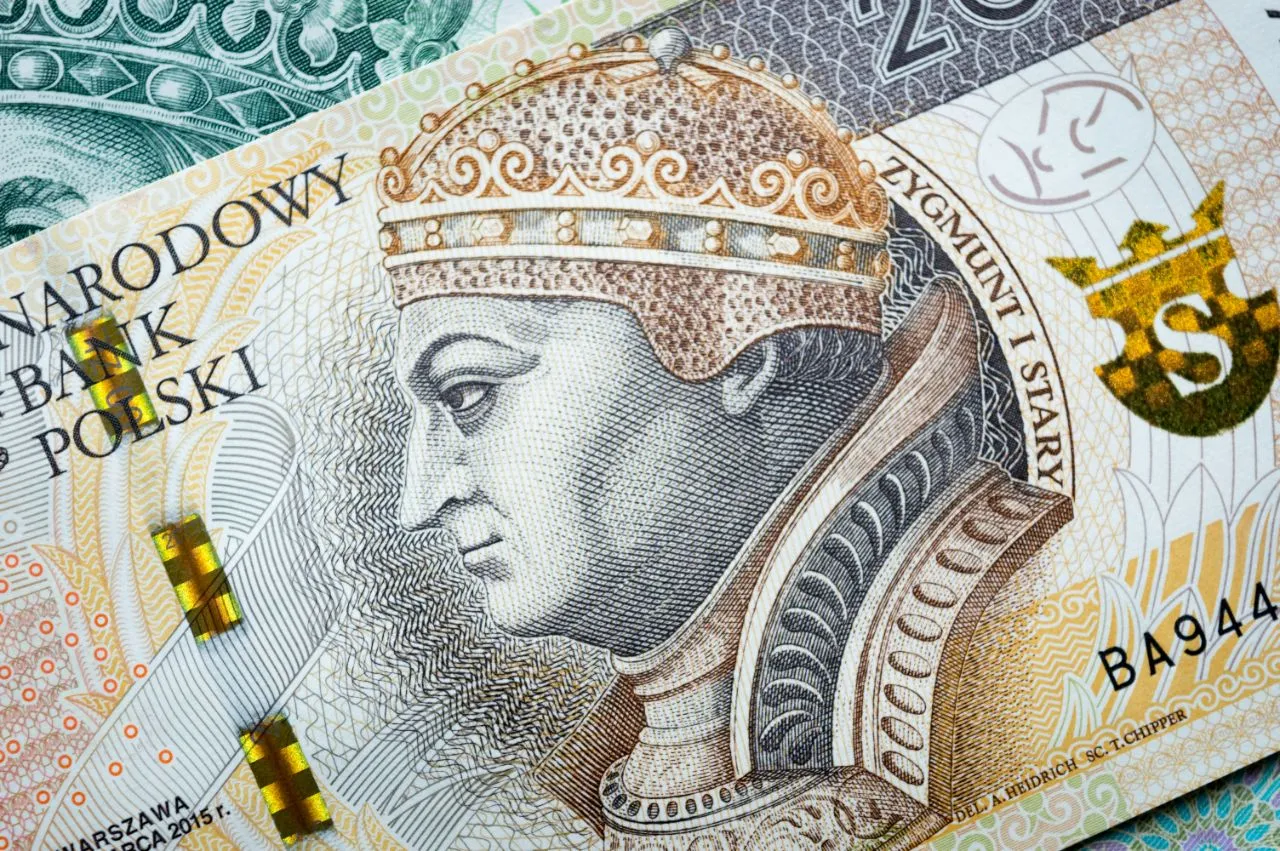
The Korea Federation of Banks (KFB) Chairman Cho Yong-byoung paid a visit to Poland yesterday to sign a memorandum of understanding (MOU) on financial cooperation between South Korea and Poland, Korean news media The Korea Economic Daily reported. The MOU was signed by Chairman Cho and the Polish Bank Association (ZBP) President, Tadeusz Białek.


The partnership aims to strengthen bilateral financial collaboration, which will be backed by holding joint financial conferences, sharing information on financial regulations and training financial experts. 

https://asset.coinness.com/en/news/dc56fd07b6f3e124cc4378bbfc1a5175.webp
Photo by Lukasz Radziejewski on Unsplash

Joint seminar on digital finance, blockchain and AI 

Following the MOU signing ceremony, the two associations conducted a joint seminar on digital finance, economy and the banking industry. The event was attended by Korea's Financial Services Commission (FSC) Chairperson Kim Joo-hyun, representatives of KFB members, President Białek and executives of Polish banks. 


Among the mainly discussed topics were Korea's digital financial landscape and its digital banking industry, along with the Polish economy and its banking industry. In particular, the participants focused on innovative changes in the financial industry brought by cutting-edge technology such as blockchain, AI and big data. 


During the conference, Chairman Cho expressed his commitment to bolstering the bilateral partnership, stating that the Korean banking industry will support local companies in expanding their businesses in Poland. 


More to Read
View All
Policy & Regulation·

Dec 14, 2023

KuCoin resolves lawsuit through settlement and New York market exit

KuCoin resolves lawsuit through settlement and New York market exitKuCoin, one of the largest global cryptocurrency exchanges, has arrived at a comprehensive settlement with the authorities in the state of New York in the United States, agreeing to pay $22 million.Photo by Michael Discenza on UnsplashSubstantial fine and refundsThe settlement not only involves a substantial fine but also includes refunds to New York investors and the cessation of trading activities in the state. This resolution comes amidst an assertive effort by New York authorities to shape and regulate the crypto landscape within the state.According to a statement released by New York Attorney General Letitia James on Tuesday, KuCoin will refund a total of $16.7 million to 177,800 New York investors. In addition to the refunds, KuCoin will pay a $5.3 million fine to the state.The settlement addresses allegations that KuCoin failed to register as a securities and commodities broker-dealer while falsely presenting itself as a cryptocurrency exchange.Taking to social media platform X, James wrote:”My office is making crypto platform @kucoincom pay over $22 million for illegally operating in New York. KuCoin is also banned from doing business in our state. Shady cryptocurrency platforms must play by the same set of rules as everyone else or face the consequences.”At the time of taking action against KuCoin in March, James described the lawsuit as “our eighth action to rein in shadowy cryptocurrency platforms that disregard our laws and put New Yorkers at risk.”Lack of registrationKuCoin, based in the Seychelles, allows investors to trade digital assets through its website and app. However, the state of New York argued that KuCoin could not legitimately claim to be an exchange due to its lack of registration with the U.S. Securities and Exchange Commission (SEC) and the proper designation by the Commodity Futures Trading Commission (CFTC), as mandated by state law.Ranked as the fourth-largest exchange by spot and derivatives trading volume, KuCoin’s KCS token, a profit-sharing token on the platform, has experienced a 39% increase since the start of the week. At the time of writing, it has a unit price of $13.80. This surge is a consequence of the clarity and finality brought about by the settlement, alongside rising expectations for a U.S. exchange-traded fund (ETF) directly investing in Bitcoin, sparking a broader rally in lesser-known cryptocurrencies over the past month.Potential rumorsKuCoin CEO Johnny Lyu took to the X platform on Tuesday to outline details of the settlement. Interestingly, Lyu included this notification:”I also want to give you a heads-up about potential rumors surfacing in the next few weeks. Please stick to the official website of KuCoin for accurate information.”While the settlement may have brought a certain degree of clarity to the KuCoin platform, Lyu’s comment suggests that there may be other issues about to emerge in the short term.The lawsuit against KuCoin is part of a broader regulatory trend in New York, with Attorney General James having previously filed a similar complaint against CoinEx. Additionally, a settlement in January involving crypto companies Nexo Inc. and Nexo Capital Inc. resulted in a financial resolution of up to $24 million for New York and nine other states.

news
Web3 & Enterprise·

Nov 17, 2023

FD International joins hands with Lbank to expand global blockchain ecosystem

FD International joins hands with Lbank to expand global blockchain ecosystemFD International, the parent company of blockchain consulting and IT company Blockchain Innovation, announced on Friday (local time) that it has signed a memorandum of understanding (MOU) to collaborate with the global cryptocurrency exchange LBank.Photo by Shubham Dhage on Unsplash“Blockchain-related industries are growing exponentially worldwide, and we hope to create an ecosystem that can have a positive impact on many people through our well-prepped collaboration with LBank,” said FD Group CEOs Jeon Da-seul, Lee Seo-yeon, and Jeon Sol.Lbank’s global presenceEstablished in 2015 in Indonesia, LBank currently boasts a user base of over 10 million people and a daily trading volume of up to $1.5 billion. It currently supports over 50 fiat currencies, several major cryptocurrencies like Bitcoin and Ethereum and a wide variety of payment methods including Apple Pay. It also operates branches in other countries like the U.S. and Canada.Navigating regulatory landscapesFD International has been working on creating Travel Rule solutions for Korean exchanges such as Bithumb, Coinone and Korbit in accordance with relevant regulatory guidelines like the Act on Reporting And Using Specified Financial Transaction Information. The Travel Rule refers to the Financial Action Task Force’s (FATF) Recommendation #16, which outlines that VASPs must share certain personal information about customers — including names and account numbers — when facilitating crypto transactions that exceed a certain amount.The firm has also been leveraging its expertise in the blockchain and IT fields to help accelerate major companies such as Klaytn and Everscale. Notably, the company adapts its solutions and technological capabilities to regulatory trends, such as the Financial Services Commission’s (FSS) regulations on security token offerings (STOs) and the European Union’s Markets in Crypto-Assets Regulation (MiCA) legislation.

news
Web3 & Enterprise·

Oct 16, 2024

Solv raises $11M to bring overall funding to $25M

Singapore-based decentralized liquidity infrastructure and on-chain funding project Solv Protocol has raised $11 million in funding, bringing its total inward investment to date to $25 million. Taking to Medium on Oct. 14, the project outlined that in this most recent funding round, $11 million had been raised with participation from Nomura subsidiary Laser Digital, Blockchain Capital, gumi Cryptos Capital, OKX Ventures and CMT Digital. Angel investors associated with a number of blockchain projects such as Berachain, Ethena, Mezo, Core, GMX, Curve and EigenLayer also invested. $200 million valuationThis latest funding round was carried out while placing a $200 million valuation on the company. Going forward, the company plans to roll out additional products over the course of the next few weeks, with a view towards further expanding yield opportunities for Bitcoin (BTC) holders. Solv Protocol’s leading product, SolvBTC, was introduced to the market last March as the world’s first-ever yield-bearing Bitcoin. The protocol initially ran on Ethereum, Arbitrum, BNB Chain and Merlin Chain. Since launch, it has been expanded across 10 blockchain networks. The product claims to enable BTC holders to earn additional BTC all the while maintaining Bitcoin exposure. In excess of 20,000 BTC is currently staked within Solv Protocol’s SolvBTC product, accounting for around $1.3 billion in value. The project claims to have 400,000 users, with 80% of their assets allocated to yield-generating strategies.Photo by Traxer on UnsplashMarket opportunitySolv Protocol’s Co-Founder Ryan Chow spoke to the market opportunity that Bitcoin staking presents. Chow stated: “With a market cap of over $1.2 trillion, Bitcoin holds immense growth potential, Bitcoin’s staking rate is currently much lower than Ethereum’s 28%. If we can unlock similar levels of participation, Bitcoin staking could unlock $330 billion in value. We believe BTCFi will drive the next wave of innovation in the blockchain space.” In a series of X posts published on Oct. 14, the project pointed out that the lack of a native yield, limited integrations with core DeFi primitives and fragmented BTC liquidity relative to DeFi are key challenges for Bitcoin, which Solv claims to have resolved. Staking Abstraction Layer (SAL)Earlier this month, Solv, alongside BNB Chain, Ceffu and Chainlink, launched the Staking Abstraction Layer (SAL). SAL is a framework which has been designed to simplify and standardize Bitcoin staking across a number of blockchain networks. Key SAL features include cross-chain compatibility with Ethereum Virtual Machine (EVM) compatible chains, support for liquidity staking tokens (LSTs) and a focus on security and custody with the involvement of crypto custodian Ceffu deemed to ensure that the user’s underlying Bitcoin is secure. Solv has launched three LSTs. These include SolvBTC.BBN, an LST representing staked Bitcoin on Babylon, another Bitcoin staking platform. SolvBTC.ENA is a trading strategy involving Ethena’s basis trading. Meanwhile, SolvBTC.CORE focuses on providing Bitcoin liquidity on CoreDAO, a Bitcoin-aligned EVM-compatible layer-1 blockchain. Bitcoin staking is a more recent development which appears to have considerable potential. As Solv pointed out on X, Ethereum has a 28% staking rate right now, with Bitcoin not coming anywhere close to this figure. Staking platforms on Ethereum like Lido has $23.7 billion in total value locked (TVL) while EigenLayer weighs in at $10.9 billion.

news
Loading