Top

Spot BTC, ETH ETFs to commence trading on April 30 in Hong Kong

Policy & Regulation·April 25, 2024, 7:12 AM

The first tranche of spot Bitcoin and Ether exchange-traded funds (ETFs) have been officially approved to start trading in Hong Kong on April 30.


Announcement from regulator

Hong Kong’s Securities and Futures Commission (SFC) announced the official approval of the first batch of spot Bitcoin and Ether ETFs on April 24 via a press release seen by CoinTelegraph. The regulator first provided outline approval for these products on April 15.


Additionally, some of the fund management firms themselves have come out to outline product trading commencement at the end of the month. The first batch of approved Hong Kong-based ETFs include China Asset Management’s (ChinaAMC) Bitcoin and Ether-based ETFs.  In a press release, the firm verified that its products will begin trading on April 30.


HashKey Capital and Bosera Asset Management have partnered to offer similar spot products. A spokesperson for HashKey told Bloomberg that they’re ready to commence trading of the product at the end of the month.

https://asset.coinness.com/en/news/64d6c05ea89a3a96105d41c92f3f9560.webp
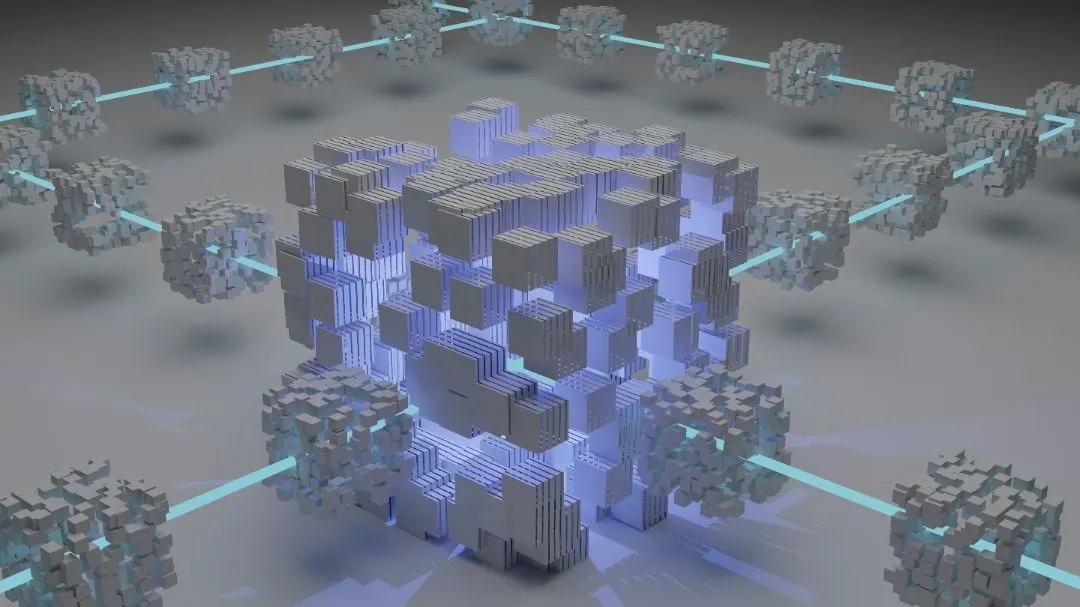
Photo by Ruslan Bardash on Unsplash

In-kind vs. cash-only approach

Harvest Global Investments is the third fund manager that intends to launch such a product offering. The launch of these three spot Bitcoin and Ether-based ETFs on April 30 signals a new era for digital asset investment in Hong Kong.


Unlike their counterparts in the U.S., which rely on a cash creation model, these ETFs in Hong Kong embrace an in-kind creation mechanism. This approach holds the potential to significantly boost assets under management (AUM) and trading volume, as highlighted by Bloomberg ETF analyst Rebecca Sin. The unique dynamics of Hong Kong's ETF creation model present an opportunity for market growth and innovation, positioning the region as a key player in the global digital asset landscape.


By providing a regulated framework for retail and institutional investors, along with the ease of converting digital assets into fully regulated ETFs, ChinaAMC aims to cater to a growing demand for such offerings. China Asset Management’s Head of Digital Assets, Thomas Zhu, emphasized in the firm’s press release the in-kind creation feature.


Potential fee war

As the ETF market in Hong Kong gains momentum, competition could result in downward pressure on fees. With issuers vying to offer the most competitive fees to attract customers, the stage is set for a potential battle of pricing strategies. Harvest, for instance, has already entered the fray with a full fee waiver and the lowest fee at 0.3% after the waiver, Bloomberg ETF analyst James Seyffart outlined on the X social media platform.


This competitive landscape bodes well for investors, with fees for the first ETFs proving to be lower than expected, as noted by Eric Balchunas, senior ETF analyst at Bloomberg. All eyes will be on the performance and impact of these financial products relative to the crypto market in the Asian region and further afield.

More to Read
View All
Web3 & Enterprise·

Dec 15, 2023

Exploring the motivations behind Crescendo’s multi-million dollar investment in LINE NEXT

Exploring the motivations behind Crescendo’s multi-million dollar investment in LINE NEXTIn a move that has made headlines as the largest investment made in the Asian blockchain and Web3 industry this year, Seoul-based private equity firm Crescendo Equity Partners has decided to invest $140 million in LINE NEXT, the NFT business arm of Tokyo-based Internet giant LINE Corporation. According to South Korean news outlet DealSite, this can be seen as a strategic decision to leverage LINE’s global network, which dominates the Japanese market. Considering Crescendo’s track record of successful investments in various IT companies, the industry is keen to see whether the firm can replicate this success in the rapidly growing blockchain sector.Photo by Pepi Stojanovski on UnsplashConsortium takes controlAccording to the South Korean Financial Supervisory Service’s (FSS) Data Analysis, Retrieval and Transfer (DART) System on Thursday (local time), Crescendo’s special purpose company (SPC) established to manage the LINE NEXT investment dubbed Ludwig Holdings will act as a third party in the investment by providing KRW 130 billion in paid-in capital. Other financial investors will also contribute KRW 52 billion through a consortium formed with Crescendo, bringing the total investment amount to KRW 182 billion, or approximately $140 million.As a result of this capital increase, 795,401 new shares will be issued. Crescendo’s consortium will thus secure a 50% stake plus one more share, making it the largest shareholder group. However, among individual shareholders, LY Corporation will maintain its position as the single largest shareholder. The existing number of shares was 795,400. Crescendo plans to utilize its third fund, which raised KRW 1.1 trillion in 2021, to provide the funds by next February.Smooth transitionAlthough the consortium has become the largest shareholder group, there is no indication of an immediate change in LINE NEXT’s current management board. This decision is likely because blockchain development companies should be run by executives who are familiar with the unique ins and outs of the blockchain industry. The firm’s current CEO, Ko Young-su, is an IT expert who had been responsible for financial technology (fintech) operations at LINE Corp.Web3 expansionThrough the investment, LINE NEXT plans to popularize Web3 by expanding its global platform and developing new services. This includes DOSI, a global mobile NFT marketplace app for trading digital products, which will be integrated with LINE’s Japanese NFT marketplace LINE NFT. DOSI’s launch is scheduled for January next year.Navigating uncharted territoryMany believe that LINE NEXT’s ambitions for dominating the blockchain sector aligning with Crescendo’s tradition of investing in promising IT companies is sufficient justification for the major funding decision. However, some observers find the development surprising, considering the fact that it is rare for private equity firms in Korea to make such large investments in blockchain firms — an industry that has mostly been an unpopular choice for investors, likely due to its close association with crypto assets. Indeed, Crescendo’s interest in the company may have been partly driven by the fact that it is more focused on blockchain technology itself rather than crypto.“Crescendo seems to have focused on LINE’s global network, which pushed it to invest in its subsidiary. Considering the popularity of NFTs and other related projects last year, expanding this area of business seems plausible,” said an anonymous source from the investment banking industry. “Peter Thiel [the billionaire entrepreneur and venture capitalist who sponsored Crescendo] is known to have a keen interest in blockchain technology and is actively making investments in the sector, which probably made the decision-making process much smoother.”This development signifies yet another shift in the evolving business landscape, where parts of the industry that have not been traditionally associated with blockchain are increasingly recognizing the potential of its role in the future of industry and technology.

news
Web3 & Enterprise·

Aug 09, 2023

NEOPIN and SBINFT Join Forces to Expand DeFi and NFT Ecosystems

NEOPIN and SBINFT Join Forces to Expand DeFi and NFT EcosystemsNEOPIN, the global CeDeFi platform of South Korean investment holding company Neowiz Holdings, announced today its strategic partnership with SBINFT, the NFT marketplace developer and Web3 subsidiary of Japanese online financial conglomerate SBI Holdings.Photo by Markus Winkler on PexelsExtending their global reachThrough this partnership, the two companies will combine their individual expertise to enhance the global reach of each other’s ecosystems. Their strategy involves facilitating the introduction of established NFT projects from regions such as South Korea, the Middle East, and Southeast Asia into the Japanese market. Additionally, they will collaborate to offer both financial and technical assistance to promising Japanese Web3 initiatives, enabling them to expand internationally.Web3 projects and utility NFTsTo achieve this objective, NEOPIN will onboard a diverse range of Web3 projects to its ecosystem, thereby broadening their adoption and appealing to a worldwide user base. Meanwhile, SBINFT will proactively seek to bring utility NFTs into its NFT marketplace.NEOPIN’s partnership with SBINFT is a strategic step in its plan to enter the Japanese market. Just recently, the South Korean enterprise revealed its proactive approach to intensify endeavors to attract a Japanese customer base.Kim Yong-ki, NEOPIN’s CEO, mentioned that the collaboration with SBINFT represents one of their initial endeavors to penetrate the Japanese market. Kim further stated that NEOPIN is dedicated to achieving favorable outcomes not only within Japan but also across the East Asian region.Ko Jang-deok, CEO of SBINFT, echoed this sentiment, expressing that NEOPIN possesses a robust strategy tailored for the Japanese market. He mentioned that the partnership with such a company will help SBINFT introduce international content to the Japanese market. Ko highlighted SBINFT’s commitment to extending its presence in the East Asian market.

news
Web3 & Enterprise·

Mar 02, 2024

OKX adds Uniswap in bid to eliminate gas fees

Leading crypto exchange OKX has announced the seamless integration of Uniswap Labs' application programming interface (API) into its decentralized exchange (DEX). The objective of the Uniswap addition is to usher in an era of gas-free trading through its innovative feature called "Snap” for OKX service users. Snap trading modeThe company made the announcement by way of a PR Newswire press release on Feb. 29. OKX asserts that Uniswap is one of the most trusted names in DeFi. As part of the integration, the Snap trading mode will be included as a feature on OKX DEX, with the objective of aggregating Uniswap’s liquidity.The feature operates directly on the OKX DEX interface by way of the UniswapX protocol. UniswapX is an immutable smart contract built with the intention to be fully permissionless. The contract cannot be modified or paused by anyone, including Uniswap Labs. Liquidity providers pay the feeIn explaining away the technology, Jason Lau, the chief innovation officer at OKX told Cointelegraph the mechanics behind the no-fee swaps. Lau unveiled a novel model wherein liquidity providers absorb transaction fees on behalf of users. He asserted that this approach not only enhances convenience but also facilitates cost savings for traders. Lau elaborated further, stating: “By agreeing to a price and signing a transaction off-chain, then settling the transaction on-chain, users end up paying no gas fees because the liquidity providers will pay the fee on the user’s behalf.”Photo by Shubham Dhage on UnsplashGoing beyond trading fee reductionAnticipating a positive response from DeFi enthusiasts, Lau highlighted additional features that go beyond transaction fee savings. These include the elimination of slippages, maximum extractable value (MEV) bot attacks and transaction failures, addressing prevalent concerns within the DeFi space.In tandem with the gas-free trading initiative, OKX announced a seamless integration for its wallet users within the Uniswap interface, courtesy of the Multi-Injected Provider Discovery upgrade on Ethereum, based on Ethereum Improvement Proposal (EIP)-6963. This enhancement extends to all browser extension wallets, enabling OKX wallet users to seamlessly connect with Uniswap, facilitating activities such as cryptocurrency swapping, NFT trading, liquidity pool participation and decentralized application (dApp) development. Positioning this integration as a pivotal addition to their ecosystem, Lau reiterated OKX's commitment to broadening user access to diverse on-chain use cases. He expressed enthusiasm for ongoing development initiatives and urged users to actively contribute feedback for further enhancements. The crypto exchange platform achieved further technical progress recently, with the addition of support for atomicals, runes, doginals and stamps to its Web3 wallet. Providing further detail on these additions last month, the company said that they were part of a "first-to-market" initiative relative to Bitcoin NFTs. Alongside technical advancements like these, earlier this week it emerged that the company was further advancing its market expansion strategy, through the launch of OKX TR, its Turkish platform. With OKX pioneering gas-free trading and bolstering user accessibility to decentralized finance, the convergence of traditional finance and blockchain technology accelerates, indicating an ongoing transformative shift in the crypto space.

news
Loading