Top

Piggycell raises $10M from Animoca Brands, ICP and others to expand its decentralized infrastructure and ecosystem

Web3 & Enterprise·February 17, 2025, 2:40 AM

Piggycell, a blockchain decentralized physical infrastructure network (DePIN) startup, recently announced that it has successfully closed its seed investment round for $10 million. Piggycell will mainly use the funds raised from the investment round to expand its charging infrastructure and ecosystem further.
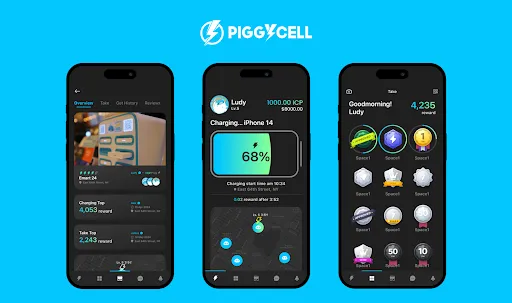
https://asset.coinness.com/en/news/c36c3e0959ba2c318dcc25eb97d70b1b.webp

Piggycell is improving the ownership and management of charging infrastructures through DePINs and real-world assets (RWAs). By integrating blockchain technology with physical assets, Piggycell aims to empower users through decentralized ownership, transparent profit-sharing models and enhanced community engagement.


Since its establishment in 2020, Piggycell has made advancements in developing its infrastructure. It currently has over 13,000 charging hubs with over 100,000 batteries across all cities in South Korea. As a key player in the country's portable battery rental industry, Piggycell boasts nearly four million users and commands over 90% of the market share.


One of the notable investors in the round is Animoca Brands, a Web3 company that uses blockchain technology to provide digital property rights to consumers worldwide, supporting the development of the open metaverse. Animoca Brands is one of the most active investors in Web3, with a portfolio of over 540 investments.


Another key investor in this round is Internet Computer (ICP), a third-generation blockchain developed by the DFINITY Foundation that enables full end-to-end decentralization without the use of cloud computing. With its cryptographic methods, ICP supports fully on-chain applications, including complex web services.


The investment from Animoca Brands, ICP and other investors further endorses Piggycell as a DePIN platform that bridges traditional Web2 services with the Web3 ecosystem.


Having received backing from Web3 investors, Piggycell is now working to accelerate its decentralized infrastructure network with next-generation blockchain capabilities. Piggycell plans to launch its DePIN platform in the first half of 2025. 


About Piggycell

Piggycell is an RWA and DeFIN project that merges blockchain with real-world utility, offering a Charge-to-Earn experience. Its power bank-sharing infrastructure rewards users for charging their devices, bridging digital incentives with real-world convenience.


By combining hub-based charging stations with blockchain technology, the project seeks to enhance transparency and efficiency through a digital twin strategy. Beyond charging, Piggycell integrates a social app-tech gaming platform, fostering interaction, gamification and community-driven growth.


More to Read
View All
Policy & Regulation·

Dec 29, 2023

Indonesia sets out crypto exchange registration requirement

In response to the expanding demand for cryptocurrencies in Indonesia, the government has laid down a directive, requiring crypto exchanges operating within the Southeast Asian country to register with the recently inaugurated Commodity Future Exchange (CFX).Photo by Bisma Mahendra on UnsplashMandatory requirementThe CFX was established back in July as the world's first national bourse exclusively dedicated to digital assets. The national exchange has been modeled to replicate exchanges in traditional markets like the NASDAQ, but in this case, focusing entirely on digital assets. Under regulations introduced in 2019 by the Indonesian Commodity Futures Trading Regulatory Agency (Bappebti), crypto exchanges in the country must seek authorization. Even exchanges operating legally since 2014 fall under the category of "prospective crypto exchanges" and must undergo a rigorous process to gain recognition as legitimate entities affiliated with the CFX. Safeguarding investorsThis regulatory initiative aims to create a secure environment for crypto investors while simultaneously serving as a platform for tracking digital asset transactions for taxation purposes. Beyond the regulatory oversight, registering with the CFX also acts as a gateway for the Indonesian government to monitor cryptocurrency transactions for taxation purposes. The authorization process involves registration with self-regulatory organizations (SROs) like the CFX, followed by scrutiny by Bappebti to assess the company's suitability to operate. Only after meeting all requirements can a crypto exchange be issued a crypto exchange license (PFAK). Failure to complete the new procedures and registrations within the specified timeframe, set for Aug. 17, 2024, will result in the inability to operate in Indonesia. Currently, there are 29 prospective crypto exchanges in Indonesia that must obtain authorization to continue their operations. Regulatory oversight change in 2025It is noteworthy that a significant regulatory overhaul in 2025 will shift the oversight of cryptocurrency regulation from Bappebti to Indonesia's Financial Services Authority (OJK). This change could potentially reclassify cryptocurrencies as securities, potentially impacting taxation. While crypto assets are currently subject to Value Added Tax (VAT) and Income Tax (PPh) as commodities, reclassification as securities may lead to a reduction in taxes. In late February, Didid Noordiatmoko, head of Bappebti, announced the nation's intention to launch its state-backed crypto exchange by mid-2023. The exchange will be operated by a private-sector company rather than the government, with private-sector crypto platforms executing trades on the exchange. Crypto adoptionThe surge in demand for cryptocurrencies in Indonesia is evidenced by official data from 2023, indicating that the number of registered crypto traders exceeds that of stock traders. Data published in October outlined that Indonesia has seen a 10.1% year-on-year increase in the number of crypto investors in the country, bringing that figure to 17.79 million citizens. The increase in interest in crypto among Indonesians has not been lost on the country’s politicians as crypto appears to have become an election issue. Gibran Rakabuming Raka, a vice-presidential candidate in the upcoming Indonesian election, expressed the aim to accelerate Indonesia's position as a leader in the digital revolution by cultivating expertise in blockchain and cryptocurrencies. 

news
Web3 & Enterprise·

Jan 10, 2025

Backpack acquires FTX EU

Backpack Exchange, a crypto exchange that joined the Japan Virtual Currency Exchange Association (JVCEA) last December, has recently acquired FTX EU, the European arm of the failed crypto exchange business FTX. According to a press release, the business comes with a European MiFID II license, with the acquisition having been approved by the Cypriot regulator, the Cyprus Securities and Exchange Commission (CySEC). Furthermore, a Delaware bankruptcy court in the United States, which is dealing with the FTX bankruptcy, has also rubber-stamped the acquisition. Backpack Exchange was co-founded by CEO Armani Ferrante, alongside other former FTX executives. According to the firm’s LinkedIn page, it has established its headquarters in Japan. The company also has links to Dubai, having acquired a Virtual Asset Service Provider (VASP) license for its Backpack Wallet product from  Dubai’s Virtual Assets Regulatory Authority (VARA) in 2023.Photo by Christian Lue on UnsplashRebuilding trust As a consequence of having acquired FTX’s European arm, Backpack Exchange will now assume responsibility for the distribution of court-approved FTX bankruptcy claims to FTX EU users. In the company’s press release, Ferrante spoke of the importance of the distribution process in rebuilding trust. He stated: "Customer restitution is a crucial step to rebuild trust and confidence in the industry, and Backpack is committed to returning FTX EU customers’ funds as fast and as safely as possible." In response to a query from FTX creditor activist Sunil Kavuri on X, Ferrante outlined that FTX EU users “will only be able to claim their euro claims funds directly from Backpack EU.” Ferrante clarified that FTX EU customers who had pending crypto withdrawals at the time of the bankruptcy will have their crypto claims dealt with via the FTX bankruptcy estate. In a Series A financing round early last year, Backpack was valued at $120 million. Through FTX EU, it now acquires a MiFID II license, further facilitating the global expansion of the company. With FTX EU now forming Backpack’s EU arm, the company will offer crypto-derivative products, including perpetual futures. This product offering is scheduled to go live in Q1 2025. Bankruptcy process controversy The bankruptcy of FTX EU has been controversial, starting off with the European entity being illegally filed into a U.S. bankruptcy process. In early 2024, the FTX Debtors suggested that the entity was worthless. It later wanted to buy out the entity itself, outbidding a third-party bidder. A short time afterwards, the FTX Debtors reached a settlement with the former FTX EU team. It’s understood that Backpack has acquired FTX EU for $32 million.  The FTX Debtors’ attempt to buy the business itself has cast a cloud over the bankruptcy process. When it first emerged that the business had been sold, there was some speculation as to if this would mean a rebooted FTX within the European market, but Backpack’s acquisition confirms that this was not to be the outcome.  Japan could have offered another opportunity to reboot the business, but instead, FTX Japan was acquired by bitFlyer and absorbed into its existing business. With regard to the main FTX business entity, the FTX Debtors told the bankruptcy court that there was no interest in the business from buyers. 

news
Policy & Regulation·

Apr 28, 2023

Hong Kong to Issue Digital Asset Licensing Guidelines in May

Hong Kong to Issue Digital Asset Licensing Guidelines in MayAccording to Hong Kong’s Securities and Futures Commission (SFC), the Commission will issue new guidelines for virtual asset exchanges within the Chinese autonomous special administrative region (SAR).© Pexels/Jimmy ChanSFC CEO Julia Leung made that announcement while speaking at an event in the city on Thursday, indicating that the guidelines are due to be released next month. Additionally the autonomous region intends to introduce a new licensing system from June 1 onwards, enabling the retail investors among Hong Kong’s populace to trade leading cryptocurrencies like Bitcoin and Ethereum.Hong Kong authorities had provided an insight into this approach back in February, when plans to provide retail access to digital assets were first set out. At the time, they outlined the need for retail customers to pass a knowledge test relative to digital assets or otherwise only being allowed to trade such assets once the customer had completed a certain level of training relative to digital assets, provided by a regulated crypto service provider.This latest announcement has arrived amid a backdrop of a series of recent indications that signify the intent of authorities in Hong Kong to make the autonomous region a major financial hub centered around digital assets.Leung articulated that the further development of this digital assets framework follows a consultation process that attracted more than 150 responses. Although virtual asset service providers (VASPs) will need to await the complete rollout of the licensing system, a handful of crypto businesses such as OSL and Hashkey, under the supervision of the Hong Kong regulator, have already started to offer their services.Crypto as propertyA Hong Kong court recently recognized cryptocurrency as property. The ruling emerged in a bankruptcy hearing pertaining to failed cryptocurrency exchange Gatecoin. In presiding over the case, Justice Linda Chan outlined that the autonomous region takes a broad view of what constitutes property. In finding crypto to meet the definition of property, she went on to clarify that it therefore has the capability of being held in trust.The finding has particular relevance in the crypto world right now given the consequences of an “in trust” custodianship of customer’s digital assets relative to numerous ongoing bankruptcy processes involving failed crypto businesses, and the pecking order of creditors in those instances, in their efforts to recover their digital assets.Positive approachWhile mainland China remains an adverse territory relative to digital assets, Hong Kong has taken to welcoming the sector and with that, enticing crypto firms to relocate to the autonomous region from the mainland. Leadership in the city has been making all the right soundings to demonstrate that it is actively trying to nurture the nascent sector.While recent months have seen the Biden administration in the United States attempt to close off banking from the crypto sector, in contrast, Hong Kong’s largest virtual bank, ZA Bank, was recently given permission to act as a settlement bank for regulated Web3 businesses located within Hong Kong.

news
Loading