Top

South Korea to mandate disclosure of crypto funds in home purchases

Policy & Regulation·September 09, 2025, 6:22 AM

South Korean authorities will require homebuyers to disclose funds originating from cryptocurrency sales, a move aimed at increasing transparency in the nation's tight real estate market. The new rule is part of a wider government effort to address housing affordability, which is particularly pronounced in Seoul, and to integrate digital assets into its regulatory framework.


The change, announced on Sept. 7 as part of new housing supply measures, will alter the mandatory funding plan submitted during property transactions. Proceeds from digital assets will be listed as a distinct category, similar to funds from stocks or bonds. Officials are also expanding loan disclosure requirements to include business loans and overseas borrowing, closing potential financing loopholes.
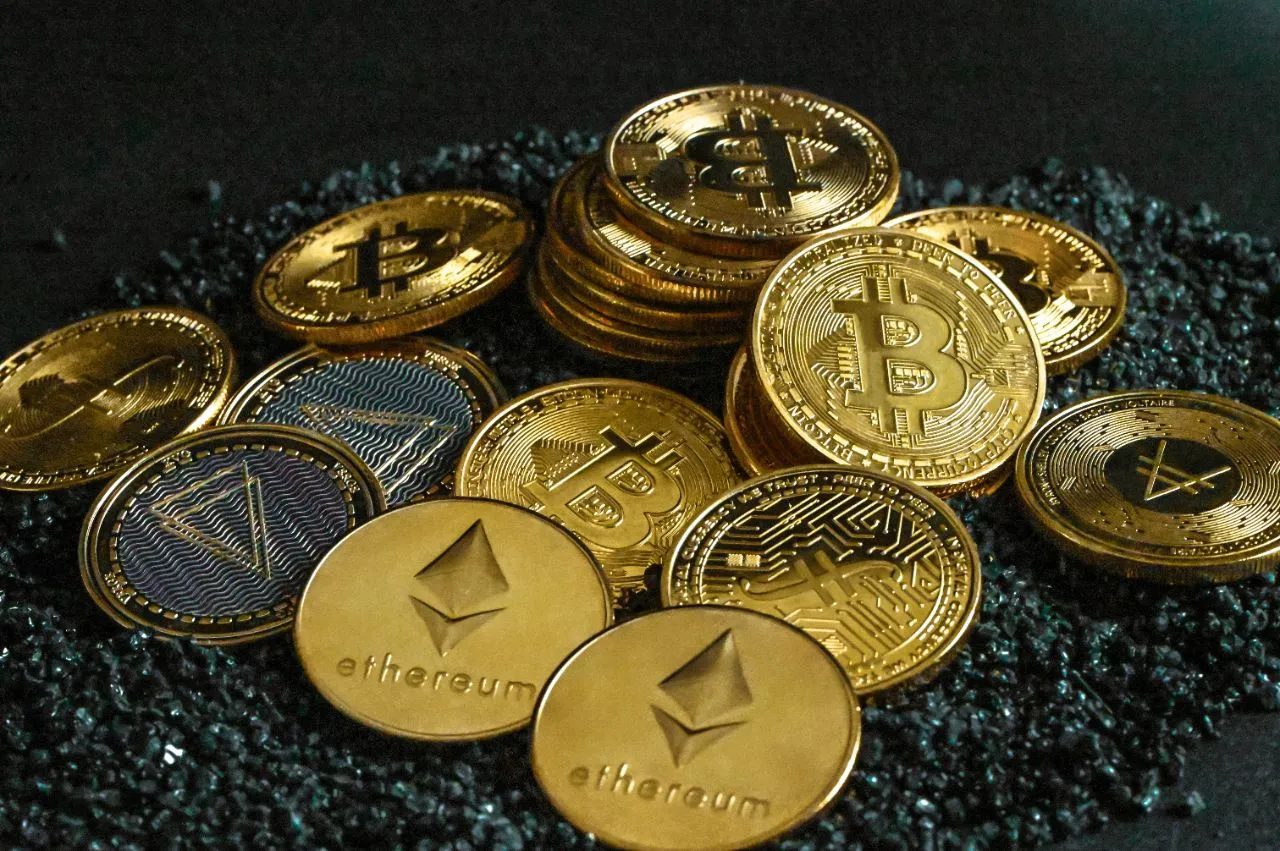
https://asset.coinness.com/en/news/db71559f141f43539e2bc0216cd969d5.webp
Photo by Traxer on Unsplash

Impact of asset volatility on property values

The policy follows growing evidence that volatility in assets like cryptocurrency can spill over into the property market. A 2024 study cited by Maeil Business Newspaper highlighted that both the COVID-era stock rally and Bitcoin's 2023 price surge had a discernible impact on housing values.


According to Yu Jung-suk, a professor at Dankook University, apartments in Seoul's affluent Gangnam district are particularly sensitive to fluctuations in Bitcoin and the KOSDAQ index. He noted that high-profile property acquisitions by young crypto investors, even if few in number, can significantly sway market sentiment. Professor Yu suggested that regulators may need more comprehensive tools to manage the risks connecting different asset classes.


The government's new measures also seek to cool the capital's housing market, where prices have continued to rise despite a slowdown in growth. In contrast, prices in areas outside Seoul have been declining since 2022. To address the supply-demand imbalance, officials plan to begin construction of 1.35 million new homes in the Seoul metropolitan area between 2026 and 2030.


Stablecoin regulation and CBDC trials advance

Beyond real estate, officials are developing a formal regulatory structure for stablecoins. The Presidential Commission on Policy Planning is reportedly considering a model where a consortium of banks and fintech firms would be granted rights to issue a won-pegged stablecoin.


Supervision for this new system would fall to a proposed Financial Stability Council, a body intended to serve as a central coordinator for financial policy, comprising the finance ministry, the Bank of Korea, and other regulators. The initiative aims to combine the stability of the traditional banking sector with the innovation of non-bank financial companies.


The evolving regulatory environment is attracting attention from global industry leaders. Executives from Tether, the issuer of the USDT stablecoin, met with Shinhan Financial Group CEO Jin Ok-dong in Seoul on Sept. 8. While Tether representatives stated they were monitoring the regulatory climate, they confirmed no specific business plans were discussed.


Separately, the Bank of Korea is moving forward with digital currency experiments. In partnership with government agencies and six major commercial banks, the central bank will launch a pilot program to test the use of a digital currency for distributing state subsidies and vouchers.


 

More to Read
View All
Web3 & Enterprise·

Sep 14, 2023

Raon Whitehat Launches Cloud-Based NFT Wallet for OmniOne Marketplace

Raon Whitehat Launches Cloud-Based NFT Wallet for OmniOne MarketplaceSouth Korean tech security firm RaonSecure announced Thursday that its subsidiary Raon Whitehat has launched a cloud-based NFT wallet service on the OmniOne NFT marketplace, specializing in utility NFTs that are backed by tangible assets like gold.Photo by C Dustin on UnsplashMore secure and convenientUsers can easily create an account for the OmniOne NFT cloud wallet by entering a username and password. This cloud-based solution offers advantages over mobile app-based NFT wallets, which can present occasional inconveniences. In scenarios involving app deletion, device change, or device loss, one faces the cumbersome task of reinstalling the application and going through the authorization process again. In contrast, the cloud wallet provides a more seamless experience. NFTs are securely stored in the cloud and can be accessed from any device, requiring only the recollection of a username and password.Transferring NFTsIndividuals who have NFTs stored within their current app-based NFT wallet can create a new cloud wallet account and proceed to transfer their NFTs from the existing app-based account to the new cloud account by utilizing the “Send as Gift” feature.RaonSecure CEO Lee Soon-hyung announced that users are now able to store their gold-backed NFTs, purchased from the OmniOne NFT marketplace, in the cloud wallet. He explained that this development addresses the issue of potential NFT asset loss due to app deletion or device loss.Furthermore, Lee emphasized that Raon Whitehat is dedicated to introducing more innovative services in the future. These services will prioritize user convenience and security, specifically in the storage of diverse digital assets like NFTs and certification badges.

news
Web3 & Enterprise·

Oct 26, 2023

Web3 Fashion Platform doDRESS Opens Pop-up Store in Seoul

Web3 Fashion Platform doDRESS Opens Pop-up Store in SeouldoDRESS, a fashion and lifestyle platform created by the faculty at Kookmin University in Seoul, has opened a pop-up store in Seoul in line with the launch of its new website. doDRESS aims to create a decentralized Web3 fashion ecosystem centered around brands, creators, and influencers, providing a space to communicate with consumers and promote their businesses and content. In turn, consumers can get the chance to dive into a new form of Web3 technology and express themselves through their personal style.Photo by No Revisions on UnsplashInteractive space for creators and consumersThe pop-up store, which was revamped from an old auto repair shop, has invited some 40 designers and graphic artists to showcase and sell their unique street fashion-inspired clothing and graphic art to consumers. It will also present an opportunity for them to interact with influencers who can contribute to the marketing and distribution of their products, thus boosting their value.Creators and those who wish to become creators can upload the products they make on doDRESS. When a product is sold, every individual in the platform’s Web3 ecosystem who contributed to making it will receive a portion of the revenue.Visitors, on the other hand, can customize their own clothing by printing designs created by the artists themselves through doDRESS’s fashion stickering service, which is available both online and offline at the pop-up store. The platform also said that it would give out custom doDRESS products worth KRW 40,000 (approximately $30) on a first-come, first-served basis to 70 visitors on weekdays and 200 on weekends.Future plans for growthIn the future, doDRESS aims to expand on a global scale and add more clothing products to its services utilizing various production techniques like 3D printing.The pop-up store will be open until next Wednesday (local time) in Seongsu-dong.

news
Policy & Regulation·

Oct 22, 2025

Singapore launches BLOOM initiative to advance digital finance infrastructure

The Monetary Authority of Singapore (MAS) has unveiled a new initiative aimed at enhancing the nation’s financial infrastructure through the use of stablecoins and tokenized commercial bank money. Announced on Oct. 16, the project, known as BLOOM, short for Borderless, Liquid, Open, Online, Multi-currency, brings together 16 financial sector participants, including Anchorage Digital, Ant International, Circle, Coinbase, and DBS Bank. According to MAS, BLOOM is open to additional participants through a registration form available on its official website.Photo by Jason Leung on UnsplashBuilding on Project OrchidBLOOM operates under Project Orchid, a digital Singapore dollar initiative launched in 2021 to explore potential applications of central bank digital currency (CBDC) in strengthening Singapore’s financial ecosystem. Through BLOOM, it will examine use cases involving G10 and Asian currencies, covering both domestic and cross-border payments, as well as wholesale financial transactions. The project’s focus includes coordinating interoperability between different networks to enable the distribution and clearing of settlement assets. It will also explore automated compliance checks and study methods to make wholesale settlements more efficient and cost-effective. Artificial intelligence (AI) agents are expected to play a supporting role, executing transactions automatically within predefined limits and regulatory parameters. Expanding stablecoin usage in SingaporeThe MAS initiative comes shortly after the listing of XSGD, a Singapore dollar–backed stablecoin, on the U.S.-based crypto exchange Coinbase on Oct. 1. XSGD is issued by StraitsX, a digital payments provider, and is fully backed by reserve assets held with DBS Bank and Standard Chartered. Stablecoin payments have gained traction in Singapore’s retail sector as well. StraitsX recently began supporting settlements in USDT and USDC through OKX Pay. Consumers can use SGQR codes at participating GrabPay merchants to make everyday purchases, such as coffee, with transactions settled directly in Singapore dollars into merchant accounts. Rising local interest in digital assetsSingapore’s growing engagement with digital assets reflects a broader trend of public interest. A report from ApeX Protocol, cited by Cointelegraph, ranked Singapore as the world’s most “crypto-obsessed” nation, awarding it a composite score of 100. The ranking considered ownership rates, adoption growth, search activity, and ATM availability. The study found that 24.4% of Singapore’s population holds cryptocurrency, ahead of the United Arab Emirates (UAE), which scored 99.7 despite a 25.3% ownership rate. In a separate development, Channel News Asia reported that three Singaporeans have been implicated in a large-scale fraud scheme linked to Cambodia’s Prince Group. The U.S. Department of Justice recently confiscated 127,271 Bitcoin tied to the operation—the largest seizure in its history. Following the investigation, the U.S. Department of the Treasury’s Office of Foreign Assets Control imposed sanctions on the three individuals as well as 17 Singapore-registered entities. The sanctions block access to any property in their possession and prohibit U.S. persons from engaging in transactions with them, citing risks to U.S. national security and foreign policy interests. 

news
Loading