Top

First Toyota vehicle in Bolivia purchased with USDT as inflation bites

Web3 & Enterprise·September 23, 2025, 6:30 AM

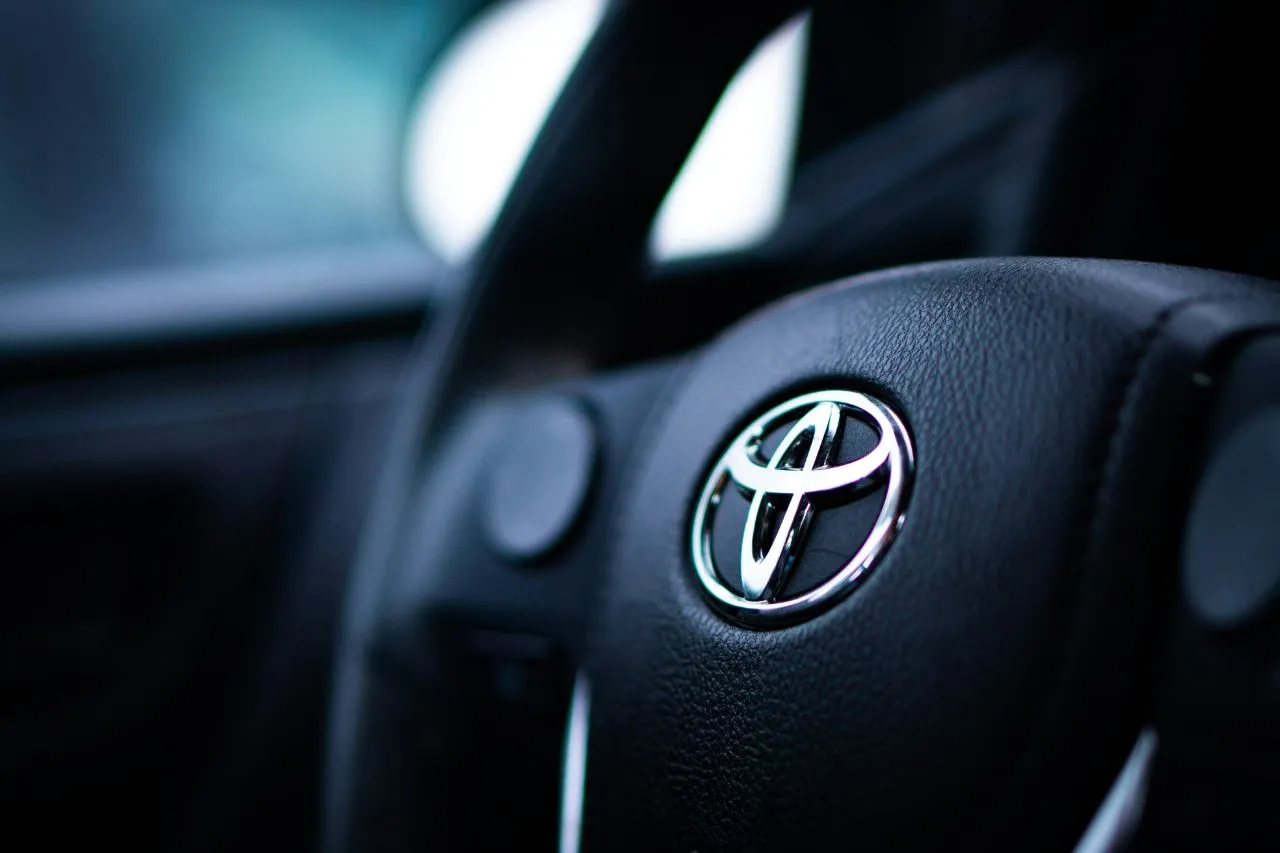
In a first for Bolivia, Japanese automaker Toyota saw one of its vehicles purchased with the stablecoin USDT, according to a recent X post by digital asset trust company BitGo. The transaction underscores growing cryptocurrency adoption in the Latin American country, which is grappling with soaring inflation and a shortage of U.S. dollars.


The transaction was facilitated by a partnership between Toyosa (the official Toyota distributor in Bolivia), BitGo, and Tether, the issuer of the USDT stablecoin. The sale highlights the increasing use of digital assets for commercial and retail payments, as the global stablecoin market cap recently reached an all-time high of $293 billion at the time of publication.


Confirming the milestone, Tether CEO Paolo Ardoino stated on the social media platform X that, in addition to Toyota, the USDT stablecoin is now also accepted by distributors of BYD and Yamaha vehicles in Bolivia.
https://asset.coinness.com/en/news/b94b96d990aa5d76bf8b4727fd086674.webp
Photo by Christina Telep on Unsplash

Crypto use surges amid inflation and dollar shortage 

The development comes as Bolivia faces 25% inflation, the highest in 34 years. With the local economy under pressure, many Bolivians are moving their money into cryptocurrencies in an effort to protect their savings, according to Bloomberg. U.S. dollars have become increasingly scarce. Unofficial exchange rates have jumped to 14 bolivianos per dollar, nearly twice the government's rate. That gap is pushing people toward stablecoins like USDT, which are easier to access and hold their value. The shift is already showing up in payment trends. Digital transactions surged more than fivefold in the first half of 2025, reaching nearly $300 million.


Regional adoption and Toyota’s blockchain push

The rise in crypto use in Bolivia is part of a broader shift across Latin America. According to a recent report from analytics firm Chainalysis, crypto adoption in the region jumped from 53% to 63% in the 12 months ending June 2025. The only region to outpace this growth was Asia-Pacific, which saw a 69% year-over-year increase. El Salvador stands as another prominent example in the region, having adopted Bitcoin (BTC) as legal tender in September 2021 and currently holding over 6,300 BTC in its treasury.


Separately, Toyota Motor Corporation has been actively exploring applications for blockchain technology. In March, its subsidiary Toyota Financial Services, in collaboration with Daiwa Securities and MUFG Bank, launched its first security token bonds on Progmat, a platform founded by MUFG with backing from other big banks like Sumitomo Mitsui Banking Corporation (SMBC) and Mizuho. The initiative is aimed at strengthening the Toyota Group’s ties with individual investors and supporting the growth of the digital bond market.

 

More to Read
View All
Web3 & Enterprise·

Jan 15, 2024

Conan Korea launches open beta service for decentralized storage network

Conan Korea has launched an open beta service for OceanDrive, a desktop platform that contains a network of decentralized computer storage for users to share and explore their digital assets, according to an article published by South Korean news outlet Asia Times on Monday (KST). In comparison to cloud storage, which is subject to service provider policies, has no reward system, and relies on centralized servers, OceanDrive distributes storage across multiple nodes, is equipped with user-controlled access and encryption, and provides incentives for participation and contribution.Photo by Shubham's Web3 on Unsplash"The blockchain market is currently transitioning from NFTs to decentralized physical infrastructure networks (DePIN), which combines digital currency and physical infrastructure. OceanDrive is a platform optimized for the DePIN paradigm and is now making its market debut after four years in development,” explained Pyo Se-jin, CEO of Conun Korea.  Global collaborationThe project aims to create a vast network of storage resources scattered across the globe, all while providing users with cost efficiency, rewards and opportunities for collaboration and sharing of knowledge.  "We hope that this open beta service will give people a chance to experience OceanDrive’s user-friendly system and recognize its difference from cloud storage," Conun Korea said. "We are currently working on implementing OceanDrive into a popular Korean fashion boutique as well as a major online educational institution."      2024 plansThrough this open beta service, the company plans to build a blockchain network infrastructure platform of the highest quality by overcoming the shortcomings of OceanDrive and maximizing its advantages so it can be used not only domestically, but abroad as well.

news
Markets·

May 09, 2025

Binance survey reveals evolving security habits of Asian platform users

Global crypto exchange Binance has carried out a survey which reveals that the security habits of Asian platform users are evolving positively.Photo by Vadim Artyukhin on UnsplashUsers responding to more sophisticated scamsIn a blog post published by the crypto exchange platform on May 6, Binance revealed that it had carried out a survey of nearly 30,000 platform users across Asia. The company’s takeaway following analysis of the survey data is that “scams are evolving — and so are crypto users.” The firm suggested that users are “stepping up their security game,” with exchanges facing growing demand from their users for real-time protection and smarter security tools. Increasing use of 2FAThe exchange platform found that 80.5% of survey respondents now use Binance two-factor authentication (2FA). While the use of 2FA is definitely a move in the right direction, it doesn’t guarantee the safety of a user’s digital assets.  In an article published by Forbes last month Forbes Contributor Davey Winder warned that infostealer malware can compromise 2FA codes in as little as 10 seconds. In June of last year, an OKX user lost $2 million in crypto to a hacker who utilized AI despite the victim having used Google’s 2FA. Double-checking transfersThe survey found that 73.3% of users double-check transfers before sending digital assets. Due to the nature of decentralized cryptocurrency, crypto transactions are not easily reversed and are usually irreversible. That puts a greater responsibility on crypto users to ensure that they are sending funds to the appropriate wallet address. Double-checking transfer addresses is not only necessary due to human error. Malware is also used by hackers to spoof such addresses, tricking the sender into sending the digital assets to their address rather than the one that was originally intended. It emerged in May 2024 that a Bitcoin trader had lost more than $70 million in Bitcoin in an “address poisoning” scam. Binance itself had warned users last September that “clipper malware,” which intercepts clipboard data on a user’s phone or desktop, replacing copied wallet addresses with alternative addresses under the hacker’s control, is increasingly being employed in hacking attempts. While the survey has revealed a positive evolution in the security habits of Asian platform users, there’s still room for further improvement. Just 17.6% of survey respondents utilize address whitelisting, a measure that restricts account user access to a safe list of pre-defined trusted addresses. Only 21.5% of survey respondents use anti-phishing codes as a security mechanism. The objective of phishing is to steal data, install malware on a user’s device or otherwise gain account access. An anti-phishing code aids the user in verifying the authenticity of emails and texts from a specific service. Security remains a major issue within crypto. Last month, hackers employed social engineering tactics to steal $330 million in Bitcoin from an elderly American victim. Exchange platforms themselves continue to struggle to safeguard user funds. Earlier this year, Binance competitor, Dubai-headquartered Bybit, suffered a $1.5 billion hack believed to have been perpetrated by North Korea’s Lazarus Group. Lazarus is also thought to have been behind a $235 million crypto theft at Indian crypto exchange WazirX in July 2024.

news
Web3 & Enterprise·

Oct 20, 2025

Sony Bank seeks OCC nod for U.S. dollar-backed stablecoin and crypto services

Sony Bank, a Japanese neobank headquartered in Tokyo, has applied to the U.S. Office of the Comptroller of the Currency (OCC) to establish a new trust bank, Connectia Trust, as part of a broader expansion into digital assets. According to Sony Bank’s application, if approved, Connectia Trust would issue U.S. dollar–pegged stablecoins and manage the corresponding reserves. The entity would also offer non-fiduciary custody of digital assets and provide fiduciary asset-management services for certain affiliates.Photo by P. L. on UnsplashSony among 11 crypto applicants to the OCCSony Bank’s filing is among 11 crypto-related applications before the OCC, alongside efforts by Coinbase, Nubank, Paxos, BitGo, Ripple, and others. To date, only two banks have advanced through the agency’s charter approval process. In 2021, the OCC conditionally approved the conversion of Anchorage Trust Company into Anchorage Digital Bank, granting it a national trust bank charter. More recently, last week, Erebor Bank, backed by PayPal co-founder Peter Thiel, received preliminary conditional approval for its de novo charter. The initiative reflects Japan’s growing openness to cryptocurrencies, underscored by the government’s recent regulatory approval of the country’s first yen-denominated stablecoin. Fintech firm JPYC Inc. plans to launch “JPYC” this fall, pegged at 1 yen per token and designed for person-to-person transfers and retail payments, with plans for point-of-sale integration. The issuer targets up to 10 trillion yen ($66.7 billion) in circulation within three years. There are no limits on holdings or wallet transfers, while redemptions are capped at 1 million yen ($6,700) per user per day. Sony Bank has been building its Web3 capabilities this year. Its board approved a new subsidiary for blockchain initiatives in May, later renamed BlockBloom in August. Now operational, BlockBloom aims to connect fans and artists and bridge digital and physical experiences, as well as fiat and digital assets. Its ultimate parent, Sony Group, launched a blockchain mainnet called Soneium in January through Sony Block Solutions Labs, S.BLOX, and SNFT. Built as an Ethereum layer-2 network powered by Optimism’s Superchain technology, Soneium recently announced support for meco.fun, a SocialFi platform that enables creators to earn through memes, content, and NFTs. MUFG’s blockchain initiatives at home and abroadJapan’s top traditional banks are also expanding their involvement in digital assets, with a growing focus on stablecoins. An Oct. 17 Nikkei report, cited by CoinDesk, said Mitsubishi UFJ Financial Group (MUFG), Sumitomo Mitsui Financial Group, and Mizuho Financial Group aim to develop a unified system to issue and transfer stablecoins among corporate clients. Their first rollout will focus on yen-pegged tokens, followed by a potential dollar-based offering. According to an earlier report from Reuters, MUFG and nine other major international banks, including Bank of America, Deutsche Bank, Goldman Sachs, and UBS, are collaborating on stablecoins tied to G7 currencies. MUFG has additionally rolled out a blockchain-based business with Mitsubishi UFJ Morgan Stanley Securities (MUMSS), which is offering bond security tokens and operating ASTOMO, a trading venue for retail investors that has debuted with tokens backed by real estate. The platform lets users invest from 100,000 yen (about $667) on their phones. In summer, MUFG’s trust unit, Mitsubishi UFJ Trust and Banking, acquired a high-rise building in Osaka for more than 100 billion yen ($667 million), with plans to issue digital securities tied to the asset. The tokenization strategy would offer fractional ownership to retail investors long excluded from major real estate opportunities. Taken together, Sony Bank’s OCC application and Japan’s accelerating tokenization efforts signal a race among major financial and technology players to build compliant, scalable infrastructure for digital assets—both at home and abroad. 

news
Loading