Top

X-TICKET teams up with Catalyze Research for XRPL expansion

Web3 & Enterprise·November 06, 2023, 3:48 AM

South Korean Web3 performing arts platform X-TICKET has signed a memorandum of understanding (MOU) with Catalyze Research, a Web3 research firm and an official partner of Ripple, to jointly expand the XRP Ledger (XRPL) ecosystem and support the integration of Web3 into Korea’s performing arts landscape.
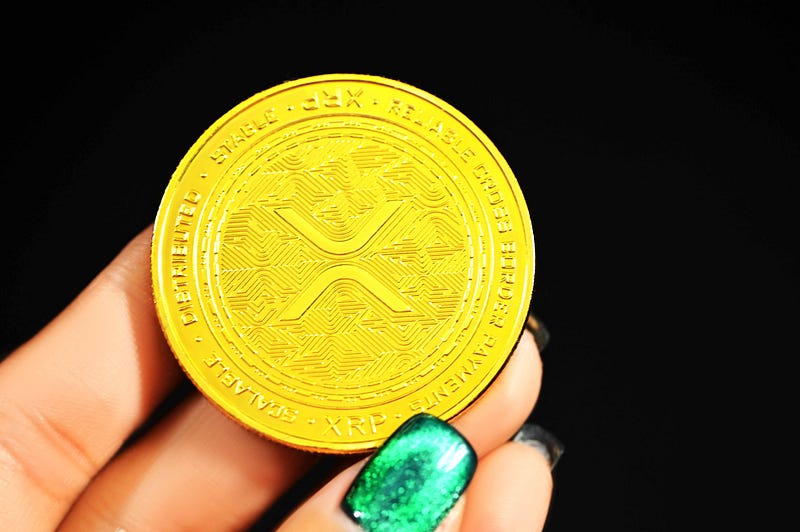
Photo by Kanchanara on Unsplash

“We are delighted to work alongside Catalyze Research. The XRPL ecosystem, together with XRP, is poised to play a significant role in bringing the Korean performing arts industry onto the global stage. We hope to create synergies through collaborations with Korean cultural performances,” said X-TICKET CEO Shin Yong-un.


Leading a new era of event ticketing

X-TICKET harnesses blockchain technology to provide digital collectible tickets for performing arts shows, including live musicals like “Cats” and “The Phantom of the Opera.” This service is expected to revolutionize the industry by preventing various problems that tend to occur with ticketing, such as duplication, loss and scalping, thus fostering a secure, transparent and efficient performing arts ecosystem. The platform recently launched its beta version and held a sales event for NFT tickets to “The Phantom of the Opera” shows.


Pioneering Web3 solutions

Catalyze Research, on the other hand, specializes in Web3 and blockchain research and consultations. The firm teamed up with Ripple in July to expand the presence of XRPL in the Korean market — a decentralized, public blockchain for businesses and developers — and encourage participation in the XRPL developer community.

“Catalyze Research is actively engaged in numerous collaborations to expand the XRPL ecosystem. We plan to implement blockchain technology into X-TICKET and the Korean performing arts sector to extend the ecosystem’s reach,” the firm stated.

The partnership between the two enterprises represents a significant step forward in the intersection of technology and the arts in Korea.


More to Read
View All
Web3 & Enterprise·

Nov 21, 2023

Rotonda launches crypto wallet service Burrito Wallet in Latin America

Rotonda launches crypto wallet service Burrito Wallet in Latin AmericaRotonda, a subsidiary of South Korean crypto exchange Bithumb and the operator of the digital wallet Burrito Wallet, announced on Tuesday (local time) that it has launched its services in the Latin American region, marking its entry into global markets.Photo by Leon Overweel on UnsplashLaunched in February, Burrito Wallet’s primary functions include convenient chat-based cryptocurrency transfers and crypto swapping. It is the largest multi-chain wallet in Korea that supports 11 mainnets, including Bitcoin and Ethereum, as well as over 1,000 token currencies.Expanding region-specific servicesIn addition to these basic services, the Burrito Wallet’s available services in Latin America will include both on- and off-ramp functions for buying and selling crypto, which will be added by the end of this year. An on-ramp function facilitates users in acquiring crypto assets, whereas an off-ramp facilitates users in disposing of their crypto assets. Considering that many countries in the region recognize cryptocurrencies as fiat currencies, the company plans to expand its services to meet the market demand. Furthermore, the company aims to secure users by providing transfer services and various airdrop events.“The greatest advantage of Bithumb Burrito Wallet is the ability to use various functions such as cryptocurrency storage, management, transfers and swapping all in one platform,” explained Burrito Wallet’s Chief Financial Officer Chung Jae-kwon. Jeong recently visited Colombia last month to introduce the wallet service. “We believe that we can respond to the specific demands of the financial environment in Latin America through our user-friendly wallet service,” he added.Addressing economic challengesThe blockchain market in Latin America has been growing rapidly with rising demand for convenient and secure crypto services, driven by low accessibility to traditional finance and unstable economic conditions such as inflation.“As the global financial crisis worsens due to a lack of liquidity in banks, the need for financial instruments that can safely protect assets is increasing,” Chung said. “We anticipate a growing demand for our non-custodial wallet, which allows users to hold their own private wallet keys.”Earlier this month, Burrito Wallet signed a business agreement with the blockchain gaming platform Yooldo to expand their respective blockchain ecosystems and secure a global user base.

news
Policy & Regulation·

Feb 13, 2024

Philippines to move forward with CBDC without blockchain

The Philippines' central bank has confirmed it has no plans to issue a retail version of a central bank digital currency (CBDC) but that it has definite plans to introduce a wholesale-level CBDC, albeit without using blockchain as the underlying technology. Avoiding retail-level bank run riskThe bank expressed concerns that a retail CBDC could potentially trigger bank runs, given the velocity at which digital currency can be transacted. However, in an interview with local media outlet, the Inquirer, the central bank governor Eli Remolona clarified that within the next two years, the country has definite plans to roll out a wholesale CBDC. CBDCs come in retail and wholesale forms, with the former accessible to the general public and the latter exclusively for institutional use. While the Philippines central bank initiated an exploratory study previously relative to CBDC use, concerns have been raised by the Bank for International Settlements (BIS) about the readiness of institutions to handle the risks associated with CBDCs.Photo by Krisia on PexelsDismissing blockchainDespite this move, the bank does not intend to utilize blockchain or digital ledger technology, which are fundamental to many virtual assets. Remolona stated: "Other central banks have tried blockchain, but it didn’t go well." Instead, the CBDC will operate on a payment and settlement system owned by the central bank, with a focus on wholesale transactions mediated by banks. This marks a shift in the central bank's approach to underlying technology where a CBDC is concerned. The Bangko Sentral ng Pilipinas (BSP) initially embarked on an exploratory study regarding CBDCs in 2022, known as Project CBDCPh. Upon completion of that study, it followed up with a pilot project called Project Agila, concentrating on a wholesale CBDC. Project Agila leaned on the use of the Hyperledger Fabric blockchain, considering it for use on the first wholesale CBDC.  Hyperledger Fabric is an open-source blockchain framework hosted by the Linux Foundation. Companies like IBM, SAP and Intel have all contributed to the development of the enterprise-grade permissioned blockchain network. However, it appears that the BSP is shying away from using any type of blockchain-based solution in establishing its CBDC. Regional steps towards CBDC useThe central bank of the Philippines is among several in the Asia-Pacific (APAC) region that are working towards the introduction of a CBDC. Earlier this month an official from the Reserve Bank of India (RBI) outlined that the central bank will move forward with CBDC development while working towards addressing privacy concerns that citizens may have with a digital rupee. Towards the end of last month, the Japanese government, in collaboration with the Bank of Japan, appeared to be gearing up for the rollout of a CBDC. In a recent meeting between both parties, several legislative matters were identified as key to ensuring a smooth path to the unobstructed launch of a digital currency. There has also been a lot of activity relative to attempts to utilize CBDCs for cross-border trade over the course of the past year. In the United Arab Emirates (UAE), the country announced the first-ever use of its CBDC or digital dirham in a trade deal with China using mBridge, a multi-CBDC platform that supports peer-to-peer, cross-border payments in real time.

news
Web3 & Enterprise·

Dec 05, 2023

NEOPIN teams up with Project SEED to propel growth of Web3 gaming ecosystem

NEOPIN teams up with Project SEED to propel growth of Web3 gaming ecosystemCentralized decentralized finance (CeDeFi) protocol NEOPIN has partnered with Project SEED — a blockchain gaming ecosystem based in the United Arab Emirates (UAE) — to grow the global Web3 gaming ecosystem, according to South Korean news outlet News1. NEOPIN plans to serve as a bridge between Project SEED and the IP owners and game studios within its ecosystem, facilitating the creation of more global Web3 games.Photo by Mateo on Unsplash“Connecting notable IPs and game studios to gamify Web3 holds significant meaning beyond just securing well-made Web3 games. We expect to diversify the genres and improve the qualitative standards of Web3 games in collaboration with Project SEED,” said Kim Yong-gi, CEO of NEOPIN.Pioneering Web3 gaming excellenceLed by a team of experts from various cryptocurrency exchanges such as Binance and Crypto.com, Project SEED is the developer behind the popular Web3 action role-playing game (RPG) Outland Odyssey. The firm also operates the Grow Program, which was launched in 2021 to incubate blockchain game projects and allow builders to concentrate their efforts on developing high-quality games. Next year, Project SEED plans to unveil its launchpad platform Seed Launcher as part of the Grow Program to aid gaming finance (GameFi) projects in raising funds and discover promising projects worth investing in.Under the newest partnership, NEOPIN’s CeDeFi wallet function will be integrated into Web3 games and NFT projects that are launched through the Grow Program and Seed Launcher platform, driving worldwide user acquisition and promoting the launch of DeFi products on NEOPIN.“We will leverage NEOPIN’s wallet service, network and blockchain expertise to develop high-quality games for diverse users. We plan to strengthen our capabilities to provide benefits to developers, IP owners and gamers alike,” said Project SEED CEO Liko Subakti.NEOPIN’s blockchain journeySince 2017, NEOPIN has accumulated its blockchain expertise and technology by serving as a node validator in multiple global blockchain projects, including Ethereum, Tron, Cardano and Cosmos. Launched last year, its CeDeFi protocol aims to provide Web3 users with a safe and convenient non-custodial DeFi platform.Earlier this year, the company was selected to participate in the Innovative Program of the Abu Dhabi Investment Office (ADIO), attracting a series of investments. It is also working with the Abu Dhabi Global Market (ADGM), an international financial center and free zone in the UAE, to create the world’s first DeFi regulations through a public-private partnership.

news
Loading