Top

Bitmain’s Latest Air-Cooled Antminer Set to Ship in Q1 2024

Web3 & Enterprise·October 28, 2023, 12:24 AM

Bitmain, the prominent Chinese Bitcoin mining equipment manufacturer, has officially unveiled its latest innovation, the Antminer T21.
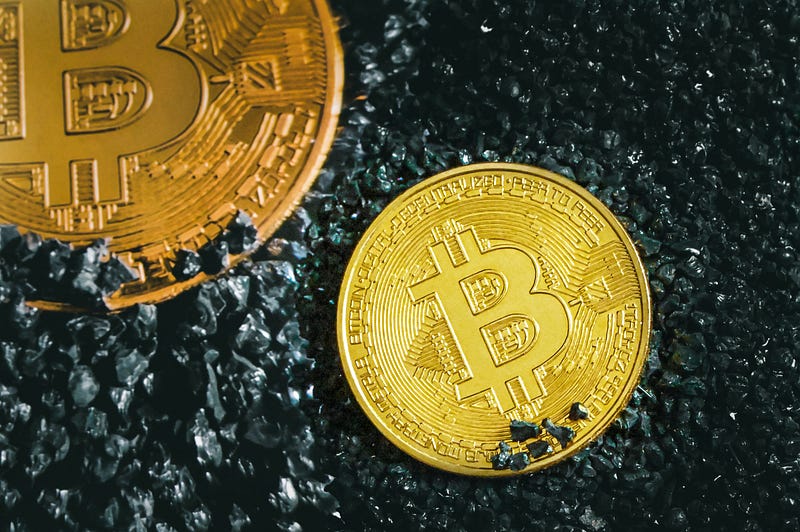
Photo by Traxer on Unsplash


Heat tolerance

The company confirmed in an announcement made on Thursday that the state-of-the-art air-cooled Bitcoin miner will ship during the first quarter of 2024. The Antminer T21 is expected to make waves in the world of cryptocurrency mining given that it can withstand scorching temperatures of up to 45 degrees Celsius.

During a facility tour, the firm tweeted out on Friday: “Although it is so hot here, ANTMINER is still running stable!”

The context of the comment relates to an installation of the new miner’s predecessor at a Moonwalk Systems facility in the arid heat of the United Arab Emirates (UAE). Moonwalk is utilizing water cooling to overcome the local conditions. However, it’s in environments like this one that Bitmain is likely to envisage its latest Antminer performing well.


Energy efficiency

Another standout feature of the Antminer T21 is its energy efficiency. With a stellar energy efficiency ratio of 19 joules per terahash (J/TH), it outpaces its predecessor, the Bitcoin Miner S21 Hyd, which offers an energy efficiency of 16.0 J/TH. This efficiency means miners can maximize their returns while minimizing their energy costs. Additionally, the Antminer T21 boasts an impressive processing power of 190 terahashes per second (TH/s), a crucial factor in the competitive world of Bitcoin mining.

The compatibility of the Antminer T21 with the SHA256 mining algorithm, used in the proof-of-work (PoW) consensus mechanism for cryptocurrencies like Bitcoin, Bitcoin Cash, and Bitcoin SV (BSV), adds to its appeal.

Notably, Bitmain has extended a helping hand to pre-order buyers of the Antminer T21 by offering Bitmain’s Price Protection Plan. This plan, available until November 25, aims to support miners in times of cryptocurrency market volatility. The plan shields customers from price fluctuations in Bitcoin for periods of one, three, or six months.


Company difficulties

Founded in Beijing in 2013, Bitmain swiftly rose to prominence as a global leader in producing Bitcoin (BTC) mining ASICs. However, the company faced internal turmoil due to a power struggle between its co-founders, Wu Jihan and Ketuan Zhan. The situation was eventually resolved in 2021, with Jihan Wu stepping down from his roles as chairman and CEO of Bitmain and selling his ownership share to Zhan for $600 million.

ASIC miner manufacturers like Bitmain have also had to grapple with the backdrop of a challenging market environment that has seen plummeting prices paid for mining equipment over the past two years.

Bitmain has faced scrutiny regarding its treatment of employees. Recent reports from local sources and Bitmain employees revealed that the company issued a notification in September indicating negative operating cash flow. In response to these financial challenges, Bitmain delayed the disbursement of a portion of its employees’ September salaries, raising concerns about the financial stability of the organization. In April of this year, it emerged that the Chinese authorities had imposed a fine on the company due to tax irregularities.

More to Read
View All
Policy & Regulation·

Jul 28, 2023

Hong Kong and Saudi Arabia Collaborate on Tokenization and Payments

Hong Kong and Saudi Arabia Collaborate on Tokenization and PaymentsIn an effort to enhance financial collaboration, Hong Kong and the Kingdom of Saudi Arabia are expanding their ties and focusing on agreements related to tokenization and payments infrastructure.Photo by Ketut Subiyanto on PexelsBilateral meetingOn Wednesday, the Saudi Central Bank (SAMA) and the Hong Kong Monetary Authority (HKMA) held a bilateral meeting to discuss various initiatives aimed at integrating financial services between the two nations. During the meeting, the central banks explored areas such as financial infrastructure development, open market operations, market connectivity, and sustainable development. Additionally, they signed a memorandum of understanding (MoU) to facilitate joint discussions on financial innovation.HKMA chief executive Eddie Yue emphasized the potential for cooperation in fields like economy, trade, sustainable development, finance, and fintech between the two nations. He expressed optimism about the continued development of the relationship and the prospects it holds for the future.SAMA governor Ayman Al-Sayari echoed this sentiment, acknowledging the significance of the MoU in fostering stronger ties and assisting them in the future. “HKMA is an important partner for the Saudi Central Bank. Today’s MoU will support our relationship and contribute to the consolidation of efforts in developing the Fintech industry,” he stated.Tokenization and payment infrastructureNotably, the authorities of Hong Kong and Saudi Arabia also used the opportunity to exchange expertise in tokenization, payment infrastructure, and supervision technologies. This collaboration opens up possibilities for both countries to leverage each other’s strengths in these areas.Hong Kong has been actively participating in various inter-jurisdictional tokenization initiatives. In June, the Bank of China’s investment bank subsidiary, BOCI, issued a $28 million tokenized security in Hong Kong using the Ethereum blockchain. The project utilized Goldman Sachs’ tokenization protocol GS DAP and featured cash tokens representing claims on the Hong Kong dollar.Digital assets firm Ripple Labs has also participated in a HKMA pilot program that implicates real estate tokenization.No crypto discussionHowever, the joint announcement did not explicitly mention any joint efforts related to cryptocurrencies like Bitcoin. It is worth noting that Hong Kong recently allowed retail investors to trade crypto, but Saudi Arabia has not shown any specific plans to promote cryptocurrencies in recent years. In 2019, the Saudi Central Bank issued a warning that Bitcoin is not recognized by legal entities within the country.International collaborationRecent months have seen ever greater collaboration between international central banks and regulators relative to digital assets. Last month Japan’s Financial Services Authority (FSA) joined forces with the Monetary Authority of Singapore (MAS) on its Project Guardian initiative to further explore the potential of digital assets.In May, the central banks of Hong Kong and the United Arab Emirates announced a collaboration to work on cryptocurrency regulations and financial technology development. In the same month, MAS partnered with New York’s Federal Reserve Bank on an initiative that examined the use of central bank digital currency (CBDC) for wholesale cross-border payments.As the financial collaboration between Hong Kong and Saudi Arabia strengthens and other such international partnerships continue to unfold, the focus on tokenization and payment infrastructure and digital assets more broadly signifies a step forward in embracing these innovative financial technologies.

news
Web3 & Enterprise·

Jun 10, 2025

Metaplanet raises funds to fulfill 2027 Bitcoin goal

Japanese Bitcoin treasury company Metaplanet, whose shares are listed on the Tokyo stock exchange (3350/TYO), has taken an important step towards its goal of holding 210,000 BTC by 2027. ‘Asia’s largest-ever equity raise’The firm’s CEO, Simon Gerovich, took to the X social media platform on June 6 to outline details of what he termed “Asia’s largest-ever equity raise.” Gerovich stated that Metaplanet had raised 770.9 billion yen ($5.4 billion) by means of moving strike warrants, implicating 555 million shares. Moving strike warrants are a type of equity warrant through which the strike price changes over time. Photo by Cullen Cedric on UnsplashGerovich claimed that the warrants were issued at a premium to the market due to Metaplanet’s “high volatility and deep liquidity.” The Metaplanet CEO stated that the firm is targeting 100,000 BTC by the end of 2026 and 210,000 by the end of 2027. On June 2, the firm announced that it had acquired its latest tranche of Bitcoin, adding another 1,088 BTC to its corporate treasury. The company paid an average Bitcoin unit price of 15,519,019 yen ($107,000). Metaplanet has adopted the treasury playbook first pioneered by Michael Saylor’s Strategy (formerly MicroStrategy), acquiring the leading crypto asset through a combination of equity issuance, debt financing and opportunistic buying.  Russell Okung, a former professional American football player and well-known Bitcoin proponent, took to X on June 6 to highlight that Saylor “lit the match” through Strategy in the United States.  Okung stated: “Metaplanet just launched the rocket in Asia. When capital moves, narratives follow.”He added that “Metaplanet didn’t just buy Bitcoin. They’re directing global attention toward Japan.” Both Metaplanet and Strategy have appealed to investors who are otherwise not in a position to gain exposure to Bitcoin directly, either as a result of regulatory issues or concerns with regard to the custody of the digital asset.  Corporate treasuries adopting BitcoinIn addition to these companies who have led first with a Bitcoin treasury as their primary attraction, other corporates have added Bitcoin to their corporate treasuries while maintaining their focus on other business activities.  Announcements have come thick and fast over the course of recent weeks, particularly in the Asian region.  A number of Nasdaq-listed companies, including Hong Kong-based Reitar Holdings, Indonesian fintech firm DigiAsia, Malaysia-based Treasure Global and South Korea-based K Wave Media, have all announced the addition of Bitcoin to their corporate treasuries.  Metaplanet’s new funding round will put it on track to achieve the goal of obtaining 210,000 BTC by 2027, equating to approximately 1% of the entire Bitcoin supply. The Japanese firm’s shares have risen in price by over 275% since the beginning of this year. According to BitcoinTreasuries.net, Strategy remains the largest corporate treasury holder of Bitcoin with 582,000 BTC. It’s followed by MARA Holdings, Twenty One, Riot Platforms, Galaxy Digital Holdings and CleanSpark. Tesla, Hut 8 Mining Corp and Coinbase Global also feature prior to Metaplanet which comes in tenth place.

news
Policy & Regulation·

Jun 16, 2023

Tether Critics Point to Previous Chinese Securities Backing

Tether Critics Point to Previous Chinese Securities BackingUSDT stablecoin issuer Tether (USDT) has long faced persistent scrutiny and criticism due to the lack of transparency surrounding the assets backing their digital currencies. The latest allegations come in the form of a report by Bloomberg on Friday suggesting that the world’s largest stablecoin was once backed by securities issued by Chinese companies.Photo by Manuel Joseph on PexelsNYAG releases documentsThese findings were based on documents made public by the New York Attorney General (NY AG). The documents disclosed that Tether had listed securities issued by China’s state-owned Industrial and Commercial Bank of China, China Construction Bank, and Agricultural Bank of China as part of its reserves backing the USDT stablecoin.Rumors about USDT’s exposure to Chinese securities have circulated for a number of years. In 2021, a Bloomberg research report revealed that Tether’s reserves reportedly included billions of dollars in short-term loans to China-based companies, as well as a significant loan to the collapsed crypto lender Celsius Network.However, in February 2021, Tether reached a settlement with the NY AG’s office over accusations of providing misleading information about its reserves and losses. To address these concerns, Tether handed over documents such as letters, bank accounts, reserve holdings, and wallet addresses through the law firm Steptoe.Attestation reportTether’s latest attestation report for Q1 2023, released on May 10, offered further details about its reserves. According to the report, Tether’s reserves were valued at $81.8 billion at the end of the quarter, a significant increase from the earlier period of $14.8 billion. These reserves consisted of $53 billion in US Treasuries, $1.5 billion in Bitcoin, and $5.3 billion in loans described as “over-collateralized.”The disclosure of Tether’s previous backing by Chinese securities adds another layer of complexity to the stablecoin landscape, raising questions about the risk exposure and potential impact on the stability of these digital assets. Using Chinese commercial paper to back a US dollar stablecoin is a risky endeavor.It raises the same issues as we’ve seen with the plethora of crypto lenders that went bankrupt in 2022. In those cases, they were using customer money to speculate and turn a profit. That’s fine when it works but when it goes wrong, it is customers who suffer. In its defense, Tether has stated that it only held A1 rated banking sector Chinese commercial paper in 2022 in state-owned Chinese companies like Industrial & Commercial Bank of China Ltd., China Construction Bank Corp., and Agricultural Bank of China Ltd. It reduced this exposure to zero later that year.With the cryptocurrency community and regulators seeking greater transparency and accountability, the industry is likely to face increased scrutiny and calls for enhanced regulations to ensure the integrity of stablecoin operations moving forward.As regulators continue to assess and navigate the evolving crypto market, it remains to be seen how the industry will address these concerns and establish clearer guidelines for stablecoin issuers to ensure the trust and confidence of market participants.

news
Loading
