Top

Dtcpay Looks to Extend Crypto Payment Services to Hong Kong

Web3 & Enterprise·July 15, 2023, 1:01 AM

Dtcpay, a Singapore-based payment processor catering to both fiat and cryptocurrencies, has set its sights on expanding into Hong Kong by the end of this year. The company also has plans to establish an office in Dubai, another prominent crypto hub, by 2024.
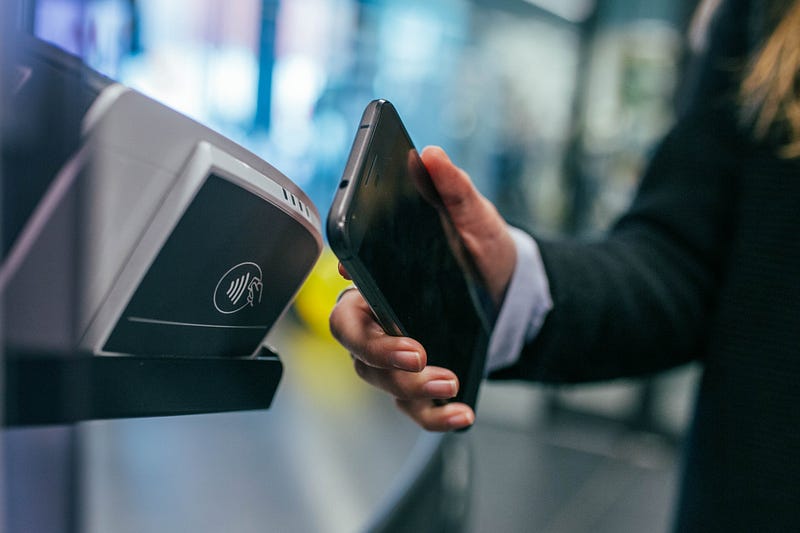
Photo by Jonas Leupe on Unsplash


North Asia potential

In an interview with Tech in Asia, Kanny Lee, the group CEO of Dtcpay, expressed optimism about the North Asia market, citing clear regulations and rules for digital assets and the recent opening up to retail participants. Lee believes that the region holds significant potential for growth over the course of the coming years.

Dtcpay generates revenue through crypto conversion rates on transactions and has already acquired approximately 12 merchants. The company aims to onboard up to 100 merchants by the end of 2023. Since the beginning of this year, the firm has experienced a fourfold increase in transaction volume.


Seamless regional payments

Lee acknowledged that most consumers view tokens primarily as investments. Dtcpay’s objective is to unify various payment methods across different countries, including Indonesia, Malaysia, India, Vietnam, and Singapore, providing a seamless experience for both merchants and consumers.

As an example, Dtcpay enables users to purchase cars using cryptocurrencies, significantly reducing transaction fees from approximately 4% to just 0.5% compared to cash payments. Notable partnerships in Singapore include Cars and Coffee and DM Autohaus.

In June, Dtcpay secured a pre-series A funding round, raising $16.5 million from Kwee Liong Tek. Tek, the chairperson of the Pontiac Land Group, which owns renowned hotels such as the Ritz-Carlton and Conrad Hotels in Singapore, has enabled Dtcpay to target the hospitality sector. At the time Lee said that there are an increasing number of businesses expressing interest in collaborating with regulated entities in the digital assets space and combined with an increase in the adoption of digital payments, that’s turbocharging DTCpay’s business.


Rebrand

That focus on digital payments led to the company rebranding back in April from Digital Treasures Center to Dtcpay. It appears that Hong Kong was already on the company’s radar back then as Lee stated at the time that “in Asia, particularly the key tier 1 financial capitals such as Singapore, Hong Kong and Tokyo, [they] have experienced a rapid rate of digital adoption primarily due to transparent regulatory frameworks for digital financial inclusion.”

Additionally, Dtcpay obtained a major payment institution license from the Monetary Authority of Singapore in August 2022. The company plans to launch a debit card in Q4 2023. That product will allow cardholders to convert their cryptocurrencies into multiple currencies without incurring foreign exchange fees.

The company was co-founded in 2019 by Sam Lin, Band Zhao, and Alice Liu, with Lee joining the company earlier this year with a view towards expanding its area of operations beyond Singapore.

With its expansion plans into Hong Kong and its focus on innovation, Dtcpay is certainly aiming to establish itself as a leading player in the crypto payment services industry, catering to the evolving needs of merchants and consumers alike.
More to Read
View All
Policy & Regulation·

Jul 20, 2023

China’s Crypto Crackdown Reveals Capital Control Loopholes

China’s Crypto Crackdown Reveals Capital Control LoopholesChinese authorities have been stepping up their efforts to crack down on cryptocurrency-related crimes, and with that, uncovering how digital currencies are being used to bypass strict capital controls imposed by Beijing.China may be a few years into a crackdown against the use of cryptocurrencies but despite that, their use and particularly their use for illicit purposes continue. That’s according to a report on Wednesday by the South China Morning Post (SCMP).Photo by Christian Lue on UnsplashCombating capital outflowsThe rising trend of capital outflows has prompted Chinese authorities to take action. Two prominent cases illustrate the extent of these illegal activities and the value of assets seized.In Jingmen, a city in Hubei province, police disclosed details of an online gambling case involving digital currencies used to evade regulation. The case has implicated over 50,000 individuals and a turnover of billions of dollars. Although the specific virtual currency was not mentioned, authorities revealed that they had frozen multiple accounts with a combined value of $160 million.Meanwhile, in Shanxi province, police solved a money laundering case linked to 380 million yuan worth of USDT, the US dollar stablecoin issued by Tether. China’s State Administration of Foreign Exchange is responsible for monitoring cross-border capital flows. Accordingly, it has taken steps to curb these illicit activities. Late last month, it fined ten firms in order to maintain order in the forex market.Digital yuan developmentThese recent cryptocurrency cases have exposed loopholes in China’s capital control system. Crypto mining and trading have long been banned by Chinese regulators. As an alternative, China has been actively developing its own central bank digital currency (CBDC), known as the digital yuan or e-CNY. 2023 has seen a raft of measures taken by various regional administrators throughout China to bring about further e-CNY adoption.However, the ban on cryptocurrencies and the launch of the e-CNY have driven many miners and traders underground or to overseas locations such as Hong Kong, which ironically, is vying to become a cryptocurrency hub. The continued depreciation of the yuan against the US dollar has intensified capital outflow pressures.Chinese bonds sell-offInternationally, fund managers have been selling significant amounts of Chinese securities since 2021. That goes against the current regional trend which sees emerging Asian markets experiencing substantial inflows of funds during the same period, according to the Institute of International Finance.That market activity has been in response to Chinese policies and escalating US-China tensions. An Atlantic Council report highlights that international institutional investors have been net sellers of approximately 1 trillion yuan in Chinese bonds since early 2022.China’s efforts to control capital outflows and stabilize the yuan’s value face ongoing challenges, as cryptocurrency-related crimes persist. While the crackdown exposes weaknesses in the country’s capital control system, it also underscores the difficulty authorities will have globally in trying to control digital currency use.

news
Policy & Regulation·

Jun 21, 2023

Korean Financial Watchdog: Investor Protection Boosts Crypto Market

Korean Financial Watchdog: Investor Protection Boosts Crypto MarketLee Bok-hyun, Governor of the South Korean Financial Supervisory Service (FSS), addressed the issue of investor protection measures in the cryptocurrency market during his speech at the fourth Blockchain Leaders’ Club in Seoul. According to a report by local news agency News1, Governor Lee emphasized that these measures would not hinder the market but instead establish a positive cycle by increasing market confidence and driving industry growth.Photo by Joshua Miranda on PexelsCrypto user protectionTo underscore the importance of safeguarding users in the crypto industry, Governor Lee referred to recent incidents such as the collapse of stablecoin Terra and the failures of Silvergate and Silicon Valley Bank. He highlighted how these examples demonstrate the need for protective measures as the influence of the crypto market extends beyond the financial sector and impacts the real economy.Governor Lee further emphasized the FSS’s commitment to maintaining ongoing communication with the crypto industry and adapting the regulatory system to accommodate the changing landscape. He stated that the FSS would assist the industry in establishing its own self-regulatory system, which includes monitoring suspicious transactions and transparent procedures for virtual asset listing. Additionally, the FSS plans to collaborate with industry insiders to prevent misunderstandings when formulating relevant rules and regulations.Governor Lee also touched on the Virtual Asset User Protection Bill, stating that he expects to see the final draft this summer as it is currently undergoing a legislative process in the National Assembly. He highlighted the government’s commitment to improving market order and minimizing investor losses before the law’s implementation. The government is taking a “same risks, same regulation” approach to prevent regulatory arbitrage and establish effective monitoring systems for virtual asset transactions and on-chain data.Unfamiliar but importantMeanwhile, Lee Yong-woo, a member of the opposition Democratic Party of Korea (DPK), echoed the importance of establishing and improving a regulatory framework for the cryptocurrency industry. He drew parallels between the current situation and the dot-com bubble era, emphasizing the significance of not disregarding the potential of the crypto market due to unfamiliarity.Communication channelLawmaker Lee expressed hope that the Blockchain Leaders’ Club would contribute to shaping a stable crypto market by providing opportunities to listen to the opinions of market participants, which can then be reflected in managing and revising laws and regulations.Today’s event, hosted by News1, saw the gathering of lawmakers, government officials, crypto industry leaders, and academics. Among the participants were People Power Party Lawmaker Yun Chang-hyun, the top executives of the five major Korean crypto exchanges (Upbit, Bithumb, Coinone, Korbit, and Gopax), and the CEO of blockchain gaming company Wemade.

news
Policy & Regulation·

Apr 12, 2023

Official Says Hong Kong Should Invest in Web3 Economy

Official Says Hong Kong Should Invest in Web3 EconomyAccording to Hong Kong’s financial secretary, Paul Chan, this is the perfect time for Hong Kong to promote the development of Web3, the next-generation version of the World Wide Web that is decentralized and distributed through the use of blockchain and similar technologies.©Pexels/Tara WinsteadLearning from the dot com boomDespite the recent instability of the virtual assets market and the collapse of some digital asset exchanges, Chan has pointed out that the quality of the real economy has improved since the dotcom bubble burst in 2000, and surviving market players have focused on technological innovation, applications and value creation.In remarks made via a blog post published on Sunday, Chan argues that the development of Web3 is going through the same process. He suggested that the next stage of development would be to focus on developing blockchain technology more deeply to find wider application for it, which would improve existing business models, ultimately benefiting users and improving the quality of the real economy.To accelerate the development of Web3, Chan allocated HK$50 million (US$6.4 million) to the Cyberport business park to organize major international conferences and youth workshops in his latest budget released in February.VASP licensingChan also announced that authorities would introduce a licensing regime for virtual asset service providers (VASPs) in June to ensure appropriate supervision and minimize risks in the innovation and development of Web3. Furthermore, the government is looking into regulating stablecoins or cryptocurrencies with their value pegged to another currency or commodity.According to some local experts, Hong Kong should not delay in pushing Web3 development, and the government should work out clear policies to attract overseas investors and Web3 developers to set up offices in Hong Kong.Working towards a Web3 hubFrancis Fong Po-kiu, honorary president of the Hong Kong Information Technology Federation, told the South China Morning Post that the government could help by building up infrastructure such as data and supercomputing centers to help small and medium-sized enterprises to adopt more advanced technology.Although IT sector veteran Joseph Leung Wai-fung agreed that Hong Kong was lagging Singapore in terms of Web3 development, he suggested that the government should step up efforts to attract overseas investors and Web3 developers by working out clear policies to support them in setting up offices in Hong Kong. He also pointed out that Web3 covers key areas such as artificial intelligence, the Internet of Things, blockchain technology, and metaverse augmented reality, and that every international smart city should explore this area.The recent fluctuations in virtual asset markets and the collapse of some online trading platforms have cast doubts on the future of Web3, but Chan believes that competent market players who survive a “burst bubble” can focus on innovation and make significant strides.The government’s efforts to accelerate the development of Web3 through the allocation of HK$50 million to the Cyberport business park, the introduction of a licensing regime for virtual asset service providers, and the regulation of stablecoins, are steps in the right direction. However, more needs to be done to attract overseas investors and Web3 developers to set up offices in Hong Kong and to build up infrastructure such as data and supercomputing centers to help small and medium-sized enterprises to adopt more advanced technology.

news
Loading