Top

Bitmain Planning Mining Equipment Support For Aleo Blockchain

Web3 & Enterprise·October 25, 2023, 12:30 AM

Bitmain, the leading Beijing-headquartered crypto mining rig manufacturer, is set to bolster the proof-of-work (PoW) blockchain network of Aleo with its upcoming Antminer release.

The firm announced its intentions via a social media post which was published on WeChat on Monday. The move follows Bitmain’s recent introductions of Filecoin and Kaspa mining machines and its latest series of Bitcoin miners.
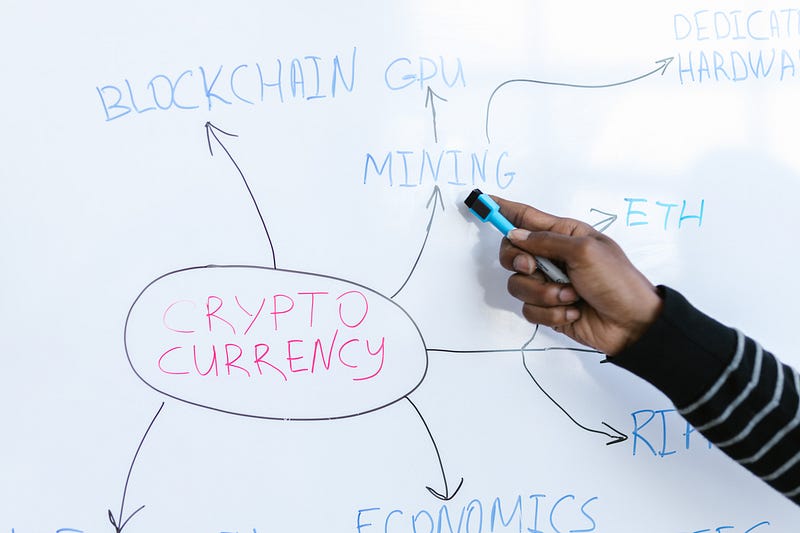
Photo by RDNE Stock project on Pexels


Enhanced privacy through zk proofs

Bitmain plans to unveil a miner compatible with the forthcoming Aleo blockchain network which is currently in testnet mode. Aleo’s PoW blockchain promises to bring enhanced privacy through zero-knowledge (zk) proofs while retaining programmability. Zk proofs represent a cryptographic advancement insofar as they can verify data while it remains encrypted and undisclosed to the verifying party. The blockchain network adopts a statically typed programming language inspired by Rust, known as Leo.

Aleo has been gaining significant attention in the crypto space, much like other venture capital-backed layer 1 blockchains, including Solana, Aptos, and NEAR, before their respective debuts. In April 2021, Aleo’s team successfully secured $28 million in a Series A funding round, with Andreessen Horowitz (a16z) leading the way.

Aleo’s journey reached new heights in February 2022 when its Series B funding round raised a substantial $200 million, pushing the project into unicorn status. This funding round was jointly led by Softbank Vision Fund 2 and Kora Management LP, with participation from a16z, Tiger Global, Sea Capital, Slow Ventures, and Samsung Next.


Latest in series of product launches

Bitmain’s announcement is part of a series of product launches in recent months. In July, the company unveiled a mining rig designed for Filecoin (FIL). The following month marked the shipment of Bitmain’s Kaspa (KAS) mining machines. Shortly after the Kaspa deliveries, Bitmain revealed plans for an August release of a Monero (XMR) mining rig. Most recently, Bitmain introduced two next-generation Bitcoin (BTC) miners from the S21 series.

The Chinese crypto mining equipment manufacturer has faced financial challenges in recent times. In April, it emerged that the company had been fined by the Chinese authorities for tax irregularities.

Earlier this month, reports suggested that the company was experiencing liquidity issues. It failed to pay some of its employees although it later resolved the matter. Reports of staff payment difficulties surfaced two weeks ago. Arising out of that episode, the company subsequently fired three employees for posting information about salary payment issues on social media.

Nevertheless, the firm managed to secure two contracts with US-based mining operations following those reports. In these contracts, Bitmain sold a combined 5.8 exahash per second (EH/s) of its new S21 Antminers to Iris Energy and Cleanspark. In September, Bitmain finalized a deal with troubled crypto miner Core Scientific that will see the firm supply the restructured company with 27,000 Bitcoin miners.

The company has been blighted by internal conflicts going back a number of years between co-founders Jihan Wu and Zhan Ketuan. Subsequently Wu went on to found Singapore-headquartered crypto cloud mining platform Bitdeer.


More to Read
View All
Policy & Regulation·

Apr 10, 2023

Korean Financial Watchdog to Penalize Bankers Involved in Illegal Foreign Remittances

Korean Financial Watchdog to Penalize Bankers Involved in Illegal Foreign RemittancesThe Korean Financial Supervisory Service (FSS) recently completed an investigation into illegal foreign remittances of approximately 16 trillion KRW (~$12,137,718,400) that involved numerous bankers.©Unsplash/Paul FiedlerExploiting the kimchi premiumThe investigation, launched by the Korean financial watchdog last June, found that these lawbreakers sent funds to China, Hong Kong, and other overseas destinations through Korean crypto exchanges, trading firms, and bank branches with an aim of making money through arbitrage by taking the advantage of the kimchi premium, a term used to describe that the higher prices of crypto assets in Korean exchanges compared to their foreign counterparts.Bankers neglecting the KYC ruleSome of these bankers participated in the crime by raising the remittance cap and applying favorable exchange rates to trading companies that had no previous transaction records with banks. By law, bankers in Korea are obligated to follow the “know your customer” rule. It was found that 12 domestic banks and one futures firm were involved in this incident.The FSS has decided to impose strict penalties on these financial institutions, considering they were exploited for money laundering purposes. These entities are likely to have some of their services suspended, with the employees involved being fired.Accountability of top bankersOne key point to watch out for is whether the FSS would be able to hold executives accountable. Some say penalizing top bankers is not easy, given that it has to be proven that the employees’ criminal activities were due to a lack of executives’ internal control.The financial regulator recently announced plans to revise the law governing banks’ governance, but it is expected that such a bill would take some time to pass through the National Assembly.Through a revision of the law, the financial authority aims to hold top executives at financial institutions more responsible for serious financial accidents. It looks forward to bestowing top bankers with the obligation of comprehensive internal control management and making them accountable as an overall manager only in case of critical financial accidents. The term “top executives” in the bill will encompass not only bank presidents but also chairpersons of financial holding companies. More specific revision plans are expected to be revealed by the end of this month.

news
Policy & Regulation·

Jul 06, 2023

Korea’s Virtual Asset User Protection Act to Take Effect in July Next Year

Korea’s Virtual Asset User Protection Act to Take Effect in July Next YearThe Virtual Asset User Protection Bill was passed during the South Korean National Assembly’s plenary session last Friday, according to a report by news agency Newsis. The legislation aims to safeguard customer assets, establish regulations against unfair trading practices, and enforce penalties. The act is scheduled to take effect one year after its passage.Photo by KS KYUNG on UnsplashDefinition of virtual assetsUnder the act, a virtual asset is defined as a digital representation of economic value that can be digitally traded or transferred. It’s important to note that central bank digital currencies (CBDCs) are not considered virtual assets. Virtual assets with characteristics of securities will initially fall under the jurisdiction of the Capital Market Act.Roles of Korea’s central bankThe act grants the Bank of Korea (BOK) the authority to request data and information from virtual asset service providers (VASPs). This provision is deemed necessary for the Korean central bank to formulate monetary and financial policies, despite virtual assets not being equivalent to traditional currencies.Responsibilities of VASPsMoreover, VASPs are obligated to segregate users’ virtual assets from their own holdings. VASPs are also required to reserve the same type and quantity of virtual assets entrusted by users and maintain a certain proportion of these assets in a cold wallet, which is an offline storage solution.Unfair trading practices will be regulated in a similar manner as outlined in the Capital Market Act. The act specifically prohibits the use of undisclosed information, price manipulation, fraudulent transactions, and trading of self-issued virtual assets. VASPs are barred from suspending deposits and withdrawals without legitimate reasons. They are also mandated to monitor suspicious transactions and take appropriate measures to safeguard users. Any suspected unfair trading practices must be promptly reported to financial authorities. Violators of these rules may face criminal penalties, liability for damages, and potential class action lawsuits.Powers of financial authoritiesThe act also clarifies the powers of financial authorities in supervising, inspecting, and taking action against virtual asset operators. Unfair trade practices can result in imprisonment for more than one year (up to 10 years for violations related to self-issued virtual assets) or fines ranging from three to five times the illicit gains. Assets acquired through unfair trade practices will be confiscated, or an equivalent value will be charged if confiscation is not feasible.Impact on crypto investigationsThe absence of legislation directly addressing unfair trading practices in the virtual asset market has posed challenges for prosecutors. They had to rely on existing statutes related to fraud, the capital market, and financial investments. Once the new act takes effect, prosecutors will no longer need to determine whether a virtual asset qualifies as a security or not.Regarding this development, a prosecutor told local legal news outlet Law Times that the implementation of the new act will escalate prosecutorial investigations into cryptocurrency incidents.Meanwhile, the individuals behind the crash of Terraform Labs’ stablecoin TerraUSD and its sister coin Luna will not be subject to this act due to the legal principle of nulla poena sine lege, which prevents the retrospective enforcement of criminal laws. Do Kwon, co-founder of Terraform Labs, was recently sentenced to four months in prison by a Montenegrin court for passport forgery after being arrested in March. The other co-founder, Daniel Shin, has been indicted by prosecutors in Korea.

news
Web3 & Enterprise·

Jul 19, 2023

Polymesh’s APAC Digital Asset Regulation Report Highlights Challenges

Polymesh’s APAC Digital Asset Regulation Report Highlights ChallengesThe project team behind Polymesh, an institutional-grade permissioned blockchain built specifically for regulated assets, released a report on digital asset regulation within the Asia Pacific (APAC) region on Tuesday, highlighting several challenges that regulators are attempting to overcome.In a press release, the company outlined that the report covers recent regulatory developments in South Korea, Singapore, Hong Kong, and the broader APAC region.Photo by Jéan Béller on UnsplashProgressive regulatory effortsRegulators within the APAC region are currently striving to introduce legislation for digital assets, while several centers within the region are vying to establish themselves as hubs for digital asset-related business.The report explores the individual efforts of regulators in various APAC nations as they work towards crafting regulatory frameworks tailored to their jurisdictions. Those efforts encompass implementation, investigation, and enforcement of legislation in a borderless industry.Regulators in South Korea, Singapore, and Hong Kong have all embarked on formulating rules for emerging asset categories, albeit using different terminologies such as “digital assets,” “digital payment tokens,” and “virtual assets.” Their focus lies in striking a balance between consumer protection, market integrity, and industry development.Additionally, all three regulators adhere to the principle of “same activity, same regulations, same risks” when it comes to tokenized securities. They argue that regulatory requirements do not significantly differ solely because a security is in tokenized form. Each state has been actively engaged in local and global activities surrounding security tokens, including state involvement in the advancement of security token technology and cross-border transactions.Main findingsThe report’s main findings emphasize that while regulators in the APAC region are making strides in introducing digital asset legislation, the road ahead will not be without challenges.Legislating a cross-border industry poses difficulties that necessitate harmonization to foster a robust and interconnected ecosystem. Digital assets originating in Asia can be traded globally and vice versa. Merely identifying the asset’s place of origin is no longer sufficient.Although the report delves into the efforts of individual regulators, it emphasizes the need for long-term collaboration to establish a unified vision and practical implementation of regulations for this borderless phenomenon.Regulatory challengesThe regulatory challenges faced by South Korea, Singapore, and Hong Kong in driving the growth of digital assets in the APAC region are multifaceted. They include the intricacies of legislating an inherently cross-border industry. In turn, that can lead to the potential violation of legislation from other jurisdictions.The lack of harmonization among different jurisdictions, and variations in regulatory approaches among the three regulators are likely to be problematic. Furthermore, there are push-pull dynamics between the industry and regulators, with even the regulators themselves not always in agreement.However, despite these challenges, all three regulators have initiated the formulation of rules for new asset categories, with a strong emphasis on safeguarding consumer interests, maintaining market integrity, and fostering industry development.

news
Loading