Top

Seoul and Baobab Partners Face Controversy Over Unpaid Prize Winnings for SWF2023 Hackathon

Policy & Regulation·October 24, 2023, 8:53 AM

The city of Seoul has come under public scrutiny for failing to pay the winners of the Seoul Web3 Festival (SWF2023) Hackathon a cash prize worth KRW 150 million (approximately $112,000). The Seoul Metropolitan Government has argued that since it was simply a naming rights sponsor, the responsibility for paying the prizes lies with Baobab Partners, who co-hosted the event. However, critics argue that the city did not properly vet Baobab Partners more rigorously before hosting the event.
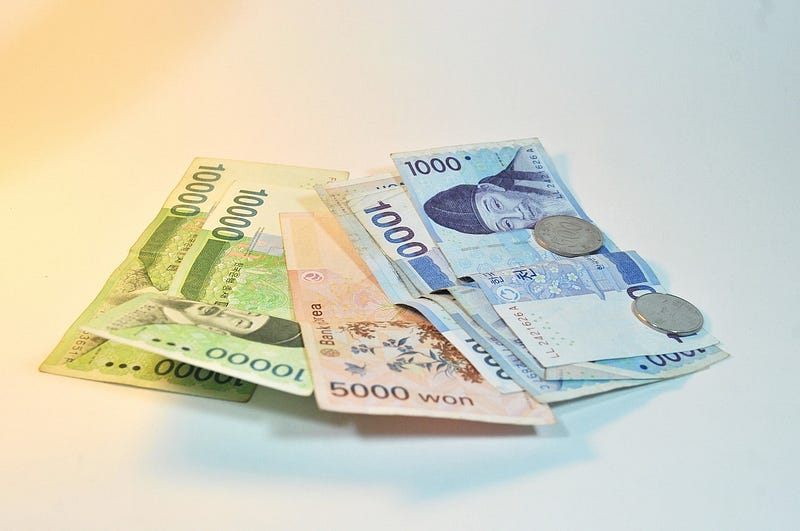
Photo by okaybuild on Pixabay


Unpaid prizes linger

The SWF2023 Hackathon took place from July 31 to August 2 at Dongdaemun Design Plaza (DDP) and was co-hosted by the city of Seoul, the Seoul Design Foundation, and Baobab Partners. It offered a total prize pool of KRW 150 million attracting 417 participants who made up 115 teams.

However, although over two months have passed since then, the winners are yet to be paid their prize money. “Baobab Partners initially proposed the SWF2023 event, and they were responsible for gathering the necessary sponsorship funds to run the event,” said a city representative.

According to industry sources on Monday, the company’s CEO, Choi Jin-beom, issued a handwritten apology last Friday regarding the incident. “We promised to pay the winners by today, but we were unable to deliver on that promise. We explored multiple avenues, including investors, new contractors, and other assets, but were ultimately unable to secure the funds to do so,” he said. “The narrative that the funds were diverted elsewhere or invested in cryptocurrencies or stocks is untrue,” he added, clarifying that related information was transparently disclosed to the city of Seoul.


Baobab Partners’ swift rise raises industry eyebrows

Baobab Partners had previously participated as an event planner at last year’s Blockchain Week in Busan, which turned out to be a success. “We also spoke with the Busan city government, who gave a positive opinion of the company,” the representative added. It was under this context that Seoul entered into a naming rights agreement with Baobab Partners. The agreement stipulated that the company would be in charge of attracting and managing sponsorships, and the prize money and operational costs would be covered by corporate sponsorship funds.

Nevertheless, questions have arisen within the industry about Baobab Partners’ short track record and its successive collaborations with public organizations. Baobab Partners is a startup that was founded in May 2021. In November of the same year, the firm signed memoranda of understanding with three blockchain companies during NFT Busan 2021, a large-scale NFT fair held in the southern port city to share the latest blockchain trends. As a result of its efforts, it was listed alongside prominent companies such as Coinone and Onther despite only six months passing since its establishment. Subsequently, Baobab Partners relocated from Seoul to Busan, and the following year, it participated as an event planner at Blockchain Week in Busan.


Accumulating allegations

Speculation suggests that this success was not solely due to Baobab Partners’s capabilities. The company’s CEO is believed to have political connections, according to an anonymous industry insider. Choi denied such claims and stressed that its technical expertise should not be downplayed, citing the fact that Baobab Partners was the first entity in Korea to develop virtual reality (VR) banking technology and had received a KRW 15 billion investment from Finger, a KOSDAQ-listed company.

Baobab Partners has also been mired in controversy over supposedly unpaid wages. In response to a claim made by an industry source that many former employees of Baobab Partners have still not received their due wages, a Seoul representative stated that there is no such dispute according to conversations with company representatives, seeking to dispel the dispute. Choi further explained, “We didn’t have wage disputes until last year. The difficulty in paying wages began in January this year due to the failure to execute promised investment funds.”

The city said that it is currently conducting legal examinations and looking into necessary measures for two matters involving Baobab Partners, including the handling of hackathon winnings.

More to Read
View All
Web3 & Enterprise·

Oct 31, 2023

Korean Crypto Exchange Giants Lead Market Expansion With Increased Listings

Korean Crypto Exchange Giants Lead Market Expansion With Increased ListingsSouth Korea’s top three cryptocurrency exchanges Upbit, Bithumb and Coinone have all increased the number of cryptocurrencies they listed for trading this year compared to last year, making them responsible for leading the market’s activity and expansion.Photo by Maxim Hopman on UnsplashDynamic shifts in listing and delisting trendsA recent analysis by local news outlet News1 on the number of cryptocurrencies listed and delisted this year on the country’s major fiat-to-crypto exchanges Upbit, Bithumb, Coinone, Korbit and Gopax — listed in order of market share size — revealed that Upbit and Coinone have increased their number of listings and delistings compared to last year.The remaining three exchanges, on the other hand, showed differing results. Bithumb increased its number of listings by 47 compared to the number listed last year, while delistings decreased by three, and Gopax listed eight fewer tokens and delisted one more token. Meanwhile, Korbit’s listings decreased by 37 tokens, while delistings decreased by only one.Among the five exchanges, Bithumb listed the highest number of new cryptocurrencies this year, with 80 new currencies in total added as of Monday (local time). This represents a more than double increase compared to the 33 currencies added last year. It is also 18 more than Coinone’s 62 new currencies and 50 more than Upbit’s 30.Differing approaches based on situational factorsGopax and Korbit have taken a more conservative approach compared to Upbit, Bithumb, and Coinone, which have been more aggressive in their listing strategies. In particular, as of Oct. 4, Bithumb has also been offering free transaction fees in an effort to regain its market share. This aggressive approach can be interpreted as an effort to weather the recent crypto winter, although it hasn’t been very successful.Conversely, the exchange that delisted the most cryptocurrencies this year was Coinone, with 38 taken down as of Monday, marking a significant increase compared to last year when it delisted 26. This can be accredited to the platform’s efforts to improve its reputation and operating system following an incident earlier this year where two former employees were booked for taking bribes in exchange for listing certain cryptocurrencies. Coinone CEO Cha Myung-hun subsequently issued an apology and pledged to take proper measures to prevent such an event from recurring. Since then, the exchange has been actively looking into carrying out delistings tied to issues like the amount of currency in circulation or market price manipulation.Bithumb and Upbit came in second and third for most delistings this year, with 22 and 18, respectively.However, Korbit showed the least fluctuation in the number of listings and delistings this year — nine and three, respectively — among the five exchanges. This is a sharp contrast owing to its conservative listing policy. Speculation suggests that the platform might adopt a more aggressive stance if market conditions improve in the second half of the year.On the other hand, Gopax listed 10 tokens and delisted eight tokens. The exchange has notoriously been dealing with operational difficulties due to regulatory roadblocks despite optimistic outlooks after its acquisition by Binance, one of the world’s most prominent exchanges. Along with the recent appointment of Cho Young-joong as the new CEO of CityLabs, the company that acquired an 8.55% stake in Gopax, the exchange has been working on resolving regulatory issues and improving the state of operations.

news
Web3 & Enterprise·

Nov 29, 2023

Dunamu reports Q3 slump amid interest rate hikes and economic slowdown

Dunamu reports Q3 slump amid interest rate hikes and economic slowdownDunamu, the operator of South Korea’s largest cryptocurrency exchange Upbit, posted a lackluster performance in this year’s Q3 due to a decrease in trading volume caused by ongoing interest rate hikes and an economic downturn.Photo by Алекс Арцибашев on UnsplashLagging performanceAccording to the Financial Supervisory Service (FSS), Dunamu’s consolidated operating revenue in Q3 was KRW 193 billion (approximately $150 million), marking a 29% decrease from the same period a year earlier (KRW 271.9 billion). Operating income came in at KRW 101.8 billion, and net profit was KRW 29.5 billion, down 39.6% and 81.6% from the same period last year, respectively.This underwhelming financial performance reflects the sluggish crypto market amid the nation’s economic downturn and the U.S. Federal Reserve’s interest rate hikes. The decrease in the exchange’s net profit in particular can be attributed to a loss in the valuation of crypto assets due to crypto price declines compared to the previous quarter.Positive outlookHowever, with the expected approval of the spot bitcoin exchange-traded fund (ETF) next year and the next Bitcoin halving, the market outlook is expected to improve gradually. Despite the current market conditions, Dunamu plans to continuously promote the mainstream adoption of blockchain services and explore new business ventures.“We will make efforts to revitalize the blockchain ecosystem and create an advanced investment environment,” Dunamu said. “We will strive to offer innovative services building on our unique technological capabilities.”

news
Web3 & Enterprise·

Nov 16, 2023

Hong Kong’s OSL crypto exchange receives $91M boost

Hong Kong’s OSL crypto exchange receives $91M boostBC Technology Group, the owner of the licensed OSL exchange, has secured a HK$710 million ($90.9 million) investment from BGX.Photo by Precondo CA on UnsplashBringing clarity to BitgetX market withdrawalBGX is reportedly associated with Seychelles-incorporated crypto exchange Bitget. The investment, which was announced via statements published by both BC Technology Group and BGX on their respective websites on Tuesday, brings further clarity to the rationale behind Bitget’s recent decision to withdraw its BitgetX platform from the Hong Kong market.BitgetX was believed to be working towards crypto licensing in Hong Kong. Its decision on Monday to stop pursuing a virtual asset trading platform (VATP) license and withdraw from the market entirely had been perceived as a weakness of the regulatory regimen in Hong Kong. However, it now appears that it was just clearing the way for involvement in crypto trading brought about through its investment in OSL, an entity that has already acquired a trading license within the Chinese autonomous territory.BGX has entered into an agreement to acquire a 29.97% stake in BC Technology, OSL's parent company, pending shareholder approval. According to an announcement, BGX CEO Patrick Pan Zhiyong is set to become one of two new executive directors as part of this investment. Pan, concurrently serving as the CEO of BitgetX, will also oversee the transition as Bitget steps back from the market, scheduling its platform closure for Dec. 13.Sale rumors deniedReports emerged in October that BC Technology Group was considering the sale of OSL based on a $128 million valuation. Contrary to those reports, BC Technology vehemently denied any intentions to sell OSL, emphasizing its commitment to maintaining the exchange’s operations. The company dismissed such speculation as “factually inaccurate and highly misleading,” underscoring its dedication to navigating the evolving crypto landscape.Bitget, responding to inquiries from the South China Morning Post (SCMP), asserted its independence from BGX, stating that it is “an independent entity” with no legal or commercial connections to the crypto firm.BGX is incorporated in the Cayman Islands and wholly owned by Liu Shuai, the founder of Shenzhen Qianhai Junchuang Fund Management and Singaporean crypto fund Foresight Ventures. Liu’s investment portfolio includes Bitget, as well as U.S. crypto media group The Block, which was acquired by Foresight Ventures, according to reports earlier this week.The incorporation of BGX into BC Technology’s ecosystem introduces a dynamic player with diverse investments across the crypto space. Against the backdrop of Hong Kong’s changing regulatory landscape, with the introduction of a mandatory licensing scheme last year, BC Technology’s OSL was the first exchange to obtain a voluntary license from the Securities and Futures Commission (SFC) in 2020. The asset management division of the company received a trading license in May of this year. In August, OSL, along with HashKey, received approval from the SFC to upgrade their licenses, allowing them to serve retail investors.The evolving regulatory environment reflects Hong Kong’s ambition to position itself as a crypto hub, attracting both institutional and retail participants. While that endeavor is not without its challenges, the city hasn’t been adversely affected by BitgetX's withdrawal from the market, given this related investment in OSL.

news
Loading