Top

CoinDCX Expands Okto Wallet’s Global Reach with Transak Integration

Web3 & Enterprise·October 06, 2023, 11:46 PM

Indian cryptocurrency exchange CoinDCX has moved to broaden the accessibility of its self-custody wallet, Okto. The exchange recently announced the addition of Transak, a major on-ramp platform that enables a fiat-to-crypto payment gateway integration, to enhance the wallet’s global capabilities.
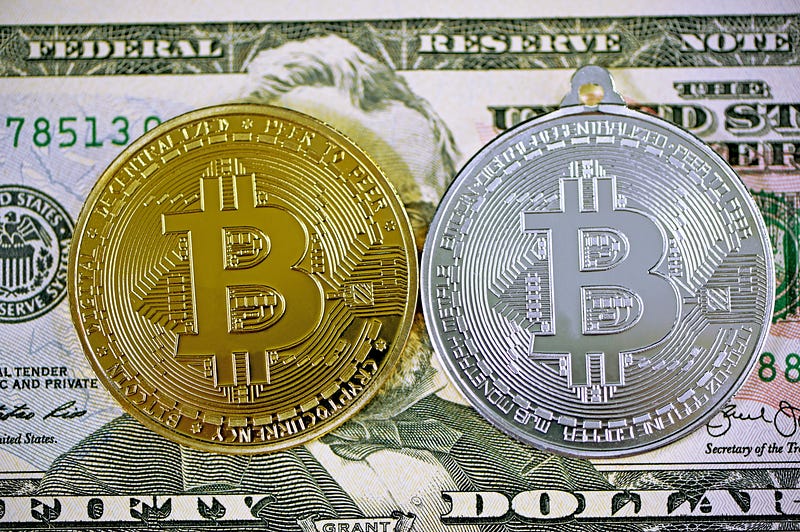
Photo by Kanchanara on Unsplash


Building on Okto

That’s according to a report published by Cointelegraph on Thursday. Okto was introduced by CoinDCX in August 2022, and the firm swiftly moved to expand its services. The integration with Transak represents a pivotal step in this direction.

This strategic integration immediately expands the reach of the Okto wallet from supporting 60 countries to an impressive 155 jurisdictions. Neeraj Khandelwal, Co-Founder of both CoinDCX and Okto, emphasized the significance of this move, stating that it allows users in numerous countries to engage with cryptocurrencies directly through Okto.

While Transak supports approximately 160 tokens, Okto goes above and beyond by allowing users to store more than 1,000 tokens across multiple blockchain networks, including Polygon, Fantom, Avalanche, and others. According to an Okto spokesperson, the wallet can accommodate up to 3,000 tokens, providing ample flexibility for cryptocurrency enthusiasts.


Seamless fiat-to-crypto conversion

Khandelwal also spoke to the value add that a more seamless asset conversion process will bring. He stated:

“The integration of Transak now allows users to seamlessly convert fiat to crypto right within the app. Prior to this integration, users had to transfer funds from another decentralized wallet, such as MetaMask.”

Transak’s integration brings a key feature to Okto — the ability for users to purchase cryptocurrencies like Bitcoin (BTC) directly within the wallet. Notably, this functionality accepts a wide range of fiat currencies, including the US dollar, euro, Hong Kong dollar, and others. Prior to the Transak integration, users were required to transfer digital assets from external wallets like MetaMask. With this development, Okto streamlines the process, enabling users to seamlessly convert fiat into crypto within the app itself.


Months-long integration process

It’s worth noting that although the announcement of Transak’s support on Okto was made on Thursday, the integration process began several months earlier. As early as August, some Indian users reported encountering Transak while Okto was in the testing phase. The integration process itself commenced in April, with the official roll-out to all customers occurring in mid-September.

Transak, a global Web3 payment and onboarding infrastructure provider, plays a crucial role in bridging the gap between traditional finance and the digital asset ecosystem. It is a well-established on-ramp solution in the cryptocurrency industry, with platforms like MetaMask, Coinbase, and PancakeSwap among its clientele.

In recent days, Okto has also announced a partnership with ReHold, a multi-chain protocol which has been developed to enable users to maximize their crypto earnings. In the coming weeks, Okto and ReHold will work towards integrating Okto’s wallet with ReHold.

The Okto-Transak integration is in line with Transak’s mission to facilitate crypto adoption by providing easy access to digital assets. Earlier this week, Transak also announced its integration with The Open Network’s (TON) wallet, known as Tonkeeper. This collaboration opens up Toncoin (TON) purchases directly with fiat currencies to users in more than 150 countries, marking a significant milestone in expanding the TON ecosystem.


More to Read
View All
Web3 & Enterprise·

Feb 01, 2024

Klasha and FOMO Pay join forces on cross-border payments

Klasha, a leading global cross-border payment company based in Africa, has officially announced its partnership with Singapore-headquartered FOMO Pay, a digital payment, banking and digital assets solutions provider in the Asian market. Streamlining collections and paymentsIn a press release published on Wednesday, the two companies outlined the nature of the partnership. Through this collaboration, FOMO Pay will optimize collections for its corporate clients by leveraging Klasha’s platform. This synergy enables businesses to receive payments in various local African currencies and methods, with the added flexibility of receiving payouts in their preferred currencies.Photo by George Bakos on UnsplashUnlocking growth opportunitiesThe duo also envision the unlocking of growth opportunities for Asian businesses looking to expand into new markets within Africa. By facilitating seamless cross-border payments, Klasha and FOMO Pay believe that they can help businesses diversify and broaden their customer base. In the joint statement, the management teams of Klasha and FOMO Pay expressed their enthusiasm for the collaboration. Jess Anuna, CEO of Klasha, shared her insights, stating:"With combined efforts, we will continue to enable merchants in Asia to collect payments from the continent more seamlessly through our payment rails and our unique ability to terminate payments in greater Asia." Africa has been undergoing a transformation from the perspective of trade relationships while Asia is emerging as a pivotal trading partner, contributing to over 40% of both exports and imports for the continent. It is with that in mind that Klasha and FOMO Pay have united to introduce a platform aimed at enhancing cross-border payment capabilities for businesses and merchants across Africa and Asia. Crypto credentialsFOMO Pay claims to be Asia’s first licensed gateway connecting fiat currencies and cryptocurrencies. The firm was established in 2015 and is regulated by the Monetary Authority of Singapore (MAS) to conduct cross-border money transfer services, domestic money transfer services, digital payment token services and merchant acquisition services. In 2022 FOMO Pay announced a partnership with enterprise blockchain firm Ripple, which resulted in the fledgling company using Ripple’s On-Demand Liquidity (ODL) offering, a product that revolves around the use of Ripple’s XRP in moving value globally, without the need for correspondent banking relationships. In July of last year, FOMO partnered with crypto compliance and blockchain analytics firm Elliptic. That partnership is aimed at building out a payment ecosystem in Asia that offers seamless interoperability between fiat currency and cryptocurrency. With that same goal in mind, last September FOMO Pay initiated a collaboration with crypto sector decision making specialist, Notabene, who are helping the company optimize in terms of know-your-transaction capabilities. Zack Yang, co-founder of FOMO Pay, emphasized the partnership's significance, stating:"In this era of globalization, the synergy between FOMO Pay and Klasha marks a significant milestone in increasing financial connectivity between Africa and Asia. Our partnership is more than just a business collaboration; it's a commitment to fostering seamless payments and economic growth across continents. This collaboration not only opens up new avenues for African and Asian merchants, facilitating market expansion and easing entry into new territories, but also provides greater opportunity for merchants in those regions to fully benefit from day-to-day use of digital assets in international trade.

news
Policy & Regulation·

Jan 02, 2024

Singapore Prime Minister issues warning on AI-generated crypto scam

In a recent announcement on Facebook, Singapore Prime Minister Lee Hsien Loong has raised alarm bells about a new form of cyber scam that exploits deep-fake technology. Deep-fake technologyThe Prime Minister highlighted the emergence of deceptive videos utilizing artificial intelligence (AI) to create false portrayals of him endorsing cryptocurrency scams. This development underscores the escalating sophistication of online scams and the deployment of advanced technology to mislead the public. Deep-fake technology has emerged as a powerful tool for scammers, enabling them to manipulate genuine footage to produce highly convincing yet entirely fabricated content. In the latest incident, a deep-fake video features Prime Minister Lee Hsien Loong endorsing a nonexistent crypto investment platform purportedly associated with entrepreneur Elon Musk. This video, a manipulated version of an interview on CGTN, showcases the concerning level of realism achievable with deep-fake technology. The incident emphasizes the growing trend of utilizing AI in perpetrating scams. Prime Minister Lee underscored the deceptive nature of these videos, articulating the potential damage they could inflict by leading unsuspecting individuals to invest in fraudulent schemes. The Singaporean government maintains a vigilant stance on such scams, consistently urging citizens to exercise caution and verify information from official sources.Photo by Guo Xin Goh on UnsplashPrevious issuesThe exploitation of public figures in financial scams is not a new phenomenon. Prime Minister Lee has been a recurrent target of such scams, dating back to 2018. At that time, the government issued public warnings about Bitcoin investment scams falsely claiming the Prime Minister’s endorsement. More recently, in July, another fake video featuring Lee Hsien Loong surfaced, prompting renewed public warnings. In 2021, the Prime Minister’s name and photograph were used without his consent in an effort to sell cryptocurrency. The data was taken from his X (formerly Twitter) profile. At the time, Lee wrote:“The site’s creators are anonymous, but I have sent an open tweet out to ask that my name and photo be removed from the site immediately, as I have nothing to do with the platform. I urge everyone to remain vigilant when dealing with cryptocurrency platforms.” That was a much less sophisticated identity-related scam. More often than not, scammers and fraudsters tend to be early adopters of technology. That’s proving to be the case with the use of deep-fakes in this instance. A need for cautionAs he did in 2021, Prime Minister Lee has urged the public to exercise caution in light of this more recent incident. He advises against responding to scams promising guaranteed investment returns or giveaways. There’s every sign that the Prime Minister’s warning is warranted. In September it emerged that six Singaporeans lost more than $100,000 when a scammer tricked them into buying tokens on a cryptocurrency trading platform. More recently, five Americans were conned out of $10 million in a scam that involved a spoofed domain of the former Singapore International Monetary Exchange (Simex). This call for public vigilance is part of a broader government effort to address the surge in cyber fraud. These repeated incidents underscore the challenges posed by digital technologies in spreading misinformation and financial fraud.   

news
Web3 & Enterprise·

Jun 09, 2023

Taiko Labs Raises Funding to Build Ethereum-Equivalent zkEVM

Taiko Labs Raises Funding to Build Ethereum-Equivalent zkEVMTaiko Labs, a crypto startup focused on scaling the Ethereum blockchain, has successfully raised a total of $22 million in two funding rounds.According to a blog article published to the startup’s website on Thursday, the first funding round, a $10 million seed raise, was led by Sequoia China and concluded in the third quarter of 2022. The second round, a recent pre-Series A round, raised $12 million and was led by Generative Ventures, according to co-founder Daniel Wang.Photo by cottonbro studio on PexelsBroad investor participationNotable investors in the two rounds include IOSG Ventures, GSR, and GGV Capital, as well as angel investors like Patricio Worthalter, the Founder of the Proof of Attendance Protocol (POAP), Tim Beiko from the Ethereum Foundation, and Anthony Sassano, Co-Founder and COO of the decentralized virtual world, The Sandbox. Taiko Labs has not disclosed its valuation.Scaling EthereumThe primary focus of Taiko Labs is to develop a scaling solution for the Ethereum blockchain that closely adheres to Ethereum’s design and ideology. The company refers to its product as a Type 1 zero-knowledge Ethereum Virtual Machine (zkEVM).Vitalik Buterin, the inventor of Ethereum, emphasized the importance of Type 1 zkEVMs for scaling the Ethereum layer 1 in a blog post. Taiko Labs aims to extend Ethereum’s capabilities by sticking to the Ethereum Virtual Machine (EVM) specification and leveraging its best properties, as explained by Matthew Finestone, co-founder of Taiko Labs.On Wednesday, Taiko Labs released its latest version, its alpha-3 testnet, Grímsvötn, marking a significant milestone on its path to a decentralized and Ethereum-equivalent ZK-EVM.Taiko backstoryThe journey towards Taiko Labs began when Daniel Wang and Matthew Finestone worked together at Loopring Foundation, a trading and payment protocol based on zk-rollup technology. Wang served as the founder and CEO of Loopring Foundation from July 2017 until November 2021, while Finestone worked as the head of business for three years.Wang initially intended to build a decentralized social network but encountered a major obstacle — the lack of infrastructure and scalability. This realization led to the birth of the idea for Taiko Labs.Wang commented on the funding milestone, stating: “We believe that we are now on the cusp of having a truly decentralized Ethereum-equivalent ZK-rollup. This is our core mission at Taiko and we are incredibly proud to partner with leading investors who share our uncompromising vision.”The successful financing rounds will enable Taiko Labs to ensure a successful launch of its mainnet. However, the company is considering raising additional capital, partly to establish an ecosystem investment fund that will attract decentralized applications (dApps) and developers to the ecosystem.In terms of organizational structure, Taiko Labs plans to follow in Ethereum’s footsteps. Wang told The Block: “We are going to quickly convert the organization into a non-profit one. Ideally, we’ll operate very similarly to the Ethereum Foundation.”These successful funding rounds provide a solid foundation for Taiko Labs’ future endeavors, and the company is aiming to make a meaningful impact on the global adoption of blockchain technology with its focus on scaling.

news
Loading