Top

Taiko Labs Raises Funding to Build Ethereum-Equivalent zkEVM

Web3 & Enterprise·June 09, 2023, 12:52 AM

Taiko Labs, a crypto startup focused on scaling the Ethereum blockchain, has successfully raised a total of $22 million in two funding rounds.

According to a blog article published to the startup’s website on Thursday, the first funding round, a $10 million seed raise, was led by Sequoia China and concluded in the third quarter of 2022. The second round, a recent pre-Series A round, raised $12 million and was led by Generative Ventures, according to co-founder Daniel Wang.

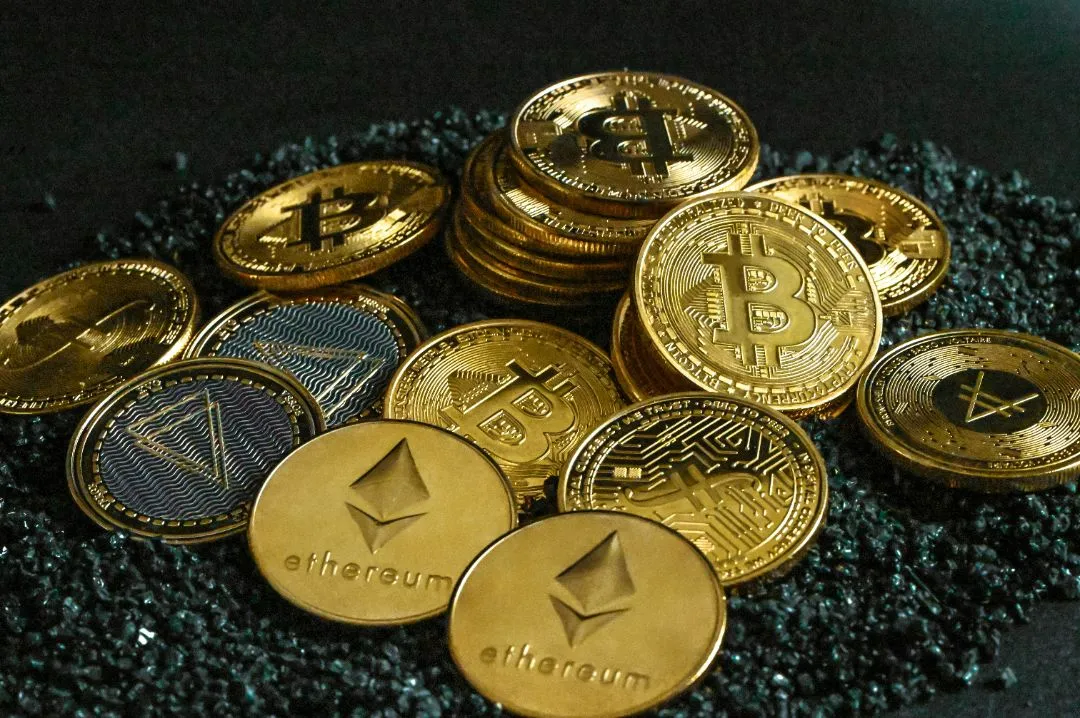
Photo by cottonbro studio on Pexels


Broad investor participation

Notable investors in the two rounds include IOSG Ventures, GSR, and GGV Capital, as well as angel investors like Patricio Worthalter, the Founder of the Proof of Attendance Protocol (POAP), Tim Beiko from the Ethereum Foundation, and Anthony Sassano, Co-Founder and COO of the decentralized virtual world, The Sandbox. Taiko Labs has not disclosed its valuation.


Scaling Ethereum

The primary focus of Taiko Labs is to develop a scaling solution for the Ethereum blockchain that closely adheres to Ethereum’s design and ideology. The company refers to its product as a Type 1 zero-knowledge Ethereum Virtual Machine (zkEVM).

Vitalik Buterin, the inventor of Ethereum, emphasized the importance of Type 1 zkEVMs for scaling the Ethereum layer 1 in a blog post. Taiko Labs aims to extend Ethereum’s capabilities by sticking to the Ethereum Virtual Machine (EVM) specification and leveraging its best properties, as explained by Matthew Finestone, co-founder of Taiko Labs.

On Wednesday, Taiko Labs released its latest version, its alpha-3 testnet, Grímsvötn, marking a significant milestone on its path to a decentralized and Ethereum-equivalent ZK-EVM.


Taiko backstory

The journey towards Taiko Labs began when Daniel Wang and Matthew Finestone worked together at Loopring Foundation, a trading and payment protocol based on zk-rollup technology. Wang served as the founder and CEO of Loopring Foundation from July 2017 until November 2021, while Finestone worked as the head of business for three years.

Wang initially intended to build a decentralized social network but encountered a major obstacle — the lack of infrastructure and scalability. This realization led to the birth of the idea for Taiko Labs.

Wang commented on the funding milestone, stating: “We believe that we are now on the cusp of having a truly decentralized Ethereum-equivalent ZK-rollup. This is our core mission at Taiko and we are incredibly proud to partner with leading investors who share our uncompromising vision.”

The successful financing rounds will enable Taiko Labs to ensure a successful launch of its mainnet. However, the company is considering raising additional capital, partly to establish an ecosystem investment fund that will attract decentralized applications (dApps) and developers to the ecosystem.

In terms of organizational structure, Taiko Labs plans to follow in Ethereum’s footsteps. Wang told The Block: “We are going to quickly convert the organization into a non-profit one. Ideally, we’ll operate very similarly to the Ethereum Foundation.”

These successful funding rounds provide a solid foundation for Taiko Labs’ future endeavors, and the company is aiming to make a meaningful impact on the global adoption of blockchain technology with its focus on scaling.

More to Read
View All
Web3 & Enterprise·

Sep 11, 2023

UAE’s Royal Office Visits Korea to Further Security Token Collaboration with AIITONE

UAE’s Royal Office Visits Korea to Further Security Token Collaboration with AIITONEAIITONE, a Korea-based augmented reality firm specializing in security tokens, invited journalists to showcase its strategy to foster business collaborations between South Korea and the United Arab Emirates (UAE) on the occasion of the Korean visit of the Private Office of His Highness Sheikh Ahmed Bin Faisal Al Qassimi.Photo by Ethan Brooke on UnsplashPrivate Office’s return visitThe Private Office is a Dubai-based corporate conglomerate that operates businesses in various areas including real estate, energy, and finance. This visit by the Private Office marks a return visit following AIITONE’s visit to the UAE in July.The conference took place at a hotel in Gangnam, Seoul, and was attended by Lee Jin-yeop, CEO of AIITONE; Bruce Jeong, Chairman of Middle East Investment; and H.H. Sheikh Ahmed Bin Faisal Al Qassimi.Security tokens, CBDCs, smart defenseChairman Jeong, leading AIITONE’s global initiatives, said that their primary endeavor is to set up a Korean branch of the Royal Office. This branch will function as an international business hub, facilitating collaborations across three key sectors: security tokens, central bank digital currencies (CBDCs), and smart defense ventures.The event also featured presentations by AIITONE officials who introduced the company’s focus areas.Kang Man-soo, who leads AIITONE’s defense unit, highlighted the company’s technical expertise in maintenance training equipment, interactive electronic technical manuals, and integrated system support. He pointed out that AIITONE has been actively involved in the development of technical manuals and training simulators for various defense assets, including warships, guided weapons, and fighter aircraft. Kang emphasized that AIITONE’s strategic partnerships with Korean defense firms have propelled their engagement in initiatives aimed at exporting these products to countries such as Indonesia, Malaysia, and Poland.Lee Joo-hyung, the head of AIITONE’s extended reality (XR) content division, revealed the company’s plan to create portable products that can replicate the physical sensations of the real world, including sensations like physical contact and heat. Additionally, Lee introduced MOUM, a metaverse platform that features blockchain-powered security functions and generative artificial intelligence (AI) capabilities.Park Sang-il, who is at the helm of the firm’s security token project, showcased AIITONE’s comprehensive security token platform, which enables users to both issue and distribute security tokens. Notably, the platform is compatible with hyperledgers Besu and Fabric.Since arriving in Korea last Wednesday, the Royal Office has met with representatives from Standard Chartered Bank Korea and lawyers from law firm Kim and Chang, as well as lawmaker Yang Hyang-ja. Additionally, the Royal Office made a visit to smart farms located in South Jeolla Province.H.H. Sheikh Al Qassimi expressed a high regard for South Korea, acknowledging its beautiful natural landscapes and significant economic development. He underlined that this visit serves as an opportunity for the Royal Office to strengthen cooperation between UAE companies and their Korean counterparts, further fostering economic exchanges between the two countries.

news
Policy & Regulation·

Feb 27, 2025

Local crypto firms in talks with Hong Kong’s SFC on crypto staking

Local crypto firms in Hong Kong are understood to be in “active” talks with the Securities and Futures Commission (SFC), with a view towards bringing about the integration of staking within crypto exchange-traded fund (ETF) products. Haiyang Ru, chief risk officer of HashKey Group, a leading Hong Kong-headquartered digital asset financial services firm, told The Block that the Chinese autonomous territory may shortly see the introduction of staking services relative to crypto derivatives trading products and crypto ETFs. He stated: "We are actively discussing with the SFC the introduction of ETF staking and tokenized money market funds, as well as launching an 'Earn' feature alongside spot trading."Photo by tommao wang on UnsplashFocus on staking in 2025HashKey is one of a number of well-known digital asset firms that is in regular contact with the regulator. Other firms are also paying attention to developments. Alessio Quaglini, co-founder and CEO of Hex Trust, a Hong Kong-based firm that offers regulated institutional digital asset custody and staking services, believes that staking will garner greater attention in 2025. He stated: “Institutions that move into crypto custody will naturally seek yield-generating opportunities for their clients."  OSL, one of the first entities alongside HashKey to be awarded digital assets-related licensing in Hong Kong, has also identified rising customer demand for yield-generating products in the crypto space within the Chinese autonomous territory.  Global competitionThe authorities in Hong Kong are likely to be watching developments overseas also. ETH ETFs in the United States have reeled in $3 billion in capital inflows without staking. Since the launch of these products, many industry commentators have suggested that in the event that staking is approved, big institutions, particularly pension funds and wealth managers, are going to be attracted to the passive yields on these ETFs.  Traditional finance (TradFi) loves yield, and in the case of Ether ETFs that include staking, an annual percentage yield (APY) of up to 5% should be possible. Last month, an S&P Global report suggested that there was growing interest from institutional investors with regard to crypto staking opportunities.  Cryptocurrency ETF issuer 21Shares has applied to the Securities and Exchange Commission (SEC) in the U.S. to include staking within its ETH ETF product. A similar application has been made by crypto asset manager Grayscale relative to its ETH ETF offering. With that activity ongoing in the U.S. and inter-jurisdictional competition in terms of digital asset growth opportunities, it’s likely that Hong Kong will be keen to enable this market offering. Staking ‘unparalleled’ in TradFi markets Earlier this week, the SFC introduced a new roadmap geared towards strengthening the digital assets sector in Hong Kong. One of the initiatives itemized is the enabling of crypto staking.  The explanatory document published by the regulator states that it is examining the introduction of staking with safeguards in respect to digital asset custody, liquidity risks and “ensuring that the operational processes for staking are transparent.” The SFC described crypto staking as a yield generation opportunity that is unparalleled in TradFi markets.

news
Policy & Regulation·

Apr 14, 2025

Hong Kong firms move forward with staking services

With local regulator the Securities and Futures Commission (SFC) having set out guidelines for crypto firms regarding the provision of crypto staking services, two prominent Hong Kong companies have moved forward with staking-related offerings. HashKey Capital, a crypto-focused institutional asset manager, and crypto trading platform OSL, have announced the addition of staking to an Ether exchange-traded fund (ETF) and in the case of OSL, a partnership with Kiln to offer ETH staking.Photo by Raymond Yeung on UnsplashFirst spot crypto ETF in APAC to support stakingIn a press release published on April 11, HashKey Capital outlined that its Bosera HashKey Ether ETF, which was jointly launched with Bosera Asset Management in April 2024, has received approval from the SFC to engage in Ethereum staking activity from April 25 onwards.  HashKey claimed that its ETH ETF product is the first spot crypto ETF within the Asia-Pacific (APAC) region to support staking. The company stated: “By enabling staking, the ETF aims to enhance potential returns for investors, creating a new avenue to participate in the Ethereum ecosystem through a regulated virtual asset investment vehicle.” The staking service will be extended to the ETF by another HashKey Group company, HashKey Cloud, a Web3 infrastructure provider. HashKey Capital and HashKey OTC Global CEO Deng Chao said that the institutional-grade staking infrastructure of HashKey Cloud was being leveraged in order to provide a secure, efficient and regulated vehicle to access staking rewards with ease to both professional and retail investors.  The ETF is listed on the Hong Kong Stock Exchange (HKEX). It tracks the price of Ether via the CME CF Ether-Dollar Reference Rate, a daily benchmark index price that aggregates Ether trade data from various sources. Competitive edgeBoth HashKey and the Hong Kong authorities have stolen a march on their international counterparts with the launch. In recent months, efforts have been building in the United States by spot ETH ETF providers to add a staking element to these offerings.Robert Mitchnick, head of digital assets at the world’s largest asset manager, BlackRock, told last month’s Digital Asset Summit in New York that the lack of availability of a staking yield as part of U.S. spot ETH ETFs is likely to be holding the development of the products back. He added:”A staking yield is a meaningful part of how you can generate investment return in this space, and all the [ether] ETFs at launch did not have staking.” HashKey and OSL were the first two entities to be issued trading licenses by the regulator in Hong Kong. OSL is also looking to take advantage of the new regulatory clarity related to crypto staking in Hong Kong. On April 10, it published a press release, outlining details of a partnership that it has formed with enterprise-grade staking infrastructure firm, Kiln. By integrating with Kiln’s API infrastructure, OSL is now enabled in offering clients of its custody platform access to staking services.Kiln co-founder and CEO Laszlo Szabo underscored the significance of regulatory approval of staking in Hong Kong, while stating:”With the future integration of staking, these products will offer investors both exposure to ETH price movements and rewards for securing the Ethereum network.”

news
Loading