Top

Nomura Subsidiary Achieves In-Principle Approval in Abu Dhabi

Web3 & Enterprise·September 29, 2023, 12:08 AM

The digital assets subsidiary of Japanese financial services conglomerate Nomura has been granted in-principle approval by the Abu Dhabi Global Market (ADGM) to offer broker-dealer and asset/fund management services for both digital and traditional assets.
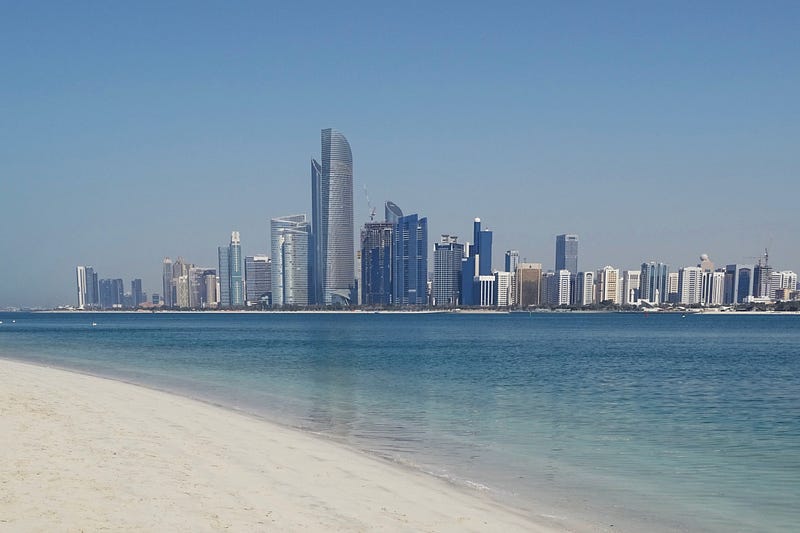
Photo by Belinda Fewings on Unsplash


Preliminary license to trade

The development is a shot in the arm for Laser Digital Asset Management while serving to highlight Abu Dhabi’s growing prominence as a global center for digital assets, attracting prominent players such as Binance and Kraken.

Led by CEO Jez Mohideen, Laser Digital is now on the path toward securing full financial services authorization in Abu Dhabi, subject to meeting undisclosed conditions specified in the approval. The company is enthusiastic about the ADGM’s transparent and comprehensive regulatory framework.

Speaking to that, Mohideen stated: “We are thrilled to be part of their comprehensive and clear regulatory framework, which is creating a global hub for digital assets.”


International free zone

The ADGM, an international financial free zone situated in Abu Dhabi, covers nearly 15 square kilometers across two islands. It hosts a registration authority, regulatory authority, and a court system functioning under common law principles. This favorable regulatory ecosystem has been instrumental in attracting digital asset firms to establish a presence in the UAE’s capital.

Laser Digital’s approval follows a series of recent cryptocurrency-related approvals in Abu Dhabi. Zodia Markets, backed by UK bank Standard Chartered, was recently granted permission to operate as a crypto broker, adding to the growing list of companies making strides in the region.

Binance, one of the world’s largest cryptocurrency exchanges, received in-principle approval from the ADGM in April 2022 and subsequently obtained full financial services permission in November of the same year. Kraken, along with firms like UAE-based M2 and Bahrain-based Rain, have also received permissions to operate within the ADGM in recent years.


Building on Dubai achievement

Laser Digital’s approval in Abu Dhabi comes on the heels of its earlier achievement of obtaining an operating license from Dubai’s Virtual Asset Regulatory Authority (VARA). Alongside these regulatory milestones, Laser Digital introduced an institutional Bitcoin Adoption Fund in August. Despite its relatively short existence since its establishment in September 2022, the firm has made significant strides.

Nomura’s engagement extends beyond Laser Digital, as it is also part of the Komainu joint venture alongside cryptocurrency firms CoinShares and Ledger. Komainu secured its operating license from Dubai’s VARA in August, contributing to the expanding community of crypto-focused businesses in the region.

It is worth noting the UAE’s diversified approach to cryptocurrency regulation, offering five distinct regulatory regimes for cryptocurrencies, including the ADGM and VARA. Legal experts from White & Case have recently assessed these regulatory frameworks, highlighting the UAE’s commitment to fostering a progressive and well-regulated environment for digital assets.

Nomura’s Laser Digital is well-positioned to play a pivotal role in the digital asset sector in Abu Dhabi, given that it’s leveraging the favorable regulatory environment of the ADGM and the UAE’s dedication to becoming a global digital asset hub.


More to Read
View All
Policy & Regulation·

Mar 06, 2024

Taiwan’s FSC plans crypto draft regulations by September

The Financial Supervisory Commission (FSC) of Taiwan has disclosed its intention to introduce a fresh draft of digital asset regulations for the nation come September 2024. The forthcoming draft bill seeks to establish more robust regulations for digital asset markets, prioritizing investor safety, as announced by Huang Tien-mu, the chairman of FSC. That’s according to a March 4 report by local media outlet, United Daily News (UDN).Photo by Kelly Sikkema on UnsplashAddressing customer protectionIn October, Taiwanese legislators introduced the Virtual Asset Management Bill to parliament, a move aimed at fortifying customer protection and ensuring effective industry supervision. The bill encompasses provisions that could impose fines ranging from two million Taiwanese dollars ($63,000) to 20 million Taiwanese dollars on unlicensed virtual asset service providers (VASPs). Around that time, the authorities had a particular concern with regard to the operation of foreign and offshore VASPs within the Taiwanese market. Like Hong Kong, Taiwan also had seen some negative impact due to the fraudulent activity of the Dubai-based JPEX crypto platform.The FSC has already barred foreign VASPs from operating in Taiwan without requisite approvals from the regulator. These measures were instituted following the establishment of a self-regulatory association by major cryptocurrency exchanges in the country, aiming to foster collaboration with regulators. Stricter regulationsPer the latest report, Chairman Huang Tien-mu outlined the FSC's plan to propose a draft bill targeting virtual currencies in September of the current year. This initiative seeks to bolster investor safeguarding and enhance regulatory oversight over the virtual currency sector. Concern has also been raised relative to native exchanges, in addition to offshore VASPs. In November, an investigation was opened into the Bitgin exchange, amid alleged money laundering activity. Shortly afterwards, another probe was launched into the ACE Exchange, amid allegations of money laundering and fraud. Highlighting the imperative for stricter regulations, Huang underscored the potential fraud risks tied to digital currencies. He issued a stern warning, signaling severe administrative penalties for merchants engaged in fraudulent activities aimed at investors. Moreover, the regulator expressed concerns about the growing interconnection between digital assets and the conventional financial system. He emphasized the need for laws to shield the stability of traditional financial systems from the inherent risks posed by digital assets. Addressing apprehensions regarding the misuse of virtual currencies for fraudulent endeavors, Huang cautioned of stringent administrative penalties awaiting both domestic and foreign currency traders found guilty. ETF considerationsTaiwan's Chamber of Commerce is poised to unveil a study on Bitcoin exchange-traded funds (ETFs) in April. Gao Jingping, Deputy Director of the Securities and Futures Bureau at the Financial Supervisory Commission, indicated Taiwan's contemplation of endorsing spot Bitcoin ETFs under regulatory oversight. However, he advised against investing in foreign crypto-based exchange-traded products. Reports from local media in December suggested that the FSC will closely monitor Bitcoin ETFs to assess their potential and gauge public demand. The FSC intends to release research findings in April, which will influence the fate of Bitcoin ETFs in Taiwan. Positive findings may pave the way for Taiwanese investors to resume acquiring overseas Bitcoin ETFs. This initiative unfolds amid heightened global demand for Bitcoin ETFs, which recently contributed to Bitcoin's surge to almost $69,000.

news
Policy & Regulation·

Jun 20, 2023

Hong Kong Analyzes Web3 Approach of Regional Peers

Hong Kong Analyzes Web3 Approach of Regional PeersHong Kong’s ambitions in Web3 are on the rise as it strives to establish itself as a global hub for digital assets. The Research Unit of the Legislative Council Secretariat of Hong Kong has recently released a summary of a document titled “Development of Selected Regional Web3 Technologies,” shedding light on the city’s involvement in Web3.According to the report summary which was published on June 14, the Hong Kong government is actively promoting the development and utilization of Web3. In the fiscal budget for 2023–2024, the Financial Secretary announced accelerated efforts to build Hong Kong’s Web3 ecosystem, along with the establishment of a dedicated development task force focused on virtual assets.Photo by Jimmy Chan on PexelsPace of developmentHowever, concerns have emerged about Hong Kong’s comparatively slower pace of development in contrast to other regions. Various regions across the globe, particularly in Asia and the Gulf region, have implemented measures to expedite the progress of Web3 and its associated technologies and applications.To address these concerns, the report suggests that Hong Kong should broaden its focus beyond financial services and virtual assets. Instead, it should actively promote innovation in other areas of Web3 technology, such as blockchain and metaverse technology.Scrutinizing regional Web3 developmentIn response to a request from Councilor Wu Kit Ching, the research group has conducted a study on leading regions in Web3 technology and application development, examining their strategies.The study primarily highlights Japan, Singapore, South Korea, and the United Arab Emirates (UAE) as these regions have demonstrated proactive approaches in developing Web3 technologies, and they have become global or regional innovation hubs. Japan, for instance, has established high-level policy guidance and dedicated offices to coordinate Web3 policies across various government departments.Other regions covered in the study have focused on specific areas of Web3. Singapore and the UAE, for example, are exploring blockchain technology through industry collaborations and the establishment of incubation centers. Meanwhile, South Korea is actively launching metaverse strategies to foster innovation across multiple sectors.The summary also provides an overview of the key characteristics, foundational technologies, and applications of Web3. It outlines recent developments in Web3 within Hong Kong and analyzes the development scenarios of selected regions, including Japan’s comprehensive approach and the application-focused initiatives of other regions.The document emphasizes that Web3 represents a decentralized network that empowers users with greater autonomy and control over their digital lives. While the Hong Kong government has introduced measures to support the development of the Web3 ecosystem, particularly in the virtual asset market and related financial services, concerns persist regarding Hong Kong’s slower progress in other areas of Web3 technology compared to its counterparts in Asia and the Gulf region. These regions are capitalizing on their strengths and exploring broader applications of Web3.Hong Kong’s engagement in Web3 and its ambition to thrive in this domain is becoming more evident with each passing day. The summary of the document sheds light on the Chinese autonomous territory’s efforts, while also highlighting the need to expand its focus and foster innovation in various areas of Web3 technology. By doing so, Hong Kong can position itself as a prominent global center for Web3 and leverage the advantages it offers for digital asset development and beyond.

news
Policy & Regulation·

Sep 06, 2023

Latest Chinese Crypto Crackdown Sees Influencer Accounts Shut Down

Latest Chinese Crypto Crackdown Sees Influencer Accounts Shut DownMicro blogging platform Sina Weibo, one of China’s most popular social media platforms boasting over 258 million daily active users, has taken decisive action to enforce the country’s stringent regulations on cryptocurrency activities.Photo by Henry Chen on Unsplash80 accounts removedIn its latest announcement on Tuesday, the platform revealed the removal of 80 influencer accounts dedicated to promoting cryptocurrency-related content. These accounts collectively held a substantial following, with over 8 million followers combined.The move by Weibo comes as a response to official legislation aimed at cracking down on activities that breach a range of regulations encompassing telecommunications, finance, banking, online marketing, securities, exchanges, and internet safety. The 80 influencer accounts in question had actively violated these regulations by endorsing and promoting cryptocurrencies.Ongoing enforcementThis isn’t the first time Weibo has undertaken such a measure. It has been periodically purging crypto-related accounts since China’s cryptocurrency ban took effect in September 2021. In March of this year, Weibo already took down 131 accounts associated with crypto and stock trading activities.The most significant nationwide crackdown occurred in August 2022 when the Cyberspace Administration of China (CAC) stepped in, resulting in the removal of a staggering 12,000 influencer accounts across both Weibo and Baidu. Furthermore, 51,000 promotional posts related to cryptocurrencies were deleted. The CAC justified these actions by emphasizing their intent to protect the public’s property safety, educate citizens on responsible investment practices, and discourage participation in speculative cryptocurrency trading activities.Weibo echoed similar sentiments in their previous enforcement actions, vowing to increase the crackdown on illegal securities activities on their platform while strictly adhering to legal regulations.Worldwide issueCrypto promotion and crypto influencers are coming under increased scrutiny worldwide. In a recent filing by the Department of Justice (DoJ) in the United States in its criminal prosecution against Sam Bankman-Fried, the Founder and former CEO of failed crypto exchange FTX, it asserted that promotion by way of ads featuring US comedian Larry David and American sports star Tom Brady had blurred the lines between FTXs international and US businesses.Class action lawsuits have been instigated against a long list of crypto influencers and promoters relative to FTX, Celsius, BlockFi, and a number of other high-profile failed crypto platforms.Last month, details emerged of a grizzly end for Argentinian crypto influencer Fernando Perez Algaba, whose dismembered body was found in a suitcase in a town close to the Argentinian capital, Buenos Aires.China’s intensified scrutiny over crypto activities in recent years is driven by multiple factors, including concerns about capital flight, money laundering, and the imperative to safeguard state-controlled cryptocurrency initiatives. These measures have not only affected domestic investors but have also had unintended consequences for international cryptocurrency enthusiasts.

news
Loading