Top

Korea to Ban Virtual Asset Deposit Services from Next July

Policy & Regulation·September 11, 2023, 9:40 AM

During a recent criminal law seminar held at the Supreme Prosecutors’ Office, Park Min-woo, Director of the Capital Markets Bureau at the South Korean Financial Services Commission (FSC), underscored that starting next year, virtual asset service providers (VASPs) will no longer be permitted to offer deposit and management services for virtual assets. That’s according to a report by local crypto news outlet Digital Asset.

This is seen as a response to the suspension of virtual asset deposits and withdrawals carried out by virtual asset yield platforms Haru Invest and Delio a few months ago.

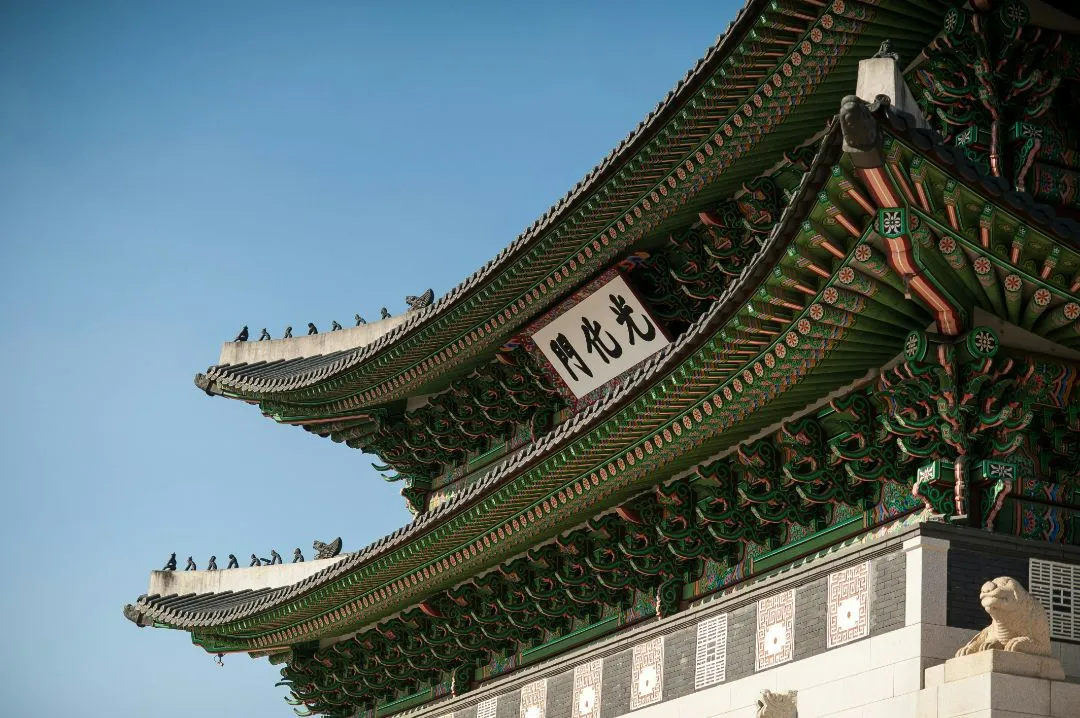
Photo by Mathew Schwartz on Unsplash


Legal background

Director Park referred to Article 7, Paragraph 2 of the Virtual Asset User Protection Act, clarifying that the intention behind this provision is to ensure that VASPs have the ability to fulfill asset withdrawal requests, even in the scenario where all their customers make such requests. This Act is scheduled to go into effect in July of next year, and Article 7 prohibits VASPs from entrusting customer assets to third parties.

Deposit service providers receive cryptocurrency deposits and then distribute the resulting yields to their customers. In a bull market, these entities can manage yields on their own. However, in a flat or bear market, these asset managers may face challenges in paying yields unless they can generate profits by handing over customer assets to external custodians.


Signs of giving up

In fact, centralized finance (CeFi) company HeyBit made an announcement last month, stating that it will discontinue its virtual asset deposit service starting from October 2. They cited this specific provision as the reason for their decision.


Fraud charges

Both Haru and Delio have been indicted by the Seoul Southern District Prosecutors’ Office on fraud charges.

As an unregistered VASP, Haru suspended its deposit and withdrawal services on multiple occasions in June, causing substantial financial losses to numerous investors. This suspension was triggered by significant losses incurred at B&S Holdings, another unregistered entity to which Haru had entrusted virtual assets.

Similarly, Delio, although registered, entrusted a considerable amount of virtual assets to Haru and Traum Info Tech but was unable to recover them.


More to Read
View All
Web3 & Enterprise·

Jun 07, 2023

SAND Token to be Listed on Japanese Crypto Exchange bitFlyer

SAND Token to be Listed on Japanese Crypto Exchange bitFlyerJapanese crypto exchange bitFlyer has recently announced its plans to list The Sandbox (SAND) on its trading platform, making it the 22nd crypto asset to be available on bitFlyer. Specific details are yet to be announced. This move reflects bitFlyer’s commitment to expanding its offering and providing customers with more investment options and opportunities in the realm of Web3.Photo by Shubham Dhage on UnsplashGlobal presenceFounded in 2014 with a mission to simplify the world through blockchain technology, bitFlyer has taken its crypto asset trading business to the global stage. Its expansion includes sister companies bitFlyer USA and bitFlyer Europe, which have allowed the exchange to extend its reach beyond Japan.Blockchain-powered metaverseThe Sandbox is a metaverse platform that harnesses the power of blockchain technology, empowering users to create and possess digital content using the platform’s tools. Moreover, The Sandbox features virtual land called LAND, which is regularly utilized by companies for hosting events and various other activities. At the heart of this ecosystem lies the SAND token, which enables users to trade user-generated content, participate in governance by voting, and engage in staking.Attention in East AsiaNotably, The Sandbox has been generating significant attention in East Asia. Last month, the metaverse platform initiated an event titled “Hallyu Rising,” collaborating with renowned Korean brand partners, including automaker Renault Korea. As part of this event, Renault Korea launched the Renault Korea Hub within The Sandbox’s environment. This hub gives car enthusiasts a unique chance to design their own vehicles and enjoy exclusive experiences. The event also included a land sale, offering users the chance to acquire LAND adjacent to the Korean brands, thereby encouraging more active user engagement.

news
Policy & Regulation·

Jan 02, 2024

Singapore Prime Minister issues warning on AI-generated crypto scam

In a recent announcement on Facebook, Singapore Prime Minister Lee Hsien Loong has raised alarm bells about a new form of cyber scam that exploits deep-fake technology. Deep-fake technologyThe Prime Minister highlighted the emergence of deceptive videos utilizing artificial intelligence (AI) to create false portrayals of him endorsing cryptocurrency scams. This development underscores the escalating sophistication of online scams and the deployment of advanced technology to mislead the public. Deep-fake technology has emerged as a powerful tool for scammers, enabling them to manipulate genuine footage to produce highly convincing yet entirely fabricated content. In the latest incident, a deep-fake video features Prime Minister Lee Hsien Loong endorsing a nonexistent crypto investment platform purportedly associated with entrepreneur Elon Musk. This video, a manipulated version of an interview on CGTN, showcases the concerning level of realism achievable with deep-fake technology. The incident emphasizes the growing trend of utilizing AI in perpetrating scams. Prime Minister Lee underscored the deceptive nature of these videos, articulating the potential damage they could inflict by leading unsuspecting individuals to invest in fraudulent schemes. The Singaporean government maintains a vigilant stance on such scams, consistently urging citizens to exercise caution and verify information from official sources.Photo by Guo Xin Goh on UnsplashPrevious issuesThe exploitation of public figures in financial scams is not a new phenomenon. Prime Minister Lee has been a recurrent target of such scams, dating back to 2018. At that time, the government issued public warnings about Bitcoin investment scams falsely claiming the Prime Minister’s endorsement. More recently, in July, another fake video featuring Lee Hsien Loong surfaced, prompting renewed public warnings. In 2021, the Prime Minister’s name and photograph were used without his consent in an effort to sell cryptocurrency. The data was taken from his X (formerly Twitter) profile. At the time, Lee wrote:“The site’s creators are anonymous, but I have sent an open tweet out to ask that my name and photo be removed from the site immediately, as I have nothing to do with the platform. I urge everyone to remain vigilant when dealing with cryptocurrency platforms.” That was a much less sophisticated identity-related scam. More often than not, scammers and fraudsters tend to be early adopters of technology. That’s proving to be the case with the use of deep-fakes in this instance. A need for cautionAs he did in 2021, Prime Minister Lee has urged the public to exercise caution in light of this more recent incident. He advises against responding to scams promising guaranteed investment returns or giveaways. There’s every sign that the Prime Minister’s warning is warranted. In September it emerged that six Singaporeans lost more than $100,000 when a scammer tricked them into buying tokens on a cryptocurrency trading platform. More recently, five Americans were conned out of $10 million in a scam that involved a spoofed domain of the former Singapore International Monetary Exchange (Simex). This call for public vigilance is part of a broader government effort to address the surge in cyber fraud. These repeated incidents underscore the challenges posed by digital technologies in spreading misinformation and financial fraud.   

news
Policy & Regulation·

Dec 31, 2025

Korean regulator targets concentrated control at crypto exchanges in phase 2 bill

South Korea’s financial regulator is preparing a second major cryptocurrency bill that would expand investor protections, strengthen stablecoin safeguards, and potentially impose governance changes at the country’s largest exchanges, as domestic token projects warn that regulatory uncertainty is curbing growth. The Financial Services Commission (FSC) is drafting the Digital Asset Basic Act, a so-called “phase two” bill that follows an earlier virtual asset user protection regime which took effect in July 2024. According to Yonhap News, the bill is expected to address stablecoin risks by requiring issuers to hold reserve assets in instruments such as bank deposits and government bonds, and to deposit or place in trust at least 100% of outstanding issuance with banks or other designated custodians. It would also extend existing financial-sector rules to crypto firms in areas including disclosures, terms and conditions, and advertising. In addition, the proposal could impose no-fault liability on virtual asset service providers for losses stemming from hacks or system failures, in line with standards under Korea’s Electronic Financial Transactions Act, which governs traditional financial institutions and payment services.Photo by Timothy Ries on UnsplashGovernance dominance at exchangesA separate report by KBS said the draft bill includes measures to overhaul governance at South Korea’s four major crypto exchanges—Upbit, Bithumb, Coinone, and Korbit—which together serve about 11 million users. The FSC has raised concerns about concentrated control by founders and major shareholders, and is considering a governance framework similar to that applied to alternative trading systems (ATS) under Korea’s Capital Markets Act. That could include limits designed to prevent any single shareholder from holding too much control, capping controlling stakes at around 15% to 20%. Under Korea’s current Capital Markets Act, an ATS is generally barred from holding more than 15% of voting shares, including those held by related parties, with limited exceptions allowing stakes of up to 30%. If similar limits were applied to crypto exchanges, the changes could affect Dunamu, the operator of Upbit. Dunamu Chairman Song Chi-hyung holds a stake in the mid-20% range and, under the proposal as described, could face pressure to sell roughly 10% of his holdings. The proposal could have implications for the deal, as Dunamu is pursuing a merger with Naver Financial through a comprehensive stock swap. While the bill’s broad outlines are taking shape, regulators are still working to narrow differences over stablecoin rules, and the final proposal is expected to be submitted to the National Assembly next year. Key unresolved issues include eligibility requirements for stablecoin issuers, whether to establish an interagency consultative body during the licensing process, initial capital thresholds, and whether a single entity should be allowed to both issue and distribute stablecoins. The core dispute centers on who should be allowed to issue stablecoins. The Bank of Korea is said to favor limiting issuance to consortia in which banks hold at least a 51% stake, while the FSC is believed to oppose writing a mandatory bank ownership threshold into law, arguing that such a requirement could limit broader participation by technology firms. ‘Kimchi coin’ listings stall amid cautionEven as policymakers push ahead, regulatory uncertainty is curbing growth among South Korean blockchain projects. News1 reported that Upbit listed only one token from a domestic project in 2025, out of 54 tokens added for trading since the start of the year—the native token of Story, a peer-to-peer intellectual property network powered by blockchain and co-founded by Korean entrepreneur Lee Seung-yoon. Upbit also removed 10 tokens during the period, seven of which were so-called “kimchi coins,” a colloquial term for tokens originating in South Korea or developed by Korean teams. Industry participants attribute the removals to increasingly risk-averse behavior by exchanges amid regulatory uncertainty, which can complicate promotional efforts and trust-building while constraining early-stage liquidity. TradFi players seek crypto integrationsWhile local token projects face headwinds, interest from traditional financial institutions appears to be picking up. Chosun Biz reported that Mirae Asset Financial Group is considering an acquisition of Korbit, with its non-financial affiliate Mirae Asset Consulting seen as a potential buyer of shares from major shareholders NXC and SK Planet. Industry analysts estimate the deal could be worth up to 140 billion won ($97 million). The group’s founder, Park Hyeon-joo, has said he is developing a strategy to bridge traditional and digital assets, arguing that it is time to prepare for the next wave of financial innovation. In payments, EBN Industrial News reported that BC Card has signed a memorandum of understanding (MOU) with U.S.-based crypto exchange Coinbase to test USDC payments in South Korea. The pilot would integrate BC Card’s QR payment system with wallets on Coinbase’s Base blockchain to assess whether USDC can function as a viable payment method at local merchants. 

news
Loading