Top

SAND Token to be Listed on Japanese Crypto Exchange bitFlyer

Web3 & Enterprise·June 07, 2023, 4:00 AM

Japanese crypto exchange bitFlyer has recently announced its plans to list The Sandbox (SAND) on its trading platform, making it the 22nd crypto asset to be available on bitFlyer. Specific details are yet to be announced. This move reflects bitFlyer’s commitment to expanding its offering and providing customers with more investment options and opportunities in the realm of Web3.

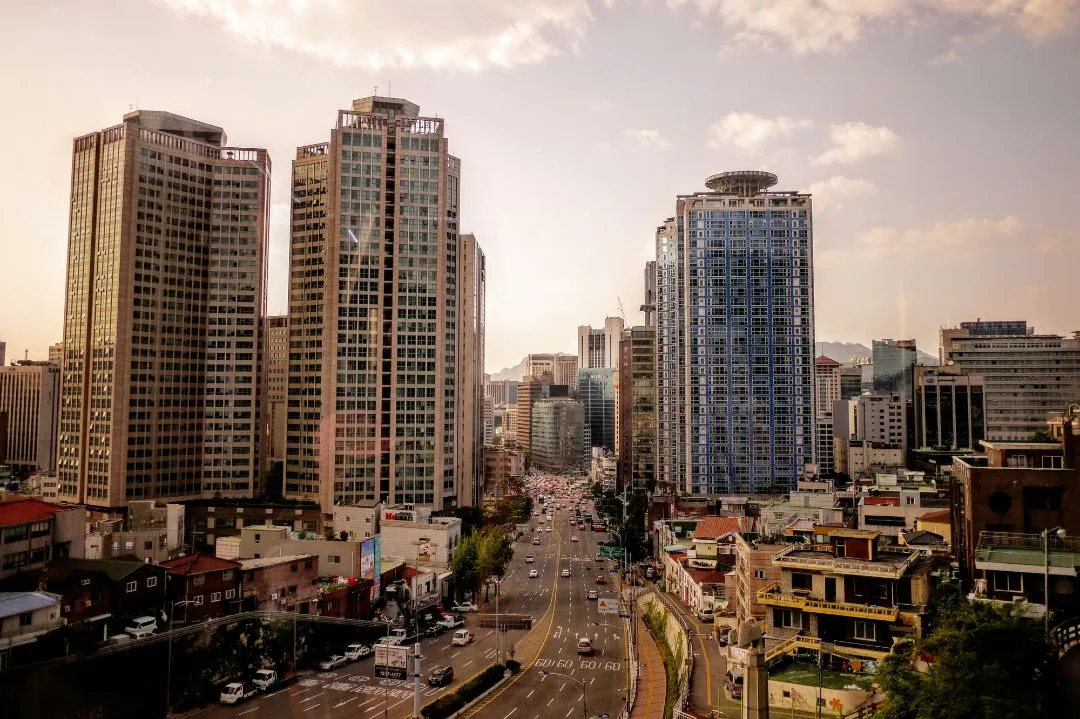
Photo by Shubham Dhage on Unsplash


Global presence

Founded in 2014 with a mission to simplify the world through blockchain technology, bitFlyer has taken its crypto asset trading business to the global stage. Its expansion includes sister companies bitFlyer USA and bitFlyer Europe, which have allowed the exchange to extend its reach beyond Japan.


Blockchain-powered metaverse

The Sandbox is a metaverse platform that harnesses the power of blockchain technology, empowering users to create and possess digital content using the platform’s tools. Moreover, The Sandbox features virtual land called LAND, which is regularly utilized by companies for hosting events and various other activities. At the heart of this ecosystem lies the SAND token, which enables users to trade user-generated content, participate in governance by voting, and engage in staking.


Attention in East Asia

Notably, The Sandbox has been generating significant attention in East Asia. Last month, the metaverse platform initiated an event titled “Hallyu Rising,” collaborating with renowned Korean brand partners, including automaker Renault Korea. As part of this event, Renault Korea launched the Renault Korea Hub within The Sandbox’s environment. This hub gives car enthusiasts a unique chance to design their own vehicles and enjoy exclusive experiences. The event also included a land sale, offering users the chance to acquire LAND adjacent to the Korean brands, thereby encouraging more active user engagement.

More to Read
View All
Policy & Regulation·

May 22, 2023

Cebu Meeting of FSB Highlights Crypto Risks

Cebu Meeting of FSB Highlights Crypto RisksThe Regional Consultative Group for Asia of the Financial Stability Board (FSB) has highlighted the risks implicated by crypto assets in a series of meetings held on Thursday and Friday in Cebu, the Philippines.The FSB is an international body with a mandate to monitor the global financial system, as well as make recommendations in respect of that system. The agency was established by the G20 group of countries in April 2009, replacing its forerunner, the Financial Stability Forum.Photo by John Alvin Merin on UnsplashA regulatory framework for cryptoThe two-day event focused on non-bank financial intermediation (NBFI) in Asia and the development of an effective global regulatory framework for crypto-assets. It discussed recent developments in financial markets, together with their regional impact.In opening remarks, Philippine Central Bank Governor, Felipe Medalla, stated: “Crypto, the biggest issue there is, whether we like it or not is quite a lot, especially younger people who are actually gambling. They have huge losses, our view right now. Well, you’re there, it’s your problem and the regulation becomes strict the moment crypto meets banking.”International participants highlighted the need for the development of an effective global regulatory framework for crypto-assets. Particular concern exists with regard to the potential for systemic risk in relation to crypto and a potential overflow into the traditional financial system.Earlier this year, the FSB proposed a complete regulatory framework for cryptocurrencies, with the report having been originally submitted in October of last year. Among its key components is the imposition of tighter controls. It proposed the guiding principle of “same activity, same risk, same regulation” for crypto assets, mirroring the approach taken for traditional financial assets.Global approach to taming cryptoThis approach has proven to be problematic for people working within the digital assets space. Many of the core facets of cryptocurrencies are entirely different to anything we see in traditional finance. Trying to frame crypto within an existing approach and standard has been perceived by many to be akin to trying to fit a square peg in a round hole.It’s not the FSB's role or place to affect policy directly. That responsibility lies with policymakers and regulators in each individual country. However, the organization is seeking to influence those individuals and entities in the hope that they will employ its suggested regulatory framework.Klaas Knot, Chair of the FSB and President of the Dutch Central Bank, provided this view on crypto: “We will come up with a global regulatory framework. It also only makes sense to regulate this from a global perspective. Because, nowadays you can take a server and put it anywhere in the world and start issuing these digital assets.”From Knot’s take, it’s clear that governments and central bankers are cottoning on to the fact that individual nation-state regulation is futile to an extent where decentralized innovations like cryptocurrency are concerned. Others such as European Central Bank (ECB) President Christine Lagarde and Mark Branson, President of German financial markets regulator BaFin, similarly have called for a globally enforced regulatory approach over the course of the past year.Ongoing struggleWhile regulation can be helpful, particularly when it comes to the points at which crypto meets the traditional system, there’s no doubt that this emerging innovation will disrupt the conventional system to some degree or other. That may place an incentive before central bankers and governments to try and stymie the further development of digital assets.While a truly global approach to regulating digital assets could retard development of the sector, there is rarely total consensus among world governments on a single issue. Therefore, by its very nature, crypto, and the digital assets sector will likely continue to develop regardless. It’s more a question of how long that process takes.

news
Markets·

Aug 16, 2023

QCP Capital: Bitcoin Has $34K Price Potential

QCP Capital: Bitcoin Has $34K Price PotentialBitcoin’s potential for a significant price rally toward $34,000 has been discussed recently by analysts at QCP Capital, the Singapore-headquartered crypto asset trading firm. Despite Bitcoin’s recent lack of major volatility catalysts, QCP’s analysis suggests that a classic support rebound might trigger the return of the highest Bitcoin prices in over a year.Photo by Kanchanara on UnsplashCrucial price action time-frameAccording to QCP Capital’s latest market update on Tuesday, the upcoming weeks are poised to be crucial for Bitcoin’s price action. The cryptocurrency has been range-bound for months, leaving market observers speculating about the emergence of a new market trend.QCP Capital highlights September as a pivotal month due to the completion of a rising wedge pattern that started during the end of the 2022 bear market. This pattern has guided Bitcoin’s price movement, with the wedge reaching its first termination point at the beginning of September. The specific level of interest is $29,300, which aligns with the current focal point of the Bitcoin spot price.Rally potentialThe analysis ponders whether there will be a sharp rally that pushes the price to the $34,000 resistance level. This scenario has occurred three times this year, as the price kissed the support trendline. The report acknowledges that it might take a few more quiet weeks before the outcome becomes clear. The analysts expressed their intention to buy back their end of September short calls and anticipate going long on end of December volatility in due course.QCP Capital’s perspective aligns with other optimistic views on Bitcoin’s short-term price strength. Some projections even suggest that the 2023 Bitcoin bull market might return by October, although the market sentiment is varied, with some cautioning about the possibility of new lows before a broader recovery.Macroeconomic trendsTurning to macroeconomic trends, QCP Capital indicates that significant change is not on the immediate horizon, echoing the status quo in the crypto space. Comparing the current situation to the compressed trading environment of the crypto winter in 2018 and 2019, the analysis suggests that a macroeconomic shift would be required to reinvigorate the market, similar to what has happened in the past.Bitcoin’s volatility has reached historic lows, as illustrated by data just published by on-chain market intelligence firm, Glassnode. While a game-changing macro environment shift isn’t imminent, there are short-term catalysts on the crypto calendar for the upcoming months.These include events like Mt. Gox creditor payouts, the GBTC vs. Securities and Exchange Commission (SEC) lawsuit, potential SEC decisions on Blackrock/Fidelity’s Bitcoin spot ETF applications, and potential news related to centralized crypto exchanges and stablecoins.The September deadline for comments on the initial Bitcoin spot price exchange-traded fund (ETF) applications is particularly noteworthy, as it’s widely seen as a turning point for the industry. Europe’s first Bitcoin spot ETF, which began trading on Tuesday, is being custodied by Fidelity Investments, marking another step in the maturation of the cryptocurrency market.

news
Policy & Regulation·

Oct 04, 2023

GSR Gets on Path Towards Full Regulatory Approval in Singapore

GSR Gets on Path Towards Full Regulatory Approval in SingaporeGSR Markets Pte. Ltd., the Singaporean subsidiary of the global crypto trading firm GSR, has reached a significant milestone in its quest to become a fully licensed entity within the city-state. On Monday, the Monetary Authority of Singapore (MAS) granted GSR in-principle approval for a Major Payment Institution (MPI) license.Photo by Mike Enerio on UnsplashTrading licenses filtering throughThis development mirrors similar approvals granted to other crypto firms in the region, solidifying Singapore’s status as a hub for crypto and Web3 innovations. The approval of GSR’s MPI license follows hot on the heels of Coinbase Singapore’s announcement of securing a full Major Payment Institution license from MAS.Other companies such as Circle, Blockchain.com, and Crypto.com have also obtained MPI licenses this year. These developments underscore the competitive yet regulated landscape of the cryptocurrency market in Singapore.In-principle approvalThe in-principle approval from MAS empowers GSR to provide crypto and fiat-related services to Singaporean residents and entities. This includes the ability to conduct payment services without the limitations of single transaction thresholds (SGD 3 million) and monthly limits (SGD 6 million). GSR’s CEO, Jakob Palmstierna, expressed gratitude for MAS’s constructive oversight, which has played a pivotal role in shaping the evolving digital asset landscape in Singapore. Palmstierna stated:“We are immensely grateful to MAS for their constructive oversight, which helps shape a growing digital asset ecosystem that we feel proud to be a substantial part of.”Meanwhile, GSR’s COO Xin Song, emphasized the importance of this approval, stating that it enables them to “deepen our local client partnerships and continue in our critical role as a liquidity provider within the ecosystem.”GSR’s presence in Singapore aligns with the country’s burgeoning crypto-friendly environment. Recent surveys indicate that 25% of Singaporeans view cryptocurrency as the future of finance, with 32% having some involvement in crypto ownership. Moreover, Singapore boasts over 700 Web3 companies, positioning itself as a pivotal market for the expansion of the crypto and Web3 economy.Company ambitionsGSR, established in 2013 in New Jersey, offers a diverse range of services, including over-the-counter crypto trading, derivatives trading, market making, and venture capital investments. The firm is no stranger to regulatory compliance, holding Money Service Business licenses across several US states.The company was founded by former Goldman Sachs Executives Rich Rosenblum and Cristian Gil. At the height of the last crypto bull run, the crypto market maker had plans “to add 100 hires every six months for the next few years.” No doubt that ambition has been scaled back since then, given the protracted bear market which has followed.Last month, Gil became embroiled in a spat with Andrei Grachev of rival market making firm, Singapore-based DWF Labs.GSR’s recent attainment of in-principle approval for a Major Payment Institution license from MAS reinforces Singapore’s position as a leader in the crypto space. The firm’s interest in pursuing a compliant route forward and its role as a liquidity provider bode well for both GSR and the broader crypto community in the Asia-Pacific region.

news
Loading