Top

Crypto Trading Surges in South Korea While Global Trends Decline

Markets·August 04, 2023, 7:25 AM

Despite a global decrease in cryptocurrency trading on centralized exchanges, South Korea has witnessed a significant increase in trading activities. Upbit, the nation’s largest crypto exchange, climbed to the second spot in global spot trading volume for July.
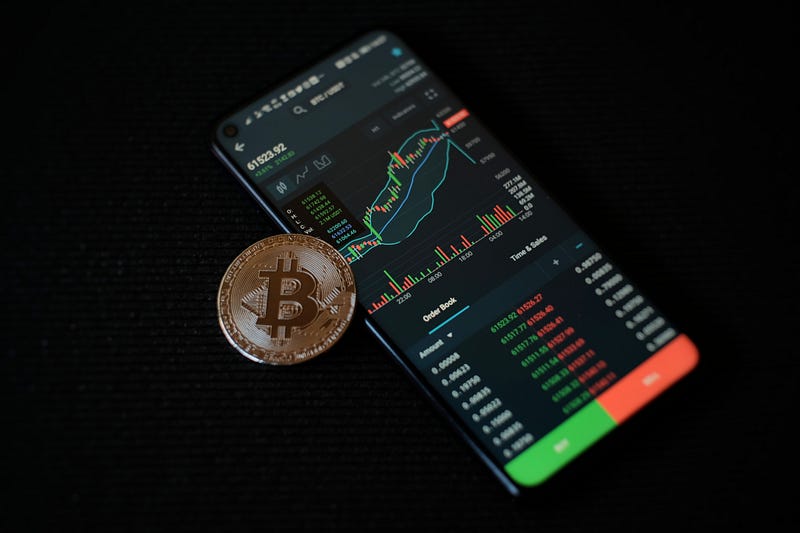
Photo by Viktor Forgacs on Unsplash


Plunges in global trading volumes

According to an Exchange Review for July 2023 by CCData, a virtual asset data provider, the total global spot trading volumes on centralized exchanges dropped to $515 billion in July, a 10.5% decrease compared to the previous month, marking the second lowest level since 2019. Additionally, derivative trading volumes fell by 12.7% to $1.85 trillion, the second-lowest since December 2020.

Experts attribute these declines to increased regulations on cryptocurrencies worldwide, such as legal crackdowns on exchanges like Binance and Coinbase by the US Securities and Exchange Commission.

Binance, the world’s largest cryptocurrency exchange, recorded a trading volume of $208 billion with a market share of 40.4% in July, marking a five-month consecutive decline, although it still maintained its title as the largest platform worldwide for crypto spot trading.

Coinbase — the largest cryptocurrency exchange in the US — and global exchange OKX also saw a decline in trading volume of 11.6% and 5.75% to $28.6 billion and $29 billion, respectively.


Crypto exchanges flourish in Korea

Contrarily, the majority of major crypto exchanges in Korea experienced significant growth in trading volume. Upbit’s trading volume skyrocketed by 42.3% to $29.8 billion in July, surpassing Coinbase and OKX for the first time to claim the second spot in global cryptocurrency exchanges behind Binance.

Other Korean exchanges also saw remarkable increases in trading volume. Bithumb recorded $6.09 billion, a surge of 27.9%, while Coinone’s volume rose by 4.72% to $1.39 billion.

These spikes in trading volume can be accredited to an increased interest in cryptocurrencies and blockchain technology among citizens throughout the country, despite global regulatory challenges impacting the market. As the cryptocurrency industry continues to evolve, Korean exchanges are showing resilience and maintaining their competitive positions on the global stage.

More to Read
View All
Web3 & Enterprise·

Oct 21, 2023

Japanese Games Publisher Suspends Metaverse Downloads

Japanese Games Publisher Suspends Metaverse DownloadsJapanese video game publisher Bandai Namco has taken the step of temporarily suspending downloads of its recently unveiled Gundam Metaverse, raising questions and concerns about a potential major leak within the project.In an official announcement on Thursday (local time), the company expressed regret over the temporary suspension of client file downloads, stating that the firm is sorry that downloading the client files for the Gundam Metaverse has been temporarily suspended.Photo by Jason Ng on UnsplashRecent game releaseGundam Metaverse was launched with the collaborative intention of Bandai Namco and Gundam fans, aimed at creating a community that contributes to future Gundam projects. The sudden halt to downloads came as a surprise, given that the game was released just this month.The Gundam Metaverse was initially slated to be open for a limited time in Japan and the US. It featured an “Early Access” phase for a select number of users, which commenced on October 6, followed by the “General Access” phase available to the public starting on October 12.During this time, visitors had the opportunity to immerse themselves in a 3D world inspired by the iconic Gundam anime. The virtual world included a store offering six distinct Gundam Plastic models, commonly known as Gunpla, and a space for digital live performances by artists affiliated with the Gundam series.Suspected design file flawsBandai Namco has remained tight-lipped about the reasons behind the decision to cease downloads, leaving fans and observers speculating about potential issues with the project. Speculation was further fueled by rumors that circulated online, suggesting that the game’s downloads contained unencrypted design files related to specific models from “Gundam SEED Freedom.”These rumors began circulating as early as mid-September when a Weibo user claimed to have shared images of the “Freedom Gundam” and “Justice Gundam” designs, scheduled to make their debut in “Gundam SEED Freedom.” This upcoming animated film is produced by Bandai Namco Filmworks and directed by Mitsuo Fukuda, with a release date set for January 26 next year, marking the 20th anniversary of the Gundam SEED franchise.Given that Gunpla models were set to be released in tandem with the film’s screening in January, the alleged leak of design files would be a substantial concern for Bandai Namco.Hong Kong news outlet HK01 reported:“There were a large number of 3D model CAD [computer-aided design] files of Gundam models hidden inside [a download], including 2024-only 3D model CAD files.”Metaverse visionBandai Namco set out its metaverse vision in March 2022 when it provided initial details on what it termed back then as its “Gundam Metaverse Project.” The project involved an outlay of $130 million for the company to get it off the ground.At the time, Bandai Namco saw its entry into the world of the metaverse as an opportunity for it to be “connected with fans,” becoming a hub so that those connections could run more deeply and broadly and result in greater enjoyment for IP fans, partners, group employees, and society worldwide.Bandai Namco’s decision to halt downloads remains a topic of intrigue that has left Gundam fans and industry observers eagerly awaiting further developments and clarifications from the gaming giant.

news
Policy & Regulation·

Jun 16, 2023

SEC Opposes Motion to Dismiss Terraform Labs Lawsuit

SEC Opposes Motion to Dismiss Terraform Labs LawsuitLawyers representing the United States Securities and Exchange Commission (SEC) have responded to a motion to dismiss the lawsuit filed by Dentons, the lawyers representing Singapore-based Terraform Labs and its Founder Do Kwon.Photo by Miguel Á. Padriñán on PexelsCourt filingAccording to its arguments, set out in a court filing lodged to the District Court of the Southern District of New York on Thursday, the SEC’s counsel claims that the additional documents provided by Dentons lack sufficient grounds for dismissing the case.It claims that the internal SEC emails presented by Dentons are irrelevant to the current lawsuit. The SEC asserts that the parameters of an “investment contract” are clearly defined by the Howey test and argue that TerraUSD ($UST) should be classified as a security.The reliance by US regulators on the Howey test, a legal test case that implicated citrus grove contracts that date back to 1946, has proven to be controversial. Naturally, there could have been no consideration of the digital innovation that digital assets present today almost eighty years ago. Notwithstanding that, the SEC maintains that the principle factors of what constitutes an investment contract are covered by the case regardless.During the court hearing held on June 15, Dentons submitted supplementary documents to strengthen their motion to dismiss the lawsuit. The primary focus of the hearing was to determine whether the digital assets developed by Terraform Labs should be categorized as securities based on the criteria of an “investment contract.”Dentons maintains that the algorithmic stablecoin, $UST, should not be considered a security and emphasizes its practical purpose rather than its classification as an investment contract. To support their motion, Dentons included additional documents such as the US House Financial Services Committee hearing on digital asset regulation and stablecoin issuance, the SEC’s request for a restraining order against Binance.US, and the Hinman emails from the SEC vs. Ripple lawsuit.Judge to decideThe defense lawyers highlighted what they perceive as a “regulatory gap” in classifying crypto assets as securities, particularly as the US Congress engages in discussions about regulatory frameworks for digital assets and stablecoin issuance. Furthermore, they argued that the SEC is exceeding the scope of securities laws and relying on internal emails related to “investment contracts” to determine the security status.A decision on the motion to dismiss will be arrived at by July 14. Judge Jed Rakoff, who is presiding over the case, will be responsible for that, once he’s weighed up the merits of the arguments presented by both parties.It is noteworthy that Dentons has previously represented Kwon in challenging the US SEC’s subpoena during the investigation of the Mirror Protocol in 2021, as well as in a class-action lawsuit in the Singapore High Court in 2022. The law firm also provides representation to Terraform Labs in other legal matters.In a separate development, the Basic Court in Podgorica, Montenegro, has granted bail for Kwon and former Terra Chief Technology Officer Han Chang-joon. However, Kwon has recently been taken into custody for extradition in Montenegro while the court deliberates on South Korea’s extradition request for the Terra founder.As the legal proceedings continue, the outcome of the motion to dismiss will have significant implications for the ongoing dispute between Terraform Labs, Do Kwon, and the SEC.

news
Policy & Regulation·

Feb 07, 2024

India moves cautiously on CBDC to address privacy concerns

India is strategically navigating the development of its digital rupee, with the Reserve Bank (RBI) actively addressing privacy concerns through technological solutions in its central bank digital currency (CBDC) pilot programs. According to a recent report by CoinDesk, a senior official with insights into these initiatives revealed that while progress is evident, the RBI is proactively exploring ways to ensure privacy in the use of the digital rupee.Photo by Julian Yu on UnsplashPursuing mechanisms to maintain anonymityThe RBI has introduced a new dimension to the discourse on privacy concerns associated with CBDC usage. The central bank official suggested that the RBI may seek legal backing from India’s finance ministry to enact legislation allowing customers to delete transactions for the purpose of maintaining anonymity. New-found urgencyPublic statements from the RBI suggested a lack of urgency in implementing a full-scale retail CBDC, coupled with a reluctance to provide a specific timeline. However, recent events indicate that an underlying sense of urgency may be emerging. In the past month, the retail CBDC achieved a notable milestone, processing one million transactions in a single day, with support from various banks. Several banks, including HDFC Bank, Kotak Mahindra Bank, Axis Bank, Canara Bank, IDFC First Bank and Union Bank of India, reportedly encouraged their employees to deposit funds in CBDC instead of fiat currency, contributing to this achievement. The official overseeing the CBDC development emphasized the necessity for experimentation and substantial efforts to ensure the security of the digital currency. While the settlement aspect is considered straightforward, addressing latency remains a priority for the RBI. No mandate on taxThe RBI, historically known for its opposition to crypto both domestically and globally, clarified that crypto taxation is not within its mandate. This clarification suggests that the RBI might not object if the Indian government decides to reduce the stringent taxes currently imposed on cryptocurrencies. The central bank clarified that it lacks the mandate to express a viewpoint on reducing a contentious tax that has stirred debate within the crypto industry. The RBI has been a driving force behind the adoption of wholesale and retail CBDC since late 2022 when it initiated pilot programs. The official emphasized that taxation matters fall under the government’s purview, reinforcing the RBI’s focus on its designated responsibilities. Similarly, the country’s judiciary recently turned down a plea to have it formulate a crypto regulatory framework, outlining that this too is up to the government to address. The central bank has a historical context of attempting to ban cryptocurrencies, with effective prohibitions in place between 2018 and 2020 until a Supreme Court order overturned the ban. Since then, the RBI has consistently expressed concerns about cryptocurrencies in various forums, including the Group of 20, where India played a leading role in coordinating global regulation in the crypto space. Recent utterances from the RBI governor, Shaktikanta Das, suggest that the regulator is disinterested in seeing the offering of spot crypto exchange-traded funds (ETFs) in India despite that eventuality coming to pass last month in the United States. Das also spoke positively recently about the tokenization of real-world assets using blockchain technology.

news
Loading