Top

HashKey’s New $100M Fund to Prioritize Altcoins

Web3 & Enterprise·September 02, 2023, 11:51 AM

HashKey Capital, the investment arm of Hong Kong-based crypto firm HashKey Group, is embarking on a new investment journey with the launch of a fund that predominantly targets major altcoins.
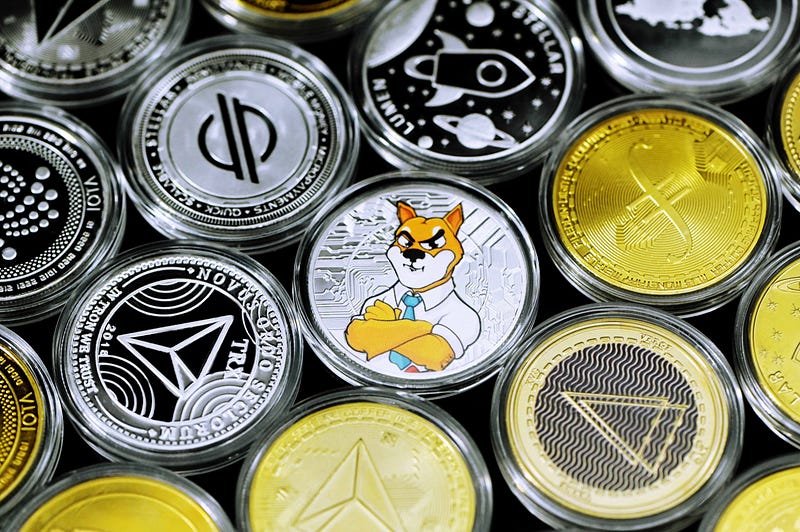
Photo by Kanchanara on Unsplash


50% altcoin allocation

In a recent interview with Reuters, Jupiter Zheng, the Portfolio Manager of the fund, revealed that less than 50% of the fund’s allocation will be directed towards Bitcoin (BTC) and Ethereum (ETH), the two largest cryptocurrencies.

The fund has already garnered attention from potential clients, primarily high-net-worth individuals and investment firms catering to affluent, high-net-worth Asian families. Zheng underscored the fund’s commitment to diversifying investment strategies, which he believes is necessary as a consequence of the Hong Kong stock market’s recent weakness.

“We see untapped demand from professional investors who wish to chase above-market returns in crypto,” Zheng noted, suggesting that the allure of crypto assets is becoming increasingly appealing to traditional investors.


$1 billion assets under management

HashKey Capital has $1 billion in assets under management, and the firm has set an ambitious target of raising $100 million for the newly launched fund within the next 12 months. This allocation strategy also includes a portion of the fund’s holdings in cash, allowing for flexibility in navigating the dynamic and volatile cryptocurrency market.

In addition to forging ahead with crypto investments, the company is actively establishing distribution channels with offshore Chinese financial institutions, expanding its reach and influence in the digital asset space.


Positive market outlook

Zheng remains optimistic about the crypto market’s future, expressing confidence that cryptocurrency prices are finding stability as industry liquidity improves. He cited several factors contributing to this stabilization, including the plateauing of US interest rates and the growing interest of large US asset managers in filing for spot Bitcoin ETFs, indicating a maturing and evolving industry sector.

Responding to news of the new fund, Ryan Selkis, CEO and Founder of crypto market intelligence firm Messari, said that he expected other funds to follow suit in 2024 given that “there’s a ton of inefficiency and mispricing in assets 50–500 by market cap.”

HashKey’s progression in the crypto investment space can be traced back to its acquisition of a Type 9 asset management license from Hong Kong’s Securities and Futures Commission last year. This license granted HashKey the ability to manage portfolios exclusively composed of virtual assets, laying the groundwork for its latest venture. It has since secured Type 1 and Type 7 licenses and recently started offering its products to retail investors in Hong Kong, being one of the first to do so.


Funding round

Earlier in the year, the company successfully closed a $500 million investment round for a fund dedicated to infrastructure, tooling, and applications that drive the widespread adoption of blockchain and crypto technologies. In April, it launched a wealth management service in response to demand from investors who were looking to gain exposure to digital assets.

Hong Kong’s welcoming stance towards cryptocurrencies and its proactive approach to addressing market demand for alternative assets have played a pivotal role in attracting digital asset firms. The city’s Securities and Futures Commission (SFC) has been granting licenses to crypto exchanges in alignment with its new licensing framework, opening up opportunities for retail investors to trade “large-cap tokens” on licensed platforms while implementing safeguards like knowledge tests, risk profiles, and reasonable exposure limits.

More to Read
View All
Web3 & Enterprise·

Dec 01, 2023

Late Korean artist Lee Jung-seob’s ‘Bull’ NFT on auction at OpenSea

Late Korean artist Lee Jung-seob’s ‘Bull’ NFT on auction at OpenSeaNFT marketplace OpenSea is hosting an ongoing auction for a digital representation of the painting “Bull” by the late Korean artist Lee Jung-seob, Yonhap News TV reported on Tuesday. Celebrated for his distinctive lines in his paintings, Lee passed away in 1956. This auction is set to conclude on Dec. 12, with the starting bid placed at 300 WETH (Wrapped Ethereum), which is approximately equivalent to $626,000.Photo by Hans Eiskonen on UnsplashWhite bull as NFTLee’s “Bull,” featured in the OpenSea auction, is distinguished by its depiction of a white bull set against a dark green background. This particular piece is one of Lee’s unpublished works and is currently being offered for sale by a private art collector. Regarding the authenticity of the painting, the description on the OpenSea page states, “This work received a handwritten evaluation from Professor Jung Jum-sik, a founding member of the Lee Jung-seob Art Award, on November 9, 2000.”The current owner of the original artwork has expressed their intention for auctioning it as a desire to share a valuable piece of art. The painting originally belonged to poet Ku Sang and has since changed hands multiple times, experiencing some damage along the way. While the copyright for an artist’s work typically remains with their inheritors for 70 years posthumously, in the case of Lee Jung-seob, this period has already lapsed.Authenticity and NFT investmentsMeanwhile, art appraisal experts are advising caution, emphasizing the need to first confirm the authenticity of the original painting. This caution stems from the fact that the painting has not undergone evaluation by an official appraisal organization.During his interview with Yonhap, Jung Jun-mo, CEO of Korea Art Authentication Appraisal Inc., offered a word of caution regarding investment in NFTs tied to artworks with questionable authenticity. He emphasized that NFTs representing works that lack genuine authentication also hold no value in terms of authenticity. Jung advised potential investors to thoroughly verify the legitimacy of such artworks before proceeding with any investment in their NFT representations.Last year, many paintings of modern Korean artists were converted into NFTs, but they sparked controversy over issues of authenticity. Experts in art investment have since been advising thorough research prior to making any investments in these digital assets. They warn that losses incurred from transactions involving these NFTs fall squarely on the investors.

news
Web3 & Enterprise·

Nov 30, 2023

IOTA accelerates Middle East expansion with $100M foundation launch

IOTA accelerates Middle East expansion with $100M foundation launchIn a move aimed at catalyzing the adoption of its distributed ledger technology (DLT) in the Middle East, the Berlin-headquartered IOTA Foundation, the developmental force behind the IOTA-directed acyclic graph-based ledger network, unveiled a $100 million foundation in Abu Dhabi on Wednesday.Photo by Imtiyaz Ali on UnsplashTokenizing real-world assetsThe IOTA Foundation announced details of the initiative, known as the IOTA Ecosystem DLT Foundation, via a blog post published on its website on Wednesday. The new foundation is designed to facilitate the transformation of tangible assets into digital entities, marking a significant stride in the convergence of real-world assets with the digital realm, according to IOTA Co-founder and Chairman Dominik Schiener.Taking to the X platform, Schiener wrote:”We will double down on our efforts to bring the real world to Web3. We will pave the way to tokenize RWA [Real World Assets] assets on #IOTA and work with the governments in the UAE, across the Middle East and Africa to digitize their trade infrastructure and tokenize assets. We will make Blockchain real, with real use cases, real adoption, real yield and real assets.”IOTA is not a blockchain, but a related distributed ledger technology. DLT has garnered attention for its diverse applications over the past decade. IOTA’s digital tokens will serve as the financial backbone for this substantial investment, signaling a strategic move amidst recent setbacks in the cryptocurrency sector.Regulatory first in Abu DhabiThe IOTA Ecosystem DLT Foundation stands out as the first blockchain-focused foundation sanctioned by the regulatory authorities of the Abu Dhabi Global Market (ADGM), a key financial hub within the United Arab Emirates (UAE). The ADGM solidified its blockchain regulations in early November, creating a conducive environment for innovative blockchain-focused entities. The regulatory framework was crafted to offer a comprehensive structure specifically for DLT foundations and decentralized autonomous organizations (DAOs).Schiener expanded further on plans for the DLT Foundation:”With a new headquarter in the UAE, we are positioning IOTA from being an Enterprise Blockchain in Europe, to becoming one of the largest, global Crypto ecosystems. We will fully support Web3 and DeFi use cases on IOTA with the #EVM launch in Q1.”Endowed with over $100 million in IOTA tokens, the foundation’s funds will be gradually vested over the next four years.The financial infusion is earmarked for the development and expansion of the IOTA network. Additionally, IOTA will embark on asset “tokenization,” a process involving the representation of ownership rights for land or buildings as digital tokens stored on a blockchain. These tokens, akin to digital certificates of ownership, extend to virtually any valuable object.IOTA launched in 2015, and within its first two years, it rose to be a top-ten crypto project on the basis of market capitalization. Over the course of the last six years, the project has struggled to make the network less centralized. There have also been internal conflicts, which resulted in a number of the project’s co-founders stepping away from the project. With this latest development, Schiener suggested that IOTA could work its way back to being a top-ten project once again.

news
Markets·

Oct 10, 2023

Korean Crypto Exchanges Struggle Despite Market Recovery

Korean Crypto Exchanges Struggle Despite Market RecoveryThe results of a recent study by the South Korean Financial Intelligence Unit (FIU) released on Monday revealed that ten domestic cryptocurrency exchanges have reported zero revenue from transaction fees, with half of them struggling to achieve a daily average trading volume of KRW 1 million ($740).Photo by Maxim Hopman on UnsplashTrends of growth and declineThe study looked into data from 35 registered virtual asset service providers (VASPs) for the first half of this year. The findings showed that compared to the second half of last year, the crypto market capitalization and Korean won deposits increased, but exchanges faced growing challenges, illustrated by a widening gap between leading fiat-to-crypto exchanges and smaller crypto-only exchanges.In the first half of this year, the operating profit of won-based exchanges reached KRW 259.8 billion (approximately $193 million), a 46% increase compared to the second half of last year, which recorded KRW 177.9 billion. In contrast, crypto exchanges recorded an operating loss of KRW 32.5 billion. Notably, out of 21 crypto-only exchanges, 10 of them reported no revenue at all from transaction fees, and 18 were in a state of complete capital impairment. Meanwhile, the operating profit of won-based exchanges was concentrated among the country’s top two exchanges, Upbit and Bithumb.But from a broader perspective, as of the end of June, this year’s total capitalization of the crypto market reached KRW 28.4 trillion — a 46% increase compared to the end of the second half of last year. Korean won deposits also increased by KRW 400 billion, or 11%, compared to the previous half. The overall operating profit was KRW 227.3 billion, up 82% from KRW 124.9 billion at the end of the second half of last year.“The first half of this year saw a rise in prices of virtual assets and investor sentiment, leading to an increase in Korean won deposits, overall market capitalization, and operating profits for exchanges, compared to the second half of 2022,” the FIU remarked.The number of new listings and delistings on virtual asset exchanges also surged with 169 new listings and 115 new delistings. These represented a more than double increase and a 47% increase, respectively, compared to the second half of last year. 66% of the delisted crypto assets were coins that had been exclusively listed on a given exchange.Despite the market’s recovery, trading volume and the number of users have slightly decreased. The daily average trading volume in the domestic crypto market for the first half of this year was KRW 2.9 trillion, down 1.3% compared to the second half of 2022. In addition, the number of registered accounts with VASPs also dropped by 19% to 9.5 million compared to the end of last year. This can be attributed to a growing number of dormant accounts and the removal of duplicate accounts.The quantity of verified users has also declined. The number of individuals and corporations that had completed the mandatory Know Your Customer (KYC) procedures needed to engage in trading decreased by 210,000 to 6.06 million (including duplicates) compared to the end of 2022. The majority of users, or those who own less than KRW 1 million in virtual assets, dropped by 7%.On the other hand, the amount of virtual assets leaving the country increased. In the first half of this year, a total of KRW 22.1 trillion was transferred to whitelisted overseas operators or individual wallet addresses, marking a KRW 500 billion increase compared to the second half of last year. This trend could be accredited to futures trading and arbitrage trading influenced by the so-called “kimchi premium” — a term used to describe the difference between trading prices of cryptocurrencies in Korea and in other foreign exchanges.Age demographicsOther findings showed that the age group that traded the most virtual assets is in their 30s, accounting for 30% of all users. Within this group, men make up 70%, with 1.27 million men recorded as engaging in crypto trading. Following closely with 1.2 million, men in their 40s were the second-largest demographic.

news
Loading