Top

KuCoin Halts Bitcoin and Litecoin Mining Pools Amidst Strategic Shift

Web3 & Enterprise·August 03, 2023, 12:16 AM

In an announcement on Tuesday, Seychelles-based cryptocurrency exchange KuCoin revealed its decision to temporarily suspend its Bitcoin and Litecoin mining pools, effective from 16:00:00 on August 15, 2023 (UTC).
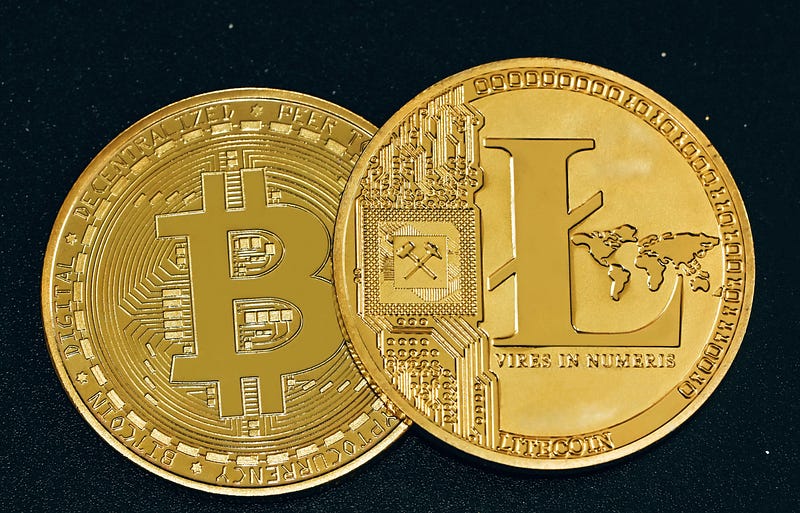
Photo by Traxer on Unsplash


Changing business strategy

This move is attributed to KuCoin’s evolving business strategy, although specific details remain undisclosed. The exchange expressed its regret for any inconvenience caused and extended gratitude for users’ continued support.

It appears that the company wants to focus on core business activities and for that reason, it’s terminating its mining pool activity. That said, the discontinuation was described in its statement as being “temporary” although that has been left open-ended with no indication of if or when it would bring the service back into operation.

The company is open to the idea of revisiting the facilitation of mining pools in the future. “We will see if it is needed to restart based on the market and users’ demand in the future,” a spokesperson for the company told The Block.

To ensure miners’ uninterrupted earnings during the suspension, KuCoin advised users engaged in cryptocurrency mining to transition their Bitcoin (BTC) and Litecoin (LTC) miners to alternative mining pools before the specified suspension date. Additionally, the exchange emphasized the importance of backing up and preserving mining records and related data, recommending users complete these actions before August 27.

Presently, the KuCoin Bitcoin mining pool maintains a hash rate of 9.08 exahash per second (EH/s), while the Litecoin pool operates at 3.90 terrahash per second (TH/s). These figures contribute to the broader hash rate landscape, where the entire Bitcoin network boasts a hash rate of 349.19 EH/s, compared to the Litecoin network’s 792.16 TH/s.


Workforce reduction

It is clear that the company is in the process of adjusting to current market conditions. Last week, rumors surfaced of a plan to effect a workforce reduction. That prompted KuCoin’s CEO Johnny Lyu to respond, clarifying that the exchange’s operations are running smoothly. Dismissing layoff speculation, Lyu highlighted the exchange’s steady expansion and strong growth as demonstrated by the H1 2023 report. The report showcased an increase in users and new listings, underscoring the platform’s vitality and development.


Mandatory KYC

In recent months, KuCoin has also implemented mandatory Know Your Customer (KYC) requirements, obligating users to undergo verification processes. Existing customers who fail to complete KYC procedures will be unable to make deposits. With over 20 million registered accounts, the exchange felt that it needed to improve on its level of regulatory compliance and security measures.

It’s highly likely that an action taken by authorities in New York in the United States in March prompted KuCoin’s decision to tighten up on KYC. At that time, the New York Attorney General said that action was being taken against KuCoin due to its failure to register as a securities and commodities broker-dealer.

As KuCoin undergoes these changes, the suspension of its mining pools raises questions about the broader implications for its business strategy and the potential impact on miners within its ecosystem. That said, the firm is not alone in making changes, with most crypto exchanges having had to adjust to a business and regulatory environment that has changed considerably since the 2021 crypto bull run.

More to Read
View All
Web3 & Enterprise·

Dec 12, 2025

a16z establishes Seoul presence as Asia’s retail crypto market evolves

Andreessen Horowitz is deepening its bet on Asia’s retail crypto boom, even as trading on South Korea’s largest exchanges has cooled from last year’s peaks. The firm’s crypto arm, a16z crypto, said in a press release that it has opened its first Asia office in Seoul, citing South Korea’s high level of retail participation. Nearly one in three South Korean adults owns cryptocurrency, exceeding the share of stock investors, according to the firm. The move comes as the broader Asia-Pacific region cements its role as a hub of grassroots crypto activity, a trend highlighted in Chainalysis’ 2025 Global Crypto Adoption Index.Photo by Brady Bellini on UnsplashAltcoin-heavy retail marketSouth Korea has been a major contributor to that growth. Bloomberg reported in October that digital assets have increasingly become a long-term savings vehicle for many South Koreans, particularly those trying to purchase homes. Trading on local platforms remains heavily skewed toward higher-risk altcoins, which account for more than 80% of total volume across domestic exchanges. Still, overall activity has dropped sharply over the past year. A November report from Wu Blockchain said trading on Upbit, the country’s largest exchange, is down about 80% from a year earlier. The platform averaged $1.78 billion in daily volume in November 2025, compared with roughly $9 billion in December 2024. Bithumb, the second-largest exchange, saw a similar pullback, with average daily volume falling from $2.45 billion last December to about $890 million this November. Some of that retail liquidity appears to have rotated into equities, with the benchmark KOSPI index up more than 72% year-to-date. Asia’s wealthy to increase crypto exposureEven as spot volumes recede, higher–net–worth investors across the region are signaling longer-term interest. Sygnum’s APAC HNWI Report 2025, cited by Cointelegraph, found that 60% of surveyed high-net-worth individuals plan to increase their crypto exposure over the next two to five years. The report said 87% of respondents already hold digital assets; about half allocate more than 10% of their portfolios, and the average allocation is around 17%. The survey included 270 participants with more than $1 million in investable assets or extensive professional investing experience, drawn from ten Asia-Pacific markets led by Singapore and including Hong Kong, Indonesia, South Korea, and Thailand. Overall, 90% of respondents said they view digital assets as important for long-term wealth preservation and legacy planning, rather than primarily as a speculative trade. Anchored by the new Seoul office, a16z crypto said it plans to provide go-to-market support for portfolio companies seeking to expand in Asia, including help with distribution, partnerships and community building. The effort will be led by Park Sung-mo, whose previous roles include positions at Monad Foundation and Polygon Labs, as Head of APAC go-to-market. Pakistan looks to crypto for financial modernizationPolicy debates elsewhere in Asia also reflect growing interest in digital assets' economic role. At the Bitcoin MENA Conference on Dec. 9, Pakistan’s Virtual Asset Regulatory Authority chairman Bilal Bin Saqib said the country needs to move beyond conventional economic structures and leverage digital assets as a new source of momentum, according to Cointelegraph. He argued that digital assets and blockchain could form part of a new financial architecture for the Global South, not merely serve speculative use cases. The country’s youth-heavy population, about 70% under age 30, was central to his view that it could take a leading position in crypto adoption. Chainalysis’ 2025 index placed Pakistan third worldwide, pointing to how policymakers in emerging markets are increasingly factoring digital assets into long-term economic strategies. 

news
Web3 & Enterprise·

May 22, 2023

Funding Round Sees HashKey Target Unicorn Valuation

Funding Round Sees HashKey Target Unicorn ValuationLeading financial technology company, Hong Kong-based HashKey Group, is looking to raise between $100 million and $200 million based on a $1 billion dollar company valuation that sees it take on unicorn status.According to an initial report by Bloomberg, early stage talks on the fund raise are progressing positively. It cites sources familiar with the matter in suggesting that as the fund raise negotiations progress, the terms of the offering, extent of the capital raise, and the valuation upon which its all based could change.Photo by Annie Spratt on UnsplashLeveraging a crypto-friendly environmentThe Web3 infrastructure developer and digital asset management firm has decided to take advantage of favorable conditions in Hong Kong in order to raise capital. The current business backdrop in the Chinese autonomous territory is particularly positive, and something that’s likely to make the capital raise a much easier task.Hong Kong has sought to create a crypto-friendly environment by way of both word and deed over the course of the past six months. With that being the case, it’s logical that there is tremendous opportunity for businesses like HashKey to achieve rapid growth in the nascent digital assets sector.Under the supervision of the Hong Kong regulator, Hashkey has already started to offer its services, one of only two companies (alongside OSL) to be permitted to trade in advance of the full implementation of licensing next month.While there have been some difficulties relative to banking the digital assets sector in Hong Kong, ZA Bank, Hong Kong’s largest virtual bank, has stepped up with the aspiration of banking the sector. ZA Bank is expected to facilitate crypto-fiat conversions with both of the currently licensed exchanges, HashKey and OSL, where customers can swap crypto into fiat currencies. The bank will also offer basic banking services to local web3 startups, a category that is currently underserved by traditional financial institutions.HashKey itself is cognizant of the conditions being right on the ground in Hong Kong and the opportunity that presents. Its chairman, Xiao Feng stated that Hong Kong is “very serious about building an international virtual asset center,” when speaking at the city’s Web3 Festival recently, an event that drew 13,000 attendees on its first day.Diversified service offeringThe firm’s activities in Hong Kong extend to HashKey Pro, a Hong Kong-compliant virtual asset exchange, and HashKey Capital, an investment firm. In April, the company established HashKey Wealth.This wealth management service offers investors access to a wide range of digital assets, including Bitcoin, Ethereum, and other cryptocurrencies, together with alternative investments such as decentralized finance (DeFi) projects and non-fungible tokens (NFTs).The program is designed to meet the needs of both institutional and high net worth individual investors. The investment strategies offered vary, ranging from passive to actively managed portfolios. Different risk profiles are employed to suit investors’ preferences. The program also provides a range of other services, including custody, trading, and portfolio rebalancing, to ensure that investors can manage their investments with ease.

news
Policy & Regulation·

May 15, 2023

Crypto Oasis Founder Thinks UAE Set Up For Crypto Success

Crypto Oasis Founder Thinks UAE Set Up For Crypto SuccessAs the dust settles on 2023's Dubai Fintech Summit, which took place last week, one takeaway offered by the Co-Founder of blockchain ecosystem firm Crypto Oasis is that the United Arab Emirates (UAE) has set itself up for success where crypto business is concerned.In speaking with crypto publication CoinTelegraph on the fringes of the Dubai Fintech Summit, Crypto Oasis Co-Founder and Managing Partner Saqr Ereiqat suggested that the regulatory infrastructure that the UAE has put in place provides an ideal foundation upon which crypto companies can develop and prosper.Photo by Mo Ismail on PexelsRegulatory infrastructureEreiqat pointed to some key fundamentals that crypto entrepreneurs and start-up founders should look at when deciding on the location that will best meet their needs and help to optimize their route to market and ultimate success. This includes the regulatory infrastructure.The UAE authorities and regulators at a national level, together with their colleagues within the regulatory agencies in the Emirates of Dubai and Abu Dhabi, have been doing some heavy lifting in this regard over recent months.They’ve all been working on establishing a workable regulatory framework, and as part of that, a licensing process. In the case of Dubai, its Virtual Assets Regulatory Authority (VARA) has started to issue preliminary or Minimum Viable Product (MVP) license approvals that enable crypto startups to get started, while providing them with a pathway towards obtaining Full Market Product (FMP) licensing at a later stage.Talent poolThe other key requirements that Ereiqat set out were digital infrastructure alongside an ability to attract and provide a pool of talent relative to the crypto assets space. In respect of these key considerations, Ereiqat believes that the UAE hits the target in each case.“The UAE’s regulatory framework is more streamlined and business-friendly compared to the complex and fragmented regulatory environment in the US,” he told the crypto media firm.To enhance these fundamentals, Ereiqat also alluded to a depth of capital that could potentially find its way into UAE-based crypto businesses, easing these start-ups’ efforts in executing on funding rounds as they look to achieve growth.Ereiqat maintains that the interest in the region is already evident, citing a data-point that suggests there are 1,800 Web3-centric businesses already operating in the region, with more than 8,000 people working for those start-up businesses. Speaking to that reality further, he said:“The Dubai FinTech Summit was a significant event that brought together stakeholders from the fintech industry […] The presence of crypto and Web3 leaders and projects at the event is an important indicator of the growing interest and adoption of these technologies in the region.”This enthusiasm and belief in the existence of the right Web3 business environment in the UAE was echoed at that event by both Coinbase Founder and CEO Brian Armstrong and Ripple Founder and CEO Brad Garlinghouse. Both industry figures featured as keynote speakers at the event. Armstrong alluded to the potential of Coinbase establishing a base in Abu Dhabi while Garlinghouse announced the opening of a Ripple office in Dubai.

news
Loading