Top

Ripple and the Republic of Palau Collaborate to Mint First PSC Stablecoin

Policy & Regulation·July 27, 2023, 12:10 AM

In a groundbreaking partnership, the Republic of Palau has teamed up with Ripple Labs to introduce its inaugural stablecoin, the Palau Stablecoin (PSC).

This occasion was shared by Jay Hunter Anson, the Director of Palau’s Digital Residency Program and a member of Palau’s Ministry of Finance, who took to Twitter on Wednesday to shed light on the collaboration between the Palau National Treasury and Ripple Labs.

The event unfolded at the National Capitol in Ngerulmud, Palau, where representatives from both the Palau National Treasury and Ripple gathered to celebrate the successful launch of the Palau Stablecoin. Anson emphasized that this marks a significant step in their joint exploration of the stablecoin’s potential use cases within the Micronesian island nation.
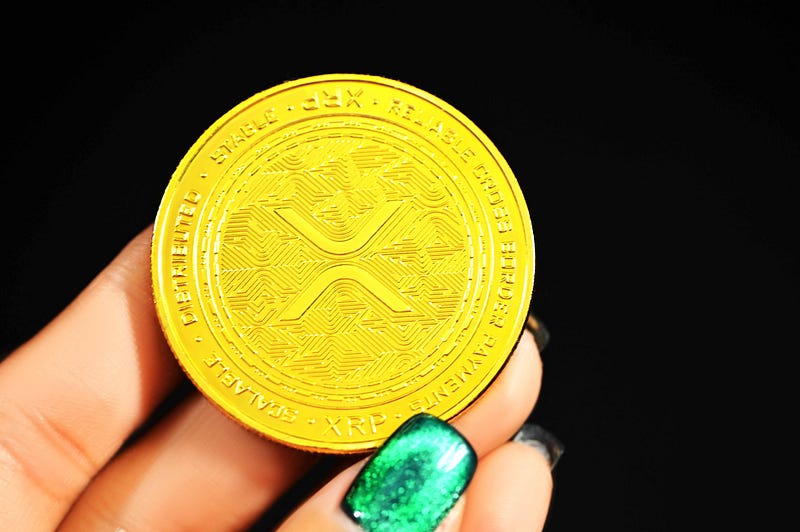
Photo by Kanchanara on Unsplash


Reducing payment costs

Palau’s Ministry of Finance initiated the Stablecoin project to address specific needs within the nation’s financial landscape. By sponsoring this project, the ministry aims to reduce payment costs within the Republic of Palau and enhance access to financial services, especially for underserved communities and various socio-economic groups, utilizing digital solutions.

Notably, the Palau Stablecoin operates on the XRP Ledger (XRPL), demonstrating Ripple’s technology as the backbone of this financial initiative.

Anson’s tweets also shed light on the meticulous approach taken in developing the Palau Stablecoin. Controlled and limited PSC pilot tests have been conducted to assess the effectiveness and efficiency of the solution co-designed with Ripple. These pilot experiments provide valuable insights into the stability and usability of the Palau Stablecoin before its potential public release.


Extensive testing

Already, the Palau Stablecoin pilot program has seen volunteer users actively participating in the testing phase. Videos shared by Anson on Twitter showcased smooth transactions at partner vendors in Palau, promptly confirming the transaction receipts.

The successful implementation of the Palau Stablecoin pilot program has drawn attention from the XRP community, and anticipation is building for the official joint press release scheduled for July 27, Thursday morning in Ngerulmud, Palau, as Anson revealed.

The collaboration between Ripple and the Republic of Palau was initiated at the end of 2021, with launch originally scheduled to take place in 2022. Ripple has claimed to be in dialogue with in excess of twenty governments relative to enabling central bank digital currency (CBDC) issuance.

Given that the island state lacks a functioning central bank and the US dollar is recognized as the primary medium of exchange throughout the country, the creation of a USD-backed stablecoin is a significant achievement resulting from the national stablecoin initiative. The president described this as a “step towards our own central bank digital currency.”

There has been plenty of activity in Micronesian nations relative to cryptocurrency in recent times. Tonga is understood to be considering introducing bitcoin as legal tender. The Marshall Islands is considering issuing a CBDC although it is being discouraged by the International Monetary Fund (IMF) in that endeavor. Meanwhile, the government of Vanuatu announced its support for the Satoshi Island project.

With a strategic focus on addressing financial needs and enhancing accessibility within Palau, this partnership sets the stage for a new era of digital financial solutions for the Micronesian nation.


More to Read
View All
Policy & Regulation·

Nov 28, 2023

Zipmex Thailand halts crypto trading citing SEC compliance

Zipmex Thailand halts crypto trading citing SEC complianceTroubled cryptocurrency exchange Zipmex Thailand has recently announced the temporary suspension of digital asset trading until early next year.Photo by Anh Tuan To on UnsplashTrading and deposits suspendedThe decision, outlined by the firm in a Facebook post on Saturday, is attributed to the platform’s efforts in ensuring full compliance with the standards set by Thailand’s Securities and Exchange Commission (SEC).In the Facebook post, Zipmex Limited addressed its customers, stating:“Dear customers, Zipmex Limited would like to ensure the proper and compliant conduct of the company’s business operations in accordance with the criteria set by Thailand’s Securities and Exchange Commission (SEC).”The suspension of digital asset trading and deposits of all types became effective from Nov. 25.Withdrawals remain openDespite the suspension, customers will retain the ability to withdraw Thai baht and digital assets from their Trade Wallet through the website and mobile application until Jan. 31, 2024. However, for digital assets categorized as “Trade Only,” customers are instructed to contact Customer Support for withdrawal. Beyond Jan. 31, 2024, when the withdrawal feature through the website and mobile application is suspended, customers will need to seek assistance from Customer Support.Zipmex Thailand also emphasized that the withdrawal process for digital assets may take between seven to 14 days, requiring customers to provide supporting documents for identity and account ownership verification.As a cryptocurrency exchange headquartered in Singapore and operating in multiple countries, including Thailand, Australia and Indonesia, Zipmex has already fallen foul of Thailand’s SEC. Earlier this year, it was hit with penalties related to allegations of improper use of a digital asset custodian service and the redirection of customers to the Singapore-based exchange, Zipmex Pte, creating a conflict of interest.Financial difficultiesThe exchange has faced financial challenges, including difficulties in repaying creditors after losses incurred from exposure to crypto lenders Babel Finance and Genesis in 2022. A planned $100 million buyout earlier in the year fell through when the buyer, reportedly V Ventures, withdrew from the purchase.Zipmex’s troubles date back to last summer when the exchange halted withdrawals due to volatile market conditions and a liquidity crunch resulting from exposure to the troubled crypto lender Babel Finance. Despite facing financial difficulties, the exchange expressed its commitment to maintaining the integrity of its platform.In August of the same year, Bloomberg reported that Zipmex intended to meet with potential investors and Thailand’s financial regulator to discuss a recovery plan. By November, the platform was in advanced discussions with venture capital fund V Ventures for the sale of a majority stake.Earlier this year, the Thai Securities and Exchange Commission announced an investigation into whether Zipmex breached local rules in its offering of certain digital-asset products. In April, the company filed a request to extend the moratorium period to enable the firm to work towards restructuring. Later that month, it appeared that the V Ventures investment deal had fallen through. By July, the beleaguered firm had sued the investor for breach of contract.The ongoing challenges faced by Zipmex underscore the complex landscape and regulatory scrutiny surrounding cryptocurrency exchanges in various jurisdictions.

news
Web3 & Enterprise·

May 11, 2023

Zodia Custody Launches Crypto Custodian Service in Dubai

Zodia Custody Launches Crypto Custodian Service in DubaiZodia Custody, a subsidiary of British multinational banking services firm Standard Chartered, has entered the Middle Eastern market, bringing its crypto custody service to Dubai.In a tweet on Thursday, the start-up announced that its parent company Standard Chartered has signed a memorandum of understanding (MoU) with the Dubai International Financial Centre (DIFC) to launch digital asset custody services in Dubai, powered by Zodia Custody.The move will only go ahead once it has been approved by Dubai’s regulator, the Virtual Assets Regulatory Authority (VARA). At the MoU signing ceremony, Standard Chartered CEO Bill Winters stated: “We see digital assets as an important part of the future of financial services and we are committed to investing in the infrastructure and talent necessary to be a leader in this space.”“The UAE [United Arab Emirates] has a well-balanced approach to digital asset adoption and financial regulation, making it an ideal first market for us to launch our digital asset custody proposition,” Winters added.With 54 years in the financial services arena, the UAE is already home to Standard Chartered’s operations in the Middle East and North Africa (MENA) region.SBI joint ventureIts London-based subsidiary has been busy. In addition to this expansion into the MENA region, in February the fledgling company entered the Japanese market. It achieved that by partnering with Japanese financial services conglomerate, SBI Holdings. The Japanese joint venture company is 51% owned by SBI, while Zodia holds the remaining 49% minority stake. At the time, Julian Sawyer, CEO of Zodia Custody, said that “partnering with SBI DAH ensures the joint venture will offer gold-standard crypto asset custody services in Japan.”Capital injectionLast month, SBI Holdings stepped up its association with Zodia Custody by becoming the lead investor in Zodia’s latest funding round. Up until that point, Zodia had been supported largely by Standard Chartered. Northern Trust took a 10% stake with Standard Chartered accounting for the remaining 90% equity stake. Following that most recent funding round, SBI now moves up the rankings to become Zodia’s second largest investor.Zodia was founded in 2020 in tandem with a separately launched trading platform, Zodia Markets. Its objective was to offer a safe, trustworthy platform through which institutional clients could invest in crypto assets. As a UK-based entity, the firm is regulated by the UKs Financial Conduct Authority (FCA).Heightened digital asset developmentAuthorities in Dubai and within the UAE in general have been working hard in recent months with an eye towards making the country, and particularly its Dubai and Abu Dhabi Emirates, a hub for digital asset-related business. Regulators in Dubai, Abu Dhabi, and at a national UAE government level, have been progressing in terms of getting a workable digital assets regulatory framework and licensing regime in place.With the Dubai Fintech Summit having taken place earlier this week, there were further developments still relative to digital asset business in the UAE. On Monday, Coinbase CEO Brian Armstrong was in attendance alongside his executive team. Just like Armstrong, Ripple CEO Brad Garlinghouse was also a keynote speaker at the event. Both complemented the UAE on its regulatory approach to crypto off the back of both of them having been sharply critical of the regulatory approach in the United States. Armstrong indicated that his company is interested in establishing a base in Abu Dhabi while Garlinghouse confirmed that Ripple is opening an office in Dubai.Photo by Aleksandar Pasaric on Pexels

news
Policy & Regulation·

Sep 19, 2023

Japan Moves to Allow Startups to Sell Digital Tokens to VC Funds

Japan Moves to Allow Startups to Sell Digital Tokens to VC FundsIn a move that further advances Japan’s efforts in the digital assets space, the country is poised to permit startups to raise capital from venture capital firms using digital assets instead of traditional stock.The approval of this approach will provide a broader spectrum of funding options for emerging companies deeply entrenched in the world of blockchain technology.Photo by Bagus Pangestu on PexelsAcceptance beyond conventional assetsCurrently, limited partnerships in Japan are predominantly associated with conventional assets such as shares, stock options, and security tokens defined by local securities laws. However, according to a report published by local financial daily Nikkei Asia on Friday, an impending rule change is set to expand this list to encompass other tokens and crypto assets, heralding a fresh era of investment opportunities in a domain that has remained relatively under-explored within the country.The Japanese government is on track to present the requisite legal revisions to the parliament, with expectations for this transformational move to occur as early as 2024. Unlike traditional shares, blockchain-based tokens offer the unique advantage of swift creation without the need for intermediaries or brokerage services.Consequently, fundraising via digital assets is becoming the preferred choice for companies operating in the cutting-edge realm of Web3 technologies, including blockchain.In Japan, a number of companies, such as the blockchain developer HashPalette, have already raised substantial amounts through token offerings. However, the existing limitations obstructing limited partnerships from investing in tokens have hindered Japanese venture capital firms and institutional investors from partaking in the burgeoning success of Web3 enterprises.Overseas token issuanceTraditionally, startups have resorted to issuing tokens in overseas locations like Singapore and Dubai. On the venture capital front, Japanese powerhouse Skyland Ventures ventured into tokens through its Singapore-based subsidiary.Notably, Japan’s Financial Services Agency (FSA) is contemplating a tax code revision for fiscal year 2024 and beyond, with the objective of exempting crypto assets and tokens from taxes on unrealized gains based on market value. This strategic move aims to eliminate a significant deterrent for potential investors in the field.While venture capital firms are eagerly anticipating this legislative change, some, like B Dash Ventures, acknowledge that the revision of the limited partnership law alone may not trigger an immediate surge in fundraising via virtual currencies. Nevertheless, it marks a significant step toward fostering a more conducive environment for digital asset investment.Removal of limited partnership restrictionsJapan’s forward-looking approach also extends to the removal of restrictions on limited partnerships that previously mandated them to invest more than half of their capital within the domestic market. This move is expected to bolster profits, empower venture capital firms with more substantial capital reserves, and ultimately fuel investment in domestic startups.Japan’s decision to embrace the potential of digital assets for startup fundraising is a progressive move. Initial exchange offerings (IEOs) are already authorized in Japan, but this proposed funding mechanism would offer a new channel through which Web3 innovation can be financed within the East Asian island nation. Given that most Web3 startups raise funds in this way, it will mean that Japanese-based firms in the Web3 space will be able to develop and participate fully as this innovation rolls out further on a global basis.

news
Loading