Top

Shanghai Embraces Blockchain, AI, and Digital Yuan with New Guidelines

Policy & Regulation·July 24, 2023, 7:59 AM

In a bid to stay at the forefront of technological advancements, the government of China’s largest and most populous city, Shanghai, has issued a set of guidelines aimed at promoting the widespread adoption of blockchain, the metaverse, and the digital yuan.

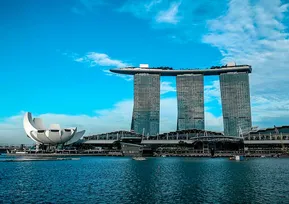
Photo by Edward He on Unsplash


Integrating blockchain technology

The objective of the measure is to further the use of these technologies across various industries within the city. Leading enterprises across a range of industry sectors, such as automotive, commodity trading, and e-commerce, are now required to look to incorporate these technologies into their operations.

The guidelines, which were published last Tuesday, outline the government’s commitment to providing support for platforms that seek to enhance digitalization in production, operations, and management processes. Additionally, they emphasize the development of information technology services centered around big data, blockchain, the Internet of Things, artificial intelligence, and the mobile Internet.


Bolstering commodity trading

A key focus for the government is the establishment of a robust internet system to bolster its local commodity trading service. This move is driven by a reliance on “the national financial factor market,” which aims to upgrade the over-the-counter derivatives platform for bulk commodities and strengthen the linkages between futures and cash.

Furthermore, the guidelines pave the way for expanding e-commerce service platforms for industrial products, setting up a digital transformation service platform, and fostering the development and application of data resources.

Shanghai’s status as China’s financial hub makes it an ideal testing ground for innovative technologies like blockchain and AI. However, China’s approach to cryptocurrency is more complex. It involves support for blockchain technology while at the same time applying strict measures against crypto trading and mining.


Aligning with central government policy

The Chinese government’s support for blockchain technology stems from its recognition of blockchain as the underlying foundation of cryptocurrencies. Judging by the blockchain initiatives forwarded by the central government and regional Chinese administrations in recent months, it’s clear that China is keen to develop leadership in the use of blockchain across various sectors. It takes a different view, however, when it comes to projects related to decentralized cryptocurrencies and crypto trading.

In recent years, China has cracked down on cryptocurrency activities. In 2013, the government banned initial coin offerings (ICOs), a fundraising method used for cryptocurrency projects. Subsequently, cryptocurrency exchanges were banned in 2017, followed by a prohibition on cryptocurrency mining in 2021.

Several factors contribute to the Chinese government’s cautious approach to cryptocurrency. One major concern is financial stability, as crypto can be exploited for illicit activities like money laundering. According to a recent report, Chinese authorities are redoubling their efforts in pushing back against the use of crypto as they’re finding that it is being used to exploit capital control loopholes.

These recent guidelines from Shanghai’s administrators aim to capitalize on the transformative potential of emerging technologies while ensuring prudent regulation and control over cryptocurrency-related activities in line with current central government policy emanating from Beijing.


More to Read
View All
Policy & Regulation·

Mar 21, 2025

Pakistan moves towards legalizing & regulating crypto

While Pakistan’s Minister of State for Finance and Revenue stated back in 2023 that cryptocurrencies “will never be legalized in Pakistan,” recent events suggest that policy change is now likely.Photo by Hamid Roshaan on UnsplashAttracting foreign direct investmentIn an interview with Bloomberg TV on March 20, Bilal bin Saqib, CEO of the Pakistan Crypto Council (PCC), outlined that the South Asian country plans to move forward towards unbanning cryptocurrency within the country, while establishing a legal framework for such digital assets. The PCC itself was only established in February, with bin Saqib appointed as CEO earlier this month. The role of the PCC is to regulate and integrate blockchain technology and digital assets in Pakistan. The motivation for the proposed change in policy is a desire to attract foreign direct investment into Pakistan. The Trump effectWhen asked “why now,” bin Saqib said that “if [not] now, then never.” Expanding on that theme, he articulated that the return of U.S. President Donald Trump to office combined with his support of cryptocurrency, stands as a “bullish” catalyst for the global development of digital assets. He added: “Trump is essentially flipping the script. Trump signing an executive order instructing regulatory bodies to accommodate digital assets, forming the White House crypto advisory team, creating the U.S. strategic Bitcoin reserve,” . . . “that means that the largest economy in the world is creating it like a valuable national asset.” bin Saqib told Bloomberg that Pakistan is done with sitting on the sidelines and that the country now wants to achieve regulatory clarity on behalf of participants in the crypto sector within the country. He added that there’s a need to establish a legal framework that is pro-business. He added: “We want Pakistan as the leader in blockchain-powered finance, and we want to attract international investment.” Policy u-turnThis new stance on crypto stands in stark contrast to Pakistan’s previous position on cryptocurrencies. The country’s central bank, the State Bank of Pakistan, has warned investors of the risks of dealing in cryptocurrencies on a number of occasions previously, highlighting the fact that no entity is licensed within Pakistan to offer remittance services that implicate crypto tokens.  Earlier this month, bin Saqib outlined that Pakistan is investigating the use of blockchain technology to streamline remittances. The South Asian nation ranks within the top 10 countries in terms of total value remitted each year. At that time, he also confirmed to CoinDesk that Pakistan is exploring real-world asset (RWA) tokenization initiatives.  A report by Chainalysis in 2023 stated that Pakistan is “a world leader in grassroots cryptocurrency adoption.” Wealth preservation was identified as one catalyst for crypto adoption, given that the country has faced high inflation rates in recent years and a devaluation of its sovereign currency. That has led to stablecoins being popular despite a ban being in place on cryptocurrencies all the while. In taking matters forward from this point, bin Saqib said that the PCC is keen to learn from the experiences of jurisdictions such as the United Arab Emirates (UAE), Nigeria, Turkey, Singapore and Hong Kong in determining how best to formulate a pro-business regulatory framework for digital assets in Pakistan. 

news
Web3 & Enterprise·

Oct 25, 2023

Upbit Adds Polygon Staking Service

Upbit Adds Polygon Staking ServiceDunamu, the blockchain and fintech firm that operates South Korea’s largest cryptocurrency exchange Upbit, announced on Wednesday (local time) the addition of Polygon’s MATIC to Upbit’s staking service, now available via the Upbit website and mobile application.Photo by GuerrillaBuzz on UnsplashStaking is a service where users entrust their cryptocurrency to a blockchain network to boost its security and receive virtual assets as rewards. The virtual assets deposited by staking users are used in the transaction verification process of generating new blocks in the blockchain network of the respective asset. Users are then rewarded with virtual assets for their participation in the process.Polygon is an Ethereum Layer 2 scaling solution that allows developers to build various decentralized applications (DApps) within the Ethereum ecosystem. Its native token is called MATIC.Expanded staking optionsAny Upbit user who has completed the Know Your Customer (KYC) process and enabled two-factor authentication can participate in staking on Upbit. The minimum staking amount is 2.7 MATIC. Users who participate in staking receive rewards once every day. They can also unstake their tokens at any time they want.“At Upbit, we utilize our world-class security measures, robust infrastructure, and years of technological expertise to operate validators and stake users’ assets for them,” the exchange said. “Users’ crypto assets that are used in staking are safely stored in a cold wallet.”Dunamu officially launched the Upbit Staking service in January of last year, serving as an intermediary in the complex staking process. The service aims to facilitate the convenient and secure staking of virtual assets. With the latest addition of Polygon, the exchange now supports a total of five staking options, namely Ethereum, Cosmos, Cardano, Solana, and Polygon.New NFT collectionsThe exchange’s non-fungible token (NFT) marketplace, Upbit NFT, also recently opened trading, deposits, and withdrawals for new NFT collections based on Ethereum and Polygon. To celebrate this additional functionality, Upbit NFT will conduct Ethereum giveaway events for lucky participants until next Wednesday.

news
Policy & Regulation·

Apr 20, 2023

Singapore Judge Says Crypto Not Money

Singapore Judge Says Crypto Not MoneyIn recent years, legal processes in various jurisdictions worldwide have seen judges comment on whether cryptocurrency is actually money. The latest such determination has been made by Justice Vinodh Coomaraswamy who outlined in a Singapore court that while being a component of financial transactions, cryptocurrencies are not money.The consideration emerged in a recent court hearing at Singapore’s High Court in a case involving the Algorand Foundation and failed Singapore-based hedge fund, Three Arrows Capital (3AC). Justice Coomaraswamy’s comments arose due to a discussion in the midst of the court proceedings involving the Judge and counsel representing the Algorand Foundation.©Pexels/EKATERINA BOLOVTSOVASeashells as moneyIn setting out his rationale for the need for 3AC to be wound up, Daniel Chan, a lawyer for the WongPartnership law firm that was representing the Algorand Foundation in the proceedings, told the judge that despite foreign currencies not being recognized as legal tender in Singapore, or used broadly as a medium of exchange within the city state, those foreign currencies are recognized by Singapore law as money. Using that analogy Chan suggested that by implication, the same scenario should be considered where cryptocurrencies are concerned.The judge provided a counterpoint: “What if you had a [community] in the world that used seashells as its internal medium of exchange? Would the Singapore courts have to recognize that as money.” Chan claimed that the judge had used an extreme example although Coomaraswamy remained steadfast in his view, pointing out that seashells had indeed been used as a form of money in the distant past.Coomaraswamy proceeded to dismiss the Algorand Foundation’s winding up application. He acknowledged that the Foundation did have standing in bringing the application. However, as he determined that cryptocurrency couldn’t be classed as money, on that basis he dismissed the application. In conveying his decision, he stated: “The word indebtedness, in my view, must require a debt which is in fiat currency. Determining whether or not a particular intangible, such as cryptocurrency, is money would require a detailed examination of evidence which is not appropriate in the context of insolvency.”Legal tenderThus far, bitcoin has been recognized as legal tender in two countries — El Salvador and the Central African Republic. In 2020, a French court referred to the leading cryptocurrency as money, agreeing that Bitcoin loans can be recognized as customer loans in the same way as loans denominated in fiat currencies. Earlier that year, an Australian court recognized bitcoin as a legally legitimate form of investment. In the United States, a Federal court recognized bitcoin as “money” or “funds” in a prosecution taken against Silk Road website operator Ross Ulbricht.There have been many similar instances in courts globally where judges have had to grapple with the consideration of whether bitcoin and crypto more generally can be regarded as money. Similar to the difficulty authorities are having in regulating cryptocurrency, it’s an issue that in most cases lacks complete clarity and in which we can expect further discussions on, similar to this most recent consideration in the Singaporean high court.

news
Loading