Top

Cake Group co-founder files application to wind up company in Singapore

Policy & Regulation·December 08, 2023, 1:57 AM

Chua U-Zyn, the co-founder and Chief Technology Officer of crypto firm Cake Group, has officially applied to the Singapore High Court to initiate the winding-up process for the company.

A winding-up notice appeared in Singapore’s The Straits Times on Thursday. U-Zyn is being represented by law firm Rajah & Tann on the matter. The court will now decide whether to grant this application, which was filed on Dec. 1.
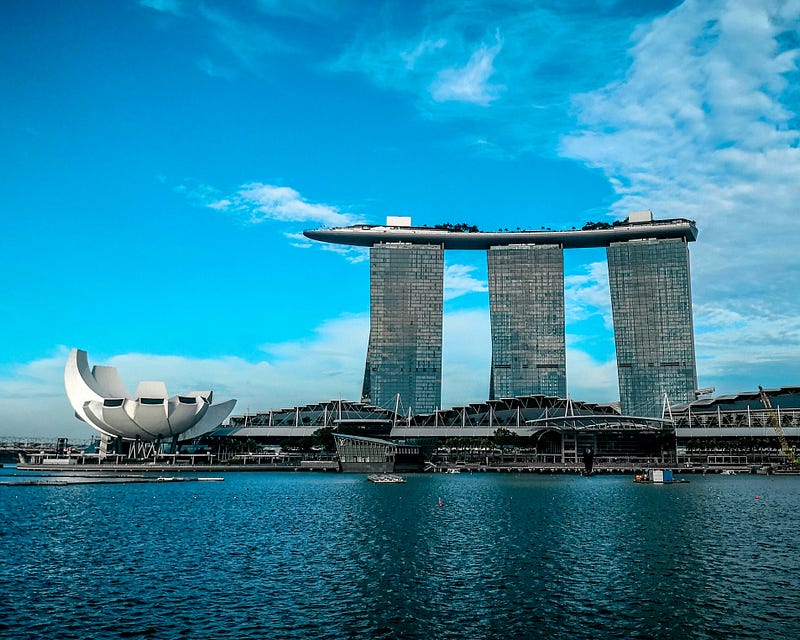
Photo by Kelvin Zyteng on Unsplash


Financial struggles

Cake Group is the parent company of the crypto platform Bake, which made headlines last month for announcing significant staff reductions affecting 30% of its workforce. Bake is an automated market maker (AMM) and decentralized exchange (DEX) that revolves around Binance’s BNB Smart Chain (BSC).

In existence for some five years, the platform claims to have over 1 million users worldwide, retaining over $1 billion in customer assets and having achieved reward payouts to date of $411 million.

Cake Group’s financial struggles have been evident, with its revenue plummeting by over half to $266 million in 2022, while profits experienced a fivefold decrease to $23.5 million during the same period. The company generates income through transaction fees.

A hearing for creditors or opposing parties is scheduled for Dec. 22, providing an opportunity for stakeholders to voice concerns or contest the winding-up process.


Internal dispute

While the specifics behind U-Zyn’s winding-up application remain unclear, the decline in financial performance and the recent layoffs are undoubtedly contributing factors.

It’s understood that CEO Julian Hosp learned about the filing on Dec. 6 and has since emphasized that the company is actively working with legal counsel to challenge the application. Hosp will challenge this request in court, asserting that the company’s finances are strong and unrelated to the dispute.

Taking to the X social media platform on Thursday, Hosp wrote:

”Disappointed to see U-Zyn filing a request on December 1st” . . . “For me, it’s selfish that he’s prioritizing his own interests over those of our customers, employees, and partners, instead of resolving it internally.”

Hosp added that U-Zyn’s application is unrelated to the company’s finances and that the firm is financially solvent.

Former employees, speaking anonymously to Tech in Asia, expressed surprise at the escalating situation, describing the co-founders as emotionally charged and seemingly unable to safeguard their investment.


U-Zyn opposed to layoffs

The court filing under Section 125(1)(i) of the Insolvency, Restructuring and Dissolution Act of 2018 adds an element of uncertainty. Unlike other sections that typically specify reasons for winding up, this particular section allows for liquidation if “the Court is of the opinion that it is just and equitable that the company be wound up.”

Hosp clarified that the application is not based on Cake Group’s inability to pay its debts, emphasizing that day-to-day operations continue at full capacity.

It’s understood that the ongoing dispute between U-Zyn and Hosp stems from internal disagreements, particularly related to cuts within the company’s engineering division. Chua claimed Hosp excluded him from decisions, especially concerning the recent layoffs.

Despite the internal discord, Hosp stressed the company’s commitment to resolving the dispute swiftly and maintaining its operational capabilities. Undeterred by his fellow co-founder’s actions, he published a blog post on Thursday, outlining his vision for the Cake Group moving forward.

More to Read
View All
Markets·

Aug 13, 2024

OSL Executive: Crypto ETFs have challenge to overcome in Hong Kong

At the Foresight 2024 Hong Kong Summit on Aug. 11, Gary Tiu, director and head of regulatory affairs for OSL, a crypto market custodian, exchange and prime brokerage, outlined in a panel discussion that the crypto exchange-traded fund (ETF) market in the Chinese autonomous territory is challenged insofar as it lacks market incentives.Photo by Cecelia Chang on UnsplashThe intermediary problemTiu’s company hosted the event, alongside Foresight News and crypto publication The Block, who reported on Tiu’s comments. The OSL executive said that when it comes to funds and structured products in Hong Kong, there’s a “very rich layer of intermediaries— brokers, banks, private banks, retail banks, etc.” involved. Tiu explained that they make a lot of money from the distribution of such products, resulting in unlisted products being marketed far more effectively by comparison with listed products. It’s against that backdrop of misaligned incentives that Tiu identifies challenges for crypto ETFs on the public markets in Hong Kong. He stated: “So I think the incentive system in Hong Kong is one of the reasons why ETFs do have a bit of a hard time growing as a financial instrument.” In the case of ETFs, the OSL executive explained that equity brokers take just a few basis points in commission, only about 1-2% of what they make on the sale of structured products. Bias against Bitcoin and EtherTiu is also of the belief that cryptocurrencies like Bitcoin and Ether have a reputational problem among Hong Kong’s investment community, stating: “I think there is still a bit of a bias in the eyes of the regulators and also in the eyes of the financial institutions, that somehow bitcoin ETF is just this unique class of risk that you need to be extra cautious about.” Chen Zhao, who heads up the digital assets section of Hong Kong-based independent financial advisory firm Fosun Wealth, chimed in with his own concerns. According to Zhao, the crypto ETF products currently marketed in Hong Kong are lacking in terms of the depth of dealers and brokers offering the products. Zhao explained that there are three main types of market participant active on the Hong Kong markets, namely western institutions, Hong Kong-based institutions and their counterparts from mainland China.  Zhao stated: “Chinese brokers and dealers, they’re not allowed or they choose not to deal with the product, and for the western financial institutions, they don’t have the necessity of dealing the products because they acquire more fees and incentives, and have easier access to the U.S. ETFs.” While progress is far more modest by comparison with the U.S. market, the Hong Kong crypto ETF market continues to develop, with spot Bitcoin and Ethereum ETFs setting a record trading volume last week. In the same week, Mox Bank, a subsidiary of British banking multinational Standard Chartered, launched trading services relative to spot Bitcoin and Ethereum ETF products in Hong Kong. Last month, OSL CEO Patrick Pan, anticipated that an Ethereum ETF product that incorporated staking would launch in Hong Kong within six months. Many commentators have suggested that institutional interest in Ethereum ETFs will begin in earnest once a yield-producing staking product hits the market.

news
Web3 & Enterprise·

Oct 06, 2023

CoinDCX Expands Okto Wallet’s Global Reach with Transak Integration

CoinDCX Expands Okto Wallet’s Global Reach with Transak IntegrationIndian cryptocurrency exchange CoinDCX has moved to broaden the accessibility of its self-custody wallet, Okto. The exchange recently announced the addition of Transak, a major on-ramp platform that enables a fiat-to-crypto payment gateway integration, to enhance the wallet’s global capabilities.Photo by Kanchanara on UnsplashBuilding on OktoThat’s according to a report published by Cointelegraph on Thursday. Okto was introduced by CoinDCX in August 2022, and the firm swiftly moved to expand its services. The integration with Transak represents a pivotal step in this direction.This strategic integration immediately expands the reach of the Okto wallet from supporting 60 countries to an impressive 155 jurisdictions. Neeraj Khandelwal, Co-Founder of both CoinDCX and Okto, emphasized the significance of this move, stating that it allows users in numerous countries to engage with cryptocurrencies directly through Okto.While Transak supports approximately 160 tokens, Okto goes above and beyond by allowing users to store more than 1,000 tokens across multiple blockchain networks, including Polygon, Fantom, Avalanche, and others. According to an Okto spokesperson, the wallet can accommodate up to 3,000 tokens, providing ample flexibility for cryptocurrency enthusiasts.Seamless fiat-to-crypto conversionKhandelwal also spoke to the value add that a more seamless asset conversion process will bring. He stated:“The integration of Transak now allows users to seamlessly convert fiat to crypto right within the app. Prior to this integration, users had to transfer funds from another decentralized wallet, such as MetaMask.”Transak’s integration brings a key feature to Okto — the ability for users to purchase cryptocurrencies like Bitcoin (BTC) directly within the wallet. Notably, this functionality accepts a wide range of fiat currencies, including the US dollar, euro, Hong Kong dollar, and others. Prior to the Transak integration, users were required to transfer digital assets from external wallets like MetaMask. With this development, Okto streamlines the process, enabling users to seamlessly convert fiat into crypto within the app itself.Months-long integration processIt’s worth noting that although the announcement of Transak’s support on Okto was made on Thursday, the integration process began several months earlier. As early as August, some Indian users reported encountering Transak while Okto was in the testing phase. The integration process itself commenced in April, with the official roll-out to all customers occurring in mid-September.Transak, a global Web3 payment and onboarding infrastructure provider, plays a crucial role in bridging the gap between traditional finance and the digital asset ecosystem. It is a well-established on-ramp solution in the cryptocurrency industry, with platforms like MetaMask, Coinbase, and PancakeSwap among its clientele.In recent days, Okto has also announced a partnership with ReHold, a multi-chain protocol which has been developed to enable users to maximize their crypto earnings. In the coming weeks, Okto and ReHold will work towards integrating Okto’s wallet with ReHold.The Okto-Transak integration is in line with Transak’s mission to facilitate crypto adoption by providing easy access to digital assets. Earlier this week, Transak also announced its integration with The Open Network’s (TON) wallet, known as Tonkeeper. This collaboration opens up Toncoin (TON) purchases directly with fiat currencies to users in more than 150 countries, marking a significant milestone in expanding the TON ecosystem.

news
Policy & Regulation·

Nov 01, 2023

Terraform Labs seeks summary judgment to dismiss SEC allegations

Terraform Labs seeks summary judgment to dismiss SEC allegationsLawyers representing bankrupt Singaporean crypto firm Terraform Labs and its co-founder, Do Kwon, have requested a summary judgment from a New York judge in their legal battle against the United States’ Securities and Exchange Commission (SEC).If granted, such a dismissal could potentially spare them from a full-blown trial. In their motion, the legal team argued vehemently that they are innocent of the SEC’s allegations, maintaining that the regulator has failed to provide any compelling evidence of wrongdoing.Photo by Bermix Studio on UnsplashDefining a securityThe motion, which was filed last Friday in the U.S. District Court for the Southern District of New York, asserts that the implicated cryptocurrencies of Terra Classic (LUNC), TerraClassicUSD (USTC) and Mirror Protocol (MIR), together with its Mirrored assets (mAssets), are not securities as claimed by the SEC in its complaint.The heart of the matter revolves around the SEC’s assertion that Terraform Labs offered or sold securities, a claim vehemently denied by the defendants. The SEC initially brought the case in February, referencing algorithmic stablecoin TerraUSD, which famously collapsed in May 2022.Lawyers claim case is unsubstantiatedBoth Kwon and Terraform Labs’ attorneys argued that despite over two years of investigation, more than 20 depositions, and the exchange of a staggering two million pages of documents, the SEC’s case remains unsubstantiated.The SEC’s original complaint in February accused Kwon and Terraform of raising substantial sums from investors by offering and selling an inter-connected suite of crypto asset securities, many of which were unregistered transactions. SEC Chair Gary Gensler added that Terraform and Kwon had failed to provide investors with full disclosures, notably concerning LUNA and TerraUSD.A key element of the dispute centers on the SEC’s allegation that Kwon and Terraform moved millions of dollars into Swiss bank accounts for personal gain. According to the agency’s complaint, the company and Kwon transferred 10,000 bitcoins to a financial institution based in Switzerland. The legal team representing Kwon and Terraform vehemently denies this allegation, characterizing it as baseless and unfounded.Flawed stablecoin designAlgorithmic stablecoins, such as TerraUSD, operate using market incentives via algorithms to maintain a stable price. Terra was tied to Luna, a governance token, in an attempt to stabilize prices. Unfortunately, the collapse of TerraUSD in 2022 destroyed in excess of $40 billion in value held by investors. It also had a domino effect, leading to a series of other crypto platform collapses later in 2022.Judge Jed Rakoff, presiding over the case in the Southern District of New York, had previously denied an attempt by Terraform Labs and Kwon to have the case dismissed. This new motion for summary judgment represents their latest effort to put an end to the legal proceedings.In a separate but related action, lawyers representing Terraform Labs Co-Founder Daniel Shin asserted that Shin played no role in the collapse of TerraUSD. In a Seoul district court, they emphasized that Shin had nothing to do with the collapse despite being indicted in South Korea in April on various charges, including fraud.

news
Loading