Top

China Performs Well as Global Crypto Industry Employment Surpasses 190,000

Markets·July 11, 2023, 12:41 AM

According to new data, the cryptocurrency industry has seen a remarkable surge in employment, with nearly 190,000 individuals currently working in the field as of July 2023, with China fairing particularly well despite its hostile approach to crypto.

This figure represents a significant increase compared to pre-2020 employment statistics, marking the onset of the crypto frenzy. The data was produced via a report published by K33 Research, a Norway-based digital assets research and data analysis firm.

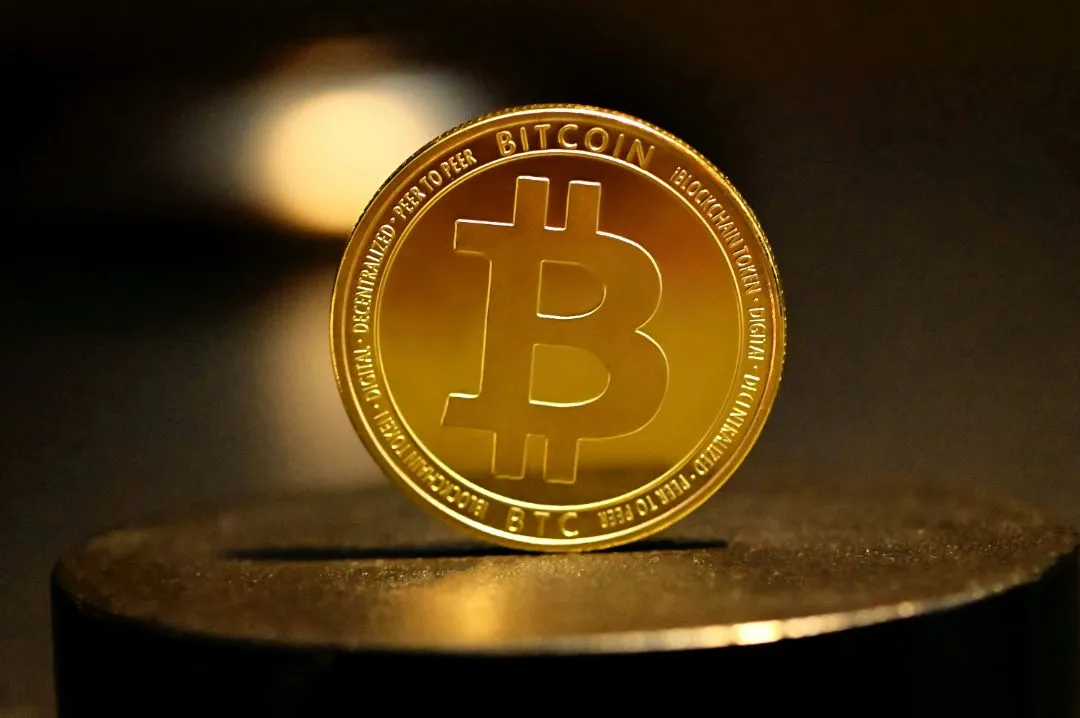
Photo by Valentin Farkasch on Unsplash


India leads in Asia

The data highlights an over-representation of crypto workers in the Western world, with more than 50% based in North America and Europe. Within this figure, the United States alone accounts for 29% of the crypto workforce. In Asia, India emerged as the leading employer in the crypto industry, employing 20% of the regional workforce, primarily in developer-related roles. Surprisingly, despite China’s historically hostile stance on the crypto industry, it stands as the second-largest employer in Asia, employing 15% of the regional workforce.

It’s also interesting that China has been found to account for such a sizable chunk of Web3-related employment when recent feedback from recruiters in Hong Kong suggest that the crypto licensing program rolled out in the autonomous Chinese territory has not yet resulted in a surge in employment. Recruiters maintain though, that this employment boost will come in due course.


Most employment via exchanges

During 2021, a period characterized by high prices and soaring company valuations, the crypto industry employed approximately 211,000 individuals, highlighting the industry’s rapid growth. Researchers from K33 found that around one-third of the crypto workforce is engaged in exchanges or brokerages, emphasizing the crucial role these entities play. Additionally, 26% of employees work for companies offering a diverse range of financial services related to cryptocurrencies.

Interestingly, the study revealed that NFTs occupy only a small portion of the workforce, with only 6% of individuals involved in this field. On the other hand, 21% contribute their skills to blockchain protocols, analytics, and mining operations. The remaining 13% hold cryptocurrency-related jobs that do not neatly fit into any specific category. The researchers employed various methods, including LinkedIn searches, AI-assisted web searches, and manual mappings, to gather this data.


Remote working

A notable trend in the crypto industry is the prevalence of remote work arrangements. Major crypto companies have opted for globally distributed workforces, capitalizing on jurisdictions with favorable regulations and lower tax rates. By establishing headquarters in these locations, but employing individuals remotely or establishing local offices worldwide, companies can reduce costs and eliminate logistical barriers.

The significant growth in crypto industry employment reflects the expanding and maturing nature of the sector. As cryptocurrencies and blockchain technology gain wider acceptance, professionals from various backgrounds are entering the industry, contributing their skills to different sectors within the crypto ecosystem. The prevalence of remote work arrangements and the global nature of the industry allow talent to be sourced from around the world, transcending geographical boundaries.

This upward trajectory in employment is likely to continue as the crypto industry evolves and continues to shape the future of finance and technology.

More to Read
View All
Web3 & Enterprise·

Dec 06, 2023

Korbit CEO partakes in anti-drug relay campaign

Korbit CEO partakes in anti-drug relay campaignSouth Korean cryptocurrency exchange Korbit’s CEO, Oh Se-jin, has joined the No Exit anti-drug campaign — a nationwide relay campaign launched in April by the National Police Agency, the Korean Association Against Drug Abuse and other relevant institutions to raise public awareness about the dangers of drug addiction and promote a collective effort to prevent drug-related crimes, according to local news outlet ET News on Wednesday (local time). So far, numerous figures across various sectors and industries have participated, including actor Choi Bool-am and the president of the Korean Nursing Association Kim Young-kyung.Photo by Hal Gatewood on UnsplashEncouraging collective vigilanceThe campaign’s slogan draws a metaphor between drugs and a maze that cannot be escaped once it has been entered. Participants in the campaign are obligated to share photos with a message that reads, “Do not start drugs — it is a maze with no exit”, and nominate the next participants.“I hope that all citizens will realize the seriousness of drugs through the No Exit campaign, and I aspire to contribute to creating a safer society. Korbit will fulfill its social responsibility in the cryptocurrency industry and contribute to building a healthier society,” Oh said.Next participantsOh was tagged in the campaign by Lee Hyo-jin, CEO of the peer-to-peer (P2P) financial services company 8Percent. In turn, he nominated Lee Sang-ho, CEO of HSBC’s Korea office, and Kim Ji-yun, CEO and Co-founder of DSRV Labs, as the next participants.

news
Policy & Regulation·

Nov 07, 2023

Hong Kong regulators consider opening up crypto ETFs to retail

Hong Kong regulators consider opening up crypto ETFs to retailHong Kong regulators are now exploring the possibility of allowing retail investors to participate in spot crypto exchange-traded funds (ETFs).The CEO of Hong Kong’s Securities and Futures Commission (SFC), Julia Leung, was cited by Bloomberg on Sunday as having indicated that provided that the necessary regulatory approvals and checks are in place, the regulator may be open to the notion of retail participation where spot crypto ETFs are concerned. Leung emphasized the regulator’s openness to innovative technology that enhances efficiency as long as it addresses potential new risks.Photo by Markus Winkler on Pixabay‘Happy to give it a try’She stated: “We welcome proposals using innovative technology that boosts efficiency and customer experience. We’re happy to give it a try as long as new risks are addressed. Our approach is consistent regardless of the asset.”While both the United States and Hong Kong currently permit futures-based cryptocurrency exchange-traded funds (ETFs), the adoption of such instruments has been relatively modest in comparison to the broader fund industry.In Hong Kong, there are currently ETF listings for products like Samsung Bitcoin Futures Active, CSOP Bitcoin Futures and CSOP Ether Futures, with a total combined asset value of approximately $65 million. In June, Hong Kong’s largest ETF manager, Hang Seng, suggested that it too was considering a crypto product offering.In accordance with the SFC’s digital asset regulations, individual investors already have the opportunity to trade prominent cryptocurrencies like Bitcoin and Ether on licensed cryptocurrency exchanges since June 1. Presently, BC Technology Group Ltd.’s OSL and HashKey Exchange are the only platforms in Hong Kong with permits for cryptocurrency trading. Additionally, there are expectations that mandatory regulations concerning stablecoins will be introduced over the course of the next year.Prioritizing investor protectionLeung expressed the regulator’s cautious approach, stating:“As the crypto ecosystem evolves step-by-step to the point where we’re comfortable, then we’re happy to open up more access to the wider investing public.”Notably, Hong Kong also recently unveiled its Web3 plans, highlighting its commitment to embracing blockchain and decentralized technologies.Hong Kong introduced a specialized regulatory framework for virtual assets in June which are designed to attract businesses while prioritizing investor protection. That need to protect consumers has been underscored recently by the alleged fraud that has subsequently been uncovered involving HK$1.6 billion ($204 million) at the unlicensed JPEX cryptocurrency exchange in the city.Market reactionThe significance of such a move isn’t lost on crypto market participants. Taking to X, one wrote: “Seismic shift. Hong Kong’s play could reshape the Asian crypto landscape. #Bitcoin ETFs? A strategic move to anchor HK as the digital nexus of Asia.” Another claimed that this “might redefine the crypto landscape and fuel the next bull market.”A report published by the Hong Kong Stock Exchange in April found that crypto ETFs have the potential to play a significant part in the next phase of digital asset innovation in Asia.Leung emphasized the importance of a strong and comprehensive regulatory structure, highlighting the SFC's efforts to enhance transparency in processing license applications for virtual asset exchanges.Moreover, the Hong Kong Monetary Authority (HKMA), the Chinese autonomous territory’s central bank, is actively exploring the possibility of offering guidance to banks regarding the provision of digital asset custodial services. These services are considered vital for nurturing the growth of a digital asset ecosystem and ensuring investor security.

news
Web3 & Enterprise·

Sep 07, 2023

Socket Protocol Raises $5M in Strategic Partnership

Socket Protocol Raises $5M in Strategic PartnershipSocket Protocol, an interoperability protocol founded by Indian duo Rishabh Khurana and Vaibhav Chellani, has raised $5 million with the strategic investment coming from Coinbase Ventures and Framework Ventures.Despite the ongoing bear market, cross-chain protocols like Socket have continued to attract substantial investment, underlining the growing belief in a future where different blockchains seamlessly connect.Photo by Towfiqu barbhuiya on UnsplashMore than just fundingSocket Protocol, designed to enhance communication between various blockchains, secured this funding to further its collaboration with Coinbase. The firm articulated the nature of the funding and that collaboration on X (formerly Twitter) on Wednesday.The partnership aims to create bridging opportunities for developers and users of Coinbase Wallet and Base, Coinbase’s recently launched layer-2 network built on Ethereum. Socket explained that there is already evidence of that collaboration, borne out by a bridging feature that has already been built into Coinbase Wallet, and powered by Socket Protocol.In relation to the newly launched Base network, the project stated: “We are also helping developers and apps expand to Base with a seamless onboarding experience. Rainbow Wallet, Layer3, Bungee, Zapper & more apps leverage Socket to get their users onboarded to Base already!”As the cryptocurrency ecosystem witnesses the emergence of new layer-2 networks or “rollups” and the continuous expansion of layer-1 blockchains, Socket Protocol positions itself as a critical player in connecting these fragmented ecosystems.Seamless cross-network communicationThe protocol’s primary goal is to facilitate communication between different blockchains, allowing them to interact seamlessly. By offering a bridge for assets, Socket Protocol simplifies cross-network transactions, effectively making the experience akin to operating on a single unified blockchain.Socket boasts that since the launch of the project, it has facilitated over 2.5 million cross-channel transactions, accounting for $3.5 billion in value transfer, while claiming that this is just the starting point, with the project aspiring to grow past that milestone going forward.The recent fundraising highlights the increasing interest in interoperability solutions like LayerZero, as investors recognize the significance of bridging for the future of blockchain technology. Notably, inter-bank messaging system Swift revealed experiments involving the transfer of tokenized value across various private and public blockchains, with Chainlink’s Cross-Chain Interoperability Protocol playing a pivotal role in these experiments.Socket Co-Founder Chellani emphasized the importance of scalable solutions for the future. He noted that “rollup-to-rollup communication is really important” for achieving scalability, aligning the scaling future with the concept of a multi-chain or cross-chain future. “I think the scaling future, and the multi- or cross-chain future are the same thing,” he added.This investment in Socket Protocol, coming at a time of market uncertainty within the crypto space, reflects the growing confidence in the potential of blockchain interoperability to unlock new possibilities and create a more interconnected blockchain landscape.

news
Loading