Top

Travel booking startup targets Bitcoin investors with cashback offer

Web3 & Enterprise·March 08, 2024, 2:11 AM

Travala.com, the Cayman-incorporated company that provides crypto-native travel booking service, has unveiled an enticing offer for Bitcoin investors, involving cashback paid in the leading cryptocurrency in collaboration with the AVA Foundation.


This initiative, announced by the firm on the X social media platform on March 7, aims to reward travelers who pay for their bookings in Bitcoin, encompassing an array of travel options, from flights to hotels and activities spanning across three million destinations globally.
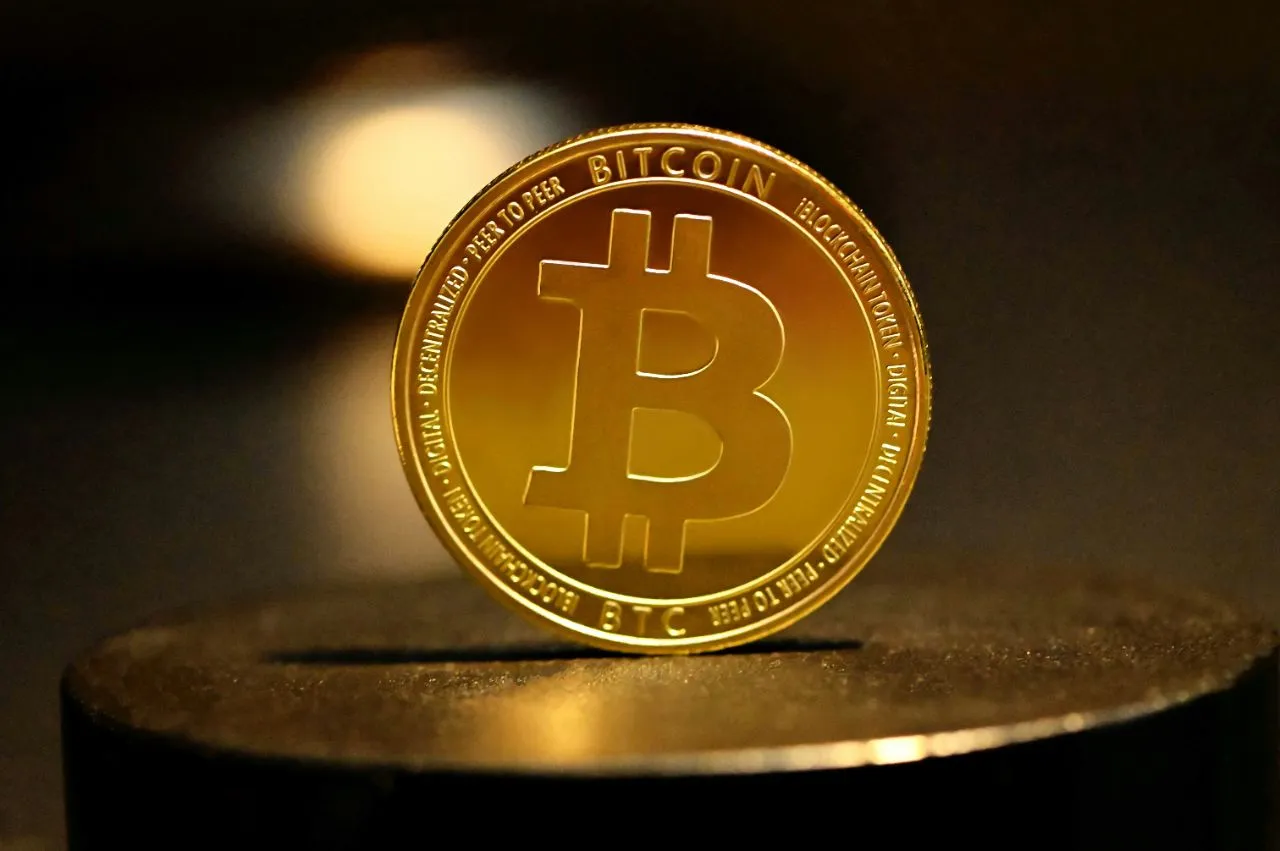
https://asset.coinness.com/en/news/fcd46487de3655713f2d0219b98b14da.webp
Photo by Kanchanara on Unsplash

10% BTC cashback

Unlike traditional cashback systems, where waiting periods for rewards can be lengthy, Travala.com ensures swift crediting of Bitcoin cashback into users' accounts within 24 hours after the completion of their trips. As part of this offer, cashback will be paid to the value of 10% of the customer’s spend, payable in Bitcoin.


Since its establishment in 2017, Travala.com has positioned itself at the intersection of cryptocurrency and travel, offering a diverse platform for bookings across various properties, activities and airlines. With support for over 90 digital currencies, the platform remains focused on cryptocurrency adoption, while aiming to provide value and flexibility for its users.


Mass adoption opportunity

Juan Otero, CEO of Travala.com, emphasized the growing appeal of Bitcoin to mainstream audiences, buoyed by recent developments like the approval of the first Bitcoin spot exchange-traded fund (ETF) in the United States. Otero sees this initiative as a means to broaden the adoption of crypto for everyday transactions, providing travelers with an efficient way to utilize reward programs.


The move towards Bitcoin-based rewards reflects the early stages of an industry-wide shift in travel loyalty programs. With traditional points-based systems losing traction, there's a burgeoning demand for innovative incentive schemes.


Steve Hipwell, a contributor to the AVA Foundation, highlighted the success of the AVA Smart Program, which has already distributed over $2.1 million worth of travel rewards in AVA tokens to customers who completed trips booked through Travala.com. By integrating direct Bitcoin rewards, the aim is to capture an additional segment of travelers seeking ways to save on their journeys.


Bitcoin stands out as one of the top three payment methods on Travala.com, accounting for approximately 9% of travel bookings on the platform. In 2023, travelers splurged over $5 million in BTC on flights, hotels and activities.


Travel Tiger NFTs

Access to Travala's BTC cashback scheme comes with a degree of exclusivity. Users must possess a Travel Tiger NFT and stake 2,500 AVA tokens to activate Smart Diamond membership.


This exclusivity stems from the limited availability of Travel Tiger NFTs, with only 1,000 in existence. These NFTs, minted on the Ethereum blockchain, serve as randomly generated utility collectibles. Market data from OpenSea places the floor price of Travel Tigers at 2.85 ETH, roughly valued at $11,165 at the time of writing.


This tie-up with the AVA Foundation is not Travala’s first partnership. In November 2023 the company struck a deal with travel industry meta-search giant Kayak, allowing it to integrate with Kayak and enable platform users to search more effectively for travel deals. Back in 2019, the company had struck a similar partnership with accommodation booking platform Booking.com. 

More to Read
View All
Policy & Regulation·

Sep 25, 2023

The Need for Crypto Regulation Improvements in South Korea

The Need for Crypto Regulation Improvements in South KoreaAlthough the cryptocurrency market entered a bearish phase last year, there are prospects for growth as regulatory inclusion and market transparency begin to improve. However, the domestic market is currently hindered by deepening monopolies and inadequate support policies, limiting the development of the industry, said Kim Jin-won, Executive Director of Korean crypto exchange COREDAX, during a conference last Friday in Seoul.The conference, hosted by the Federation of Korean Industries, invited experts to discuss the oncoming era of convergence and the current status and challenges of virtual asset legislation in South Korea, as well as the necessary steps for improving regulations on virtual assets.Photo by Kanchanara on UnsplashGlobal decentralization trendsOverseas, various decentralized projects, such as the integration of blockchain technology into traditional financial markets, have led to the growth of related markets such as Bitcoin futures, decentralized finance (DeFi), over-the-counter (OTC) trading, custodial services, the metaverse, and Web3. However, in Korea, the lack of clear guidance or policy management for crypto businesses and services prevents the market from thriving.Countries like the US and Japan as well as the European Union (EU) are overhauling regulations in order to dominate the global industry and market through blockchain technology and virtual assets. Kim emphasized that Korea also needs to incorporate such flexible regulatory improvements considering the likely possibility that various industries are going to thrive on crypto-related businesses.Challenging existing regulations and calls for clarityHe started off by stating that the implicit regulation known as the “One Exchange, One Bank” principle was created for administrative convenience and is acting as a barrier to entry into the crypto industry. He argued that it is a discriminatory regulation, especially considering the fact that securities firms choose to operate stock trading accounts through multiple banks.Regarding the standards for issuing bank accounts under real names, which will be determined by the Financial Intelligence Unit (FIU), he argued that they are difficult to comply with, even for banks that already have contracts with crypto exchanges. He called for the FIU to express a clear stance on the retroactive application of these standards to avoid potential consequences such as barriers to market entry for late-movers.“The crypto market — including DeFi, non-fungible tokens (NFTs), artificial intelligence (AI), the metaverse, and Web3 — is growing at an annual average rate of 12.8%, and is expected to reach a scale of $4.9 billion by 2030,” he said. “When combined with Web3 innovation, the metaverse will evolve into a 3D platform business that incorporates the use of payment methods, NFTs, and virtual assets.”Promoting innovation in the crypto industryTo foster such industry growth, it is necessary to actively explore new types of services as well as potential challenges. Innovative financial services should also be designated or promoted through regulatory sandboxes. The regulatory sandbox is a system run by the Korean government that exempts or suspends existing regulations for a designated amount of time for companies releasing new products and services and regulates them post-mortem if there is a problem.Kim went on to propose specific measures such as negative regulations — regulations that outline what is prohibited by law while allowing everything else — to promote new industries. He also suggested that banks should be allowed to engage in custodial services for virtual assets.Furthermore, he highlighted the need for cooperation between payment companies and crypto firms. “Payment service providers like Visa and Mastercard are already collaborating with global crypto exchanges to incorporate virtual assets into their businesses,” he said. “With companies like Tesla, eBay, and more adopting or considering adopting cryptocurrency as a payment method, we must consider allowing collaborations between domestic credit card companies, payment gateway companies, and crypto firms.”He also urged for the early approval of initial exchange offerings (IEOs) to stimulate the crypto market and advocated for support policies for virtual asset service providers (VASPs). He cited examples such as brokering transactions for security tokens, allowing OTC trading, requesting security token issuance assessments through system integration with account management agencies, and permitting outsourcing for issuance operations.

news
Web3 & Enterprise·

May 27, 2023

Binance Introduces Dedicated Trading Platform in Japan

Binance Introduces Dedicated Trading Platform in JapanGlobal cryptocurrency exchange Binance made an announcement on Friday regarding its plans to establish a new trading platform exclusively for residents of Japan.The move is in compliance with Japanese laws and regulations, and a demonstration of the company coming into line with Japan’s legal and regulatory framework relative to crypto assets and crypto asset trading. While specific details such as the platform’s launch date are yet to be disclosed, Binance has assured its Japanese customers that this information will be provided in the near future.Photo by Bagus Pangestu on PexelsPlatform transitionIn terms of scheduling, we do know that a new know your customer (KYC) verification process will be available after August 1, to migrate to the new local platform for existing Japanese users on the global platform. As part of the transition process, Binance will be sending out information to Japanese residents who currently utilize their global trading platform. This communication will include instructions on procedures including further information on identity verification.To facilitate a smooth transition, Binance’s global trading platform will cease providing services to Japanese residents on November 30, 2023. Additionally, there are plans to change the company name from Sakura Exchange Bitcoin to “Binance Japan Co., Ltd.”This development marks Binance’s initial foray into the Japanese market firmly under its own brand. In November 2022, the company entered the country by acquiring Sakura Exchange Bitcoin (SEBC). The forthcoming trading platform, dedicated exclusively to domestic residents, represents the first step in Binance’s strategic approach to the Japanese market.The new services on the platform are set to launch during the summer, with future expansion plans to broaden that offering further. Binance also intends to introduce initiatives in Japan that leverage its ecosystem, including the provision of free educational resources through “Binance Academy” to promote Web3 education.Service offeringThe newly created entity will offer crypto spot trading with fiat deposit and withdrawal facility to its Japanese customers. Crypto lending products will be provided through a digital asset earn program. For those who like to dollar cost average (DCA), an automated recurring purchase feature will be provided.In 2021, Binance introduced an NFT marketplace and that will be a service that it will also extend to its Japanese customers. Upon launch of the dedicated service, crypto derivative trading will not be offered although it is understood that it may be offered at a later stage. Derivatives are likely to be under much closer scrutiny by the Japanese regulator than Binance’s other products.It is worth noting that Binance had previously received a warning from the Financial Services Agency (FSA) for offering cryptocurrency trading services to Japanese residents without proper registration. With its full-fledged entry into the Japanese market, it remains to be seen what impact this move will have. Will it accelerate the regulatory landscape and the adoption of Web3 technology in Japan from a global perspective?Additionally, how smoothly will Binance be able to acquire new accounts while competing with domestic business operators? These developments warrant close attention as they unfold.

news
Policy & Regulation·

Dec 05, 2023

Terraform Labs fails to halt class action lawsuit

Terraform Labs fails to halt class action lawsuitThe High Court in Singapore has dismissed an appeal filed by Terraform Labs and its co-founders, marking a significant step forward for the plaintiffs behind a class action initiated against the company.That’s according to a report published by Singaporean publication, the Business Times, on Thursday. The legal development follows the collapse of TerraUSD (UST) tokens in May of 2022, resulting in the loss of billions of dollars in market value. The collapse, in turn, has led to several lawsuits against Terraform, its founders and affiliated entities, with those court actions playing out in courtrooms in Singapore, South Korea, Montenegro and the United States.Photo by Wesley Tingey on UnsplashFraudulent misrepresentation allegedThe class-action suit, initiated in September 2022 by Julian Moreno Beltran and Douglas Gan on behalf of 375 others, alleges fraudulent misrepresentation by Terraform, Co-Founders Do Kwon and Nikolaos Alexandros Platias and the Luna Foundation Guard (LFG). The claimants argue that these misrepresentations induced them to purchase UST, stake the tokens and retain them as their value plummeted.UST had been designed to be pegged to the U.S. dollar with a 1:1 ratio. However, flaws in the tokenomics behind that digital asset meant that it faced a loss of confidence in May 2022, trading at around $0.05 when the court’s decision was released. The claimants collectively suffered losses of nearly $57 million.Terms of use cited in attempt to dismissTerraform attempted to have the lawsuit dismissed by invoking an arbitration clause in its website’s terms of use, asserting that users had waived their rights to a jury trial or participation in a class action. However, the Assistant Registrar (AR) rejected this application, stating that the defendants failed to establish an arbitration agreement.The AR highlighted that the terms of use were inconspicuous on the website, and there was insufficient effort to draw users’ attention to those clauses. Terraform, Kwon and associated entities appealed this decision, which was heard by Justice Hri Kumar Nair on Sept. 25.Despite establishing a prima facie case for an arbitration agreement, the court ruled that Terraform’s participation in the legal proceedings, including filing a defense and counterclaim, meant it could no longer seek a stay in favor of arbitration.Multiple actionsIt’s a busy time for all stakeholders relative to the Terraform collapse. Playing out within the same timeframe is a lawsuit in the United States taken by the Securities and Exchange Commission (SEC) against Terraform and Do Kwon, where the SEC claims that crypto asset securities fraud has been carried out.The latest installments in that saga in recent weeks have seen both parties file to seek summary judgment. Last week, a court in New York approved the confidential treatment of specific documentation which had been produced by Jump Crypto, a division of proprietary trading firm Jump Trading.There are also criminal actions underway. In a South Korean court in October, Terraform Labs Co-Founder Daniel Shin denied wrongdoing in the Terra/Luna collapse. Meanwhile, a court in Montenegro has approved the extradition of Do Kwon, with a final decision to be made shortly as regards whether he should be extradited to the United States or South Korea.

news
Loading