Top

Japan’s Biggest Bank Explores Global Stablecoin Issuance

Web3 & Enterprise·June 23, 2023, 11:51 PM

Mitsubishi UFJ Financial Group Inc. (MUFG), the largest bank in Japan, is currently engaged in discussions with companies involved in popular global stablecoins, as well as other firms, to explore the possibility of issuing these tokens using MUFG’s blockchain platform.

That’s according to a report published by Bloomberg on Thursday. The stablecoin law in Japan, which recently went into effect on June 1, has established that only licensed banks, registered money transfer agents, and trust companies within the country are authorized to issue stablecoins.

Photo by CoinWire Japan on Unsplash


Progmat platform

MUFG is actively in talks with various parties regarding the utilization of its blockchain platform, Progmat, to mint stablecoins linked to foreign currencies, including the US dollar, with the intention of facilitating their global use.

Tatsuya Saito, the Vice President of Product at MUFG, emphasized that the implementation of the legislation provides issuers and users with a sense of security when it comes to engaging with stablecoins. However, he refrained from disclosing the specific stablecoin parties that MUFG is currently in discussions with.

Stablecoins play a pivotal role within the cryptocurrency sector, serving as a reliable asset for investors to hold between trades involving more volatile tokens. These tokens are designed to maintain a consistent value, often pegged to $1, and are typically backed by reserves such as cash and bonds. CoinGecko data indicates that approximately $130 billion worth of stablecoins are presently in circulation.


Stablecoin stability

Nevertheless, stablecoins have faced challenges in the past when it comes to maintaining their pegs, resulting in disruptions within crypto markets. Notably, TerraUSD, a token reliant on algorithms and trader incentives, experienced a significant crash in May 2022, leading to losses of at least $40 billion. In response to such incidents, regulators have intensified their scrutiny of stablecoins. The stablecoin law in Japan encourages the issuance of stablecoins that are fully backed by fiat cash in a corresponding currency.

MUFG envisions leveraging its Progmat blockchain platform to issue security tokens on behalf of third parties, with no immediate plans to develop its own stablecoin, according to Saito. He further revealed that the bank is actively exploring stablecoin projects with entertainment firms, non-financial businesses, and a consortium of Japanese financial institutions. Furthermore, overseas financial groups have shown keen interest, and Saito believes that Japan has the potential to become a global hub for stablecoin issuance.


Tether dominance

Tether ($USDT) holds the position of the top global stablecoin, accounting for more than 60% of the sector’s market value, while Circle Internet Financial Ltd.’s USD Coin ($USDC) occupies the second spot. Any party intending to produce stablecoins within Japan would need to comply with the country’s legislation.

Saito highlighted that the regulation’s provision allowing stablecoins to be denominated in various currencies, including the US dollar, opens up opportunities for the issuance of tokens intended for global use. He expressed his belief that this presents a significant opportunity for Japan.

Prime Minister Fumio Kishida’s economic agenda, known as “New Capitalism,” includes a focus on supporting the growth of Web3 firms. While Japan has taken steps to relax certain cryptocurrency regulations, such as those pertaining to token listing and taxation, it continues to be perceived as a country with relatively strict regulations.

More to Read
View All
Web3 & Enterprise·

Aug 04, 2023

Huobi Co-Founder Acquires 10 Million CRV Tokens

Huobi Co-Founder Acquires 10 Million CRV TokensJun Du, Chinese Co-Founder of Seychelles-headquartered global crypto exchange Huobi, has recently completed the purchase of 10 million curve tokens (CRV) from Curve founder Michael Egorov.Photo by Growtika on UnsplashCurve protocol loan exposureThe transaction amounted to $4 million and is part of Egorov’s ongoing efforts to mitigate his at-risk loan exposure, a further consequence of last week’s $52 million hack of the Curve DeFi protocol.Initially, Du expressed his interest in acquiring 10 million CRV tokens at the prevailing rate of $0.40. This price aligned with multiple over-the-counter (OTC) agreements between Egorov and various cryptocurrency individuals. According to a report by The Block, Du later confirmed the purchase through a Twitter direct message, revealing that he had chosen to lock up the acquired tokens as veCRV. This lock-up mechanism grants voting rights within the Curve platform while requiring the tokens to remain locked for a specified duration.“I intend to uphold this lock-up for at least a year, with optimism for continuous improvements within the Curve ecosystem,” Du stated, highlighting his commitment to the project’s long-term growth.On his Twitter account, Du emphasized his unwavering support for Curve, drawing parallels to his past backing of BendDAO during a liquidity crisis. He clarified: “Challenges faced now are transient, and collective support will foster a stronger industry.”Alongside being a Co-Founder at Huobi, Du holds the positions of CEO at New Huo Tech, a digital asset service platform, and Co-Founder and General Partner (GP) at the Web3 fund ABCDE.Ongoing token sell-offIn actively managing liquidation risk, Egorov is persistently offloading CRV tokens to bolster his loan position, given his significant exposure. He has utilized multiple DeFi lending platforms to secure loans, predominantly employing CRV tokens as collateral to borrow stablecoins. His borrowing activity on platforms like Aave alone has involved $56 million in stablecoins against $149 million worth of CRV collateral.Egorov’s health ratings on these platforms have improved recently, hovering around 1.67 or higher. Nonetheless, there remains a lingering risk associated with potential liquidation of his positions if CRV’s price were to dip substantially. This could potentially lead to bad debt scenarios for the platforms, particularly due to the substantial proportion of CRV supply involved.Sales of 72 million CRVEgorov’s token sales have amounted to 72 million CRV, according to Nansen analyst Sandra Leow. Notable recipients of these tokens include Tron Founder Justin Sun, crypto trader “DCFGod,” and Andrew Kang, Co-Founder of Mechanism Capital.Aave Chan Initiative, an entity tied to the Aave protocol, has proposed that the Aave treasury allocate funds to purchase up to $2 million worth of CRV tokens. The intention is to lock up these tokens as veCRV for an extended period, potentially up to four years. This move is aimed at further reinforcing the stability of CRV’s market dynamics.

news
Policy & Regulation·

Jun 03, 2023

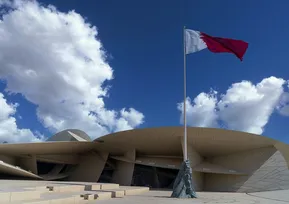
Qatar Criticized for Regulatory Inaction Against Crypto Companies

Qatar Criticized for Regulatory Inaction Against Crypto CompaniesThe Qatari Central Bank (QCB) has come under fire from the Financial Action Task Force (FATF) for its lack of efforts in enforcing regulations that prohibit virtual asset service providers.In a report released earlier this week, the global watchdog for money laundering and terrorist financing highlighted the need for Qatar to enhance its capabilities in effectively combating evolving forms of criminal activity, including taking action against virtual asset service providers.Photo by Akbar Nemati on PexelsContinuous improvement neededAlthough acknowledging “substantive improvements” applied to its control system, the FATF report emphasized that Qatar must further improve its understanding of more complex forms of money laundering and terrorist financing.While Qatar has shown positive progress in gathering beneficial ownership information through its unified register, which consolidates data on its citizens, the FATF report emphasized the need for stronger controls to ensure the accuracy and currency of the collected information. The report also criticized Qatar’s authorities for underutilizing their sophisticated analysis capabilities in identifying instances of money laundering.Lack of control despite VASP banDespite the Qatar Financial Centre Regulatory Authority’s (QFCRA) announcement in December 2019 that virtual asset service providers (VASPs) are not allowed within or from the Qatar Financial Centre, the country’s regulatory authority has made little progress in penalizing firms that facilitate or provide crypto asset services.Interestingly, while Qatar has banned virtual asset service providers, it has expressed interest in exploring the potential use cases of a central bank digital currency (CBDC). In June 2022, it was reported that the QCB is in the early stages of developing a CBDC.Sheikh Bandar bin Mohammed bin Saoud Al Thani, the governor of Qatar’s central bank, revealed that the QCB is evaluating the advantages and disadvantages of CBDCs and determining the appropriate technology and platform.As the country explores the potential of a CBDC, it must ensure that its regulatory framework aligns with international standards and best practices. By doing so, Qatar can strike a balance between fostering innovation in the digital currency space and safeguarding its financial system from illicit activities.Global coordinationThrough the Paris-based money-laundering watchdog, and calls from the G7, the European Central Bank, and others to regulate on a global basis, the official response to controlling digital assets and VASPs is becoming more globally coordinated. Central bankers and government officials have learned that decentralized finance has the ability to be borderless.FATF has been active in getting more countries on board. Effective from Thursday, Japan now implements FATF’s “travel rule” with respect to digital assets. That action was taken following a FATF finding that Japan wasn’t following best practice relative to anti-money laundering (AML) measures. Pakistan recently banned cryptocurrencies in an effort that appears to have been motivated by wanting to stay off the FATF’s gray list of non-compliant countries.While Pakistan managed to get itself off that list, the United Arab Emirates found itself on the gray list. The UAE’s Central Bank issued guidance on AML relative to virtual asset companies, in an effort to come back into FATF compliance.It remains to be seen how Qatar will respond to the FATF’s critique and whether it will take concrete actions to address the concerns raised. The international community will be closely monitoring Qatar’s efforts to combat financial crimes in the virtual asset sector and to establish a robust regulatory framework for its future CBDC endeavors.

news
Web3 & Enterprise·

Aug 08, 2024

Hong Kong's Mox Bank launches crypto ETF trading

Mox, a virtual bank in Hong Kong and a subsidiary of Standard Chartered, has introduced exchange-traded fund (ETF) trading for cryptocurrencies, marking a significant expansion into the digital asset space. The bank announced on Aug. 7 that it now offers its customers the ability to trade spot Bitcoin and Ether ETFs directly on its platform, making it the first virtual bank to do so.Photo by Florian Wehde on UnsplashExpanding crypto offeringsThe digital bank is also planning to broaden its cryptocurrency services. Future expansions may include direct purchasing and trading of cryptocurrencies in partnership with a licensed exchange. This move aligns with Hong Kong’s regulatory framework, which has been adjusting to accommodate and regulate crypto activities more robustly. Competitive pricing and user engagementMox is promoting itself as an economical choice for crypto ETF trading, with fees set at 0.12% of the transaction volume, with a minimum charge of 30 Hong Kong dollars ($3.85) for Hong Kong-listed spot and derivatives ETFs and $0.01 per share with a minimum of $5 for U.S.-listed derivatives ETFs. As of now, a local report reveals that 28% of Mox's customers engage in cryptocurrency investments, with 18% actively trading. The introduction of these ETFs is seen as a move to empower these customers to access emerging asset classes securely. Future aspirationsBarbaros Uygun, the CEO of Mox, expressed that the inclusion of crypto ETFs is part of the bank's broader strategy to set a global benchmark from Hong Kong. The bank aims to stay competitive by innovating and adapting to market changes. Jayant Bhatia, the bank’s chief product officer, hinted at more extensive plans in the crypto investment realm, although specifics on the timeline for launching broader crypto trading services were not disclosed. Despite the launch, the overall uptake of crypto ETFs in Hong Kong has been lukewarm. Bosera HashKey, ChinaAMC and Harvest Global, the issuers of the three spot ETFs in Hong Kong, have seen minimal activity with combined assets under management totaling just $236.3 million. The launch by Mox could potentially invigorate the market for crypto ETFs in Hong Kong as the region strives to become a leading hub for cryptocurrency in Asia. 

news
Loading