Top

Lotte Group Leaps into the NFT Market to Boost Customer Engagement

Web3 & Enterprise·June 23, 2023, 11:09 PM

The Lotte Group, a prominent industrial conglomerate in South Korea, has embraced the realm of non-fungible tokens (NFTs) in its efforts to boost customer engagement.


Building the brand’s metaverse

In a collaborative endeavor, Lotte’s affiliates, Daehong Communications and Lotte Hotels and Resorts, have come together to introduce Magic Ride NFTs. These NFTs enable their owners to contribute to the development of LOLO:VERSE, Lotte’s metaverse where virtual meets reality. As community members, holders of Magic Ride NFTs will have the opportunity to engage in decision-making processes and contribute to the design of project roadmaps for LOLO:VERSE.
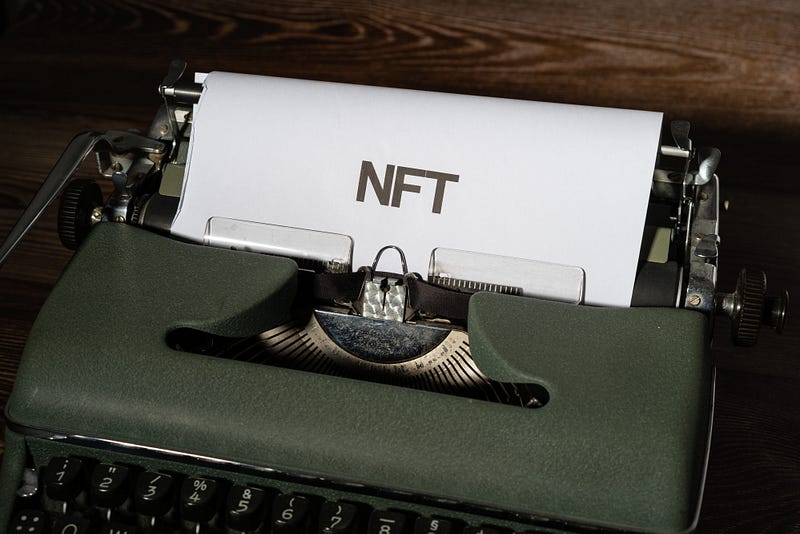
Photo by Markus Winkler on Pexels


Cooperation with NFT marketplace

Magic Ride NFTs will be made available in three different types through Korea’s largest NFT trading platform, Pala, starting from June 30. Type A NFTs will feature tickets to Lotte World, the group’s renowned amusement park. Type B will offer 60,000 KRW ($46) worth of points for use at Lotte Duty Free. Type C will include an electronic voucher worth $50, redeemable at Lotte Hotels. The price of each of these NFTs is set at 50,000 KRW ($38) or an equivalent value in MATIC tokens.

Daehong Communications, the advertising agency affiliate of the Lotte Group, has been actively establishing its presence in the Web3 landscape by fostering partnerships with various blockchain enterprises. The collaboration between Daehong and Pala on the Magic Ride NFTs marks the first joint project between the two entities. Pala’s launchpad offers a user-friendly experience, particularly catering to individuals who are new to purchasing and utilizing NFTs.


More to Read
View All
Policy & Regulation·

Apr 26, 2023

Korean Lawmakers Make Progress on Virtual Asset User Protection Bill

Korean Lawmakers Make Progress on Virtual Asset User Protection BillOn Tuesday, the subcommittee for legal deliberations under the South Korean National Assembly’s National Policy Committee reached a consensus during the first review of the Virtual Asset User Protection Bill, according to Yonhap Infomax.©Pexels/Andrea PiacquadioFirst review phaseThe bill is undergoing a two-phase review process before being legislated. During the first phase, the primary focus was on safeguarding customer assets and preventing unfair transactions. The second phase is expected to concentrate on market order regulations, including the issuance and disclosure of virtual assets.Application of Capital Markets ActSeveral stipulations were included in the approved draft of the Virtual Asset User Protection Bill during the initial review phase. These stipulations include prioritizing the application of the Capital Markets Act to virtual assets that are classified as securities, while excluding central bank digital currencies (CBDCs) from the definition of virtual assets to avoid any potential confusion. The bill also seeks to impose compensatory damages and penalties for any unfair trading practices, and establish a virtual asset committee responsible for investigating any unfair transactions in the digital asset market.The virtual asset committee will also engage in preliminary deliberations regarding the management, supervision, and monitoring of the digital asset market. The committee will carry out tasks assigned to it by the Financial Services Commission (FSC). Furthermore, the Bank of Korea has been granted the right to request data from virtual asset operators since virtual assets, although not currencies, are necessary to consider when establishing monetary credit and financial stability policies.No class action systemHowever, the introduction of a class action lawsuit system was not adopted, and details about inspecting virtual asset operators will be stipulated in a presidential decree rather than a law.Second review phaseFor the second review phase, the FSC will report several matters to the National Assembly. These will involve tasks such as establishing a regulatory framework for stablecoins, security tokens, and utility tokens. In addition, the agency will be responsible for creating a regulatory system for virtual asset valuation, advisory, and disclosure services, as well as an integrated computerized system that provides reliable and reasonable information on digital assets. The FSC will also explore ways to enhance the business conduct discipline of cryptocurrency operators by commissioning research from external organizations.Additionally, the FSC and the Financial Supervisory Service will work on supporting virtual asset exchanges to establish uniform standards for the circulation supply of virtual assets. The regulatory bodies will also enforce the requirement for transparent disclosure and strict internal control on virtual asset operators. Moreover, regulations will be developed to enhance virtual asset usability and remove any obstacles that may impede the development of innovative real-life services.

news
Web3 & Enterprise·

Sep 11, 2023

Lillius and Crypto.com Team Up for NFT Collaboration and Global Marketing

Lillius and Crypto.com Team Up for NFT Collaboration and Global MarketingLillius, a Korean artificial intelligence (AI) sports challenge app, has signed a business deal with global crypto trading platform Crypto.com to collaborate on a non-fungible token (NFT) project and global marketing strategies. The two companies will work together to promote Lillius’ platform mainly by issuing and distributing NFT rewards within the app.Elevating fitness with AILillius, set to launch its open beta service this month, is a mobile app where users can participate in exercise challenges that use AI motion detection technology to analyze their form while doing the movements. After they complete a given challenge, they can receive rewards based on the score they earn. Some of these challenges feature lessons from Korean Olympic medalists like taekwondo athlete Lee Dae-hoon, fencer Nam Hyun-hee, and wrestler Jung Ji-hyun.Photo by Huckster on UnsplashTo grow its platform, Lillius has also minted NFT figurines for iconic athletes such as table tennis player Ryu Seung-min, swimmer Park Tae-hwan, and archer Joo Hyun-jung, among others.Unlocking global Web3 sports experiencesUnder the new partnership, Crypto.com will be responsible for leveraging its global infrastructure to support Lillius’ broader global expansion and various marketing endeavors.“Our partnership with Crypto.com will expand access to Web3-based sports experiences for users around the world and serve as an important milestone in advancing our Web3 sports ecosystem,” said Julia Kim, CEO of Lillius. “We plan to enhance Lillius’ global competitiveness and lead the Web3 sports industry.”Crypto.com has consistently been participating in sports-related marketing projects and investing in such businesses as well. In 2021, it signed a naming rights agreement to change the name of the world-renowned sports and entertainment arena, the Staples Center, to Crypto.com Arena. It also became the first virtual asset platform to sponsor the 2022 FIFA Qatar World Cup. Furthermore, the platform has worked with some of the world’s biggest sports associations such as the UFC and Paris Saint-Germain F.C., playing a key role in bridging the gap between blockchain and sports. Its latest business agreement with Lillius comes as part of more concentrated efforts to enter the Korean market.“Through this partnership, we will cultivate the merging of sports and blockchain technology by providing Crypto.com’s 80 million users with a unique sports-related consumer experience,” said Patrick Yoon, CEO of Crypto.com Korea.

news
Web3 & Enterprise·

Sep 09, 2023

Founders Exit Following Overhaul of NFT Startup Rario

Founders Exit Following Overhaul of NFT Startup RarioPolygon-based NFT platform Rario, specializing in cricket-related non-fungible tokens (NFTs), is experiencing a major transformation, with its founders, CEO Ankit Wadhwa and CTO Sunny Bhanot, departing the company after a two-year tenure.Investors in the startup are taking on a more prominent role in steering the direction of the Indian startup, according to a report from TechCrunch on Friday.Photo by Alessandro Bogliari on UnsplashDream11Dream11, a prominent Mumbai-based fantasy sports platform and one of Rario’s primary backers, alongside other investors, is said to be exerting pressure to gain greater control, resulting in the ousting of the firm’s founders. The development comes amid other significant shifts in Dream11’s leadership.Additionally, Rario is undergoing a broader restructuring effort that includes the elimination of various roles, according to sources who were cited by TechCrunch as being familiar with the matter.This recent upheaval coincides with reports of Dream11’s parent company, Dream Sports, taking measures to reduce operational costs. TechCrunch noted that Dream Sports is actively renegotiating several licensing agreements previously inked by Rario as part of cost-cutting measures.High profile investorsRario boasts a roster of high-profile investors, including global investment company Alpha Wave Global and cricket icon Sachin Tendulkar. In April 2022, the cricket NFT platform made waves by securing $120 million in a Series A funding round, asserting its dominance in the cricket NFT rights arena with over 900 cricketers on board at that time. It’s not clear what valuation the firm had at the time of the Series A funding round but in a prior round, Rario had been valued at $250 million.Founded in 2021, Rario set out with a mission to create digital cricket collectibles and foster an online community for passionate fans. By April 2021, the company had successfully sold 50,000 NFTs to sports enthusiasts spanning 20 countries.Cricket world partnershipsCricket is the second largest sport in the world with in excess of 1.5 billion fans worldwide. That leaves a lot of scope for Rario to harness NFTs to bring about new forms of engagement.Among Rario’s notable partnerships are agreements with cricket leagues such as Cricket Australia, the Australian Cricketers’ Association, the Caribbean Premier League, the Lanka Premier League, and the Abu Dhabi T10 League Legends League Cricket.Polygon changesPolygon Labs, the developer of the Ethereum-centric layer two scaling network upon which the Rario platform runs, also features India in its origin story. It too has seen upheaval at a managerial level recently. In July, the firm announced a number of senior positional changes. Its former Chief Legal Officer (CLO) was elevated to the position of CEO. Those changes saw Polygon Labs’ Indian Co-Founder Sandeep Naiwal transition to the role of Executive Chairman.Rario’s ongoing evolution reflects the dynamic nature of the NFT space, where startups must adapt to changing investor interests and market conditions. With its investors taking the reins, Rario faces a pivotal juncture in its journey to redefine how cricket fans engage with the sport through the exciting world of NFTs.

news
Loading