Top

Singaporean Regulator Proposes Framework for Digital Money Use

Policy & Regulation·June 22, 2023, 12:34 AM

The Monetary Authority of Singapore (MAS) has released a White Paper that outlines proposed standards for the use of digital assets. The aim is to establish a common protocol and conditions for the utilization of these assets.

While the paper identifies the potential digital assets bring in streamlining transactions and promoting financial inclusion, it also outlines challenges that need to be addressed before digital money can be successfully implemented.

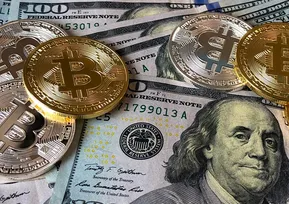
Photo by Pixabay on Pexels


Purpose Bound Money (PBM)

MAS’s White Paper, which was published on Wednesday, provides requirements to protect the use of digital assets as a medium of exchange and offers a technical overview of Purpose Bound Money (PBM). PBM allows the sender of digital money to specify certain conditions such as validity periods or how the money can be spent.

The covered digital monies include central bank digital currencies (CBDCs), tokenized bank deposits, and potentially well-regulated stablecoins, excluding digital assets that it considers volatile such as Bitcoin. These digital monies are generally pegged to real-world currencies, commodities, or financial institutions, making them more stable.

MAS highlights that PBMs utilize a common protocol compatible with different ledger technologies and forms of money. This protocol enables money to be directed toward a specific purpose without requiring the money itself to be programmed. It functions as a secure two-layered delivery vehicle, with funds held as collateral in a “wrapper” until specific conditions are met for its release.


Standardized format

The standardized format outlined in the White Paper will allow users to access digital money using their preferred wallet provider. By establishing these standards, the prospects for digital money to become a significant component of the future financial and payments landscape are enhanced. Standardization and regulated use of PBMs can unlock economic value, facilitate efficient and inclusive digital transactions, and provide additional consumer protection.

One notable application of PBMs is in protecting online payments, such as e-commerce transactions and prepaid packages. With PBMs, advance payments can be securely held until the service is fulfilled, ensuring that the product or service is delivered before funds are released. This benefits both consumers and merchants, assuring consumers of product delivery and allowing merchants to verify payment before delivering.

PBMs can also aid businesses in mitigating risks associated with international trade transactions, ensuring secure and efficient payments while reducing the potential for fraud or non-payment.


Interoperability

To ensure the safety and usability of digital monies, MAS highlights considerations that will impact PBM implementation. Interoperability across different platforms is crucial to avoid fragmentation and excessive fees. The choice of underlying digital currencies also affects usability and value, with CBDCs, tokenized bank liabilities, and stablecoins offering varying levels of guarantees and regulatory oversight. Additionally, privacy, digital readiness, and the impact on users need to be carefully assessed.

MAS acknowledges that the regulatory landscape for digital monies is still evolving globally, which may lead to varying regulatory treatment of PBMs across jurisdictions. It believes that policy considerations should be thought through when designing PBM-based solutions, including decisions regarding issuance, distribution, and conditions for use.


More to Read
View All
Web3 & Enterprise·

Apr 19, 2023

Hot Wallet Exploit Results in $23M Bitrue Loss

Hot Wallet Exploit Results in $23M Bitrue LossBitrue, a Singapore-based crypto exchange, has fallen prey to a $23 million hack due to a hot wallet exploit. The exchange has been forced to suspend all withdrawals until April 18, to provide an opportunity to conduct a thorough security review.©Pexels/Karolina GrabowskaHot wallet vulnerabilityHot wallets are used by exchanges to store small amounts of cryptocurrencies for easy access. These wallets are connected to the internet and are therefore more vulnerable to attacks compared to cold wallets, which are stored offline. In the case of Bitrue, hackers were able to exploit the hot wallet and steal cryptocurrencies worth $23 million.In a series of Twitter posts, the exchange outlined that the exploit occurred at 07:18 (UTC) on Friday. “We were able to address the matter quickly and prevented the further exploit of funds”, it went on to state.The stolen digital assets include ETH, QNT, GALA, SHIB, HOT and MATIC. Bitrue outlined that the hot wallet funds account for only 5% of overall funds and that the rest of its wallets remain secure and have not been compromised.Blockchain security firm PeckShield outlined how the funds were swapped and drained. A wallet it has labeled as “Bitrue drainer” swapped 173,000 QNT, 22.55 billion SHIB tokens, 46.4 million GALA and 310,000 MATIC for 8,540 ETH. The ether is now being held within the following address:0x1819EDe3B8411EbC613F3603813Bf42aE09bA5A5Reimbursing usersIn response to the hack, Bitrue has promised to reimburse all affected users. However, the process could take some time.The incident underscores the importance of taking precautions when storing cryptocurrencies on exchanges. Users should only keep a minimal amount of cryptocurrencies on an exchange and should not store more than they can afford to lose. Ongoing exploits, hacks and frauds exemplify the need for users to only use reputable platforms with a proven track record of security.Doubling down on securityBitrue has promised to improve its security measures to prevent similar incidents from occurring in the future. The exchange’s response to the hack has been lauded by many in the cryptocurrency community, who have praised the company’s transparency and commitment to reimbursing affected users.The cryptocurrency community has been vocal in its criticism of exchanges that fail to prioritize security. The Bitrue hack is just the latest in a series of incidents that have highlighted the importance of maintaining security in the world of cryptocurrency.It’s not the first security breach that the exchange has encountered. In 2019 Bitrue suffered a $4.7 million loss, with quantities of both XRP and Cardano (ADA) having been stolen. On that occasion, the exchange released tracking details relative to the stolen funds. Thanks to collaboration with Huobi, Bittrex and ChangeNOW, the funds and associated accounts were frozen.According to data from CoinGecko, Bitrue trades an average of $1 billion in digital assets daily, with bitcoin and ether trading pairs accounting for a large proportion of that trading volume. The Bitrue hack has been a wake-up call for the cryptocurrency community and serves as a reminder of the ongoing risks associated with storing cryptocurrencies on exchanges.

news
Web3 & Enterprise·

Aug 18, 2023

Wemade Signs Contracts with Game Developers to Expand WEMIX PLAY’s Lineup

Wemade Signs Contracts with Game Developers to Expand WEMIX PLAY’s LineupSouth Korean gaming company Wemade has signed contracts with global game developers to bring three new games to its blockchain gaming platform, WEMIX PLAY.Photo by Riho Kroll on UnsplashThree gamesOne of these developers is Cfire Network, based in Singapore, which is working on a strategic card game called Magic Card Duel. In this game, players collect heroes and build decks of cards to challenge each other in battle.Dubai’s Project SEED is also part of the initiative, preparing to release a fantasy action role-playing game (RPG) called Outland Odyssey in the third quarter of this year.Korean company SpaceProbe is contributing to the lineup with Raid of Legends, a mobile action RPG where players can develop characters to explore dungeons, join raids, and engage in combat against each other.WEMIX PLAY’s expansive reachWEMIX PLAY boasts a user base of 9 million and has already added more than 100 blockchain games to its platform, spanning various genres like massively multiplayer online role-playing games (MMORPGs), shooters, and social network games. The platform’s standout feature is its inter-game economy, allowing players to transfer currencies between different games seamlessly.Wemade’s upcoming showcase of its blockchain gaming vision and WEMIX PLAY’s ecosystem will take place at G-STAR 2023, a global game exhibition happening from November 16 to 19 in Busan, Korea.

news
Web3 & Enterprise·

Aug 09, 2023

Galaxia Metaverse Joins Hands with MVL Foundation to Expand Blockchain Ecosystems

Galaxia Metaverse Joins Hands with MVL Foundation to Expand Blockchain EcosystemsSouth Korean blockchain company Galaxia Metaverse said Wednesday it will collaborate with MVL Foundation, a blockchain-based mobility enterprise in Singapore, to advance their respective blockchain ecosystems by enabling the use of their tokens, Galaxia (GXA) and MVL, within them.Photo by Shubham Dhage on UnsplashPromoting token utilizationAs of now, MVL tokens can be used for purchasing discount coupons for TADA, MVL Foundation’s ride-hailing service. Through the partnership, GXA tokens will also be able to purchase TADA discount coupons through MVL’s cryptocurrency wallet, Clutch Wallet. Discussions are currently underway regarding more joint ventures, such as integrating the MVL token with staking products offered by Galaxia’s own digital wallet.“The MVL token is already being used by millions of mobility service users with Southeast Asia as its base. Through this partnership, we expect that our global expansion will be accelerated as we bring more users to our ecosystem,” Galaxia emphasized.Expanding the Southeast Asian user baseMVL Foundation operates its mobility services mainly in Southeast Asian countries including Singapore, Cambodia, and Vietnam. Its ride-hailing service TADA is the second-largest of its kind in Singapore. This ecosystem is connected via blockchain, enabling participants to receive rewards in accordance with their activities and ultimately forging a Web3 mobility system.Subsequently, Galaxia intends to take advantage of MVL’s solid footing in Singapore to push joint localized marketing within the country.“We are planning to develop various solutions, rewards, and service integrations with MVL by leveraging our strengths, expertise, and networks,” Galaxia said.Meanwhile, throughout this year, Galaxia has been expanding its blockchain ecosystem in other ways. Notably, it has collaborated with industry leaders such as Korean NFT exchange Pala and karaoke app Somesing.

news
Loading