Top

Tether Critics Point to Previous Chinese Securities Backing

Policy & Regulation·June 16, 2023, 11:16 PM

USDT stablecoin issuer Tether (USDT) has long faced persistent scrutiny and criticism due to the lack of transparency surrounding the assets backing their digital currencies. The latest allegations come in the form of a report by Bloomberg on Friday suggesting that the world’s largest stablecoin was once backed by securities issued by Chinese companies.

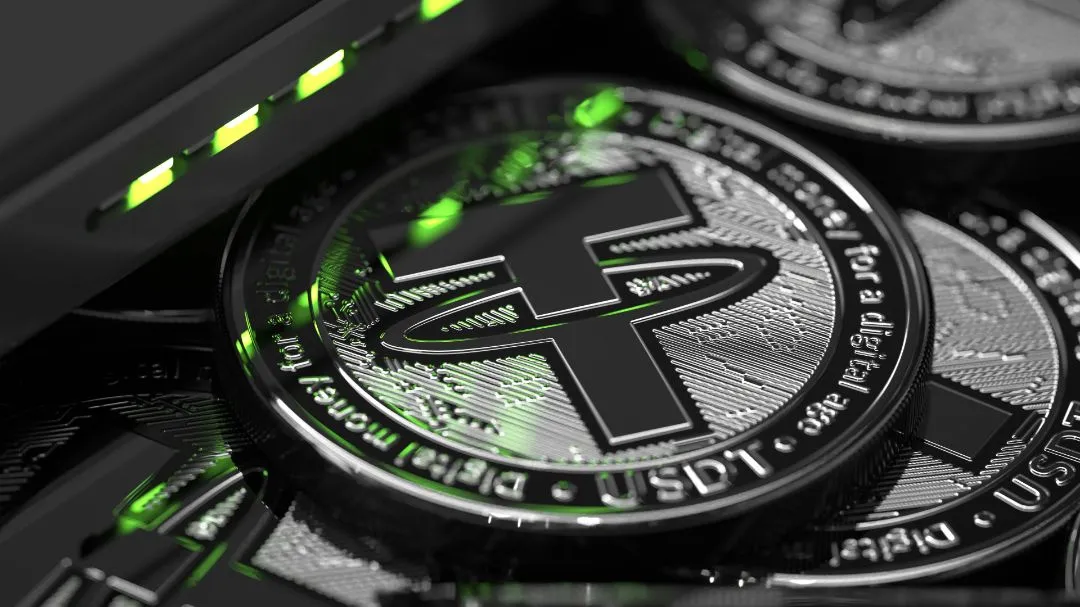
Photo by Manuel Joseph on Pexels


NYAG releases documents

These findings were based on documents made public by the New York Attorney General (NY AG). The documents disclosed that Tether had listed securities issued by China’s state-owned Industrial and Commercial Bank of China, China Construction Bank, and Agricultural Bank of China as part of its reserves backing the USDT stablecoin.

Rumors about USDT’s exposure to Chinese securities have circulated for a number of years. In 2021, a Bloomberg research report revealed that Tether’s reserves reportedly included billions of dollars in short-term loans to China-based companies, as well as a significant loan to the collapsed crypto lender Celsius Network.

However, in February 2021, Tether reached a settlement with the NY AG’s office over accusations of providing misleading information about its reserves and losses. To address these concerns, Tether handed over documents such as letters, bank accounts, reserve holdings, and wallet addresses through the law firm Steptoe.


Attestation report

Tether’s latest attestation report for Q1 2023, released on May 10, offered further details about its reserves. According to the report, Tether’s reserves were valued at $81.8 billion at the end of the quarter, a significant increase from the earlier period of $14.8 billion. These reserves consisted of $53 billion in US Treasuries, $1.5 billion in Bitcoin, and $5.3 billion in loans described as “over-collateralized.”

The disclosure of Tether’s previous backing by Chinese securities adds another layer of complexity to the stablecoin landscape, raising questions about the risk exposure and potential impact on the stability of these digital assets. Using Chinese commercial paper to back a US dollar stablecoin is a risky endeavor.

It raises the same issues as we’ve seen with the plethora of crypto lenders that went bankrupt in 2022. In those cases, they were using customer money to speculate and turn a profit. That’s fine when it works but when it goes wrong, it is customers who suffer. In its defense, Tether has stated that it only held A1 rated banking sector Chinese commercial paper in 2022 in state-owned Chinese companies like Industrial & Commercial Bank of China Ltd., China Construction Bank Corp., and Agricultural Bank of China Ltd. It reduced this exposure to zero later that year.

With the cryptocurrency community and regulators seeking greater transparency and accountability, the industry is likely to face increased scrutiny and calls for enhanced regulations to ensure the integrity of stablecoin operations moving forward.

As regulators continue to assess and navigate the evolving crypto market, it remains to be seen how the industry will address these concerns and establish clearer guidelines for stablecoin issuers to ensure the trust and confidence of market participants.

More to Read
View All
Web3 & Enterprise·

Dec 01, 2023

Late Korean artist Lee Jung-seob’s ‘Bull’ NFT on auction at OpenSea

Late Korean artist Lee Jung-seob’s ‘Bull’ NFT on auction at OpenSeaNFT marketplace OpenSea is hosting an ongoing auction for a digital representation of the painting “Bull” by the late Korean artist Lee Jung-seob, Yonhap News TV reported on Tuesday. Celebrated for his distinctive lines in his paintings, Lee passed away in 1956. This auction is set to conclude on Dec. 12, with the starting bid placed at 300 WETH (Wrapped Ethereum), which is approximately equivalent to $626,000.Photo by Hans Eiskonen on UnsplashWhite bull as NFTLee’s “Bull,” featured in the OpenSea auction, is distinguished by its depiction of a white bull set against a dark green background. This particular piece is one of Lee’s unpublished works and is currently being offered for sale by a private art collector. Regarding the authenticity of the painting, the description on the OpenSea page states, “This work received a handwritten evaluation from Professor Jung Jum-sik, a founding member of the Lee Jung-seob Art Award, on November 9, 2000.”The current owner of the original artwork has expressed their intention for auctioning it as a desire to share a valuable piece of art. The painting originally belonged to poet Ku Sang and has since changed hands multiple times, experiencing some damage along the way. While the copyright for an artist’s work typically remains with their inheritors for 70 years posthumously, in the case of Lee Jung-seob, this period has already lapsed.Authenticity and NFT investmentsMeanwhile, art appraisal experts are advising caution, emphasizing the need to first confirm the authenticity of the original painting. This caution stems from the fact that the painting has not undergone evaluation by an official appraisal organization.During his interview with Yonhap, Jung Jun-mo, CEO of Korea Art Authentication Appraisal Inc., offered a word of caution regarding investment in NFTs tied to artworks with questionable authenticity. He emphasized that NFTs representing works that lack genuine authentication also hold no value in terms of authenticity. Jung advised potential investors to thoroughly verify the legitimacy of such artworks before proceeding with any investment in their NFT representations.Last year, many paintings of modern Korean artists were converted into NFTs, but they sparked controversy over issues of authenticity. Experts in art investment have since been advising thorough research prior to making any investments in these digital assets. They warn that losses incurred from transactions involving these NFTs fall squarely on the investors.

news
Web3 & Enterprise·

May 24, 2023

BitMEX Launches Bespoke Service in Hong Kong

BitMEX Launches Bespoke Service in Hong KongSeychelles-based cryptocurrency exchange and derivative trading platform BitMEX announced on Monday that it is launching a dedicated virtual asset service for its Hong Kong customers.The exchange published a blog post to its website in which it said that it is in the process of launching “BitMEX Hong Kong,” a dedicated service offering that will be set up on a transitional basis initially. The company is currently in the process of securing a virtual asset service provider (VASP) license from the Hong Kong regulator, the Securities Futures Commission (SFC). Licensing becomes effective in the Chinese autonomous territory on June 1.Photo by Karolina Grabowska on PexelsDedicated mobile appAmong the features the exchange intends to offer its Hong Kong-based customers is a bespoke app, catering specifically to users in the city. The platform will offer Hongkongers the ability to buy and sell cryptocurrencies with eleven spot trading pairs. From an on-boarding and off-boarding perspective, the firm will facilitate the conversion of cryptocurrencies into over thirty fiat currencies.The company is looking to add value by offering additional services such as portfolio management and real-time deposits and withdrawals. BitMEX plans to enable additional functionality such as watchlists and detailed real-time data. Both of these features will enable service users to identify and follow crypto market trends.Licensing preparationsWhile the offering attempts to meet the specific needs of Hongkongers, it's likely that the main motivation relates to VASP licensing. The regulatory requirements in Hong Kong are likely to have distinct facets that would necessitate the company to tease out its service to Hong Kong citizens from its global platform.The SFC has indicated on Tuesday that it will enable crypto trading for retail investors. Notwithstanding that, it’s not doing that without the incorporation of several measures to protect the interests of retail users. Any promotions or incentives that lead a marketing effort with free gifts, and this will likely include token airdrops, will be prohibited.Minimum capital liquidity requirements are being set. Furthermore, client assets will have to be segregated from exchange assets, although the Commission doesn’t mind if the VASP simply segregates said funds itself or does so by way of using an escrow service.Stephan Lutz, acting CEO and group CFO at Bitmex, commented on the development: “We are optimistic that Hong Kong will achieve its ambition of becoming a world-leading Web3 role model city and potentially the Web3 hub for China in years to come.”On May 29, the firm will transfer existing Hong Kong-based customers from its global platform to its new affiliated Hong Kong entity, HDR BMEX Limited. Remaining account balances will be transferred over on that date. There will be no requirement for Hong Kong-based users to undertake additional KYC (know-your-customer) checks or account verification.Earlier this month, the exchange added two additional digital assets ($SUI & $PEPE) to its range of available perpetual contracts.

news
Web3 & Enterprise·

Jun 29, 2023

CoinFLEX Effects Partial Repayment of SmartBCH Debt

CoinFLEX Effects Partial Repayment of SmartBCH DebtCoinFLEX, a Seychelles-based crypto yield platform that operated the BCH to sBCH cross-chain bridge, has taken a significant step towards its restructuring plans by partially repaying its debts to SmartBCH Alliance.Photo by Towfiqu barbhuiya on PexelsBitcoin Cash sidechainAs part of the repayment, SmartBCH, a Bitcoin Cash sidechain compatible with Ethereum, received distributions from CoinFLEX, including approximately 4.28 million rvUSD ($750,000), 652,000 USDC ($652,000), and 6,834 BCH ($1.6 million). Notably, 80% of the received USDC has been swapped into Bitcoin Cash, while the remaining portion has been reserved to cover legal and operational expenses. SmartBCH currently holds a total of 10,758 BCH.The repayment to SmartBCH comes amidst a significant surge in the price of Bitcoin Cash, which has witnessed a remarkable increase of over 110% in the past seven days. This surge has positioned Bitcoin Cash as a top performer among major currencies in the crypto market, according to data from CoinGecko.Bitcoin Cash, along with other Bitcoin forks, has been benefiting from the overall rise in the cryptocurrency market. The increased interest can be attributed to the flurry of spot Bitcoin ETF filings that have taken place recently.The positive developments surrounding CoinFLEX and Bitcoin Cash have also had a ripple effect on associated tokens. $FLEX and $OX, tokens connected to CoinFLEX, have experienced notable increases in value, rising by 53% and 65% respectively over the past week.CoinFLEX itself has been undergoing a significant restructuring process that was approved by the Seychelles Courts on March 6. The exchange initially suspended withdrawals in June 2022, citing extreme market conditions and uncertainty related to a counterparty.CoinFLEX was one of several crypto firms affected by the collapse of the Terra ecosystem in May 2022, resulting in the loss of over $40 billion in investor value within a short period. In September, the company revealed its restructuring proposal, which involved offering over 65% of its equity to creditors and allocating 15% to employees.OPNX rebrandLast March, CoinFLEX rebranded itself as Open Exchange (OPNX) following the approval of its restructuring plan. The founders of CoinFLEX, Mark Lamb and Sudhu Arumugam, are collaborating with Kyle Davies and Su Zhu, the co-founders of the bankrupt crypto hedge fund Three Arrows Capital (3AC), on the new Dubai-based venture.SmartBCH has announced its intention to open an account on OPNX and gradually convert rvUSD into Bitcoin Cash through the exchange. It is worth noting that, as part of the restructuring terms, SmartBCH is entitled to common equity in CoinFLEX and one board seat, although it has not received these benefits at present.Additionally, SmartBCH has burned 33,365.67 sBCH tokens, returning them to the old bridge address. As a result, the total sBCH in circulation on the sidechain now amounts to 67,756.766.To further enhance stability, SmartBCH has entered into an agreement with CoinFLEX to assume responsibility for maintaining the 1:1 peg between sBCH (the sidechain’s native token) and BCH.

news
Loading