Top

BOCI Partners with UBS in Hong Kong on First Tokenized Notes

Policy & Regulation·June 13, 2023, 12:05 AM

In a groundbreaking move, the investment arm of the Bank of China (BOCI), has partnered with Switzerland-headquartered global financial services company UBS, to issue tokenized notes in Hong Kong.
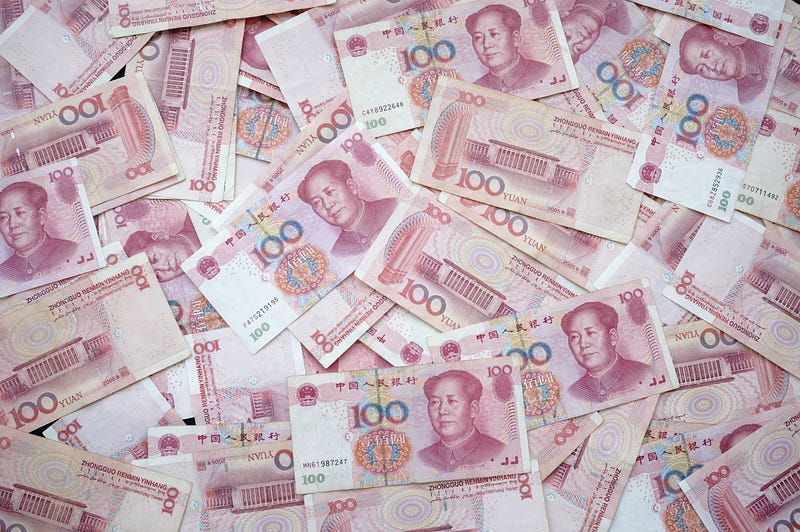
Photo by Eric Prouzet on Unsplash


Hong Kong’s first tokenized notes

This marks the first instance of a Chinese financial institution issuing a tokenized note in the region. Leveraging the power of blockchain technology, the notes were tokenized on the Ethereum blockchain. UBS announced the milestone development via a press release published to its website on Friday.

The Swiss banking giant has some expertise in this area, having first issued a tokenized fixed rate note in December 2022, recorded on a permissioned blockchain and established under English and Swiss law. On this occasion, the Hong Kong-issued tokenized notes will be compliant in terms of both Swiss and Hong Kong law.

The issuance of these tokenized notes involved a significant amount, with BOCI issuing 200 million Chinese yuan worth of notes, equivalent to approximately $28 million. The collaboration with UBS aims to simplify digital asset markets and products for customers in the Asia Pacific region, specifically by developing blockchain-based digital structured products tailored to their needs.

Ying Wang, Deputy CEO at BOCI, expressed enthusiasm for the digital transformation and innovative development of Hong Kong’s financial industry, recognizing the evolving digital economy in the region. Wang expressed the view that the development puts BOCI “at the forefront of innovation in technology finance and digital finance.”

She sees the UBS collaboration as a means of driving “the simplification of digital asset markets and products, for customers in Asia Pacific through the development of blockchain-based digital structured products, designed specifically for customers in Asia Pacific.”


Embracing digital assets

Hong Kong has been actively working towards establishing itself as a hub for cryptocurrencies. Paul Chan Mo-po, the Chinese autonomous territory’s Financial Secretary, has emphasized the region’s intention to embrace regulation in this domain. Despite recent fluctuations in the virtual asset market and the closure of certain virtual asset exchanges, Chan remains optimistic about the prospects of Web3 and believes it is the opportune moment to drive its advancement.

This month, Hong Kong lifted its ban on crypto retail trading and encouraged crypto exchanges to seek licenses within the region. The Securities and Futures Commission (SFC) has introduced exchange guidelines, leading firms such as Huobi, OKX, and BitMEX to express their intentions to apply for licenses in Hong Kong. Furthermore, in light of the recent lawsuit filed by the SEC against Coinbase, Hong Kong legislator Johnny Ng extended an invitation to the exchange to establish a hub in Hong Kong.

The collaboration between BOCI and UBS is significant as unlike UBS’ previous tokenized note project which was established on a permissioned blockchain, this Hong Kong-based project is making use of Ethereum. By issuing tokenized notes on the Ethereum blockchain, these institutions are exploring the decentralized potential of digital assets and paving the way for further innovation in the Asia Pacific region.


More to Read
View All
Policy & Regulation·

May 27, 2023

Study Places Hong Kong as Leader in Crypto Readiness

Study Places Hong Kong as Leader in Crypto ReadinessHong Kong, according to a recent study conducted by Forex Suggest, has emerged as the leading jurisdiction worldwide in terms of its readiness for cryptocurrencies. The study evaluated various factors such as the number of blockchain startups per 100,000 people and the density of crypto ATMs in relation to the population.Photo by Traxer on UnsplashZero capital gains taxThe attractiveness of Hong Kong for investors in the crypto space stems from its advantageous tax policies. The study noted that Hong Kong does not levy capital gains taxes on cryptocurrency, making it an appealing destination for crypto enthusiasts. The United States and Switzerland secured the second and third positions, respectively, in the rankings of the most crypto-ready countries.In recent times, Hong Kong has actively embraced investments from digital asset companies and is poised to implement new regulations for the industry. Effective from June 1, the city’s new rules aim to establish Hong Kong as a global hub for digital assets. These regulations permit licensed cryptocurrency trading platforms to offer services to retail investors while incorporating measures to safeguard individual traders.Global crypto firms are gearing up for that new licensing approach, carving out separate corporate entities in order to meet the regulatory requirements which the Hong Kong regulator, the Securities Futures Commission (SFC), has set. Another Hong Kong regulator, the Hong Kong Monetary Authority (HKMA), is also opening up to embrace digital asset innovation through a pilot project implicating the tokenization of real world assets.Regarding the number of blockchain startups, Hong Kong boasts three startups per 100,000 individuals, securing the second position globally. Topping the list is Switzerland, with an impressive count of 12.9 blockchain startups per 100,000 residents, amounting to a total of 1,128.The study also highlighted that countries such as Hong Kong, Switzerland, Panama, Portugal, Germany, Malaysia, and Turkey impose the lowest taxes on cryptocurrencies. These nations exempt individuals from capital gains taxes on profits derived from cryptocurrency trading.Crypto ATM proliferationWhen considering the prevalence of crypto ATMs, Hong Kong ranks third globally, with two ATMs per 100,000 people, totaling 149 ATMs. The United States takes the top spot with nearly 34,000 crypto ATMs, but when normalized to the population, it has 10.1 ATMs per 100,000 individuals.Regressive measures in USIn contrast to Hong Kong’s favorable environment, regulators in the United States have intensified their efforts to tighten regulations on cryptocurrency exchanges, leading many within the industry to advocate for clearer guidelines. Consequently, several exchanges are exploring jurisdictions that offer more favorable conditions.Forex Suggest emphasized that the report’s findings were based on extensive data analysis, taking into account factors such as tax regulations, legislation, the presence of blockchain startups, and the level of interest in cryptocurrencies. Each jurisdiction received a normalized score out of 10 for each factor, and the overall rankings were determined by averaging these scores.Hong Kong’s position as the most crypto-ready jurisdiction in the world showcases its commitment to fostering innovation and becoming a global leader in the digital asset space. With its advantageous tax policies, growing number of blockchain startups, and forthcoming regulations, the autonomous Chinese territory is solidifying its position as an attractive destination for businesses and investors in the cryptocurrency space.

news
Web3 & Enterprise·

Sep 14, 2023

Hana TI Partners with BitGo for Web3 Digital Asset Custody Solutions

Hana TI Partners with BitGo for Web3 Digital Asset Custody SolutionsHana TI, Hana Financial Group’s financial information technology (IT) arm, announced that it will work with US-based digital asset trust company BitGo on technological collaborations related to Web3-based virtual asset custody services.BitGo has been taking steps to enter the Korean market, starting with the establishment of its Korean branch and its new joint venture for digital asset custody services with Hana Bank. Following this announcement, the company said that it would delve deeper into cooperation with Hana TI.Photo by Medienstürmer on UnsplashCharting the course for digital asset custody in KoreaMike Belshe, Co-Founder and CEO of BitGo, recently visited Hana Financial Group’s Integrated Data Center in Incheon’s Cheongna district, which serves as a digital finance facility for the group. He was accompanied by Park Geun-young, CEO of Hana TI, on a tour through the integrated security control center and server rooms.The two CEOs also discussed various cooperative strategies to expand the Korean market for digital asset custody services, including security measures such as obtaining Information Security Management System (ISMS) certification. In addition, Belshe emphasized the significance of a secure and transparent custody infrastructure for facilitating the issuance and distribution of institutional security tokens. To that end, he expressed BitGo’s commitment to consumer protection and enhancing transparency and security within the Korean digital asset industry together with Hana Bank and Hana TI.“We hope that this collaboration will have a positive impact on enhancing trust and stability in the local digital asset ecosystem,” Park added.Along with security cooperation, Belshe and Park agreed that building up the technical capabilities of Web3-based digital asset platforms is equally important in expediting the growth of the market.Belshe and Park also visited the Hana Global Campus in Cheongna — a hub for cultivating talent — as well as the group’s future headquarters, set to be completed in 2025. Hana TI representatives shared their vision for the Hana Dream Town project currently under development in Cheongna.Commitment to advancing Web3 technologyHana TI is currently concentrating efforts on strengthening its capabilities to internalize Web3-based blockchain technology. The company thereby established a division dedicated to Web3 endeavors in June of last year. It has since been actively engaged in research and development for technologies involved in blockchain infrastructure, digital assets, and security tokens.

news
Web3 & Enterprise·

Oct 17, 2024

Hybrid exchange Cube lists Access Protocol (ACS)

CUBE, a hybrid crypto exchange that settles trades on-chain using secure multi-party computation, announced on its official X account that it has listed ACS, the native token of Solana-based monetization platform Access Protocol.  The hybrid exchange utilizes its custom rewards platform, Blocks, to engage users through unique packages for listing traders and token holders. Participants in the listing will be eligible for campaign rewards.  Bartosz Lipinski, CEO and co-founder at CUBE, recently revealed plans around Isometric (ISO), an intent-based transaction network, enabling cross-chain trading to eliminate the need for asset bridging.  “When we started building Cube, we wanted everything to be an intent… Everyone will be able to submit intents to the network and verify settlements on multiple chains using the decentralised MPC that we’ve built,” Lipinski said during his presentation at the Solana Breakpoint conference. “Through the decentralised MPC integration layer, you will be able to actually use the value on different layer ones without cannibalising it,” he went on to share.  ISO will be the platform token powering governance, staking, and decentralized custody, according to Cube's announcement. Both Token and Mainnet launch are expected to happen some time in Q2 2025.  In a related development on Monday, Cube announced its partnership with the Argentinian government. The company plans to explore leveraging the Isometric network as a catalyst for the South American nation’s financial system. 

news
Loading