Top

Bitmain to Launch Filecoin Token Mining Machines

Web3 & Enterprise·July 22, 2023, 2:16 AM

Bitmain, the well-known Chinese manufacturer of Bitcoin mining machines, has made a significant announcement that marks its entry into the Filecoin ecosystem.


FIL token mining

According to that announcement made by the company on social media on Friday, the company is set to launch FIL token mining machines, which are expected to have a hash rate of up to 4,300T each and will be available for purchase at $38,888 per unit.

Filecoin, created by Protocol Labs, was originally designed as a blockchain-based collaborative digital storage and data redemption solution. As an open-source, public cryptocurrency and digital remittance system, Filecoin has garnered significant attention in the market.
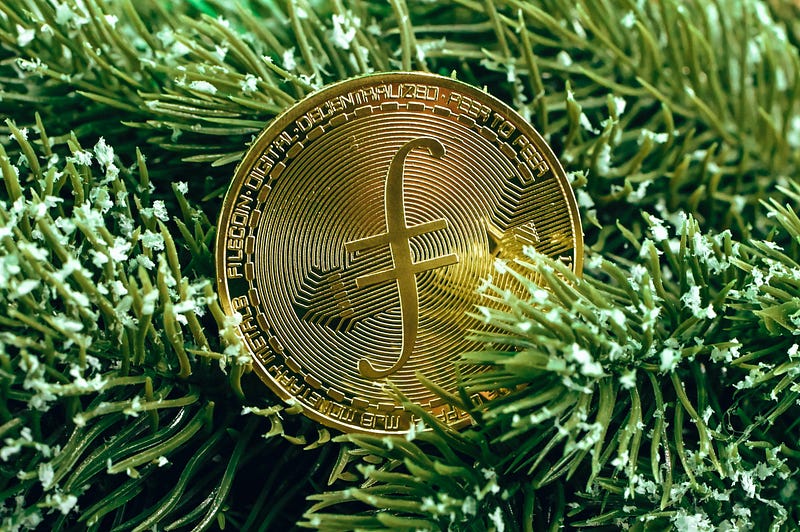
Photo by Traxer on Unsplash


Delegated staking

Along with the mining machine development, Bitmain has introduced a delegated staking service with a low monthly fee of 0.5%. This service offers traders an opportunity to earn more through staking with minimal computational energy. Delegated staking allows users to delegate their staking rights to validators or staking pools, enabling them to partake in the rewards generated by these validators.

According to a recent report by crypto market intelligence firm Messari, Filecoin’s data storage market continued to grow in Q2, 2023. Active data storage deals grew 64% when compared with the previous quarter. That deal flow resulted in increased revenue from fees, which was up 91%. Further development of the Filecoin protocol resulted in the recent introduction of the Filecoin Virtual Machine (FVM). That runtime environment for smart contracts has enabled new use cases, including liquid staking, decentralized computing, and perpetual storage.

Bitmain’s venture into the Filecoin ecosystem not only supports the development of FIL token mining machines but also offers hope for FIL token holders who experienced losses. The FIL unit price peaked at $190 during the 2021 crypto bull market. The company’s involvement has positively influenced Filecoin’s price.

Meanwhile Bitmain continues to be a major player in the crypto mining equipment space. 2021 has not been without its blemishes for the company though, as in April the Beijing-based company was fined $3.7 million by the Chinese authorities for a violation of Chinese tax regulations.


Bitmain hashrate dominance

Earlier this month, US bitcoin miner TeraWulf purchased 18,500 mining machines from Bitmain, with a view to deploying them at its 43 MW Lake Mariner mining facility in New York State in the US. The deal had a value of $75 million.

A recently published report by crypto intelligence firm Coinmetrics outlined that the majority of the Bitcoin hashrate is being processed by Bitmain’s S19 miner model. Three Bitmain miner models are responsible for 76% of the entire Bitcoin network’s hashrate, the report states.


More to Read
View All
Policy & Regulation·

Apr 10, 2023

Korean Lawmakers Complete First Rough Draft of Virtual Asset User Protection Bill

Korean Lawmakers Complete First Rough Draft of Virtual Asset User Protection BillKorean lawmakers have completed the first rough draft of the virtual asset user protection bill at a National Policy Committee meeting held later last month.©Pexels/Matthias ZomerAgreeing on term usage ‘virtual assets’So far, 18 bills have been proposed to regulate cryptocurrencies, and the lawmakers and the Financial Services Commission (FSC) agreed to use the term “virtual assets” to encompass similar terms such as digital assets and crypto assets.Phased enactment of billsThe bills are likely to be reviewed under the title “Virtual Asset User Protection Act.” The bipartisan group agreed to enact the bills in phases, introducing the user protection bill in the first phase and the virtual asset listing and issuance bill in the second phase.Meanwhile, there were mixed opinions on the content of the bills. In particular, there was debate over whether the bills should stipulate that the central bank digital currency (CBDC) is excluded from virtual assets, and whether the bills should include a standard for determining if a virtual asset is a security.Debate over stipulating CBDC’s statusThe stipulation of excluding CBDC from virtual assets was the most divisive topic since it would lead to defining the conditions for other assets such as non-fungible tokens. Moreover, the Act on Reporting and Using Specified Financial Transaction Information, which currently regulates virtual asset service providers (VASPs), does not contain any stipulation on CBDC. Some raised concerns that such discrepancies could later cause confusion. In the end, assembly members decided to discuss the matter again in April after consulting with the Bank of Korea and the Ministry of Government Legislation.Criteria for classifying virtual assets as securitiesRegarding whether to include criteria for classifying virtual assets as securities, the lawmakers and financial regulators took different sides.Lee Yong-woo, a member of the Democratic Party of Korea, underlined that a clear statement of the relationship between the issuer and the recipient of virtual assets in a whitepaper can determine their security status. He added that such provisions should be included in the bills.Park Min-woo, an FSC official, on the other hand, commented on a cautious note that in case virtual assets fall under the category of securities, they may not be applicable to the virtual asset act. He explained that VASPs might deal with both securities and virtual assets, and in such cases, there could be a misunderstanding that VASPs are not subject to the virtual asset act simply because they trade securities.

news
Web3 & Enterprise·

May 13, 2024

Coinbase Wallet and TransFi partnership expands crypto accessibility in Asia

TransFi, renowned for its global payment solutions, is collaborating with Coinbase Wallet to streamline the process of purchasing cryptocurrencies, with a particular focus on enhancing user experience in Asia.Photo by Traxer on UnsplashFacilitating seamless onboardingBy integrating with Coinbase Wallet, TransFi aims to simplify the onboarding process for businesses and individuals, ultimately fostering greater adoption of cryptocurrencies in the region. This strategic integration is designed to eliminate barriers to entry and make cryptocurrency transactions more efficient and accessible. Enhanced payment options across AsiaIn a significant move, users in the Philippines, Vietnam and Indonesia now have access to expanded payment options through Coinbase Wallet. In the Philippines, GCash and PayMaya, popular digital payment platforms, have been integrated, while Vietnam sees the addition of Viet QR, Momo and Viettel Pay. Indonesian users can utilize OVO and Dana, leading payment apps in the country. These partnerships leverage existing, widely-used payment infrastructures to provide users with more convenient avenues for purchasing cryptocurrencies. The expansion into the Asian market reflects the growing demand for cryptocurrencies in the region and highlights Coinbase's commitment to broadening its reach by collaborating with local payment services. This trend underscores the increasing integration between crypto platforms and local payment solutions, signaling a positive trajectory for cryptocurrency adoption across Asia. 

news
Markets·

Nov 15, 2024

Sygnum survey reveals greater crypto allocation appetite in Singapore

Sygnum Bank, a digital asset bank based in Switzerland and Singapore, has conducted a survey which has identified that investors in Singapore are more interested in increasing their allocation to crypto than their international peers. The bank’s 2024 Future Finance survey states that while a global average of institutional investors of 47% plan to increase their exposure to crypto next year, in the case of Singapore-based institutional investors, 57% of them expressed the view that they would increase their crypto holdings in 2025.Photo by Precondo CA on UnsplashThe report states:  "Singapore investors exhibit a higher risk appetite and motivation to invest on average than respondents from other countries.” The annual survey, which was published on Nov. 14, collated insights garnered from more than 400 institutional and professional investors, distributed across 27 countries, with average investor experience of in excess of 10 years. 121 of the survey’s participants were based in Singapore, with the survey having been conducted during Q3 2024. Long-term confidenceSingaporean respondents suggested that they were confident in the long-term potential and outlook where cryptocurrencies are concerned. While the main reason for investing in crypto was to gain exposure to digital assets in line with a global trend (56%), 41% of respondents from the city-state cited portfolio diversification as their reason for investing in the emerging asset class.  75% of investors expressed the belief that regulatory clarity has improved recently. Growing confidence among institutional investors generally is likely to be developing due to increasing certainty relative to digital asset regulation. While Donald Trump had not been elected in the United States at the time that survey participants responded, it was looking increasingly likely that he would win the election.  That’s likely to have had a bearing on investor outlook, not just within the United States but internationally, given the implications in terms of positive regulation and an overall positive approach to crypto. 39% of Singaporean respondents cited yield-generation opportunities as their motivation in investing in digital assets. The recent advent of spot crypto exchange-traded funds (ETFs) stood out as another motivation for investors.  Breaking down specific areas of interest within the crypto sector, 71% of Singaporean respondents were interested in investment in layer-1 blockchain networks. Meanwhile, 56% expressed an interest in Web3 infrastructure investment options, with 41% showing an interest in layer-2 blockchain networks. Interest in asset tokenizationIn relation to tokenization, 47% of those surveyed in Singapore indicated an interest in tokenizing mutual funds and corporate bonds over and above other financial assets and products. When first proposed, real estate was considered the most obvious asset primed for tokenization but mutual funds and corporate bonds now appear to be gaining more traction. Asset tokenization has been garnering considerable attention in mainstream finance but especially so in Singapore. Local regulator, the Monetary Authority of Singapore, (MAS) has been running Project Guardian, a collaboration between MAS and the financial services industry with an emphasis on asset tokenization. The project recently brought in the German central bank, the World Bank, HSBC and markets infrastructure firm Euroclear as participants. 

news
Loading