Top

Coinbase Effects International Expansion By Extending Singapore Offering

Web3 & Enterprise·May 18, 2023, 11:59 PM

In further proof of Coinbase’s recently-adopted strategy of focusing on global expansion, the company has just extended the range of its product offering to Singaporean customers.
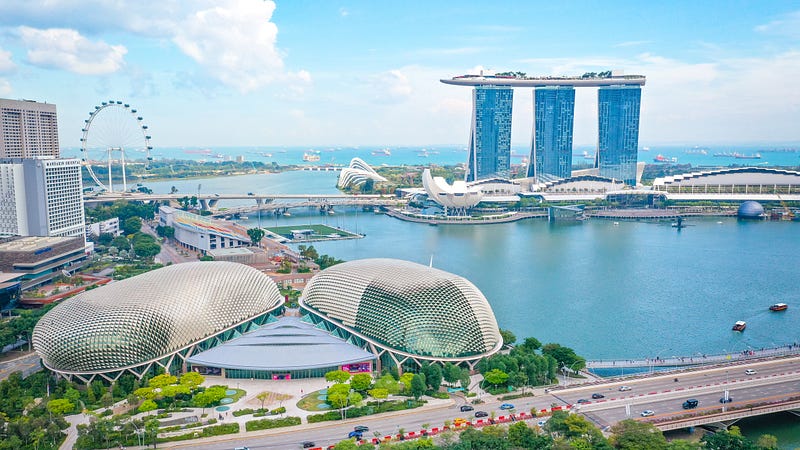
Photo by Meriç Dağlı on Unsplash


No Fees on USDC

The move was announced by way of a blog post published to the company’s website on Tuesday. The expansion entails the introduction of fee-less purchases of the USDC stablecoin for users who buy it with the Singaporean dollar (SGD). Furthermore, it is enabling Singaporean customers to earn rewards on the USDC that they hold on the platform. USDC trading pairs are being added that will allow users to trade USDC directly with over two hundred digital assets.


Taking staking overseas

Additionally, Coinbase Global is rolling out staking to the Singaporean market. Users will be empowered with the ability to stake the following digital assets: ETH, SOL, ADA, ATOM, and XTZ.

It’s interesting that Coinbase feels enabled in rolling out a digital asset staking service in this overseas market. In March of this year, the company received a Wells Notice — a formal notice informing the recipient that there are firm plans to bring enforcement actions against it — from the Securities and Exchange Commission (SEC) in the United States. The notice was sent in relation to digital assets covered under Coinbase’s staking product offering, Coinbase Earn.

In highlighting the issue, the company bemoaned the fact that the SEC had gone down the route of issuing a Wells Notice without it expressing a single specific concern about any specific digital asset offered by the platform in advance of taking the action.


Global strategy

Coinbase Founder and CEO Brian Armstrong has been outspoken in criticizing the regulatory approach to crypto in the United States. He expressed that at the time of having received the Wells Notice earlier this year, and again last week, when he and key Coinbase executives visited Abu Dhabi and Dubai in the United Arab Emirates.

On the day of SEC Chair Gary Gensler’s appearance before the House Financial Services Committee on Capitol Hill in Washington, D.C. a few weeks ago, Armstrong signaled that unless there was a more accommodating regulatory approach taken to crypto in the US, Coinbase would increasingly be looking to expand operations overseas.

A short time later, it emerged that the company had obtained a license to trade in Bermuda. At last week’s Dubai Fintech Summit, Armstrong applauded the regulatory approach taken by the UAE and indicated that the company is interested in opening a base in Abu Dhabi.


Positive survey results

Against this background, it’s not surprising to hear that Coinbase has expanded its service offering in Singapore, another aspiring global hub for crypto business. As part of reviewing and updating its business offering in the city state, Coinbase carried out a survey of prospective customers in Singapore. It found that 25% of Singaporeans consider crypto as the future of finance, on a par with findings in the US, and higher than the 17% reported in the UK.

Among its other findings, security concerns and price volatility of digital assets are still a barrier to entry for many. Of those who are already crypto-native, they tend to trade higher trade amounts, and with greater frequency, if from higher income backgrounds.
More to Read
View All
Policy & Regulation·

Nov 08, 2024

Japan to fine-tune crypto regulations to protect investors

Japan's Financial Services Agency (FSA) is proposing new legislation in an effort to prevent the assets of Japanese investors held on crypto exchanges from being transferred overseas. According to local news outlet Jiji Press, the Japanese regulator recently put forward the idea of drafting such a bill. It’s thought that the move suggests that the Japanese regulators have learned from the collapses of cryptocurrency exchanges Mt. Gox and FTX. Photo by Jaison Lin on UnsplashLearning from past failuresWhile Japan already had a higher standard of regulation in place prior to the FTX collapse, likely as a consequence of the authorities having experienced the downfall of Mt. Gox in February 2014, there is still room for improvement.  While funds had been ring-fenced for FTX Japan users, those who accessed services advertised in Japan through the FTX app were deemed to have been accessing a service which fell under an international jurisdiction, denying them the same protections otherwise offered to FTX Japan platform users as a consequence of the regulations that had been put in place. Incorporating a holding orderJapanese media outlet Nikkei described this latest move by the Japanese FSA as follows: “The Financial Services Agency is moving towards creating a new ‘holding order’ in the Payment Services Act, which regulates cryptocurrency exchanges, that will order them not to take domestic assets entrusted to them by customers overseas.” Consequently, the regulator is looking to add this as the latest proposed amendment to the Payment Services Act. Back in September it emerged that amendments to that existing legislation were being looked at with a view towards making it easier for businesses to incorporate digital assets into their service offerings. The regulator has also been mulling over the reclassification of crypto as a financial instrument by amending the Payment Services Act accordingly. Additionally, a more generous tax policy is being proposed. Currently, the Japanese authorities impose a tax rate of up to 55% on cryptocurrency-related revenues. Corporate holders of digital assets have to apply a 30% tax rate, irrespective of income or profits. With that, a 20% tax rate is being considered. The matter became a political issue prior to the East Asian nation’s recent elections, with the leader of the Democratic Party for the People (DPP) backing the application of a 20% crypto tax rate. The application of a holding order has applied previously to companies that have been registered under the Financial Instruments and Exchange Act. This proposed amendment would see it applied to virtual asset trading platforms as part of the Payment Services Act. Guarding against bankruptcy lossesIf applied, the amendment would prevent loss of Japanese investor funds in circumstances where a crypto exchange platform goes into bankruptcy. Legal precedent set in the FTX bankruptcy in the United States means that if a user’s funds go into a non-individually segregated hot wallet belonging to an exchange, any property rights, even if explicitly outlined in the terms of service, are lost.  A company can make a case to go into bankruptcy in any international jurisdiction, which means that this precedent has potential implications for all market participants. The proposed amendment from the Japanese FSA would serve to protect investors from such an eventuality.

news
Policy & Regulation·

Aug 31, 2023

Report: Vietnamese Crypto Investors Rely Heavily on Referrals

Report: Vietnamese Crypto Investors Rely Heavily on ReferralsWhile Vietnam has been leading the way in terms of cryptocurrency adoption among ordinary people, the decision-making process of Vietnamese crypto holders also sets them apart, according to a new report.The report, a collaboration between Vietnamese venture capital firms Kyros Ventures and Coin68, in association with Hong Kong-based Web3 firm Animoca Brands, reveals a striking trend. 76% of Vietnamese crypto holders base their investment choices on recommendations from friends and acquaintances.Photo by Silver Ringvee on UnsplashThe importance of referralsReleased on Wednesday, the report relied upon a survey involving 3,300 participants. A staggering 75.5% of respondents admitted that their crypto investment decisions were significantly “influenced by recommendations or referrals.” This figure stands at 2.5 times the equivalent percentage reported in the United States.Aside from word of mouth, Vietnamese crypto investors rely heavily on self-study, community groups, and media news as primary sources of information relative to crypto. Nearly 50% of survey participants indicated their reliance on these methods for staying informed about the crypto market.Market sentimentThe “Vietnam Cryptocurrency Market Report” for the first half of 2023 also sheds light on the sentiments of the crypto community. It indicates that 70% of survey participants believed that the bear market has already concluded or is approaching its end.Notwithstanding that, another data point could be interpreted such that market participants are still exercising an abundance of caution. Around 60% of respondents confirmed that they hold stablecoins as a significant constituent of their portfolios. Stablecoins are widely used by traders when exercising risk-off positioning.Interestingly, another finding of the report is the fact that an overwhelming 75% of respondents expressed a desire for increased regulatory intervention within the crypto sector. It’s unlikely that this is coincidental, given the number of high-profile crypto platform failures that took place in 2022.Vietnam leading adoptionChainalysis data confirms Vietnam’s dominant position globally in terms of crypto adoption and its impressive second-place ranking in decentralized finance (DeFi) adoption. Remarkably, more than 19% of adults in Vietnam own digital assets while Vietnam ranks among the top five countries when it comes to trading volume on global crypto platform Binance.However, this level of adoption stands in contrast with the limited educational infrastructure supporting it. Only nine educational institutions in the country offer blockchain courses.The survey also probed into user behavior within various crypto domains. The findings show a significant engagement in DeFi activities, with nearly 90% of respondents participating. By the end of 2022, there were in excess of 200 active blockchain projects in operation within Vietnam.GameFi, non-fungible tokens (NFTs), centralized finance (CeFi), and SocialFi are also popular among the Vietnamese crypto community, with engagement rates of between 55% and 91%. The research also found that users maintain a balanced preference between centralized and decentralized exchanges.The report concludes by highlighting the rapidly evolving local tech landscape and its synchronization with global trends. Largely, the report points to a positive sentiment in Vietnam relative to the future of cryptocurrency and Web3 innovation in the country.

news
Markets·

Feb 03, 2024

Crypto enthusiasm prevails in China despite crypto trading prohibition

In the face of a crypto trading ban imposed in 2021, the cryptocurrency market in China continues to thrive, defying the odds, according to a recent report from Kyros Ventures. Regional survey and reportThe Vietnam-based blockchain-focused startup incubator and venture capital firm has presented its report findings, shedding light on the unique dynamics of the Chinese crypto landscape compared to neighboring countries such as South Korea, Vietnam, Taiwan and Thailand. The survey was conducted in December in collaboration with 10 media agencies across the region, involving over 5,000 participants to gauge their sentiments and investment patterns.Photo by Road Trip with Raj on UnsplashGreater crypto interestMore than 70% of respondents revealed that cryptocurrencies accounted for over half of their asset portfolios. Among survey respondents in China, 88.9% reported heavy investments in cryptocurrencies, surpassing the enthusiasm observed in Vietnam, South Korea, Taiwan and Thailand. The finding is surprising, given that cryptocurrency trading is prohibited in China, while in the other jurisdictions the same level of restrictions is not in place. China's crypto scene faces substantial regulatory hurdles, with a government ban on crypto trading implemented in 2021. Despite this, the report highlights that a majority of Chinese investors opt for centralized crypto exchanges (CEXs) for their trading activities. Arthur Hayes, the founder of crypto derivatives platform BitMEX, recently outlined that wealthy individuals in China have access to international banking, and with that, access to overseas cryptocurrency platforms through the Chinese autonomous territory of Hong Kong. An investigative report produced by the Wall Street Journal in 2023 found that leading global crypto exchange Binance continues to have a thriving business relative to its Chinese user base. The Chinese authorities appear to be aware that the crypto trading prohibition that has been applied by the government is being flouted. This is demonstrated by the fact that the government is looking to update its anti-money laundering rules for the first time in 17 years to account for the rise in cryptocurrency investment, trading and use. Higher risk appetiteNotably, 33.3% of Chinese investors indicated an allocation to stablecoins. That is indicative of a greater risk appetite in China by comparison with countries like South Korea and Vietnam where 43% and 59% of respondents had money allocated in risk-off stablecoin positions. In terms of investment by referral, Thailand and China emerged with the highest rates, reaching up to 80%. Previous research carried out by Kyros earlier in 2023 highlighted the significance of crypto investment via referrals within the Vietnamese market. Developing regional regulatory landscapeThe regulatory landscape in Asia witnessed significant developments in 2023, with Hong Kong emerging as a leading hub for crypto and Web3 innovation. The issuance of cryptocurrency exchange licenses in Hong Kong marked a pivotal moment for the industry in the region. In South Korea, new legislation aimed at protecting cryptocurrency users, enhancing transaction transparency and fostering market discipline was enacted. Meanwhile, Taiwan's Financial Supervisory Commission explored the possibility of allowing crypto exchange-traded funds, pending a thorough analysis of the product's development in global markets.  

news
Loading