Top

Coin Oasis Founder Thinks UAE Set Up For Crypto Success

Web3 & Enterprise·May 15, 2023, 12:44 AM

As the dust settles on 2023's Dubai Fintech Summit, which took place last week, one takeaway offered by the Co-Founder of blockchain ecosystem firm Crypto Oasis is that the United Arab Emirates (UAE) has set itself up for success where crypto business is concerned.

In speaking with crypto publication CoinTelegraph on the fringes of the Dubai Fintech Summit, Coin Oasis Co-Founder and Managing Partner Saqr Ereiqat suggested that the regulatory infrastructure that the UAE has put in place provides an ideal foundation upon which crypto companies can develop and prosper.
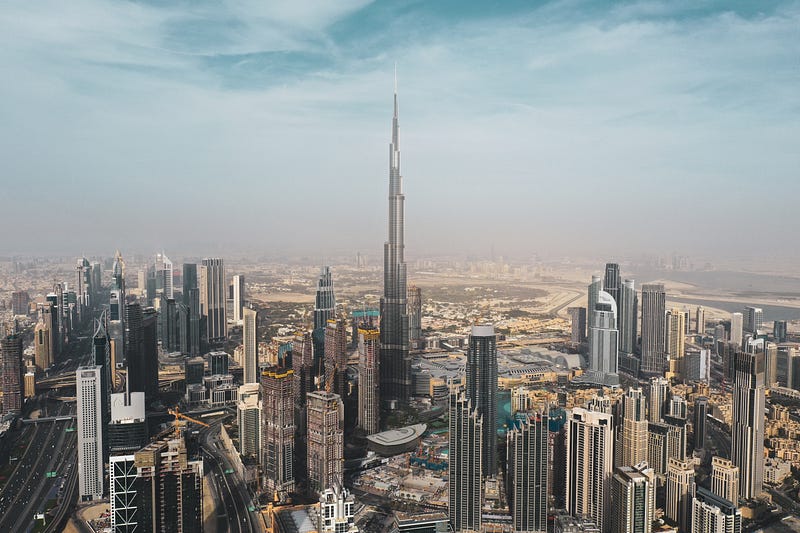
Photo by Mo Ismail on Pexels


Regulatory infrastructure

Ereiqat pointed to some key fundamentals that crypto entrepreneurs and start-up founders should look at when deciding on the location that will best meet their needs and help to optimize their route to market and ultimate success. This includes the regulatory infrastructure.

The UAE authorities and regulators at a national level, together with their colleagues within the regulatory agencies in the Emirates of Dubai and Abu Dhabi, have been doing some heavy lifting in this regard over recent months.

They’ve all been working on establishing a workable regulatory framework, and as part of that, a licensing process. In the case of Dubai, its Virtual Assets Regulatory Authority (VARA) has started to issue preliminary or Minimum Viable Product (MVP) license approvals that enable crypto startups to get started, while providing them with a pathway towards obtaining Full Market Product (FMP) licensing at a later stage.


Talent pool

The other key requirements that Ereiqat set out were digital infrastructure alongside an ability to attract and provide a pool of talent relative to the crypto assets space. In respect of these key considerations, Ereiqat believes that the UAE hits the target in each case.

“The UAE’s regulatory framework is more streamlined and business-friendly compared to the complex and fragmented regulatory environment in the US,” he told the crypto media firm.

To enhance these fundamentals, Ereiqat also alluded to a depth of capital that could potentially find its way into UAE-based crypto businesses, easing these start-ups’ efforts in executing on funding rounds as they look to achieve growth.

Ereiqat maintains that the interest in the region is already evident, citing a data-point that suggests there are 1,800 Web3-centric businesses already operating in the region, with more than 8,000 people working for those start-up businesses. Speaking to that reality further, he said:

“The Dubai FinTech Summit was a significant event that brought together stakeholders from the fintech industry […] The presence of crypto and Web3 leaders and projects at the event is an important indicator of the growing interest and adoption of these technologies in the region.”

This enthusiasm and belief in the existence of the right Web3 business environment in the UAE was echoed at that event by both Coinbase Founder and CEO Brian Armstrong and Ripple Founder and CEO Brad Garlinghouse. Both industry figures featured as keynote speakers at the event. Armstrong alluded to the potential of Coinbase establishing a base in Abu Dhabi while Garlinghouse announced the opening of a Ripple office in Dubai.


More to Read
View All
Policy & Regulation·

Jun 19, 2023

Indonesia Embraces XRP, ADA as Tradable Crypto Assets

Indonesia Embraces XRP, ADA as Tradable Crypto AssetsIn a significant move towards cryptocurrency acceptance, the Indonesian government has taken a momentous step by including a range of digital assets, including XRP and ADA, in a recently published regulatory document.Photo by Nick Agus Arya on Unsplash501 digital assetsThe document, published earlier this month, comprises an extensive list of 501 cryptocurrencies that are eligible for trading within the country. Unsurprisingly, BTC and ETH feature on the list. Other notable cryptocurrencies that have been listed include SOL, LTC, DOT, SAND, and UNI. This development is seen as a positive stride towards wider crypto adoption and holds the potential for broader use of all of these assets. In the case of XRP, it provides it with greater potential to become a viable means of payment within the region in the future, even though current regulation within Indonesia prohibits payments for goods and services in anything other than the rupiah.Defining tradable assetsThe regulatory document, officially titled “Supervisory Body Regulation Commodity Futures Trading Number 4 of 2023,” signifies an amendment to the Trade Controlling Agency Regulations Commodity Futures Number 11 of 2022. Its main objective is to identify the assets that can be traded in the physical market of crypto assets within Indonesia.Colin Wu, a prominent Chinese reporter, shared this significant development on Twitter, sparking interest and discussions within the crypto community. The news has been met with a mix of optimism and caution from Indonesian individuals. One Indonesian YouTuber expressed enthusiasm for the country’s XRP-friendly stance and voiced hope for XRP to eventually attain legal tender status. However, others, like Twitter user Pondok Indah, urged the government to focus on regulatory oversight and taxation rather than direct involvement in the crypto business.This development takes place in the broader context of Indonesia’s evolving crypto landscape. According to a 2022 research report titled “The 2022 Global Crypto Adoption Index: Emerging Markets Lead in Grassroots Adoption ‘’ by Chainalysis, Indonesia ranked at the top among the 20 countries analyzed in terms of peer-to-peer (P2P) exchange trade volume. The country has demonstrated its active participation in the crypto market, with Indodax, the largest Indonesian exchange, adding support for FLOKI, an up-and-coming cryptocurrency, back in April.That said, as we’ve seen in many other jurisdictions, the development of regulation and policy relative to digital assets has not been without its hiccups. Last month, the governor of Bali warned the foreign tourists that flock to the Indonesian island that there would be consequences for those that flouted Indonesian law and used crypto as a form of payment for goods and services.Indonesia’s recognition of the potential benefits of digital assets demonstrates a path forward for other nations to follow. Providing regulatory clarity with regard to digital assets bolsters investor confidence but also opens doors for innovation and financial inclusion. In taking this approach, the Southeast Asian country is setting the stage through which digital assets can contribute to economic growth and technological advancement.

news
Web3 & Enterprise·

May 20, 2024

Param Labs Secures $7M investment to bolster Web3 gaming infrastructure

Param Labs, a modular gaming ecosystem, has announced the successful completion of a $7 million investment round, with Animoca Brands, a prominent crypto venture capital firm, leading the charge.Photo by Precondo CA on UnsplashOversubscribed funding roundJoining Hong Kong-headquartered Animoca Brands in this oversubscribed round were Delphi Ventures, Cypher Capital, P2 Ventures (formerly Polygon Ventures), Mechanism Capital, Merit Circle, TRGC Capital, Double Peak Group and MH Ventures. Anthony Anderson, CEO of Param Labs and Kiraverse, highlighted the significance of modular gaming ecosystems like Param in laying the groundwork for the next era of Web3 games. In an exchange with Cointelegraph, Anderson stated: “Unlike most Web3 studios that focus on developing single game titles, modular ecosystems offer a variety of products and components. This allows developers to build their own games from these modules and provides essential tools for other developers to utilize and integrate into their projects.” The timing of this funding round coincides with significant growth milestones for the Param Gaming Platform, which recently surpassed 300,000 daily active users. Additionally, the platform's X page boasts over 2.5 million followers, underscoring its growing popularity. Strategic investments from luminaries such as Yat Siu, co-founder of Animoca Labs, and Banks, founder of Face Clan, further underscore the potential of Param Labs, which is based in the United Arab Emirates (UAE), in realizing the vision of an open metaverse. In a statement published to the Animoca Brands website, Yat Siu expressed enthusiasm about the collaboration, stating: "This collaboration aligns with our shared vision to redefine the gaming landscape, ensuring that gamers are the true owners of their digital assets." Focusing on infrastructureThis injection of capital is poised to address a critical deficiency in the realm of Web3 gaming: the lack of foundational infrastructure. Addressing precisely that challenge which is hindering mainstream adoption, Anderson emphasized the pivotal role of infrastructure: “Focusing on infrastructure is crucial, as it not only addresses the challenges in the games we’re developing but also has the potential to be applied to hundreds, if not thousands, of other experiences. This will significantly contribute to the adoption of blockchain gaming.” The UAE-based company is currently working on producing a number of products. These include its Game Launcher and Pixel to Poly, an offering that converts 2D images into 3D assets within games. While those are in the product pipeline, it has already launched Kiraverse, an online multiplayer game where the gameplay incorporates players competing to earn digital assets.  Param Labs has also sought to broaden the technical expertise available to it, with the hiring of Steve Young, a former head of consumer products at renowned American video gaming firm Activision Blizzard. Young has come in as a strategic advisor at Param. The company plans to launch its native token, PARAM, shortly to enable governance of the ecosystem that it is putting together.

news
Markets·

Jul 11, 2023

China Performs Well as Global Crypto Industry Employment Surpasses 190,000

China Performs Well as Global Crypto Industry Employment Surpasses 190,000According to new data, the cryptocurrency industry has seen a remarkable surge in employment, with nearly 190,000 individuals currently working in the field as of July 2023, with China fairing particularly well despite its hostile approach to crypto.This figure represents a significant increase compared to pre-2020 employment statistics, marking the onset of the crypto frenzy. The data was produced via a report published by K33 Research, a Norway-based digital assets research and data analysis firm.Photo by Valentin Farkasch on UnsplashIndia leads in AsiaThe data highlights an over-representation of crypto workers in the Western world, with more than 50% based in North America and Europe. Within this figure, the United States alone accounts for 29% of the crypto workforce. In Asia, India emerged as the leading employer in the crypto industry, employing 20% of the regional workforce, primarily in developer-related roles. Surprisingly, despite China’s historically hostile stance on the crypto industry, it stands as the second-largest employer in Asia, employing 15% of the regional workforce.It’s also interesting that China has been found to account for such a sizable chunk of Web3-related employment when recent feedback from recruiters in Hong Kong suggest that the crypto licensing program rolled out in the autonomous Chinese territory has not yet resulted in a surge in employment. Recruiters maintain though, that this employment boost will come in due course.Most employment via exchangesDuring 2021, a period characterized by high prices and soaring company valuations, the crypto industry employed approximately 211,000 individuals, highlighting the industry’s rapid growth. Researchers from K33 found that around one-third of the crypto workforce is engaged in exchanges or brokerages, emphasizing the crucial role these entities play. Additionally, 26% of employees work for companies offering a diverse range of financial services related to cryptocurrencies.Interestingly, the study revealed that NFTs occupy only a small portion of the workforce, with only 6% of individuals involved in this field. On the other hand, 21% contribute their skills to blockchain protocols, analytics, and mining operations. The remaining 13% hold cryptocurrency-related jobs that do not neatly fit into any specific category. The researchers employed various methods, including LinkedIn searches, AI-assisted web searches, and manual mappings, to gather this data.Remote workingA notable trend in the crypto industry is the prevalence of remote work arrangements. Major crypto companies have opted for globally distributed workforces, capitalizing on jurisdictions with favorable regulations and lower tax rates. By establishing headquarters in these locations, but employing individuals remotely or establishing local offices worldwide, companies can reduce costs and eliminate logistical barriers.The significant growth in crypto industry employment reflects the expanding and maturing nature of the sector. As cryptocurrencies and blockchain technology gain wider acceptance, professionals from various backgrounds are entering the industry, contributing their skills to different sectors within the crypto ecosystem. The prevalence of remote work arrangements and the global nature of the industry allow talent to be sourced from around the world, transcending geographical boundaries.This upward trajectory in employment is likely to continue as the crypto industry evolves and continues to shape the future of finance and technology.

news
Loading