Top

Indonesia Embraces XRP, ADA as Tradable Crypto Assets

Policy & Regulation·June 19, 2023, 11:44 PM

In a significant move towards cryptocurrency acceptance, the Indonesian government has taken a momentous step by including a range of digital assets, including XRP and ADA, in a recently published regulatory document.
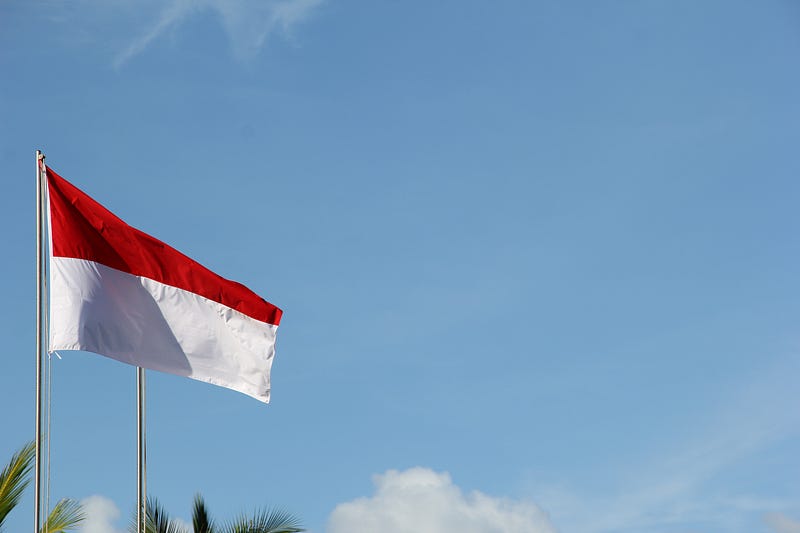
Photo by Nick Agus Arya on Unsplash


501 digital assets

The document, published earlier this month, comprises an extensive list of 501 cryptocurrencies that are eligible for trading within the country. Unsurprisingly, BTC and ETH feature on the list. Other notable cryptocurrencies that have been listed include SOL, LTC, DOT, SAND, and UNI. This development is seen as a positive stride towards wider crypto adoption and holds the potential for broader use of all of these assets. In the case of XRP, it provides it with greater potential to become a viable means of payment within the region in the future, even though current regulation within Indonesia prohibits payments for goods and services in anything other than the rupiah.


Defining tradable assets

The regulatory document, officially titled “Supervisory Body Regulation Commodity Futures Trading Number 4 of 2023,” signifies an amendment to the Trade Controlling Agency Regulations Commodity Futures Number 11 of 2022. Its main objective is to identify the assets that can be traded in the physical market of crypto assets within Indonesia.

Colin Wu, a prominent Chinese reporter, shared this significant development on Twitter, sparking interest and discussions within the crypto community. The news has been met with a mix of optimism and caution from Indonesian individuals. One Indonesian YouTuber expressed enthusiasm for the country’s XRP-friendly stance and voiced hope for XRP to eventually attain legal tender status. However, others, like Twitter user Pondok Indah, urged the government to focus on regulatory oversight and taxation rather than direct involvement in the crypto business.

This development takes place in the broader context of Indonesia’s evolving crypto landscape. According to a 2022 research report titled “The 2022 Global Crypto Adoption Index: Emerging Markets Lead in Grassroots Adoption ‘’ by Chainalysis, Indonesia ranked at the top among the 20 countries analyzed in terms of peer-to-peer (P2P) exchange trade volume. The country has demonstrated its active participation in the crypto market, with Indodax, the largest Indonesian exchange, adding support for FLOKI, an up-and-coming cryptocurrency, back in April.

That said, as we’ve seen in many other jurisdictions, the development of regulation and policy relative to digital assets has not been without its hiccups. Last month, the governor of Bali warned the foreign tourists that flock to the Indonesian island that there would be consequences for those that flouted Indonesian law and used crypto as a form of payment for goods and services.

Indonesia’s recognition of the potential benefits of digital assets demonstrates a path forward for other nations to follow. Providing regulatory clarity with regard to digital assets bolsters investor confidence but also opens doors for innovation and financial inclusion. In taking this approach, the Southeast Asian country is setting the stage through which digital assets can contribute to economic growth and technological advancement.


More to Read
View All
Web3 & Enterprise·

Aug 09, 2023

Ret Games Teams Up with Binance to Support Blockchain Acceleration Program

Ret Games Teams Up with Binance to Support Blockchain Acceleration ProgramKorean Web3 gaming studio Ret Games said Tuesday it has signed a memorandum of understanding (MOU) with Binance, the world’s largest crypto exchange, to support a blockchain company acceleration program spearheaded by Incheon Technopark’s Blockchain Center.Bolstering blockchain startupsThe two firms will team up as a single operator of the accelerator program that will supply Incheon-based startups and small companies with the resources required to grow their blockchain businesses and establish Incheon, a city next to the nation’s capital of Seoul, as a blockchain hub. They will also be joined by a third member of the operator — on-chain risk rating solution developer Undefined Labs.Photo by Shubham’s Web3 on Unsplash“We plan to work with Binance to operate an efficient and innovative acceleration program for Incheon-based startups, fostering their growth and development,” said Kim Sung-yoon, CEO of Ret Games.Binance will provide global networking and business consultations in areas such as business modeling and blockchain technology development, while Ret Games will contribute its blockchain infrastructure and development. Additionally, Undefined Labs will provide comprehensive insights into the blockchain industry, covering technology, market trends, and use cases.Five companies for the acceleration program were chosen by Incheon Technopark — AO2, Bemuse, enterBlock, Swan Electronics, and Asia Auto Pacific. They will begin receiving support worth 20 million KRW (approximately $15,000) starting this month.The operator will be required to monitor the progress of these companies during the course of the program, which will end on November 30.Second operatorThere will also be another operator for the program besides the consortium, which solely consists of venture capital firm Nanuhm Angels. It will enable participants to test their business models by granting them access to Rotonda’s launchpad. Rotonda is a subsidiary of the Korean crypto exchange Bithumb and operates the Web3 Burrito Wallet.

news
Web3 & Enterprise·

Aug 07, 2023

NEOPIN Strengthens Japanese Market Strategy for Its Global Expansion

NEOPIN Strengthens Japanese Market Strategy for Its Global ExpansionNEOPIN, the global CeDeFi platform of South Korean investment holding company Neowiz Holdings, announced the strengthening of its strategy to enter the Japanese market as part of its global expansion plan.Photo by Aditya Anjagi on UnsplashThree key initiativesTo achieve this goal, NEOPIN has devised three key initiatives. Firstly, it will make investments in Japanese partners and provide support for their entry into other markets such as Korea, the Middle East, and Africa. Secondly, NEOPIN aims to facilitate the entry of its existing partners into Japan. Lastly, the Korean platform plans to collaborate closely with the Finschia Foundation and its members to effectively drive its expansion efforts in Japan.Web3 landscape in JapanSince the Mt. Gox incident in 2014, wherein the major Tokyo-based cryptocurrency exchange went bankrupt due to hacking attacks, Japan has responded by implementing stricter regulations. However, in recent times, the Japanese government has displayed a more positive stance towards Web3 technology, aiming to attain dominance in this sector. Illustrating this commitment, the Web3 project team, operating under the ruling Liberal Democratic Party’s (LDP) Working Group for Digital Society Promotion, released the Web3 White Paper in April. The document underscores Japan’s determination to lead the global market by fostering a business-friendly environment for Web3 innovation.Moreover, Prime Minister Fumio Kishida recently delivered a keynote speech at Japan’s annual Web3 conference, WebX, reaffirming the government’s dedication to establishing a Web3-friendly ecosystem. These initiatives signal Japan’s potential to contribute to the growth of the cryptocurrency and decentralized finance (DeFi) industry.Adaptation to regulationsNEOPIN’s operator Neowiz Partners, formerly known as NEOPLY, became part of the Innovation Programme of the Abu Dhabi Investment Office (ADIO) in the United Arab Emirates (UAE), with an aim to become the world’s first regulated DeFi platform. It is also working with the Abu Dhabi Global Market (ADGM) to develop a DeFi regulatory framework for the Gulf nation. In a similar vein, NEOPIN strives to respond quickly to the changing regulatory landscape in Japan to ensure the Korean CeDeFi protocol firmly establishes its presence in the Japanese market.In addition to providing direct and indirect service offerings in Japan, NEOPIN will also invest in and partner with local Web3 projects. One significant step taken by NEOPIN was its participation in IVS Crypto 2023, a high-profile Web3 startup event held in Kyoto in June. At this event, NEOPIN engaged with various Japanese businesses, initiating important connections. Since then, the Korean platform has been making progress in advancing communication and collaborations with Japanese enterprises.NEOPIN as blockchain validatorCollaboration with the Finschia Foundation will also be strengthened to achieve success in the Japanese market. In July, the blockchain mainnet Finschia launched its governance consortium and revealed its members. Within just four hours of the consortium’s launch, NEOPIN, as a governance member, received more than 1 million delegated votes, maintaining its position at the top spot in terms of voting power ever since. The Finschia mainnet was established by Line Tech Plus, a blockchain subsidiary of Tokyo-based messaging app giant Line Corporation.Serving as validators on various blockchains, including Ethereum, Tron, Cardano, and Cosmos, since 2017, NEOPIN has acquired blockchain and technical expertise. Last month, NEOPIN launched liquid staking products for ETH and KLAY, making it Korea’s first blockchain project to introduce an ETH liquid staking product. Liquid staking is a mechanism that allows users to deposit their cryptocurrencies into a staking pool, where they receive liquidity provider tokens in exchange. By holding these tokens, users can further redeposit them to earn additional yield.In light of this development, NEOPIN CEO Kim Yong-ki emphasized the CeDeFi protocol’s global expansion strategy, establishing its bases in the UAE, Japan, and Indonesia. These locations will serve as hubs for NEOPIN’s expansion efforts in the Middle East and Africa, Northeast Asia, and Southeast Asia. Kim added that NEOPIN will leverage its physical and human resources to achieve notable outcomes in the Japanese market.

news
Web3 & Enterprise·

Sep 30, 2023

Bitfinex Forges Strategic Partnership with Zodia Custody

Bitfinex Forges Strategic Partnership with Zodia CustodyCryptocurrency exchange Bitfinex has formed a strategic partnership with digital assets custodian Zodia Custody to fortify the security of its institutional clients’ assets.The deal struck with Zodia Custody, a subsidiary of the UK multinational banking titan Standard Chartered, aligns with a growing trend within the digital assets sector, one that emphasizes separating asset custody from trading activities. Such a division will result in heightened security measures while better meeting regulatory compliance.Photo by Ketut Subiyanto on PexelsSecuring digital assetsThis collaboration provides an opportunity for institutional clients who maintain accounts with both Bitfinex and Zodia Custody. They can now seamlessly replicate their custodial assets on Bitfinex’s cutting-edge trading platform, all while basking in the security offered by Zodia’s off-exchange settlement solution, aptly named Interchange.With this innovation, the need for actual asset transfers becomes obsolete as the settlement process unfolds periodically on the blockchain. This approach not only ensures efficiency but also provides greater security when interacting with the platform.Industry trendBitfinex’s move towards segregating trading and custodial functions aligns with best practices in the crypto industry but also signifies a wider trend observed among cryptocurrency exchanges as they increasingly adopt a more conventional approach akin to traditional financial institutions.Paolo Ardoino, the Chief Technology Officer (CTO) of Bitfinex, shared the exchange’s perspective, stating:“We are committed to shaping the future of digital market infrastructure and enabling institutional customers to thrive in this space. Working with Zodia Custody is a significant part of that strategy, and together we can look to enable even more institutions to enter or further participate in digital assets.”This partnership serves as a testament to Bitfinex’s continuous efforts to collaborate with reputable custodians, building upon past successful alliances with firms like Koine in 2020 and Digivault in 2022.The significance of segregating asset custody from trading operations has taken on greater importance, primarily in the aftermath of the collapse of FTX, where management gambled with customer’s assets.Zodia’s market expansionZodia Custody, with the backing of Standard Chartered Bank, has recently expanded its footprint into Singapore, offering digital asset custody services to financial institutions in the burgeoning Asian market.Not content with that, in May it launched its crypto custodian service in Dubai. The following month the fledgling firm announced a partnership with blockchain infrastructure firm Blockdaemon relative to crypto staking for institutional clients. There’s been no let up in the firm’s roll-out of services as earlier this month it commenced a yield offering on stablecoins in partnership with Singapore-based DeFi platform OpenEden.Bitfinex’s history includes one of the most infamous hacks in the cryptocurrency sphere, with the pilfering of 120,000 BTC, now valued at over $3 billion. Nevertheless, the exchange has undergone a transformative journey and presently boasts an extensive array of cryptocurrencies and trading pairs.As the regulatory landscape continues to evolve, the practice of separating custody from trading is poised to become a standard procedure, further enhancing the legitimacy and security of the cryptocurrency market.

news
Loading