Top

KOMSCO and KEPCO Cooperate on Blockchain Technology

Policy & Regulation·April 12, 2023, 3:13 AM

Korea Minting and Security Printing Corporation (KOMSCO) and Korea Electric Power Corporation (KEPCO) have recently agreed to cooperate on blockchain technology, as well as other information and communication technology, according to a press release by KOMSCO.

©Pexels/Savvas Stavrinos


Connect and develop model

Last Thursday, KOMSCO held a seminar on tech cooperation with KEPCO in Daejeon, home to many Korean government agencies. At the seminar, both sides decided to embrace a connect and develop model, which is more advantageous than closed research and development models in terms of agility and cost-effectiveness.


Digital transformation

The two agencies possess a wealth of advanced technologies: KOMSCO excels in NFT authentication and blockchain-based payments systems, while KEPCO holds a competitive edge in blockchain platforms. Both parties will explore various ways to collaborate in these areas to promote Korea’s digital transformation.


More stable electricity grid

Furthermore, KOMSCO is continuously expanding infrastructure for information technology, and deploying its security solutions to KEPCO is expected to bolster the stability of the country’s electricity grid.

More to Read
View All
Web3 & Enterprise·

Jul 11, 2025

Chinese FTX creditors push back against potential payout exclusion

A Chinese creditor of failed crypto exchange FTX has filed an objection on his own behalf and that of 300 others, with a U.S. bankruptcy court against a motion lodged with a view towards excluding payouts to creditors resident in China, Russia and 47 other foreign jurisdictions.Photo by Mariia Shalabaieva on UnsplashPotential distribution forfeitureThe FTX Recovery Trust, an entity formed in January to oversee the FTX bankruptcy estate following the adoption of a plan of reorganization, filed a motion last week seeking the approval of the Delaware Bankruptcy Court in the United States to adhere to new parameters related to the claims of creditors residing in restricted overseas jurisdictions. Besides China and Russia, the list of restricted jurisdictions also includes many within the Asian region, including  Afghanistan, Iran, Iraq, Macau, Myanmar (Burma), Nepal, North Korea, Pakistan, Qatar, Bangladesh and Cambodia. The FTX estate claims that these jurisdictions have regulations and laws restricting cryptocurrency transactions. In such cases, the FTX Recovery Trust claims that it cannot break local laws.  The difficulty for creditors resident in these countries is that if it's deemed illegal to reimburse them, they won’t qualify for the next scheduled distribution from the estate. In that instance, distribution forfeiture will be triggered. Taking to X on July 7, FTXcreditor.com, an entity that has been buying up bankruptcy claims from FTX creditors over the course of the FTX bankruptcy process, highlighted the peril that creditors residing in these restricted countries may face. It stated: “Distribution forfeiture is triggered at every distribution record date. The first record date already passed, if your claim is still tied to a local KYC when the stamp drops, that tranche is potentially gone.” Short timeframe for objectionsMr. Purple, a pseudonymous distressed assets bankruptcy professional who has been advocating for FTX creditors since the collapse of the business in November 2022, concurred with this view in a subsequent post on X. He pointed out that an extremely short timeframe has been given to affected creditors to respond. The motion was filed on July 2 and objections are due by July 15. $500 million in claims are at stake which accounts for 5% of all creditor claims. Of this, 82% of these claims belong to Chinese creditors. In a series of follow-up posts, the bankruptcy professional describes several procedural issues that he believes will result in it being incredibly difficult for affected creditors to have their funds reimbursed.Mr. Purple concludes:”The incentives are designed to be extremely risk averse in finding [a legal opinion] that paying creditors is legal! [The estate’s lawyers will] take the fees and say its not legal.” In his court filing, the Chinese creditor, who is resident in Singapore, stated: “My family holds four KYC-verified accounts with aggregate claims exceeding $15 million USD.” . . . “We have fully complied with every procedural requirement under the Plan. The proposed motion now jeopardizes our right to distribution in an arbitrary and inequitable manner.” On X, he asserted that the FTX Recovery Trust’s motion “constitutes an impermissible and material modification of the Plan.” Aside from legal action, the only other potential solution for creditors residing in restricted countries is to sell their claims. However, claims buyers are pricing in greater risk with lower rates and less favorable terms.

news
Web3 & Enterprise·

Mar 14, 2024

OKX scores payment institution license in Singapore

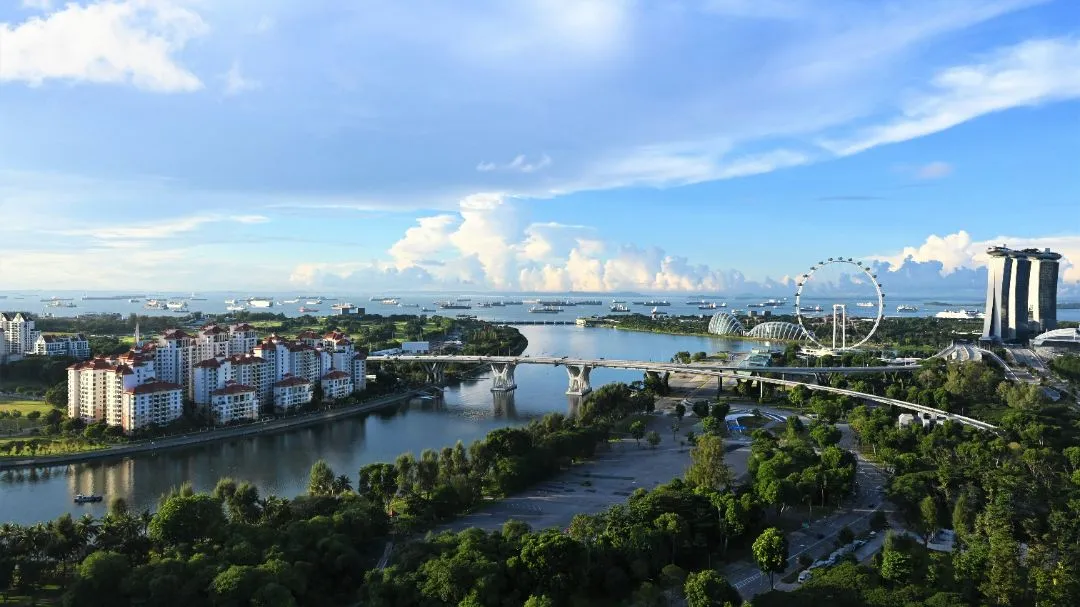
Leading cryptocurrency exchange OKX has acquired an in-principle approval from Singapore’s financial regulatory authority for a Major Payment Institution (MPI) license through its local arm, OKX SG.Photo by Mark Stoop on UnsplashEnabling broader service offeringAccording to a blog post published by the company on March 12, OKX confirmed the receipt of in-principle approval for the coveted license. The MPI license, issued by the Monetary Authority of Singapore (MAS), Singapore's primary financial regulatory body, represents an important step forward for the company. Once granted the full license, OKX will be empowered to offer digital payment token services and facilitate cross-border transfers within Singapore. A plethora of OKX executives took to social media to comment on the achievement. Hong Fang, President of OKX, expressed the company's long-standing interest in Singapore, describing it as a cornerstone of its global strategy. Fang emphasized Singapore's appeal to entrepreneurial ventures, citing its tech-savvy populace as early adopters. She praised the country's regulatory framework as "clear and thoughtful," enabling businesses like OKX to cultivate sustainable growth over the long term. With this regulatory approval, OKX intends to concentrate on bolstering its spot product offerings in the Singaporean market. Fang outlined plans to forge local banking partnerships to enhance customer experiences and expand service offerings in the future. In summarizing the company’s outlook, Fang wrote that OKX is looking to “build locally. Be compliant. Invest long-term.” OKX CEO Star Xu suggested that the firm intends to be a “long-term member of the Singapore fintech community” as a consequence of the approval. Global market expansionThe company’s CMO, Haider Rafique, pointed out that this latest license approval follows hot on the heels of further expansion in venues like Dubai, Argentina and Turkey. The in-principle license approval follows OKX's recent acquisition of a conditional license from Dubai’s cryptocurrency regulatory authority. On Jan. 16, the Virtual Assets Regulatory Authority (VARA) of Dubai granted OKX a license, enabling the exchange to provide regulated services as a virtual asset service provider within the region.On Feb. 27 the firm launched OKX TR, catering to the needs of crypto users in Turkey. In the same month, the company launched its services within the Argentinian market. MPI-licensed entities like OKX enjoy the privilege of facilitating multiple payment services, surpassing volume limitations prescribed for standard payment firms. This flexibility allows OKX to transcend the prescribed limits of three million Singapore dollars ($2.2 million) for individual payment services and a monthly cap of SG$6 million ($4.4 million) for multiple services. Joining OKX in the pursuit of regulatory compliance, BitGo, a prominent crypto custody business, also received an in-principle approval from MAS. BitGo announced on Jan. 10 that it had secured initial approval, subject to fulfilling additional requirements stipulated by the regulator. Several other notable cryptocurrency entities, including Crypto.com, Coinbase and Ripple, have already obtained complete payment institution licenses in Singapore. OKX's attainment of in-principle approval underscores the ongoing drive among market participants towards regulatory compliance and expansion into key markets. The move should help the firm to position itself well for further market growth as the digital assets space continues to progress.

news
Policy & Regulation·

May 27, 2023

Chinese City Unveils Plan to Develop Metaverse

Chinese City Unveils Plan to Develop MetaverseThe city of Zhengzhou in China recently announced a set of policy proposals aimed at supporting the growth and development of metaverse companies in the region. These initiatives, introduced by the municipal government, include the establishment of a dedicated fund worth 10 billion yuan ($1.42 billion) to facilitate the advancement of the metaverse industry.Photo by Jéan Béller on UnsplashDraft policy proposalsAccording to the government’s draft which was published on Wednesday, metaverse companies that choose to relocate their headquarters to Zhengzhou will have the opportunity to receive a startup capital investment of up to 200 million yuan ($28.34 million). In addition, these companies will be eligible for various other benefits, such as rent subsidies, to help facilitate their operations.It’s worth noting that the policy extends beyond companies with headquarters in Zhengzhou. Any company engaged in metaverse-related use case development within the city, regardless of their headquarters location, can apply for funding. Projects certified as viable by the municipal government can receive up to 5 million yuan ($710,000) in financial support.While the specific date for fund allocation has not been disclosed yet, the municipal government of Zhengzhou has outlined its long-term vision for metaverse development in the city. It anticipates that metaverse-related industries in Zhengzhou will generate an annual revenue exceeding 200 billion yuan ($28.34 billion) by the end of 2025.Stimulating metaverse developmentThese policies apply to local enterprises operating in two distinct areas. Firstly, research endeavors focused on metaverse-related technologies, such as virtual reality, augmented reality, and brain-computer interfaces, are eligible for support. Secondly, the utilization of metaverse technologies in real-world industries, including education, entertainment, and commerce, can also qualify for funding.In addition to the dedicated fund, the government of Zhengzhou plans to collaborate with other governmental agencies and investment firms to secure an additional 50 billion yuan ($7.08 billion) in funding. This funding will be allocated to support various metaverse-related development projects. Furthermore, the city intends to provide cash rewards to metaverse companies upon their listing on China’s primary stock exchanges, aiming to incentivize growth and market participation.The comprehensive plan encompasses crucial technologies in the metaverse industry, such as blockchain, next-gen computer rendering, human-computer interfaces, and artificial intelligence. Furthermore, it strives to establish a digital asset market leveraging non-fungible token (NFT) technology.Broader metaverse strategyZhengzhou joins a growing list of Chinese cities and provinces that aspire to become leaders in the country’s metaverse development. The metropolis of Shanghai, located in the southeastern region, is actively pursuing its own metaverse aspirations. It predicts that its metaverse industry will achieve annual revenues of 350 billion yuan ($49.6 billion) by the year 2025.Elsewhere in China, there has been plenty of activity relative to Metaverse development. Zhengzhou belongs within Henan Province, and at a provincial level, administrators established a metaverse fund earlier this month. Around the same time-frame, Alibaba Cloud, the cloud division of the Chinese e-commerce giant, partnered with layer one blockchain project Avalanche with a view towards creating a metaverse launchpad.As the metaverse continues to evolve and gain prominence worldwide, it will be intriguing to observe the progress and impact of the policies implemented by Chinese cities like Zhengzhou. The concerted efforts to foster metaverse development reflect a broader global trend of recognizing the significance of virtual environments and their potential to reshape various aspects of society.

news
Loading