Top

Buysell Standards and AGST collaborate to expand security token projects in Southeast Asia

Web3 & Enterprise·December 22, 2023, 4:02 AM

Buysell Standards, a South Korean company operating fractional investment platform Piece, is accelerating its expansion into the Southeast Asian market through a recent business collaboration.

A report from Korean news outlet Financial News indicates that the company has signed a memorandum of understanding (MOU) with AGST, a subsidiary of blockchain-focused investor Fundiant Holdings. This collaboration aims to launch security token projects within the Association of Southeast Asian Nations (ASEAN) region.
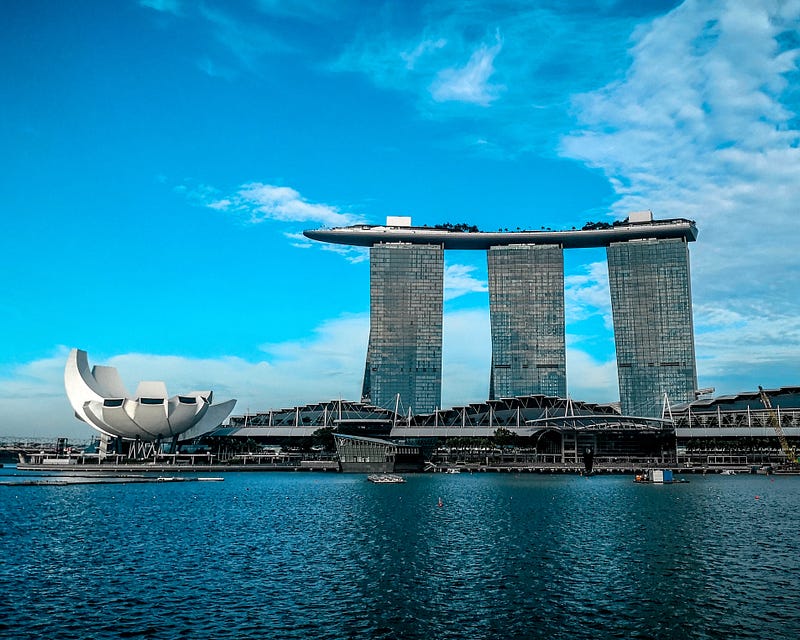
Photo by Kelvin Zyteng on Unsplash


Singapore in Q1 2024

As an asset manager in Singapore and Japan, AGST is set to play a pivotal role in the issuance and distribution of security tokens in these markets. Their strategy includes launching security token products in Singapore in the first quarter of next year. These products will be backed by assets from Buysell Standards.

The partnership between Buysell Standards and AGST is set to be multifaceted, encompassing several key areas of collaboration. Together, they will focus on developing new investment products and building the necessary infrastructure to support them. They will also focus on marketing and promotional efforts in the ASEAN region.


Anticipating regulatory exemption

Buysell Standards is among the seven companies that received approval from the South Korean Financial Services Commission to issue security tokens. The company is anticipating a regulatory exemption from the government, which would allow them to introduce fractional investment products linked to ship finance.

Buysell Standards expects that its partnership with AGST will facilitate quicker access to funding from international sources for high-quality investment products in South Korea. Meanwhile, AGST seeks to introduce a range of Korean assets to the global security token market.

Emphasizing the quick adoption of fintech by ASEAN investors and their fondness for South Korea, Shin Beom-jun, CEO of Buysell Standard, stated that the company is committed to actively promoting Korean security token products on the global investment stage.

Kim Chang-soo, Chairman of Fundiant Holdings, expressed his ambition to strengthen the Korean security token market. He observed that the market is currently in an early stage of development, leading to the undervaluation of underlying assets. He believes that introducing Korean security tokens to international markets will reciprocally aid in the expansion and maturation of the domestic market.


More to Read
View All
Web3 & Enterprise·

Oct 26, 2023

Sumitomo Trade Document Network Partnership Adds Chainlink Involvement

Sumitomo Trade Document Network Partnership Adds Chainlink InvolvementA successful proof-of-concept (PoC) venture between Vodafone and Japanese trading and investment giant Sumitomo has resulted in Vodafone’s Digital Asset Broker (DAB) platform now being integrated into the Chainlink network as a node operator.Vodafone provided details on the Chainlink Labs tie-up via a blog post published to its website on Tuesday. The primary objective of this partnership is to enhance the seamless transfer and processing of financial documents within the $32 trillion global trade ecosystem.Photo by CHUTTERSNAP on UnsplashLeveraging Chainlink’s cross-chain interoperabilityThe proof of concept leveraged Chainlink’s Cross-Chain Interoperability Protocol (CCIP), offering a solution that bridges the gaps in document management and financial transaction processing. DAB’s core function is to provide enhanced security and interoperability among Internet of Things (IoT) devices on the edge of a network.The results of this initiative have demonstrated the potential for Vodafone’s IoT devices and blockchain technology to furnish data for use in contracts and artificial intelligence (AI) applications. Furthermore, the prospect of creating a unified interface for data and token transfers is now within reach.For instance, envision a scenario where a cargo vessel detects a fire outbreak. Thanks to the collaborative efforts of DAB’s platform and CCIP, this crucial information could be autonomously relayed to smart contracts, potentially triggering an efficient marine cargo insurance process.Convoluted legacy processTrade documents have long posed a significant challenge due to their existence in both physical and digital formats, often lacking interoperability. This predicament necessitates repeated handovers and makes the exchange of such documents a convoluted process.Vodafone introduced the Digital Asset Broker in February 2022. Their initial application of DAB in the United Kingdom involved a partnership with Mastercard, where they trialed an app designed to assist electric vehicle drivers in locating and paying for the most suitable charging options.In a subsequent move, Vodafone and Sumitomo joined forces in May, culminating in the creation of a new entity in which Vodafone maintained an 80% stake. In addition to transferring DAB, Vodafone also contributed intellectual property, contracts, technology, and software to the new venture. This partnership extended further with joint investments in Safaricom Ethiopia.In August, Vodafone DAB solidified its presence in the enterprise blockchain arena by collaborating with Aventus. Their shared mission is to enhance the efficiency of supply chains within the aviation industry.Chainlink’s CCIP made a significant leap in September when it launched on Ethereum’s Arbitrum One layer 2, promising to enhance scalability. In the same month, it collaborated with the Australia and New Zealand Banking Group to test an Australian dollar stablecoin, underscoring Chainlink’s commitment to transformative developments within the blockchain space.Early blockchain interestSumitomo had expressed a desire to utilize blockchain technology going back a number of years. In 2018, the corporation’s US entity joined the Blockchain in Transport Alliance (BiTA) with a view towards using blockchain technology within its logistics business.Earlier this year, the conglomerate invested in Japanese logistics blockchain project TradeWaltz. In June, its US subsidiary was involved in the first-ever transaction of tokenized carbon credits.As Vodafone and Sumitomo continue to push the boundaries of innovation in trade document management, their partnership with Chainlink brings us one step closer to a more efficient and interconnected global trade ecosystem.

news
Web3 & Enterprise·

Jun 13, 2025

Ant Group preparing to apply for stablecoin licenses in Hong Kong & Singapore

Ant Group, a Chinese financial services conglomerate and affiliate of the Alibaba Group, has plans to acquire stablecoin licenses across Asian markets and further afield. Its Singapore-headquartered global digital payments and financial technology subsidiary, Ant International, plans to file an application for a stablecoin license in Singapore and in Hong Kong once the Chinese autonomous territory implements its stablecoin regulation later this summer.  That’s according to a report published by Bloomberg on June 12, citing unnamed sources familiar with the matter. Beyond the Asia-Pacific (APAC) region, Ant International also plans to seek a stablecoin license in Luxembourg.Photo by Ban Daisy on Unsplash2 Hong Kong stablecoin license applicationsIn a statement, Ant International stated: “We plan to apply for the fiat-referenced stablecoins (FRS) issuer's license once the process is open after the [Hong Kong] Stablecoins Ordinance takes effect on August 1.”Additionally, Bian Zhuoqun, president of Ant Digital Technologies, another Ant Group subsidiary focused on applying digital technologies, confirmed that it too will be applying for stablecoin licensing in Hong Kong.  Zhuoqun told reporters that the company has already opened dialogue with the regulator in Hong Kong, while also participating in a regulatory sandbox. While the company wasn’t a named participant within Hong Kong’s stablecoin sandbox, it had previously participated in Project Ensemble, an initiative run by the Hong Kong Monetary Authority (HKMA) aimed at establishing a tokenization ecosystem in the city. Exploring stablecoin applicationsOn June 10, Ant International and German multinational investment bank Deutsche Bank announced a strategic partnership geared towards establishing integrated cross-border payment solutions to global merchants.  The two firms stated that they would explore tokenized bank deposits while also looking into stablecoin applications for global payments. It highlighted the potential use of stablecoins within Ant companies, facilitating real-time cross-border treasury management, reserve management and on-ramp and off-ramp services. Back in November, Singapore-headquartered StraitsX, a stablecoin-based payments startup, launched a cross-border payments product in association with AliPay+, Ali International’s offshore digital payments platform. A key component of the product offering is the use of the XSGD stablecoin. Hong Kong passed its stablecoin bill last month. Last week, the city’s government outlined that the effective date for the resultant Stablecoin Ordinance has been set for Aug. 1. Under the Ordinance, only licensed institutions are authorized to offer fiat-referenced stablecoins in Hong Kong, while the issuer of such a stablecoin must be licensed in order for it to be offered to a retail investor. Last month, multinational banking and financial services group HSBC launched Hong Kong’s first blockchain-based settlement service, utilizing tokenized deposits for swift transactions. The company collaborated with Ant International, which became the first client of the service. Entering the financial mainstreamA Financial Times report published on June 12 asserted that stablecoins are entering the financial mainstream, a development that “could have profound implications for the global financial system.” Earlier this week, the South China Morning Post (SCMP) reported that Hong Kong’s stablecoin law could lead to a boom in digital assets.Daniel Tse, managing director of Hong Kong brokerage firm Futu Securities, told the SCMP: “We’re seeing a significant trend in investments related to stablecoins on our platform, which highlights the growing importance of this sector.” 

news
Policy & Regulation·

Jun 16, 2023

Hong Kong Pressing Banks to Facilitate Crypto Clients

Hong Kong Pressing Banks to Facilitate Crypto ClientsHong Kong’s banking regulator is urging banks, including HSBC and Standard Chartered, to onboard crypto exchanges as clients, despite increasing regulatory scrutiny of the industry in the United States.That’s according to a report published by the Financial Times (FT) on Wednesday. The FT cited three people who it claims are familiar with the matter, together with a letter seen by the publication as the basis for the assertion.Photo by Ansel Lee on PexelsChallenging crypto banking reticenceAt a recent meeting, the Hong Kong Monetary Authority (HKMA) questioned these UK-based lenders, together with the Bank of China, about their reluctance to accept crypto exchanges as customers, according to sources familiar with the matter. The HKMA emphasized that due diligence on potential clients should not create unnecessary burdens, particularly for those seeking opportunities in Hong Kong. While banks do not have a ban on crypto clients, concerns over potential money laundering and illegal activities have made them cautious.The pressure faced by banks highlights the challenges Hong Kong is facing in establishing itself as a global hub for the crypto industry, especially in light of previous high-profile collapses, such as the implosion of FTX. However, the HKMA is encouraging banks to overcome their reservations, as the regulator believes there is resistance from senior executives who adhere to traditional banking mindsets.The enthusiasm of some Hong Kong officials for the sector is evident as pro-Beijing lawmaker Johnny Ng invited Coinbase and other crypto exchanges to set up operations in the city following the recent SEC lawsuit against Binance and Coinbase.Caught between opposing forcesBanks in Hong Kong find themselves walking a fine line between supporting the crypto industry as encouraged by the government and being cautious due to the US regulatory environment. They want to ensure the industry’s development aligns with government policies, but they are also concerned about potential anti-money laundering and know-your-customer issues.The HKMA and the Securities and Futures Commission (SFC) have been vocal about their expectations, setting them apart from regulators in other jurisdictions that may be more skeptical of cryptocurrencies. Last month it emerged that crypto startups are having difficulties in establishing banking facilities in the autonomous Chinese territory. At the time, the HKMA did convene a meeting to bring parties together in order to forge a path forward.While Hong Kong has a history as a crypto center, its position weakened after Beijing’s crackdown on the industry in 2017. However, the Hong Kong government aims to reestablish the city as a hub for digital assets, having expressed its desire to provide a supportive environment for crypto-related businesses. The introduction of a new licensing regime for crypto platforms in Hong Kong is part of the government’s efforts to attract more crypto groups to the city.HSBC, Standard Chartered, and the Bank of China hold influential positions in Hong Kong as issuers of the city’s currency and have key roles in the Hong Kong Association of Banks lobby group. Standard Chartered claims that it maintains regular dialogue with regulators on various subjects, while HSBC has claimed that it is actively engaging in policies and developments within the nascent industry.

news
Loading