Top

Crypto fund manager secures capital markets license in Singapore

Policy & Regulation·December 21, 2023, 1:07 AM

Digital asset fund manager HashKey Capital Singapore celebrated a significant milestone on Tuesday as it secured a regulatory license from the local regulator and central bank, the Monetary Authority of Singapore (MAS).
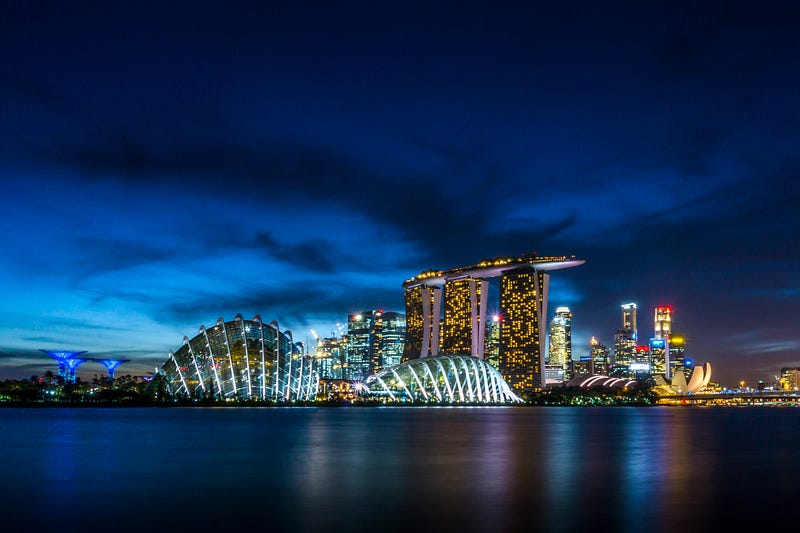
Photo by Mike Enerio on Unsplash


‘Pivotal development’

HashKey announced its regulatory success by way of a press release published to its website. This achievement, described by the company as a “pivotal development,” positions the firm to offer regulated fund management services primarily in connection with capital markets products from its Singapore base.

Deng Chao, Chief Executive of HashKey Capital Singapore and Head of HashKey Singapore, expressed the company’s commitment to the local blockchain community, stating:

“As a licensed fund management company, we are committed to contributing to the local blockchain community and playing our part in shaping its future.”


Enabling product launch

Having initiated the licensing process in late 2021, HashKey Capital Singapore now plans to leverage its new status to launch a regulated fund and provide capital market products to local customers. The company envisions connecting blockchain experts and global capital to the local market, contributing to the advancement of the blockchain community in the region.

Chao emphasized the company’s excitement about propelling blockchain-related capital markets products and investments further into the mainstream. This move is expected to open new possibilities for institutional and accredited investors in Singapore.


Hong Kong presence

HashKey Capital falls under the overarching umbrella of Hong Kong-headquartered parent company HashKey Group. Company colleagues in Hong Kong have been busy in 2023, with a number of milestones having been achieved during the year.

HashKey and OSL became the first digital asset exchange platforms to be licensed by the Hong Kong Securities and Futures Commission (SFC) as part of a new regulatory approach that allowed such platforms to offer their services to retail investors from June 1 onwards.

A few months on from that and the company has been working towards increasing platform liquidity and trading volumes through a token rewards program and partnerships with market makers.

At the end of October, the firm launched an exchange app, having received approval for the product from the local regulator. The firm has also bolstered customer deposit protection by way of a deal struck with fintech firm OneDegree to provide insurance cover for digital assets held on the platform.

In April, a separate entity, HashKey Wealth, was formed, offering a wealth management service to both institutional and individual investors looking for exposure to digital assets.

HashKey Singapore, inclusive of HashKey Capital Singapore, boasts a team of approximately 40 professionals covering various areas such as venture capital investment, fund management and over-the-counter trading of digital assets. The development follows HashKey Capital’s successful conclusion of a $500 million funding round, reinforcing its position as one of the largest crypto asset managers.

Founded in 2015, HashKey Capital has played a pioneering role as an institutional investor in Ethereum, managing over $1 billion in client assets and making investments in more than 500 projects across infrastructure, tools and applications.

During a funding round which the HashKey Group pursued earlier this year, it emerged that the company was being valued at $1 billion.


More to Read
View All
Web3 & Enterprise·

Dec 06, 2023

Bitcoin records this year’s highest in Korean market, surpassing KRW 60M

Bitcoin records this year’s highest in Korean market, surpassing KRW 60MBitcoin, the world’s largest cryptocurrency, exceeded the KRW 60 million (approximately $45,700) mark in the South Korean market on Wednesday (local time), reaching its highest value of the year.So far today, the nation’s leading crypto exchange, Upbit, saw Bitcoin’s price soaring to a daily peak of KRW 60,642,000. Meanwhile, another major trading platform, Bithumb, observed Bitcoin’s value touching a daily high of KRW 60,775,000.Photo by André François McKenzie on UnsplashHighest since November 2021This is the first time Bitcoin went above the KRW 60 million mark since November 2021. Amid this development, the Kimchi premium, a term indicating the gap in crypto prices between Korean exchanges and their foreign counterparts, has exceeded 4%. According to data from crypto information platform CoinNess, at the time of publication, the average price of Bitcoin on Korean platforms is KRW 59,986,250, while the average price of Bitcoin on foreign platforms is KRW 57,605,406.Ethereum prices are also on the rise. On Upbit, Ethereum reached its highest point of the day at KRW 3,163,000, and on Bithumb, it peaked at KRW 3,162,000.Rate hike halt and Bitcoin halvingThe ongoing surge in Bitcoin’s value is widely believed to be influenced by a halt in global interest rate hikes and the anticipated Bitcoin halving event scheduled for April 2024. Additionally, the potential approval of spot bitcoin exchange-traded funds (ETFs) by the U.S. Securities and Exchange Commission is seen as another significant factor contributing to the rise in the digital currency’s prices.Meanwhile, the Crypto Fear and Greed Index from software comparison platform Alternative.me currently indicates a sentiment of “Greed” with a score of 72. This index assesses various factors, including volatility, market momentum and volume, social media buzz, market dominance and trends. The scale ranges from 0 to 100, where 0 signifies “Extreme Fear” and 100 represents “Extreme Greed.” Scores nearer to 0 suggest increasing fear among investors, potentially signaling a buying opportunity. On the other hand, scores approaching 100 imply growing greed, hinting at the possibility of a market correction.Korean won as the top fiat trading pairDuring this latest Bitcoin rally, where the cryptocurrency climbed to over 50% of its highest price in almost two years, South Korean crypto traders have played a significant role, Bloomberg reported, citing data from CCData. In November, the South Korean won exceeded the U.S. dollar as the top fiat trading pair in the crypto market for the first time.

news
Policy & Regulation·

Apr 26, 2023

Korean Lawmakers Make Progress on Virtual Asset User Protection Bill

Korean Lawmakers Make Progress on Virtual Asset User Protection BillOn Tuesday, the subcommittee for legal deliberations under the South Korean National Assembly’s National Policy Committee reached a consensus during the first review of the Virtual Asset User Protection Bill, according to Yonhap Infomax.©Pexels/Andrea PiacquadioFirst review phaseThe bill is undergoing a two-phase review process before being legislated. During the first phase, the primary focus was on safeguarding customer assets and preventing unfair transactions. The second phase is expected to concentrate on market order regulations, including the issuance and disclosure of virtual assets.Application of Capital Markets ActSeveral stipulations were included in the approved draft of the Virtual Asset User Protection Bill during the initial review phase. These stipulations include prioritizing the application of the Capital Markets Act to virtual assets that are classified as securities, while excluding central bank digital currencies (CBDCs) from the definition of virtual assets to avoid any potential confusion. The bill also seeks to impose compensatory damages and penalties for any unfair trading practices, and establish a virtual asset committee responsible for investigating any unfair transactions in the digital asset market.The virtual asset committee will also engage in preliminary deliberations regarding the management, supervision, and monitoring of the digital asset market. The committee will carry out tasks assigned to it by the Financial Services Commission (FSC). Furthermore, the Bank of Korea has been granted the right to request data from virtual asset operators since virtual assets, although not currencies, are necessary to consider when establishing monetary credit and financial stability policies.No class action systemHowever, the introduction of a class action lawsuit system was not adopted, and details about inspecting virtual asset operators will be stipulated in a presidential decree rather than a law.Second review phaseFor the second review phase, the FSC will report several matters to the National Assembly. These will involve tasks such as establishing a regulatory framework for stablecoins, security tokens, and utility tokens. In addition, the agency will be responsible for creating a regulatory system for virtual asset valuation, advisory, and disclosure services, as well as an integrated computerized system that provides reliable and reasonable information on digital assets. The FSC will also explore ways to enhance the business conduct discipline of cryptocurrency operators by commissioning research from external organizations.Additionally, the FSC and the Financial Supervisory Service will work on supporting virtual asset exchanges to establish uniform standards for the circulation supply of virtual assets. The regulatory bodies will also enforce the requirement for transparent disclosure and strict internal control on virtual asset operators. Moreover, regulations will be developed to enhance virtual asset usability and remove any obstacles that may impede the development of innovative real-life services.

news
Web3 & Enterprise·

May 20, 2025

Ripple expands in UAE with new partners Zand Bank and Mamo

Ripple, the blockchain company behind the XRP token, announced in a May 19 press release that it has added two new customers in the United Arab Emirates (UAE)—Zand Bank and Mamo. Both institutions will use Ripple Payments, the company’s blockchain-based platform for cross-border transactions. Photo by Dmytro Demidko on UnsplashExpanding under Dubai license obtained in MarchThis partnership comes after Ripple’s obtainment of a license from the Dubai Financial Services Authority (DFSA) in March to offer regulated crypto payments and services in the Dubai International Finance Centre (DIFC). Ripple Payments facilitates end-to-end payment management for its customers. The platform enables funds to be transferred globally around the clock, with payments settled within minutes. Ripple’s latest move follows growing demand for blockchain-powered payment solutions in the Middle East. Ripple’s 2025 New Value Report shows 64% of Middle East and Africa (MEA) finance leaders see faster payments as the main reason to adopt blockchain for cross-border transactions. “Our new partnerships with Zand Bank and Mamo are testament to the momentum that the license has created for our business,” said Reece Merrick, Managing Director for the Middle East and Africa at Ripple. Zand Bank, the UAE’s first fully licensed all-digital bank, will leverage Ripple’s technology to enhance its payment solutions. “Our collaboration with Ripple highlights our commitment to empowering global payment solutions through blockchain technology. Moreover, we are excited to soon launch an AED-backed stablecoin,” said Chirag Sampat, Head of Treasury and Markets at Zand Bank. Meanwhile, Mamo, a company that helps businesses consolidate payment collection, corporate cards and expense management, sees the partnership as an opportunity to support the UAE’s growth. “The UAE is on an incredible growth path, with over a million businesses expected to call it home by 2030. At Mamo, we're proud to be at the forefront of this journey making global payments simpler and more accessible for everyone,” said Imad Gharazeddine, CEO and co-founder of Mamo. Ripple faces legal setback in U.S.While Ripple continues to expand its business globally, it is facing ongoing legal challenges in the U.S. On May 15, U.S. District Judge Analisa Torres rejected a joint request by Ripple and the U.S. Securities and Exchange Commission (SEC) to approve a proposed $50 million settlement. The settlement would have reduced Ripple's fine from $125 million to $50 million, effectively concluding a four-year legal dispute. The case began in December 2020, when the SEC accused Ripple of raising $1.3 billion through unregistered XRP sales. In July 2023, Judge Torres ruled that Ripple’s institutional XRP sales violated securities laws, while sales on exchanges to retail investors did not. Despite the SEC easing its crypto enforcement activities under the Trump administration, Judge Torres rejected the proposed settlement, calling it “procedurally improper.” Ripple’s bid to acquire USDC issuerIn a related development, Ripple made an offer to acquire Circle, the issuer of the USDC stablecoin. Circle, which is preparing for an initial public offering (IPO), is also exploring a potential sale and has reportedly engaged in informal discussions with both Coinbase and Ripple, seeking a valuation of $5 billion. However, Ripple’s offer was reportedly turned down. Meanwhile, XRP is trading at $2.39, up 2.57% over the past 24 hours, according to CoinMarketCap data at the time of publication.

news
Loading