Top

Banking giants in Turkey embrace crypto ahead of legislative change

Policy & Regulation·December 15, 2023, 1:34 AM

It remains unclear what the underlying environment for the further development of the crypto sector in Turkey will be until such time as the country introduces a legislative framework to shape the industry’s development. However, that fact is not deterring a couple of Turkey’s leading banks, who have decided to embrace the digital asset realm.

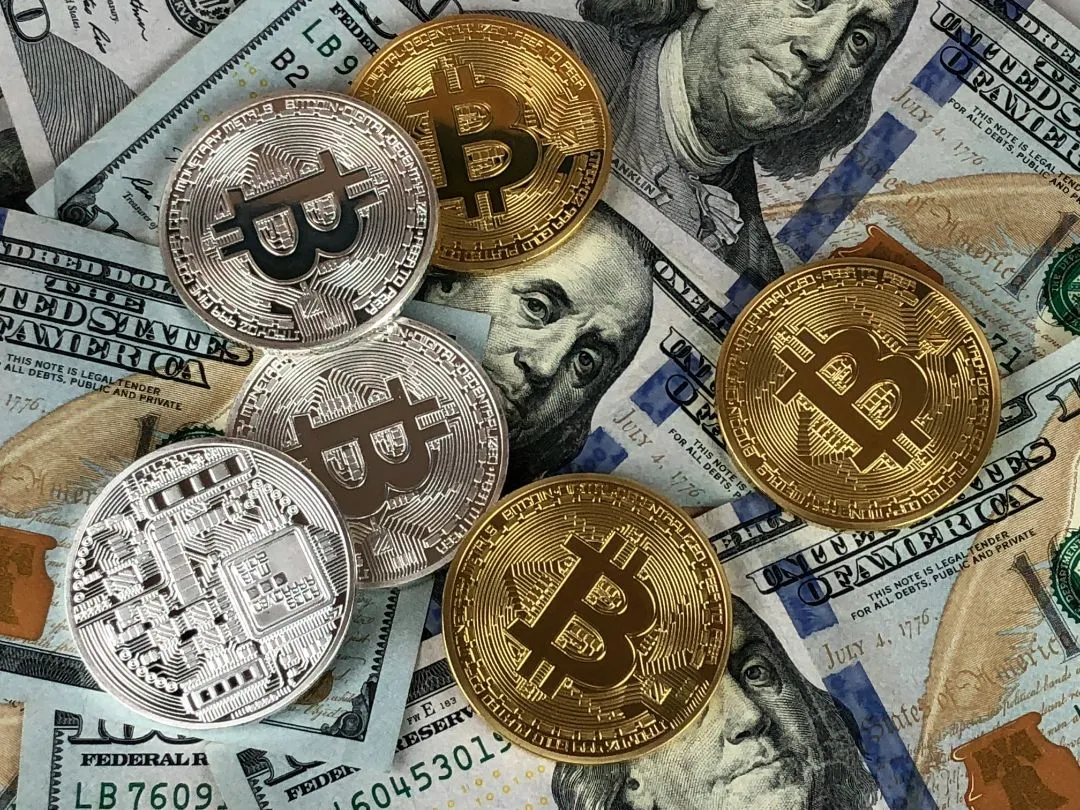
Photo by Michael Jerrard on Unsplash


Stablex acquisition

On Monday CoinDesk Turkiye reported that the investment arm of Turkish bank Akbank had acquired local crypto company Stablex. Stablex was founded in May 2020 by Jihad Shannak with the objective of providing professional services, including trading relative to cryptocurrencies in Turkey. Majority shareholding passed to Ak Investment in May of this year, with initial negotiations on the sale having commenced in August 2022.

A high-ranking official at Ak Investment expressed the group’s ambition to become a pivotal figure in the digital asset realm, signaling a proactive approach to the evolving financial landscape. Akbank also banks the majority of crypto start-ups based in Turkey.

Speaking about the acquisition recently, Akbank executive Mert Erdoğmuş stated:

“We have invested in Stablex to respond to the need for reliable and innovative service in the cryptocurrency market. Stablex reflects our values with its experience in the sector, pioneering achievements and professional service approach.”


BBVA crypto wallet

Alongside Akbank’s move into the digital assets arena, Garanti BBVA, Turkey’s second largest private bank, recently unveiled its crypto wallet app. The feature-rich application includes a cold wallet, empowering users to seamlessly send and receive assets such as bitcoin (BTC), USD Coin (USDC) and ether (ETH).

The pilot project for the app commenced in August, with the application currently available on iOS. In bringing the app to market, the bank created Garanti BBVA Digital Assets, a dedicated subsidiary firm. Commenting on that development back in August, the subsidiary’s Chairman of the Board, M. Çağrı Süzer, stated:

”Our research shows that customers significantly value trust in their crypto transactions and especially on its storage. Hence, we are happy to launch our Crypto Custody Wallet addressing these real needs.”

Despite uncertainties, Turkey has firmly established itself in the global crypto landscape, ranking among the top 20 countries in Chainalysis’ Global Crypto Adoption Index 2023. The instability of the Turkish lira in recent years has been a driver for crypto adoption in the country. In recent days, the bitcoin unit price has reached its highest exchange rate level against the local sovereign currency.

Earlier this week, it emerged that crypto platform Blockchain.com is adding headcount and has its sights set on expansion into Turkey as one of its growth opportunities.


FATF-compliant regulatory approach

Turkey’s regulatory stance has been to take a cautious approach. In 2021, the central bank restricted the use of crypto for payments, although a complete ban on digital assets was ruled out by officials.

Looking ahead, a government official revealed plans for crypto legislation to be presented to Parliament in November. While details remain scarce, this legislative move aligns with Turkey’s broader strategy to exit the Financial Action Task Force’s (FATF) “gray list.”


More to Read
View All
Markets·

May 17, 2023

Korean Crypto Exchange Presents Bitcoin Forecasts for Three Scenarios

Korean Crypto Exchange Presents Bitcoin Forecasts for Three ScenariosRecently, concerns over a potential US default have heightened due to the ongoing disagreement between Republicans and Democrats in the US Congress regarding the necessity of increasing the debt ceiling. Democrats, along with the Biden administration, advocate for authorizing additional debt, while Republicans propose spending cuts.Considering the historical patterns observed in the US and the inherently political nature of this matter, it is improbable that the uncertainty surrounding the debt ceiling raise will endure for an extended period. In the past, when faced with a similar situation in 2011, the debt ceiling was ultimately approved despite significant political divisions. Particularly with upcoming elections next year and escalating concerns of an economic downturn, it is likely that a resolution to the debt ceiling issue will be reached soon.In light of these circumstances, the economic research institute at one of South Korea’s major crypto exchanges Bithumb released a report that outlines three distinct scenarios depicting the potential unfolding of the debt ceiling issue in the US. Additionally, it has offered insights into the potential implications for Bitcoin under each scenario.Photo by Shubham’s Web3 on UnsplashBipartisan agreement to increase the debt ceilingIn the scenario where the debt ceiling is promptly raised as a result of a significant bipartisan agreement, the US is anticipated to adopt an expansionary fiscal policy by issuing government bonds to prevent a default. If a debt ceiling deal is reached, it is projected that short-term bond issuance will reach a net amount of $1.4 trillion by the end of the year. There is also a growing consensus that medium- and long-term bond issuance may commence in the third quarter. Additionally, the possibility of interest rate cuts as early as the second half of this year entered the equation. In the long term, this could potentially lead to a depreciation of the dollar as market liquidity increases, thereby weakening the currency. It is worth noting that historically, the value of Bitcoin tended to go up when market liquidity rises.Debt ceiling disagreement and delayed negotiationsAnother scenario entails the failure of the two parties to reach an agreement and a subsequent delay in approving a raise to the debt ceiling. Should the debt ceiling not be raised in a timely manner, the US would potentially encounter an unparalleled default on its debt obligations. This default could trigger a severe credit crunch, resulting from international credit downgrades and a weakened global standing for the US. Such circumstances would further escalate the risk of an economic crisis.As the negotiations on the debt limit continue to be delayed, there will be a prolonged period of uncertainty in both Treasury issuance and secondary markets. This uncertainty poses risks to money market funds (MMFs) that hold a significant portion of short-term Treasuries, potentially resulting in losses. Consequently, there could be a shift towards reverse repo (RRP) transactions as investors seek alternative avenues. In fact, Treasury liquidity has recently exhibited signs of deterioration, with MMFs and RRPs garnering considerable attention in the market.Heightened concerns regarding short-term Treasuries could lead to a higher volume of reverse repo trades compared to repo trades. Repo transactions use Treasuries as collateral, whereas reverse repo transactions involve depositing funds with the Fed or lending money to the Fed in exchange for collateral, which often includes Treasuries, thereby earning interest. In such a scenario, market liquidity could become trapped in the Fed, potentially rekindling risks within the banking system.Given their sensitivity to liquidity conditions, crypto markets are anticipated to experience a temporary decline. However, Bitcoin has exhibited a historical pattern of appreciating in value as an alternative to the US banking system, especially during instances of small and medium-sized bank failures. In the event of prolonged negotiations and an escalating risk of a US default, the demand for safe-haven assets like Bitcoin might surge. As a result, Bitcoin could gain favorability as investors seek refuge in alternative assets amidst uncertain market conditions.Linking debt ceiling increase to spending reductionThe last scenario involves a conditional agreement accompanied by measures aimed at reducing the deficit, as proposed by Republicans. Given the longstanding concerns surrounding excessive US deficits, any agreement to raise the debt ceiling would likely be contingent upon fiscal consolidation and spending cuts. Notably, as of March 31, 2023, the US federal deficit is approximately 8% of GDP, a figure comparable to the 8.3% average observed in 2011 when the possibility of a US default reached its peak.While fiscal consolidation is necessary to ensure fiscal sustainability, unless the US significantly increases tax revenues, an increase in the debt ceiling may be negotiated at the expense of significant cuts to the national budget. In such a case, the US economy would inevitably experience the adverse effects of reduced government spending.The Republican party has put forth a demand of $4.8 trillion in deficit reduction over the next ten years as a condition for raising the debt ceiling. This figure translates to an average of $480 billion per year or approximately 1.8% of the current year’s GDP (as of May). However, it is important to note that in the medium to long term, reductions in government spending without complementary expansionary monetary policies have the potential to accelerate GDP decline. If Congress agrees to cuts in government spending, it could increase the probability of the Fed swiftly reversing its tightening policy. Unless the Fed halts its tightening measures, the likelihood of a US recession may become more pronounced.If the Fed decides to cut interest rates earlier than anticipated in response to the Treasury’s fiscal consolidation efforts, Bitcoin, which is known to be more responsive to long-term monetary policy, might be able to overcome the short-term downturn and experience an upward trend.The authors contend that at present, market attention is primarily directed towards the matter of raising the debt ceiling, taking into account the potential risks of a US default and the possibility of a bond rating downgrade. However, they believe it is unlikely that US politicians will make radical decisions in the run-up to next year’s presidential election.While the issue of raising the debt ceiling will have a short-term impact, the report argues that the main drivers of Bitcoin’s price in the medium to long term will be the Fed’s monetary policy and the occurrence of Bitcoin’s halving event.It is important to note that there is a time lag between the end of the Fed’s tightening measures and the halving of Bitcoin. In the short term, the price trajectory of Bitcoin will likely be influenced by factors such as the potential failure of additional small and medium-sized US banks (which is concerning given recent outflows of US bank deposits) and increased demand for safe-haven assets due to the delay in raising the debt ceiling. These factors will play a greater role in shaping Bitcoin’s short-term performance.

news
Policy & Regulation·

May 03, 2024

Upbit executive: Establishing crypto regulations hinges on building trust

At the 'Beyond Coin: Brace for Digital Asset Super Cycle' conference held in Seoul on April 30, Lee Hae-bung, Head of Investor Protection Center at Upbit, said that it is significantly important for virtual asset service providers (VASP) to fulfill their responsibilities at a time when the government authority is laying the groundwork for crypto regulations, according to local media TECH M. Upbit is one of the few licensed cryptocurrency exchanges in South Korea. The conference was jointly organized by SEUM Law Firm and local media outlet TECH M.  During his speech at the conference, Lee stated that by adhering to industrial rules and meeting obligations, VASPs can protect not only crypto investors but also themselves. This is how the crypto industry can enhance the value of blockchain and build trust surrounding the cutting-edge technology, he asserted. Photo by Lukas on PexelsShifting paradigm Lee said everything created based on blockchain and ledger technology is now deemed assets and property in the modern world, warranting new regulations. This marks a contrasting shift from the past when only fiat currencies were considered assets and mediums of storage.  In the following sessions, he delivered presentations about cryptocurrency regulations in various countries such as the U.S., Singapore, Hong Kong and several EU member states. During his speech, four moral pillars – legal clarity, responsible innovation, accountability and resilience – were particularly highlighted as ethical requirements for VASPs.  Ten minus one equals zeroLee noted that Korea's crypto industry is currently going through transitional phases, during which the nationwide crypto craze disrupted the market and turned many good-willed investors into victims. The recent Bitcoin rally has lured many young Korean investors in their 20s and 30s to the crypto market, many of whom engaged in reckless investments with borrowed money.  The industry is now at a point where regulations are being laid out for investor protection, however, heading into a sustainable and healthy direction, he added.  "Ten minus one equals zero when it comes to regulating the crypto industry," Lee said, underscoring the significance of completing all the tasks related to establishing regulation in the local crypto space. “Transparency and accountability are the two most important values VASPs must safeguard on their journey to building trust. If VASPs fulfill these obligations, they should be able to gain the trust of users. Otherwise, they must bear liability for the consequences,” he added, citing the European Union’s Market in Crypto Asset (MiCA) Regulation as a model example that values transparency and accountability. The MiCA Regulation is currently being discussed by legislators from EU member states.  

news
Web3 & Enterprise·

Nov 27, 2024

Crypto.com partners with Triple-A to enable direct crypto payments

Crypto exchange platform Crypto.com and Triple-A, a company that enables businesses to pay and get paid in digital currencies, both Singapore-headquartered entities, have entered into a partnership to enable direct crypto payments. Simplifying crypto paymentsCrypto.com set out details of the partnership in a press release published to its website on Nov. 21. The firm stated that its partnership with Triple-A will give its global customer base “access to a diverse range of new global merchants.” The duo have set out to simplify crypto payments for both merchants and users alike. Crypto.com users will shortly be enabled in making purchases from a range of e-commerce brands directly, using crypto held in their Crypto.com wallets. Through Triple-A’s input, Crypto.com users will be spared the need to manually convert digital assets to fiat currency before making purchases. Furthermore, users won’t incur a fee for any conversion that takes place behind the scenes.Photo by David McBee on PexelsCashback rewardsOnce launched, with the service initially planned to launch in Singapore before further rollout elsewhere, Crypto.com users will also be in a position to benefit from rewards. Eric Anziani, the company’s president and chief operating officer (COO), spoke to this element of the offering, stating: “Partnering with Triple-A enables us to do this by expanding crypto payments to a range of popular brands, creating a seamless shopping experience and providing an opportunity to earn cashback rewards to make spending crypto even more rewarding.” Volatility protectionAs part of the solution that has been put in place, Triple-A will ensure that merchants aren’t exposed to cryptocurrency volatility in accepting crypto as a payment method. The payments they receive from customers are instantly converted to their local fiat currency, with settlement occurring one day following the transaction. This approach also means that merchants don’t have added difficulties in terms of the tax treatment of cryptocurrencies, their management or related reporting requirements. With that in mind, Eric Barbier, CEO at Triple-A, said that the approach “allows merchants to provide Crypto.com users with an optimized digital currency payment user journey.” Anziani said that Crypto.com is trying to “push boundaries when it comes to integrating crypto payments into real-world scenarios and enhance shopping experiences for [its] users.”  In recent weeks, Crypto.com has been active in pursuing a number of initiatives in order to expand its reach. Earlier this week, the company launched a visa card in Latin America, enabling users within the region to earn rewards on purchases made via the card. On Nov. 14, it emerged that the company had acquired Australia-regulated brokerage firm Fintek Securities. It’s understood the acquisition was made in order to expand the range of financial products that Crypto.com can offer to its customer base. At the end of October, Watchdog Capital, a U.S. Securities and Exchange Commission (SEC)-registered broker-dealer, was acquired by the company.  Like many high profile crypto firms, Crypto.com has had its difficulties with regulators. Following the receipt of a Wells notice from the SEC earlier this year, the company responded by filing a lawsuit against the commission, alleging that the SEC had engaged in regulatory overreach in classifying crypto assets as securities. 

news
Loading