Top

Late Korean artist Lee Jung-seob’s ‘Bull’ NFT on auction at OpenSea

Web3 & Enterprise·December 01, 2023, 3:29 AM

NFT marketplace OpenSea is hosting an ongoing auction for a digital representation of the painting “Bull” by the late Korean artist Lee Jung-seob, Yonhap News TV reported on Tuesday. Celebrated for his distinctive lines in his paintings, Lee passed away in 1956. This auction is set to conclude on Dec. 12, with the starting bid placed at 300 WETH (Wrapped Ethereum), which is approximately equivalent to $626,000.
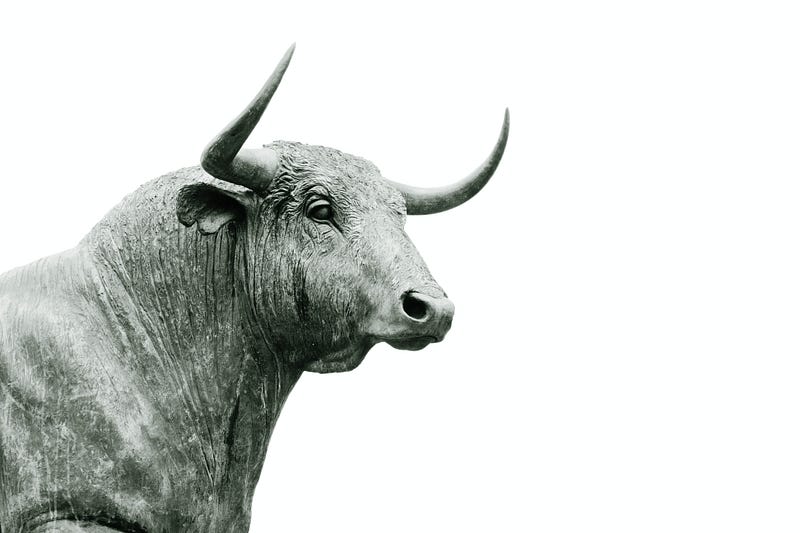
Photo by Hans Eiskonen on Unsplash


White bull as NFT

Lee’s “Bull,” featured in the OpenSea auction, is distinguished by its depiction of a white bull set against a dark green background. This particular piece is one of Lee’s unpublished works and is currently being offered for sale by a private art collector. Regarding the authenticity of the painting, the description on the OpenSea page states, “This work received a handwritten evaluation from Professor Jung Jum-sik, a founding member of the Lee Jung-seob Art Award, on November 9, 2000.”

The current owner of the original artwork has expressed their intention for auctioning it as a desire to share a valuable piece of art. The painting originally belonged to poet Ku Sang and has since changed hands multiple times, experiencing some damage along the way. While the copyright for an artist’s work typically remains with their inheritors for 70 years posthumously, in the case of Lee Jung-seob, this period has already lapsed.


Authenticity and NFT investments

Meanwhile, art appraisal experts are advising caution, emphasizing the need to first confirm the authenticity of the original painting. This caution stems from the fact that the painting has not undergone evaluation by an official appraisal organization.

During his interview with Yonhap, Jung Jun-mo, CEO of Korea Art Authentication Appraisal Inc., offered a word of caution regarding investment in NFTs tied to artworks with questionable authenticity. He emphasized that NFTs representing works that lack genuine authentication also hold no value in terms of authenticity. Jung advised potential investors to thoroughly verify the legitimacy of such artworks before proceeding with any investment in their NFT representations.

Last year, many paintings of modern Korean artists were converted into NFTs, but they sparked controversy over issues of authenticity. Experts in art investment have since been advising thorough research prior to making any investments in these digital assets. They warn that losses incurred from transactions involving these NFTs fall squarely on the investors.

More to Read
View All
Markets·

Feb 03, 2024

Crypto enthusiasm prevails in China despite crypto trading prohibition

In the face of a crypto trading ban imposed in 2021, the cryptocurrency market in China continues to thrive, defying the odds, according to a recent report from Kyros Ventures. Regional survey and reportThe Vietnam-based blockchain-focused startup incubator and venture capital firm has presented its report findings, shedding light on the unique dynamics of the Chinese crypto landscape compared to neighboring countries such as South Korea, Vietnam, Taiwan and Thailand. The survey was conducted in December in collaboration with 10 media agencies across the region, involving over 5,000 participants to gauge their sentiments and investment patterns.Photo by Road Trip with Raj on UnsplashGreater crypto interestMore than 70% of respondents revealed that cryptocurrencies accounted for over half of their asset portfolios. Among survey respondents in China, 88.9% reported heavy investments in cryptocurrencies, surpassing the enthusiasm observed in Vietnam, South Korea, Taiwan and Thailand. The finding is surprising, given that cryptocurrency trading is prohibited in China, while in the other jurisdictions the same level of restrictions is not in place. China's crypto scene faces substantial regulatory hurdles, with a government ban on crypto trading implemented in 2021. Despite this, the report highlights that a majority of Chinese investors opt for centralized crypto exchanges (CEXs) for their trading activities. Arthur Hayes, the founder of crypto derivatives platform BitMEX, recently outlined that wealthy individuals in China have access to international banking, and with that, access to overseas cryptocurrency platforms through the Chinese autonomous territory of Hong Kong. An investigative report produced by the Wall Street Journal in 2023 found that leading global crypto exchange Binance continues to have a thriving business relative to its Chinese user base. The Chinese authorities appear to be aware that the crypto trading prohibition that has been applied by the government is being flouted. This is demonstrated by the fact that the government is looking to update its anti-money laundering rules for the first time in 17 years to account for the rise in cryptocurrency investment, trading and use. Higher risk appetiteNotably, 33.3% of Chinese investors indicated an allocation to stablecoins. That is indicative of a greater risk appetite in China by comparison with countries like South Korea and Vietnam where 43% and 59% of respondents had money allocated in risk-off stablecoin positions. In terms of investment by referral, Thailand and China emerged with the highest rates, reaching up to 80%. Previous research carried out by Kyros earlier in 2023 highlighted the significance of crypto investment via referrals within the Vietnamese market. Developing regional regulatory landscapeThe regulatory landscape in Asia witnessed significant developments in 2023, with Hong Kong emerging as a leading hub for crypto and Web3 innovation. The issuance of cryptocurrency exchange licenses in Hong Kong marked a pivotal moment for the industry in the region. In South Korea, new legislation aimed at protecting cryptocurrency users, enhancing transaction transparency and fostering market discipline was enacted. Meanwhile, Taiwan's Financial Supervisory Commission explored the possibility of allowing crypto exchange-traded funds, pending a thorough analysis of the product's development in global markets.  

news
Web3 & Enterprise·

Feb 20, 2025

Standard Chartered joins with local partners in Hong Kong to launch stablecoin

Standard Chartered Bank Hong Kong, a licensed bank and subsidiary of British multinational banking group Standard Chartered, has partnered with local companies to launch a Hong Kong dollar-based stablecoin in the Chinese autonomous territory.Photo by Chapman Chow on UnsplashJoint venture formed In a press release published by Animoca Brands, a blockchain-based gaming and Web3 venture capital firm based in Hong Kong, the company outlined details of the partnership between it and Standard Chartered, alongside Hong Kong Telecom (HKT), Hong Kong’s dominant fixed-line, mobile and broadband telecommunications firm. The partnership has been structured as a joint venture between the three companies, with the objective of launching the Hong Kong dollar-backed stablecoin. Local regulator and central bank, the Hong Kong Monetary Authority (HKMA) has been working towards implementing a regulatory framework specifically dedicated to stablecoins.  Legislative framework incoming As of the end of 2024, proposed legislation that would enable such a framework had advanced to Hong Kong’s Legislative Council. Before the bill can be enacted into law, the legislative process requires three readings of the bill accompanied by a series of debates and the scrutiny of lawmakers.  Once the legislation has been signed into law, it will require stablecoin issuers to obtain a license from the HKMA. In the case of this particular joint venture, the promoters plan to apply for a license in due course. Standard Chartered is already deeply embedded in Hong Kong’s financial system, making this latest development all the more significant. Alongside HSBC and Bank of China (Hong Kong), Standard Chartered issues the local currency, the Hong Kong dollar. That activity is carried out under the oversight of the HKMA.  The HKMA launched a sandbox environment relative to stablecoins in order to provoke an exchange of views between the regulator and market participants. The three parties to this latest joint venture have been sandbox participants since July of last year, alongside JINGDONG Coinlink Technology and RD InnoTech. JINGDONG declared its intention to launch a Hong Kong dollar-backed stablecoin last year. RD InnoTech plans to launch the HKDR stablecoin in conjunction with HashKey Exchange. Stablecoins ‘starting to eat the world’Earlier this month, Rene Michau, Standard Chartered’s global head of digital assets, set out the bank’s thoughts on stablecoins in an article published on the company’s website and co-authored by Circle Chief Financial Officer (CFO) Jeremy Fox-Green. Within it, Standard Chartered recognized the potential of stablecoins, suggesting that they are key to unlocking a future where blockchain acts as a new “internet of money.” The article went on to state that it is critical for stablecoin issuers “to maintain deep connections with strong banks and for those banks to be building digital asset capability.” The company recognizes that stablecoins are “starting to eat the world,” referring to a global stablecoin circulation that has already surpassed $100 billion.  Evan Auyang, President of Animoca Brands, pointed out that “we are still in the early stages for mass adoption of stablecoins across retail, enterprises and institutions.” He added that Hong Kong has a bright future as a global Web3 hub. Susanna Hui, Managing Director at HKT, believes that “issuing an HKD-linked stablecoin will enhance payment efficiency, streamline transactions, and provide greater security and transparency through advanced Web3 innovations.”

news
Web3 & Enterprise·

Mar 26, 2025

Chainlink partners with Abu Dhabi’s ADGM on tokenization framework development

Chainlink, a prominent decentralized oracle network, has partnered with the Abu Dhabi Global Market (ADGM), a free zone and international financial center located on Al Maryah Island in Abu Dhabi in the United Arab Emirates (UAE), with a view towards further developing tokenization frameworks.Photo by Shubham Dhage on UnsplashCompliant tokenization frameworksAccording to an announcement on the ADGM website, the international financial center signed a memorandum of understanding (MOU) with Chainlink. It claimed that the collaboration marks “a major step in advancing compliant tokenisation frameworks.” Chainlink provides a suite of services. Central to that is the delivery of real-world data feeds into blockchain networks. ADGM believes that through the partnership, projects located within the free zone will be able to access this technology, while the ADGM’s Registration Authority will ensure regulatory compliance. The CEO of the ADGM Registration Authority, Hamad Sayah Al Mazrouei, said that the strategic alliance is a significant step towards ADGM leadership in blockchain innovation. He added: “By collaborating with Chainlink, we are aiming to set a global benchmark that spearheads transparency, security, and trust across the blockchain space.” The collaboration includes plans to host events and workshops aimed at educating the blockchain sector within the UAE. The two parties also aspire to the initiative, sparking greater dialogue on regulatory matters relative to blockchain, artificial intelligence and other emerging technologies. Global collaborationsThis is the latest in a long list of collaborations that Chainlink has entered into, relative to asset tokenization. In October, it partnered with Singapore’s DigiFT, an exchange dedicated to tokenized real-world assets (RWAs). The following month, it completed a pilot program alongside financial messaging service SWIFT and UBS Asset Management under the umbrella of the Monetary Authority of Singapore’s (MAS) Project Guardian. The project concerned itself with the settlement of tokenized funds. Earlier in 2024, Chainlink partnered with U.S. financial market infrastructure firm DTCC on the Smart NAV pilot project. The initiative centered on the creation and issuance of tokenized funds, counting JPMorgan, State Street, BNY Mellon, Invesco and Franklin Templeton among its participants. In the UAE, Chainlink has been added as a member of the Digital Asset Lab of one of the country’s largest banking groups, Emirates NBD. For its part, the ADGM has also been on the front foot with regard to tokenization initiatives. Its Regulatory Authority has established a regulatory framework with regard to asset tokenization, with an emphasis on investor protection. In October of last year, RWA tokenization platform Realize launched the financial center’s first tokenized U.S. treasury bill fund. At the time, the ADGM said that the development highlighted an objective for the region in becoming the global market leader where RWA tokenization is concerned. The ADGM began operations in 2015 with its own legal system. As of the end of 2024, the financial center hosted 134 fund and asset managers. Market maker and Web3 investment firm DWF Labs moved its headquarters from Singapore to Abu Dhabi’s ADGM at the end of last year, citing the goal of wanting to expand tokenized RWA-based projects as one of the reasons for the move.

news
Loading