Top

China disrupts massive crypto-related laundering operation

Policy & Regulation·December 28, 2023, 2:11 AM

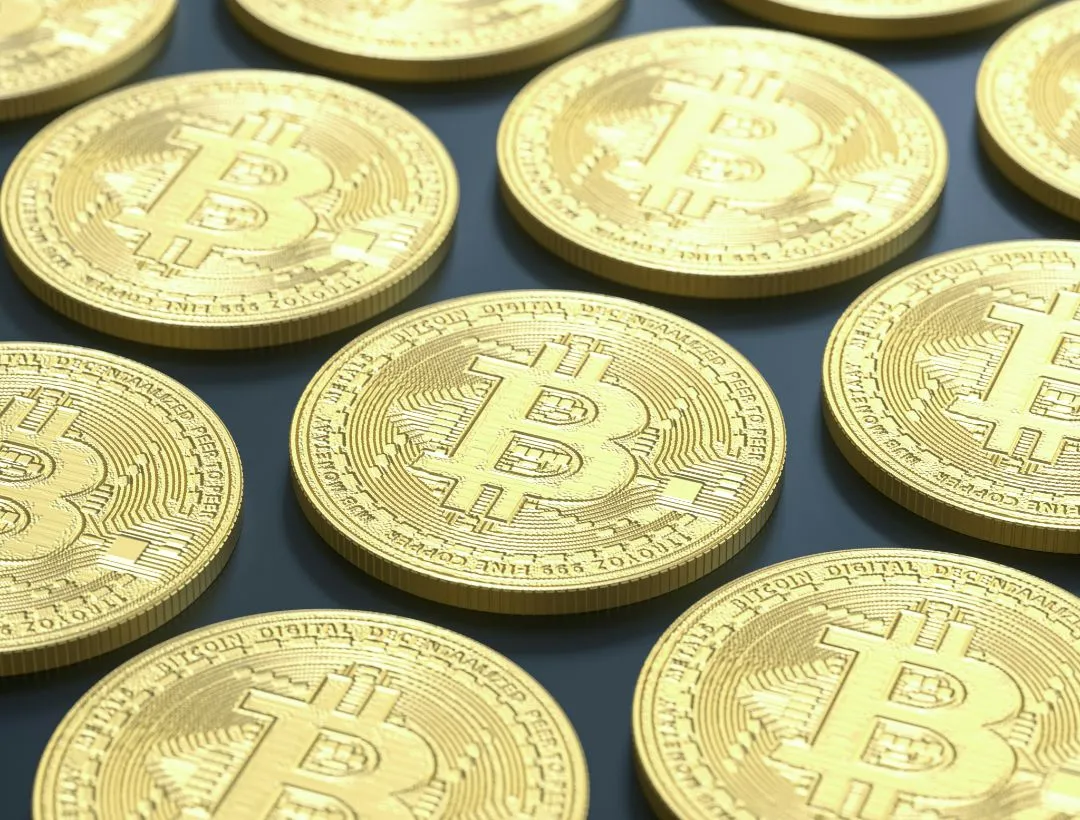
While cryptocurrencies may be banned in China, crypto trading activity continues in some corners, nonetheless, sometimes through accessing overseas exchanges. With that, authorities recently uncovered a massive underground banking operation that exploited crypto trading platforms to evade local forex regulations.

https://asset.coinness.com/en/news/caa2d48c10dac4ad394bad96026e1e19.jpg
Photo by Manuel Joseph on Pexels

$2.2 billion laundering operation

On Sunday, an account on popular Chinese social media platform WeChat run by China’s State Administration of Foreign Exchange (SAFE) published details of the $2.2 billion laundering operation bust.


Xu Xiao, the Inspector at the Qingdao Branch of the State Administration of Foreign Exchange, revealed that the scheme involved underground banks who purchased virtual currencies and then sold the virtual currencies through overseas trading platforms to obtain the foreign currency they needed. This process, he explained, completes the conversion of yuan and foreign currencies, constituting the illegal act of buying and selling foreign exchange.


Stringent capital controls

China enforces stringent rules on money transfers outside the country. Citizens are limited to exchanging up to $50,000 in foreign currency and require a permit for transactions beyond that limit. Any transaction exceeding the limit without a permit is considered money laundering.


During a recent investigation, authorities seized cryptocurrencies valued at approximately $28,000 in Tether, Litecoin and other digital currencies. However, the operation is estimated to have facilitated the movement of over $2.2 billion, involving more than a thousand bank accounts across 17 provinces and municipalities.


Monetary control loopholes

China, once the largest cryptocurrency market, imposed a comprehensive ban on crypto exchanges in September 2017 and subsequently expanded its restrictions to include crypto mining and trading. Despite these measures, reports have surfaced about underground crypto exchange operations. Earlier this year, an investigative report by the Wall Street Journal found that global exchange Binance continues to do thriving business with Chinese customers.


Global crypto exchanges are reportedly still onboarding Chinese clients indirectly. The South China Morning Post (SCMP) recently accused Binance of facilitating Chinese crypto trading accounts by falsely claiming they are from Taiwan.


While mainland China adopts a hostile stance towards cryptocurrencies, the special administrative region of Hong Kong remains progressive in the sector. Hong Kong’s regulatory authorities have introduced specific rules for cryptocurrencies and are licensing crypto exchanges operating within the jurisdiction.


Arthur Hayes, the co-founder of the BitMEX crypto derivatives platform, recently described Hong Kong as the gateway for mainland China to global capital markets. Hayes asserted that wealthy Chinese individuals all bank in Hong Kong and with that, they all have access to crypto exchanges and brokers. In Cambodia, it is understood that illicit Chinese-linked activities oftentimes implicate the use of U.S. dollar stablecoin Tether (USDT) to move funds in and out of China even though Tether is banned in Cambodia.


The latest crackdown in China underscores the ongoing challenges faced by authorities in controlling crypto-related activities, highlighting the dynamic nature of such activity within and adjacent to mainland China. As regulatory scrutiny intensifies, the contrast between mainland China’s approach and Hong Kong’s more open stance toward cryptocurrencies becomes increasingly evident.
 

More to Read
View All
Markets·

Mar 17, 2025

North Korea becomes major nation-state holder of Bitcoin following hack

While South Korea’s central bank has opted not to accumulate Bitcoin (BTC) at a nation-state level, North Korea has become a major holder of the leading crypto asset, albeit in a very unconventional way. The Democratic People's Republic of Korea (North Korea) is believed to currently be in possession of 13,518 BTC. That’s according to data compiled by the blockchain analytics firm Arkham Intelligence. Arkham has labeled the holding as belonging to the notorious North Korean hacking organization Lazarus Group. It’s been alleged by many observers over recent years that Lazarus is controlled by the North Korean government. Photo by Vasilis Chatzopoulos on UnsplashOn this basis, it would appear that North Korea now has a larger Bitcoin holding than the Bitcoin-friendly jurisdictions of Bhutan and El Salvador. The Kingdom of Bhutan holds 10,635 BTC through Druk Holdings and Investments (DHI), the commercial arm of the Royal Government of Bhutan.  Meanwhile, El Salvador holds 6,119 BTC. Bhutan has been accumulating Bitcoin as a consequence of Bitcoin mining activity carried out by the government in partnership with Singapore-based Bitcoin mining firm Bitdeer and others within the Asian country over recent years. El Salvador made a commitment to buy Bitcoin on an ongoing basis following its recognition of the digital asset as legal tender back in 2021. Based on Bitcoin pricing at the time of writing, Arkham’s data suggests that North Korea currently holds Bitcoin with an overall value of around $1.14 billion. It’s believed that North Korea’s overall holdings have been bumped up recently following a $1.4 billion hack of global crypto exchange Bybit last month. According to crypto data analysis firm Coin Metrics, the hack stands as one of the largest of all time.  Arkham’s data suggests that North Korea now has the third largest nation-state holding of Bitcoin, with the U.S. in first place, with 198,109 BTC, and the UK next with a holding of 61,245 BTC. Besides Bitcoin, the Lazarus Group is understood to be sitting on ETH, BNB, DAI and BUSD worth in the region of $30 million. In the immediate aftermath of the hack, the hackers moved to swap out some of the stolen Ether (ETH) for Bitcoin via the THORChain decentralized liquidity protocol. South Korea not building Bitcoin reserveWhile North Korea appears to have accumulated Bitcoin at the nation-state level through nefarious means, the Republic of Korea’s (South Korea) central bank has given an indication that it currently has no plans to accumulate Bitcoin.  According to a recent local media report, the Bank of Korea (BOK) responded in writing to a query from a Korean parliamentarian, outlining that there is no plan currently to develop a Bitcoin reserve or to stockpile Bitcoin at a national level.  The BOK is understood to have cited Bitcoin’s price volatility as a major concern. Additionally, the central bank outlined that Bitcoin doesn’t conform to the International Monetary Fund’s (IMF) guidelines relative to foreign exchange reserve management.

news
Web3 & Enterprise·

Jul 03, 2025

South Korea seeks buyer for NXC shares tied to gaming giant Nexon

The South Korean government has begun the process of selling its stake in NXC, the largest shareholder of Nexon, a video game company originally founded in South Korea and now headquartered in Japan. According to the Seoul Economic Daily, which cited industry sources, the Ministry of Economy and Finance began a public sale process on June 30 for its shares in NXC. These shares were received as payment for inheritance tax from the family of Nexon’s late founder, Kim Jung-ju. In February 2023, Kim’s widow, Yoo Jung-hyun—who also serves as chair of the board at NXC—along with other family members, transferred 851,968 NXC shares to the government to settle the inheritance tax liability.Photo by Kelly Sikkema on UnsplashEarlier failed sale attemptsThe government’s latest attempt to sell the shares follows two previous efforts that failed, primarily due to high asking prices at the time. The current estimated value of the shares stands at 4.7 trillion won (approximately $3.47 billion), reflecting a 20% premium over their net value due to the rights associated with company control. However, the shares are expected to sell at a lower price, since acquiring them would not lead to actual control of the company—Kim’s surviving family still holds a majority stake in NXC. Industry insiders view Chinese tech giant Tencent as a strong contender to purchase the shares. However, Tencent recently denied reports from last month that claimed it had approached Kim’s surviving family to discuss a possible acquisition of Nexon. The company had also expressed interest in acquiring Nexon back in 2019 but ultimately did not take part in the bidding process. According to Chosun Ilbo, a Tencent acquisition is being viewed as a possibility, as the Shenzhen-based firm continues efforts to secure overseas intellectual property. One industry source noted that Tencent tends to invest in Korean game developers every three to four years. The source also mentioned that Tencent had approached Korean venture capital analysts specializing in gaming last year to gather information for a potential acquisition shortlist. If Tencent were to purchase all of the government-held NXC shares, it would become the second-largest shareholder in the company. Given its ongoing investments in the Korean gaming sector, the source said it is likely Tencent will participate in the sale process organized by the government. Nexon’s blockchain pushNotably, Nexon has been expanding its presence in the cryptocurrency space. According to data from Bitcoin Treasuries, the company holds 1,717 Bitcoin (BTC), acquired at an average price of $58,226 per coin. Beyond its BTC investment, Nexon is actively exploring blockchain technology through its Web3 IP-expansion project, NEXPACE.  This initiative features the MapleStory Universe ecosystem, along with MapleStory N, a PC-based massively multiplayer online role-playing game (MMORPG) that incorporates blockchain technology. Both projects are powered by the NXPC token. MapleStory was originally developed by Wizet Studio in 2003 and became part of Nexon when the company acquired the studio the following year. 

news
Web3 & Enterprise·

Feb 14, 2024

Banxa's UK arm makes regulatory strides with FCA approval

The UK affiliate of Banxa, the Australia-headquartered financial infrastructure firm, has clinched a coveted spot as the first entity to grace the Financial Conduct Authority's (FCA) crypto register for the year 2024.Photo by Susan Q Yin on UnsplashAuthorized VASPThe company drew attention to this milestone on Tuesday, through the publication of a press release. The approval catapults BNXA UK VASP (virtual asset service provider) into the realm of authorized providers of crypto-related services to clients residing in the United Kingdom. Notably, the UK subsidiary company's managing director, Brinda Paul, formerly held the director of compliance position at Banxa in Melbourne. She struck an optimistic note in her comments on the approval, stating:"I am incredibly proud to have led this registration process to a successful outcome, especially considering the low approval rate of 7% for FCA registrations in 2023, - only 4 companies received their registration. Banxa believes the FCA's high standards, focusing on robust business models, corporate governance, risk management and compliance validates the Company's commitment to support cryptoasset adoption and the development of the crypto market in the UK while doing so in a compliant manner." Banxa's stature extends to its listing on the Toronto Stock Exchange, solidifying its position as a key player in the payments infrastructure domain. The company claims to be following a mission to “build the infrastructure to extend the benefits of crypto to every merchant & consumer in the world.” The firm includes Asian crypto service provider and investor OK Group among its list of initial investors. Other early stage investors include KuCoin and Australia’s Thorney Investment Group. Fiat processing servicesThe company specializes in fiat-processing services tailored for various cryptocurrency exchanges, including heavyweights like Binance and OKX. It’s interesting to note that in the case of these two companies, neither Binance nor OKX holds FCA approval for their crypto operations, although OKX has been making a concerted effort of late towards coming into compliance. Banxa has been accumulating money transmitter licenses in the United States. As of September, the company held 32 such licenses for various U.S. states. A pivotal aspect of FCA registration pertains to promotional endeavors targeting UK customers. Entities aiming to disseminate promotional materials to UK-based clients must either secure registration with the FCA or obtain approval for their promotions through an authorized entity. Responding to legislative changes, the FCA has rolled out updated guidance, extending its oversight to crypto promotions targeting UK consumers. This move aims to enhance consumer comprehension of crypto investments and associated risks, in line with the FCA's commitment to consumer protection and market integrity. New UK marketing rulesNew marketing rules have led to exchanges like Bybit withdrawing services from the UK market. Recent developments have also seen crypto platforms like KuCoin and HTX added to the FCA’s warning list of unregulated entities. Drawing insights from industry consultations, the FCA has refined its rules and accompanying guidance, integrating feedback from stakeholders to ensure coherence and effectiveness in navigating the evolving regulatory terrain. 

news
Loading
