Top

Singapore Prime Minister issues warning on AI-generated crypto scam

Policy & Regulation·January 02, 2024, 2:40 AM

In a recent announcement on Facebook, Singapore Prime Minister Lee Hsien Loong has raised alarm bells about a new form of cyber scam that exploits deep-fake technology.


Deep-fake technology

The Prime Minister highlighted the emergence of deceptive videos utilizing artificial intelligence (AI) to create false portrayals of him endorsing cryptocurrency scams. This development underscores the escalating sophistication of online scams and the deployment of advanced technology to mislead the public.


Deep-fake technology has emerged as a powerful tool for scammers, enabling them to manipulate genuine footage to produce highly convincing yet entirely fabricated content. In the latest incident, a deep-fake video features Prime Minister Lee Hsien Loong endorsing a nonexistent crypto investment platform purportedly associated with entrepreneur Elon Musk. This video, a manipulated version of an interview on CGTN, showcases the concerning level of realism achievable with deep-fake technology.


The incident emphasizes the growing trend of utilizing AI in perpetrating scams. Prime Minister Lee underscored the deceptive nature of these videos, articulating the potential damage they could inflict by leading unsuspecting individuals to invest in fraudulent schemes. The Singaporean government maintains a vigilant stance on such scams, consistently urging citizens to exercise caution and verify information from official sources.

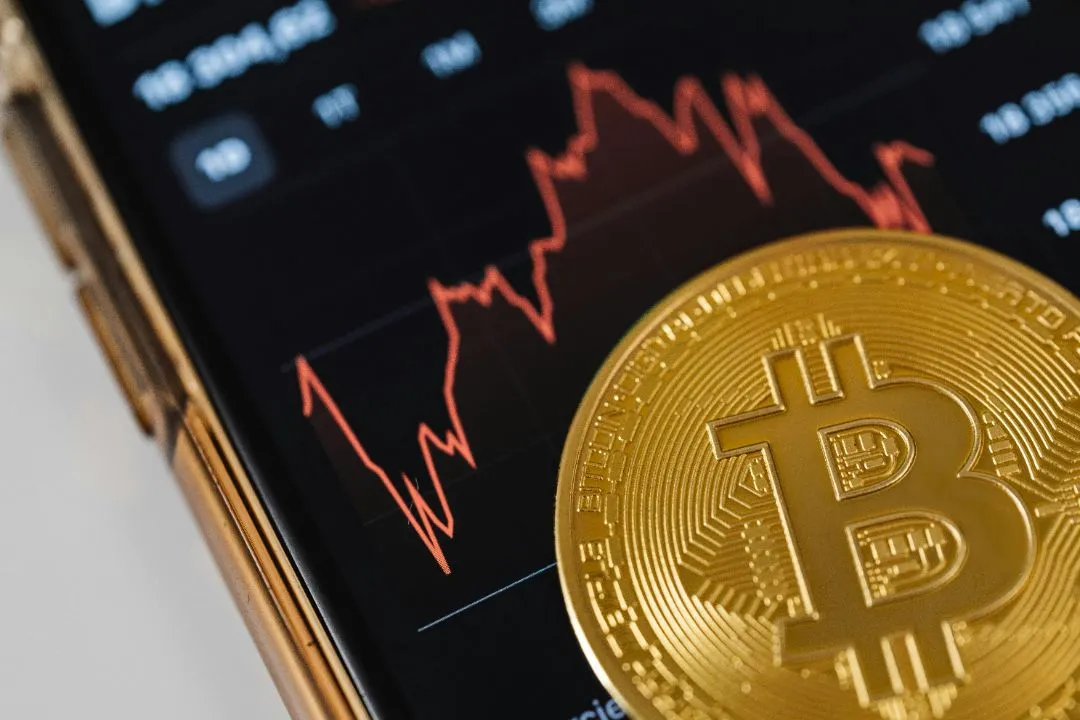
https://asset.coinness.com/en/news/d5d4ea99a0bf379f2ddebd4239153a09.jpg
Photo by Guo Xin Goh on Unsplash

Previous issues

The exploitation of public figures in financial scams is not a new phenomenon. Prime Minister Lee has been a recurrent target of such scams, dating back to 2018. At that time, the government issued public warnings about Bitcoin investment scams falsely claiming the Prime Minister’s endorsement. More recently, in July, another fake video featuring Lee Hsien Loong surfaced, prompting renewed public warnings.


In 2021, the Prime Minister’s name and photograph were used without his consent in an effort to sell cryptocurrency. The data was taken from his X (formerly Twitter) profile. At the time, Lee wrote:

“The site’s creators are anonymous, but I have sent an open tweet out to ask that my name and photo be removed from the site immediately, as I have nothing to do with the platform. I urge everyone to remain vigilant when dealing with cryptocurrency platforms.”


That was a much less sophisticated identity-related scam. More often than not, scammers and fraudsters tend to be early adopters of technology. That’s proving to be the case with the use of deep-fakes in this instance.


A need for caution

As he did in 2021, Prime Minister Lee has urged the public to exercise caution in light of this more recent incident. He advises against responding to scams promising guaranteed investment returns or giveaways.


There’s every sign that the Prime Minister’s warning is warranted. In September it emerged that six Singaporeans lost more than $100,000 when a scammer tricked them into buying tokens on a cryptocurrency trading platform. More recently, five Americans were conned out of $10 million in a scam that involved a spoofed domain of the former Singapore International Monetary Exchange (Simex).


This call for public vigilance is part of a broader government effort to address the surge in cyber fraud. These repeated incidents underscore the challenges posed by digital technologies in spreading misinformation and financial fraud.



More to Read
View All
Web3 & Enterprise·

Dec 22, 2023

WEMIX Foundation launches omnichain wallet

WEMIX Foundation launches omnichain walletThe WEMIX Foundation, a subsidiary of South Korean blockchain gaming publisher Wemade, has officially launched the una Wallet, according to an official announcement on the company’s website on Thursday (KST). una Wallet is a core application of the Unbound Networking & Accelerating Growth Initiative, or “unagi,” the company’s newest innovative omnichain network and interoperable Web3 gaming platform.Photo by Shubham’s Web3 on UnsplashEasy asset managementThe wallet service offers a solution for users to conveniently earn, manage and trade their digital assets like NFTs and tokens on multiple blockchains — such as WEMIX3.0, Ethereum and Polygon — in one borderless place. The WEMIX Foundation said it would add more supported chains in the future.Effortless access and robust securityIn particular, una Wallet’s convenience and security stem from an easy login procedure utilizing connections to social media accounts and multi-party computation (MPC) technology. MPC is a cryptographic security measure that enables multiple parties to assess a computation without revealing their private information or data. This technology splits private keys, or mnemonic phrases, and allows users to easily recover their wallets through social login even if they lose their keys.The service also provides transaction route recommendations, allowing users to move or trade assets across chains with minimal costs or signature procedures. Subsequently, they can also view their transaction history on each chain and the movement of assets between different chains.WEMIX plans to add various features to make authentication and asset-tracking processes even easier. una Wallet is currently available on Google Play and the Apple App Store.

news
Markets·

Jan 09, 2024

Philippines leading charge in Asia amid global bitcoin payment surge

Bitcoin's global merchant acceptance witnessed a substantial surge, growing by 174% throughout 2023, with the Philippines proving itself in leading the way within the Asian region.Photo by rc.xyz NFT gallery on UnsplashRegion facing regulatory restrictionsThat’s according to BTC Map, a provider of bitcoin merchant mapping services. The data, derived from BTC Map's open-source mapping data via OpenStreetMap, revealed that the number of venues accepting bitcoin payments surged from 2,207 at the beginning of the year to 6,126 by the year's end. This diverse array of businesses included restaurants, bars, shops and various services. The expansion of bitcoin vendors is a global phenomenon, with concentrations notably observed in Europe, the United States and Latin America. The Philippines stands out in Asia with hundreds of vendors, while regulatory restrictions in East Asia, especially China, have limited adoption. While it's great to see a high level of direct adoption among Filipino merchants, it's easy to understand why this level of adoption hasn’t been matched within Asia’s largest market. China has had a long-standing ban on cryptocurrency trading, mining or its use as a means of payment. Despite the ban, it appears that crypto trading is still alive and well in China, although beneath the surface. With mining too, while the sector shrank considerably once a ban was imposed, there is believed to be a significant ongoing level of bitcoin mining occurring still within China’s borders. However, when it comes to vendors, this is likely to be an activity that is far too visible to the authorities and with that, China’s 1.4 billion citizens are not getting the opportunity to buy goods and services with the world’s leading cryptocurrency. Compounding matters, the Chinese authorities have been working diligently on a myriad of projects to bring about day-to-day retail use of the country’s central bank digital currency, the digital yuan. Those efforts are not likely to be aligned with an accommodation of or tolerance of bitcoin payments. The increase in merchant listings showcased a slight decline from the peak in September, which reached 6,590 merchants. BTC Map's platform allows businesses and users to tag locations accepting bitcoin payments, with the rise in numbers potentially attributed to increased user contributions to the database. This surge in bitcoin adoption globally occurred against the backdrop of the cryptocurrency's price volatility throughout the year. Despite potential limitations in data collection due to its reliance on volunteer contributions, the overall trend indicates a growing acceptance of bitcoin. Ongoing challenges to adoptionA panel of bitcoin leaders at the Plan B conference in October discussed the challenges and opportunities of global bitcoin adoption. Notably, they highlighted the difficulty of onboarding new users and merchants, particularly in diverse cultural contexts. In El Salvador, where bitcoin is legal tender, obstacles persist in convincing merchants to accept bitcoin payments. Geographically, concentrations of bitcoin-accepting vendors were more prevalent in Central and South America, while Africa and Asia demonstrated fewer such establishments. The United States and Europe led in the global count of crypto-friendly merchants. The panel stressed the importance of education in overcoming these challenges, emphasizing the need for user-friendly applications to facilitate mainstream adoption, moving away from complex technologies. As bitcoin continues its global expansion, the industry recognizes the vital role education and user-friendly solutions play in fostering broader acceptance. 

news
Policy & Regulation·

Mar 13, 2024

Thailand greenlights U.S. spot Bitcoin ETF access

The decision by U.S. regulators to approve spot Bitcoin exchange-traded funds (ETFs) in January appears to be having some knock-on effects, with the latest such response seeing the Thai authorities enable access to such products for institutional investors and ultra-high-net-worth individuals within Thailand.Photo by Karolina Grabowska on PexelsMeeting a growing demandAccording to a report in the Bangkok Post on March 12, Thailand’s Securities and Exchange Commission (SEC) has agreed that Thai asset management firms may manage and offer funds that incorporate investment in U.S. spot Bitcoin ETF products. The decision was arrived at following a recent SEC board meeting. The SEC's decision reflects a strategic response to the growing demand for digital asset exposure among institutional investors. It would appear that spot Bitcoin ETF approval in the United States has bolstered investor confidence in this investment instrument on an international basis. Urging cautionDespite the opportunities this presents for institutional investors, the SEC has emphasized caution, citing the high-risk nature of digital asset investments. SEC Secretary-General Pornanong Budsaratragoon verbalized that need for caution, stating: "Asset management firms asked the SEC for them to have exposure in digital assets, especially Bitcoin and spot Bitcoin ETFs, but we need to consider carefully whether to allow asset management firms to invest in digital assets directly due to the high risk.”It’s interesting to note that in an immediate response to the approval of these products in the United States in January, Thailand’s SEC clarified that it had no plans to allow asset management firms to launch similar products within Thailand. For the moment at least, it seems that demand will be satisfied by accessing products that have gained exposure to U.S. spot Bitcoin ETFs instead. Retail investors excludedWhile this move expands the investment landscape for institutional players, retail investors in Thailand find themselves sidelined due to regulatory restrictions. The amended regulations primarily cater to accredited investors, leaving retail participation in spot Bitcoin ETFs out of reach. This exclusion contrasts with the popularity of retail crypto trading in Thailand, albeit within regulated boundaries. Recent government regulations have both facilitated and restricted certain crypto activities. Thailand's move aligns with broader trends in the cryptocurrency sector, with several countries, including South Korea and Hong Kong, exploring opportunities in the space. In Hong Kong, regulators are currently processing applications for Bitcoin ETFs, with several financial institutions expressing interest in introducing spot Bitcoin ETFs. Just like the Thai authorities, the governor of the Royal Bank of India (RBI) had also responded in the aftermath of product approval in the U.S. stating that he didn’t favor the approval of such products in India. Despite that, news emerged on March 11 that Indian crypto investment platform Mudrex is planning to meet demand by providing clients with access to these U.S. products. As institutional investors gear up to capitalize on this opportunity in Thailand, the regulatory framework surrounding digital assets will continue to shape market dynamics, both domestically and internationally.

news
Loading