Top

Philippine central bank tightens rules on crypto transfers

Policy & Regulation·January 03, 2024, 6:27 AM

In a move to enhance the oversight of cross-border wire transfers involving virtual assets, Bangko Sentral ng Pilipinas (BSP), the central bank of the Philippines, is fortifying the implementation of regulations relative to crypto transfers.

https://asset.coinness.com/en/news/cff389421e61abe59d6ce3bd777eaf88.jpg
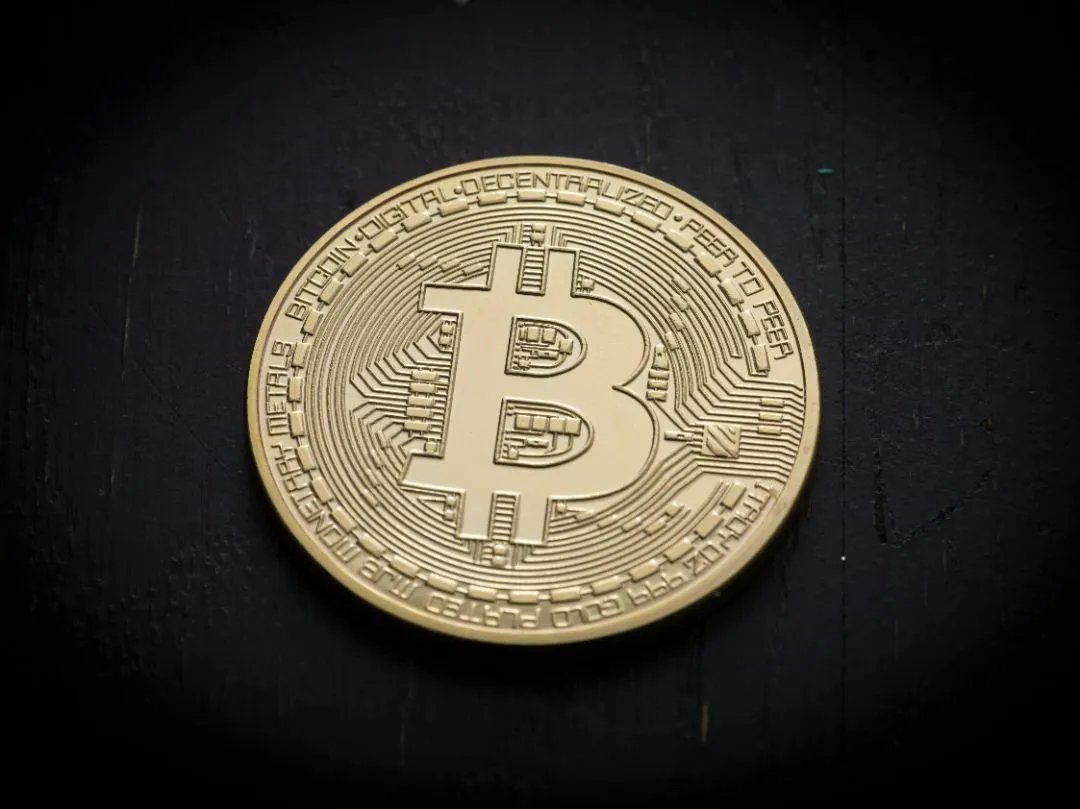
Photo by C Bueza on Unsplash

Travel rule clarifications

Local news outlet, the English language newspaper The Philippine Star reported that central bank memorandum 2023-042 provides clarifications on the travel rule for virtual asset service providers (VASPs). The travel rule requires financial institutions to pass on information to the next institution where a transaction takes place.


The BSP aims to bring greater clarity to several aspects, including the applicability of the P50,000 transaction threshold and expectations regarding transactions involving jurisdictions without travel rules. Additionally, further interpretation is being provided concerning the extension of the Philippine travel rule to non-custodial VASPs and regulatory expectations surrounding transactions with unhosted wallets or crypto wallets controlled directly by their owners, rather than managed by third-party service providers.


FATF compliance ambition

This regulatory move is in response to the directives from the Paris-based Financial Action Task Force (FATF). In 2021 the Philippines came under greater scrutiny from the intergovernmental organization, when it was included on its "gray list," making it a candidate for increased monitoring.


The FATF has called upon the Philippines to establish guidelines for the travel rule to prevent terrorists and criminals from exploiting virtual asset transfers for the unrestricted movement of their assets and to detect and prevent misuse effectively.

BSP-supervised financial institutions (BSFIs) are now mandated to scrutinize specific details of virtual asset transfers, including the originator's name, account number used in the transaction, originator's physical address or national identity and the beneficiary's name and account number.


International moves towards compliance

This latest move by the Philippine central bank is not unusual. In recent months, a plethora of similarly motivated central banks around the world have tightened up on crypto regulation as it relates to the FATF directives.


Being on the FATF's "gray list" is bad for a country’s reputation. It has the potential to result in loss of investor confidence and lead to higher compliance costs and greater monitoring. Additionally, it may have an impact on trade relations and damage a country’s ability to access international finance.  Turkey has also found itself on the organization’s gray list. Working towards repairing that situation, Turkey is in the process of establishing a crypto regulatory framework that will be FATF compliant.

In May, Pakistan went a step further in banning cryptocurrency. At the time, its Minister of State for Finance and Revenue, Aisha Ghaus Pasha, stated that the ban had been a requirement for Pakistan’s removal from the FATF gray list.


A tightening of crypto regulations has also occurred in the United Arab Emirates (UAE) and in Hong Kong more recently, as those territories work towards ensuring FATF compliance.


The BSP emphasizes that transactions not surpassing the P50,000 threshold or its equivalent in foreign currency must include the names and account numbers of both the originator and beneficiary. Both originating and beneficiary VASPs are required to establish and adhere to robust sanction screening procedures, ensuring compliance with sanctions lists and preventing transactions involving sanctioned individuals, entities, or jurisdictions.

More to Read
View All
Policy & Regulation·

Aug 29, 2023

Indian PM Narendra Modi Calls for Global Crypto Regulatory Framework

Indian PM Narendra Modi Calls for Global Crypto Regulatory FrameworkAmid the rising tide of emerging technologies like cryptocurrency and artificial intelligence, Indian Prime Minister Narendra Modi has emphasized the urgent need for a worldwide regulatory framework to ensure user safety and ethical utilization.His remarks were delivered at the G20 Summit India 2023, where he stressed the importance of cohesive global efforts in shaping the future of technological advancements.Photo by Shubham Dhage on UnsplashG20 PresidencyIndia, currently holding the G20 Presidency for 2023, has taken a strong stance in advocating for the establishment of a comprehensive global regulatory framework for cryptocurrencies. Earlier this month, the country released a presidency note outlining its insights into the proposed framework.These recommendations are closely aligned with the guidelines set forth by authoritative bodies such as the Financial Stability Board (FSB), the Financial Action Task Force (FATF), and the International Monetary Fund (IMF).Notably, India’s presidency note extended its considerations beyond established economies to include provisions for developing nations relative to crypto. At the time, it was revealed that a collaborative “synthesis paper” was in the works, jointly crafted by the IMF and the FSB. This paper, set to be unveiled by the end of August, will delve into the global macro implications stemming from the adoption and growth of cryptocurrency. The timing of this release is particularly significant, coinciding with the upcoming G20 Summit scheduled for September 9.Establishing a global frameworkAddressing the G20 Summit, Prime Minister Modi articulated his vision for a world unified under a comprehensive regulatory framework not only for cryptocurrencies but also for the ethical utilization of emerging technologies like artificial intelligence. In an interview with media platform Business Today, he emphasized the reality of rapid technological progress sweeping across the globe. Instead of dismissing or wishing away these advancements, Modi underscored the need for proactive adoption, democratization, and a unified global approach.Modi’s perspective underscores his support for a harmonized global strategy when it comes to formulating regulatory frameworks for emerging technologies. Drawing a parallel with the aviation industry, he highlighted how air traffic control and air security are governed by common global rules and regulations, illustrating the effectiveness of a consensus-based model.Expanding on the implications of India’s G20 presidency, Modi shed light on the deliberations centered around cryptocurrency’s potential impact within broader macroeconomic contexts, particularly within emerging and developing economies.Regulatory needs at a national levelWithin India, various stakeholders have been struggling with the regulation of cryptocurrencies themselves. In July, the Indian Supreme Court criticized the government for its failure to establish clear crypto-related regulations. The country’s central bank, the Royal Bank of India (RBI), has been less enthusiastic about decentralized cryptocurrency, warning of the risks extended by stablecoins more recently. Instead, it has proven to be far more interested in advancing the use of permissioned blockchain networks and a central bank digital currency (CBDC).The proposition of a globally accepted set of guidelines for cryptocurrency regulation has garnered substantial support from authorities worldwide as they begin to understand the difficulty that decentralized technology presents in terms of controlling it. If Modi’s vision translates into reality, it could mark a significant step toward standardizing the governance of cryptocurrencies on an international scale.

news
Web3 & Enterprise·

Nov 07, 2023

Galaxia Moneytree partners with Charzin to integrate security tokens into EV charging systems

Galaxia Moneytree partners with Charzin to integrate security tokens into EV charging systemsKorean financial platform services provider Galaxia Moneytree announced on Tuesday (local time) that it has signed a memorandum of understanding (MOU) with Charzin, a company that specializes in developing infrastructure for charging electric vehicles (EVs), to design a security token offering (STO) platform that issues security tokens for optimizing the process of EV charging. This includes securing installation sites and facilities for EV charging stations.Photo by Andrew Roberts on UnsplashMerging blockchain and transportationHeadquartered in Daegu, Charzin is notable for its app EVZ, which uses a blockchain-based sharing module to connect EV drivers and EV charger owners for faster charging and optimized revenue acquisition.Galaxia Moneytree will be responsible for establishing and operating the STO platform, while Charzin will handle business development, support for the launch of security token products and construction of EV charging facilities.The signing ceremony for the MOU took place at Galaxia Moneytree’s headquarters in Seoul on Monday with Galaxia Moneytree CEO Shin Dong-hoon and Charzin CEO Choi Young-seok in attendance. The two companies also discussed plans to launch other products that combine finance and EV charging infrastructure.“In addition to our ongoing efforts, we plan to design STO products for various underlying assets, such as renewable energy and aviation assets,” Galaxia Moneytree said. The company recently formed an aviation asset tokenization consortium in September.Ongoing partnershipsMeanwhile, Charzin recently announced its partnership with Hi Investment and Securities to venture into the security token business. The firms plan to raise funds for developing EV charging infrastructure by issuing security tokens and subsequently share the profits from running such projects.

news
Policy & Regulation·

Mar 27, 2024

Korean financial authority to heighten oversight on token listing with new guidelines

The South Korean financial authority will establish new policies and guidelines for token listing and provide admirable examples from past listing events for local exchanges to follow, according to local media outlet News1.  So far, fiat-to-crypto exchanges in Korea have been listing tokens on their platforms under a guideline issued by Digital Asset eXchange Alliance (DAXA) – a self-regulatory consultation group comprised of five major Korean crypto exchanges. The existing DAXA guideline outlines basic yet vague instructions, which have allowed exchanges to list tokens largely at their discretion.  However, the new guideline from the financial authority, expected to be released by this June, will mark the government’s first official manual on token listing. This is in line with the upcoming Virtual Asset User Protection Act, which will be effective in July. Photo by Hitesh Choudhary on UnsplashSetting clear guidelines for token listingsThe new guidelines are expected to include examples of past fraud detection and real-time monitoring cases which are deemed to have set precedents for the industry players. Moreover, the financial authority plans to distribute past exemplary cases of token listing as early as April, which is anticipated to set a model listing process and help local crypto exchanges adhere to the law and requirements.  This announcement comes after the local game company Wemade relisted its native token WEMIX on Korbit, one of DAXA's member exchanges, just a year after it was delisted on major exchanges due to its deviant practices in token issuance. The relisting of WEMIX has since raised concerns among crypto insiders about the lack of criteria regarding token listings. More refined token listing process As the crypto market's bullish trend continues, Bithumb and Coinone – the second and third-largest exchanges in Korea – are stepping up their efforts to speed up the listing of new coins. Industry experts expect these exchanges will double down on their efforts in screening and reviewing processes for tokens to align with the new guidelines in the future.  An official from the Korean Financial Intelligence Unit (FIU) said that while the anticipated listing process is not legally binding, it will definitely have a more profound impact on local crypto exchanges compared to the self-regulated DAXA guidelines.  

news
Loading
